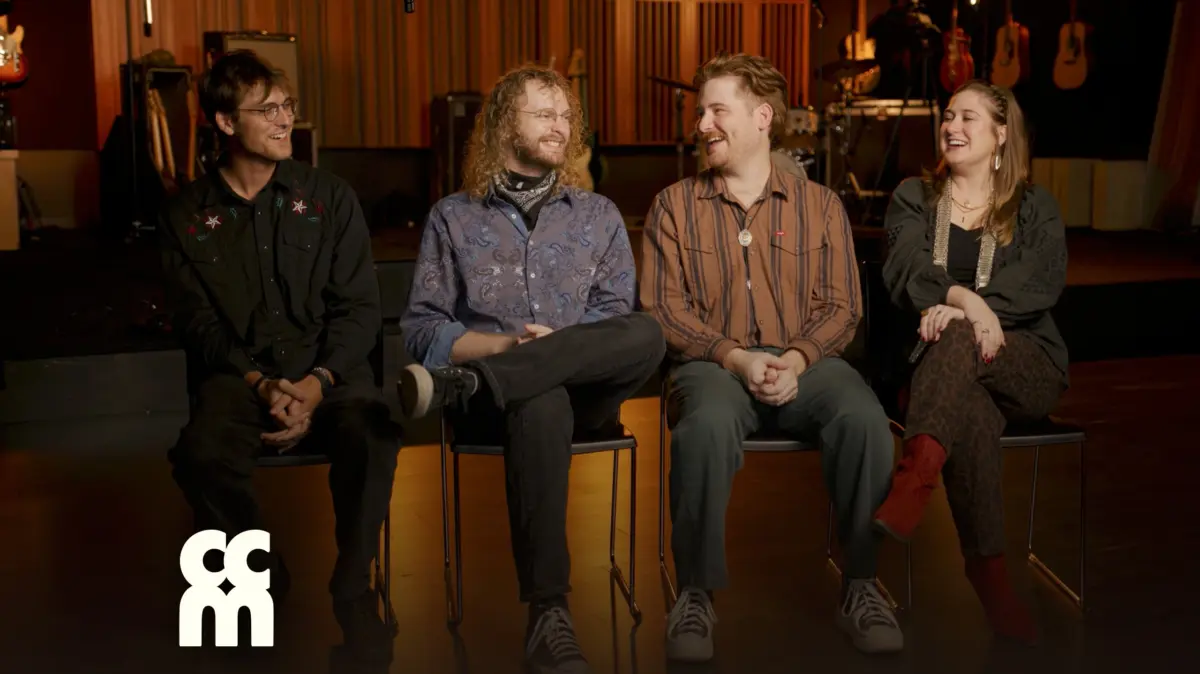
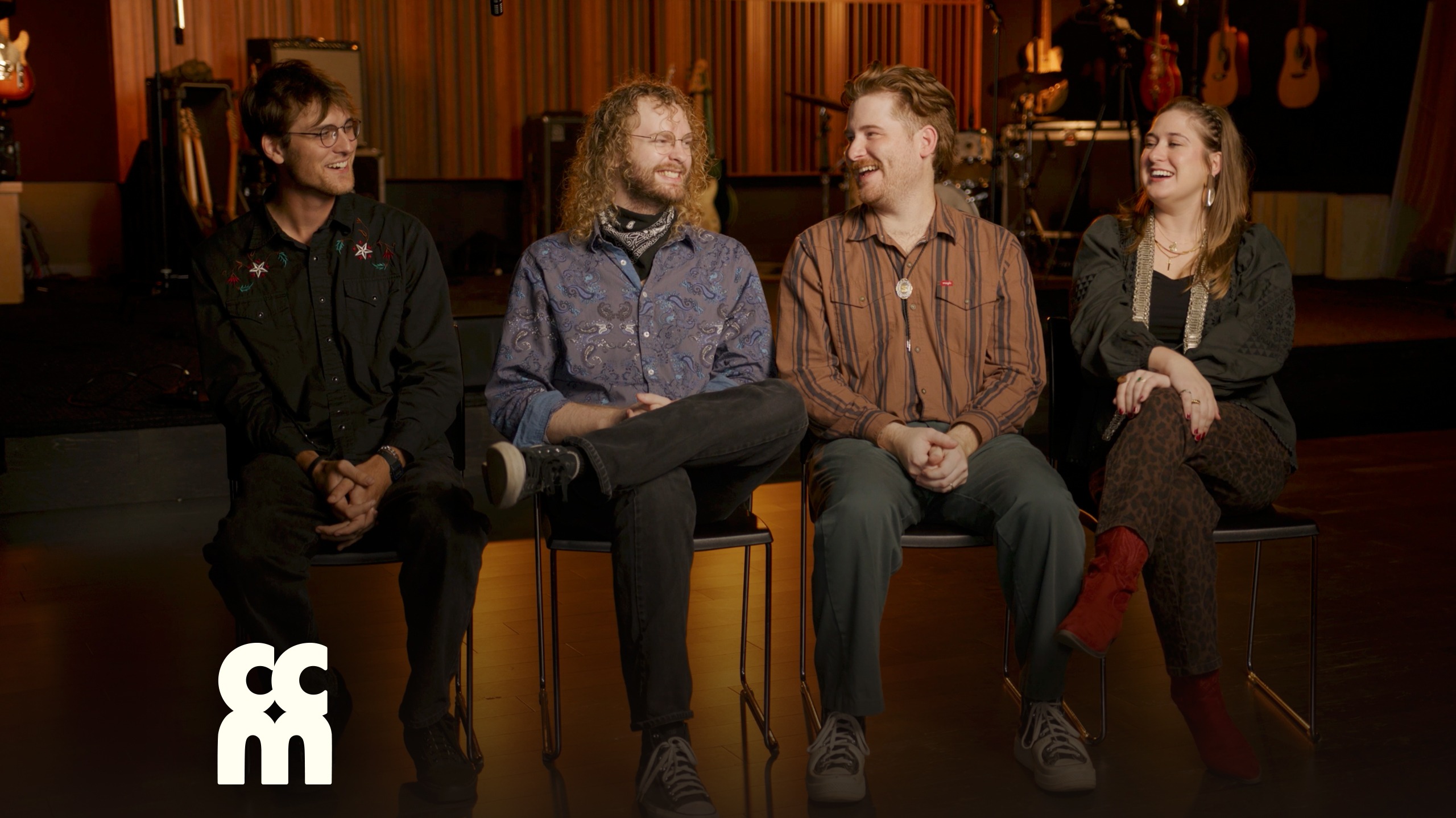
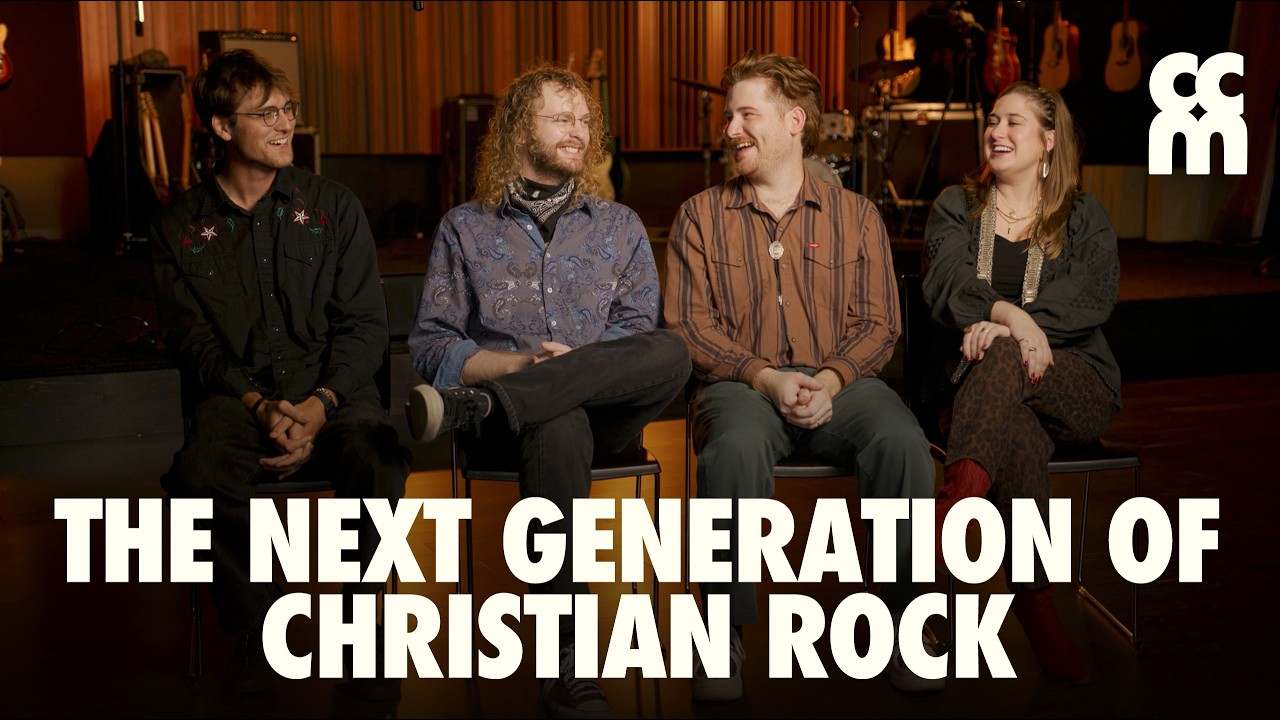
The landscape of Christian rock and roll is undergoing a seismic, guitar-driven reclamation, and at the epicenter of this revival stands Scout and the Saints. Hailing from the rich soil of Georgia, this dynamic outfit marries deep Southern roots with a high-octane, unyielding devotion to their faith. Fronted by powerhouse vocalist Scout Butler—whose musical lineage connects her directly to the golden era of Christian rock heritage—the band functions as both a family affair and a masterclass in modern roots-rock chemistry. Alongside her husband and rhythm-keeper, drummer Alec Butler; her younger brother, bassist and multi-instrumentalist Cash Powell; and college friend turned guitar virtuoso Ryan Huston, Scout and the Saints operate under a remarkably straightforward four-word manifesto: “Love Jesus. Rock and Roll.”
In an exclusive CCM Magazine Spotlight feature, the band recently pulled back the curtain on their origins, creative process, and burgeoning ministry. Delivering a pair of electrifying live performances alongside an intimate sit-down interview, Scout and the Saints proved that the genre’s foundational swagger is far from dormant. Far from resting on the laurels of their generational connection to legendary Third Day frontman Mac Powell, the band is blazing an independent trail. Balancing daytime labor with late-night studio sessions, they are forging a distinct, arena-ready sound informed by classic rock icons like Tom Petty, The Black Crowes, and Bruce Springsteen. As they prepare to step onto the grand stage as direct support for Third Day on their upcoming 2027 tour, Scout and the Saints represent a refreshing paradigm shift for contemporary Christian music (CCM)—proving that orthodox theology, blistering guitar solos, and raw, sweat-soaked rock and roll are not mutually exclusive, but rather divinely complementary.
Detailed Chronology: From Liberty University Dorms to the National Stage
The genesis of Scout and the Saints is a narrative rooted in academic beginnings, familial bonds, and an undeniable spiritual calling. Long before they were turning heads in national music studios, the core of the band coalesced in 2021 at Liberty University. What began as informal jam sessions among friends quickly mutated into a focused musical mission. Scout Butler, having absorbed the sounds of classic rock and Christian music giants since childhood, felt an unmistakable spiritual directive.
"I felt like the Holy Spirit was kind of impressing upon me, hey, let’s try Christian music," Scout shared during her studio interview. Armed with this conviction, she brought together her inner circle: her husband, Alec Butler, whose chaotic, kinetic energy behind the drum kit anchors the band’s pulse; her brother, Cash Powell, who holds down the low end on bass while contributing heavily to the band’s overall arrangements; and Ryan Huston, whose fluid, emotive guitar phrasing acts as the perfect melodic foil to Scout’s gritty vocals.
The chronology of their artistic maturation accelerated rapidly following the writing of "Oh Lord," one of Scout’s earliest explicitly Christian compositions. Drawing deep inspiration from the biblical metaphor of the potter and the clay—as detailed in Jeremiah 18—Scout took the embryonic track to her father, Mac Powell. The veteran rocker offered not just paternal approval, but invaluable mentorship, helping the young band refine the song’s structural arrangement and emotional resonance.
This momentum carried them into collaborative spaces like the Centricity Music songwriting retreat, where the seeds for tracks like "Ain’t Seen Nothing Yet" were planted. Composed by leaning heavily into the Gospel accounts of Jesus’ earthly ministry and looking forward to the eschatological promises of heaven, the song bridges timeless scriptural truths with contemporary rock arrangements. Today, operating independently out of Georgia, the band is navigating the delicate tightrope of independent artistry—writing, producing, and self-funding much of their material while carving out an undeniable niche in the modern roots-rock ecosystem. Their latest EP, Dancing on My Grave, serves as a vital historical marker of this evolution, capturing a young ensemble shedding its tentative skin and stepping boldly into its true identity.
Supporting Context & Metrics: The Anatomy of a New Sound
To fully understand the cultural and sonic weight of Scout and the Saints, one must examine the broader musical ecosystem they are navigating. For decades, the intersection of Christian faith and traditional rock and roll yielded legendary acts—from Petra and Stryper in the 1980s to third-wave heavyweights like Audio Adrenaline, Third Day, and Skillet in the decades that followed. However, as the contemporary Christian music industry shifted heavily toward polished pop, atmospheric modern worship, and radio-friendly adult contemporary ballads, the raw, unvarnished grit of Southern rock largely retreated to the margins.
Scout and the Saints are stepping directly into this vacuum, armed with a sonic blueprint borrowed from secular titans of the 1970s and ’80s. Scout’s artistic awakening occurred at age 16 when she attended a Bruce Springsteen concert with her father. "It just blew my mind," she recalls. "I was like, this is what I want to do. This, like, rock thing. This is so cool." That epiphanic moment planted the seeds for an aesthetic that rejects sterile production in favor of natural room acoustics, tube-amp saturation, and organic instrumentation.
Statistically and structurally, the independent Christian music market relies heavily on grassroots community-building, digital streaming algorithms, and high-impact live performance videos to achieve breakout status. For Scout and the Saints, platform metrics are beginning to reflect the undeniable gravity of their live show. Their recent releases—specifically their live sessions with CCM Magazine—are capturing early-adopter attention across digital video platforms. Furthermore, their upcoming placement on the 2027 Third Day tour represents a massive strategic scaling opportunity. While industry standards dictate that opening slots for legacy acts are hard-won, Scout and the Saints occupy a unique genealogical and stylistic sweet spot: they possess the familial credibility to draw legacy fans, yet their modern, swamp-rock and roll edge appeals powerfully to Gen Z and millennial listeners craving authenticity over slick perfection.
Official Statements and Artistic Philosophy
The heart of Scout and the Saints beats in lockstep with their transparent theological and artistic mission statement. Eschewing complex branding exercises or corporate formulas, the band reduces their entire enterprise down to four foundational words: "Love Jesus. Rock and Roll."
During their expansive sit-down interview with CCM Magazine, front-woman Scout Butler elaborated on the organic nature of their creative output:
"Choosing rock and roll, I think we just don’t know how to do anything else together as a band. When we come together, it’s just what flows out of us no matter what."
This philosophy extends to their approach to faith-based artistry. Rather than treating Christian lyrics as a constraint, Scout and the Saints view the gospel as the ultimate fuel for high-energy performance. Discussing the creation and execution of tracks like "Ain’t Seen Nothing Yet," Scout emphasized the sheer joy of fusing scriptural narrative with unbridled musicianship:
"We just pulled from the Word and from Scripture of things that Jesus did. It’s fun to be a Christian. It’s fun to rock out and have a guitar solo in a Christian song."
The band also acknowledges the complex shadow cast by their familial heritage. Stepping into an industry where Mac Powell’s iconic voice helped define an entire generation of believers comes with a unique set of expectations. However, Scout views this not as a limitation, but as a challenge to raise the bar. Recalling a profound prayer from her mother regarding the multi-generational trajectory of their art, Scout noted that her family’s foundational success is viewed by the band as a baseline rather than a ceiling:
"Our journey is so different from theirs… We just want to see Jesus glorified and lifted up and do it through our music."
Future Outlook: The Road Ahead for Scout and the Saints
As Scout and the Saints look toward the horizon, the trajectory points decisively upward. The coming years promise a relentless cycle of touring, writing, and expanding their footprint well beyond their Southern roots. The announcement of their inclusion on the upcoming 2027 Third Day tour marks a critical inflection point, catapulting the independent quartet from intimate club settings and regional venues directly into major amphitheaters and arenas.
Yet, despite the looming scale of arena-level exposure, the band remains grounded in the DIY ethos that birthed them. Balancing day jobs, self-production duties, and the rigorous demands of road life, Scout, Alec, Cash, and Ryan are determined to maintain total creative control over their output. Their ability to fuse the timeless, storytelling-heavy traditions of classic Southern rock with a vibrant, unashamed Christian witness positions them as rare cultural ambassadors.
The legacy of faith-based rock and roll is entering a new dawn. Scout and the Saints are not merely nostalgic reenactors trying to resurrect the ghosts of decades past; they are forward-looking pioneers proving that there is plenty of open highway left for guitar-driven ministry. With a rapidly growing audience, an arsenal of hook-laden, scripture-infused anthems, and an electric live show that demands attention, Scout and the Saints have made one thing abundantly clear: when it comes to the future of Christian rock, we truly ain’t seen nothing yet.