
Executive Overview
Four decades ago, a quartet of musicians draped in striking yellow-and-black Spandex achieved the seemingly impossible. They fused the thunderous, high-octane guitar riffs and arena-sized theatrics of 1980s heavy metal with an uncompromised, explicitly Christian message. When Stryper released their landmark third studio album, To Hell with the Devil, in October 1986, they did far more than simply release a successful record; they initiated a seismic cultural shift that challenged the rigid confines of the music industry.
At a time when MTV defined the global youth culture and mainstream heavy metal was dominated by anthems of hedonism, rebellion, and excess, Stryper gatecrashed the party. They stood shoulder-to-shoulder with secular heavyweights like Mötley Crüe, Bon Jovi, and Poison, proving definitively that faith-based music could compete commercially and artistically on the global stage.
Yet, their journey was fraught with paradox. While mainstream secular audiences and heavy metal fans embraced their stellar musicianship, soaring vocals, and high-energy live shows, parts of the conservative Christian establishment rejected them, viewing their heavy metal aesthetic with deep suspicion.
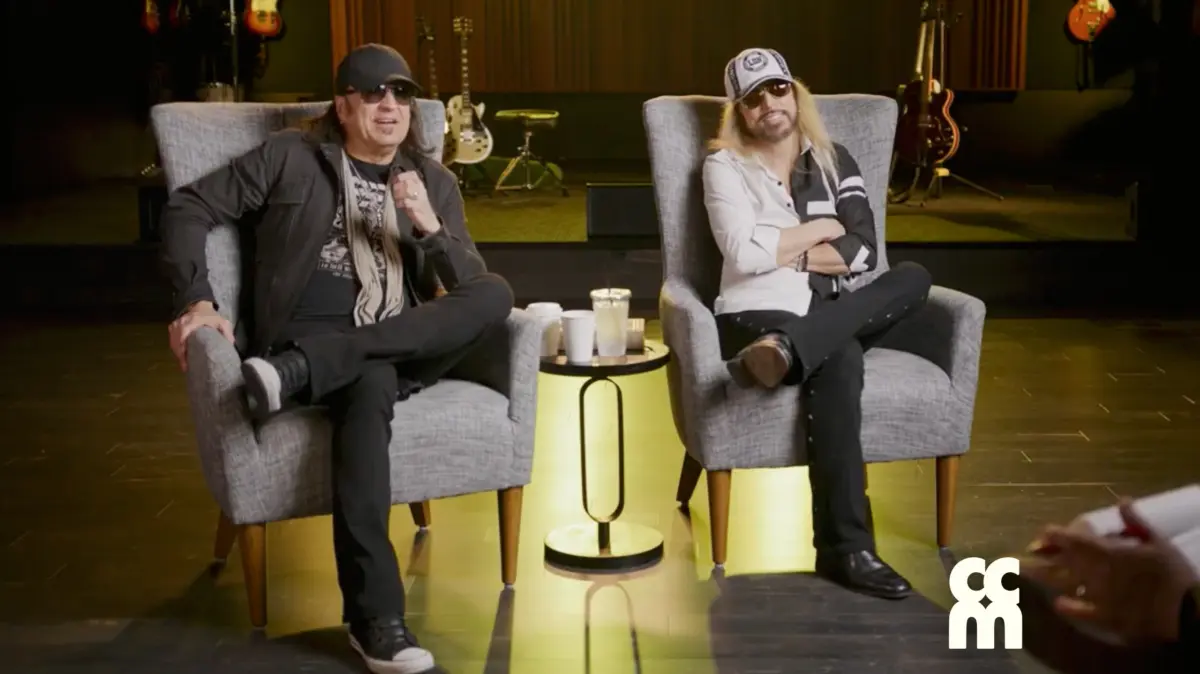
Reflecting on this milestone, brothers Michael and Robert Sweet—founding members of the band—recently sat down to discuss the creation, cultural friction, and enduring legacy of To Hell with the Devil. Their reflections offer a rare glimpse into a band that caught lightning in a bottle, survived fierce friendly fire, and ultimately laid the groundwork for modern Christian rock. Today, as the band continues to tour and record with relentless vigor, the impact of their "yellow and black attack" remains as resonant as ever.
Detailed Chronology: From Garage Ambitions to Global Phenomenon
The Genesis of a Masterpiece (Pre-Release, 1986)
By the mid-1980s, the heavy metal explosion was reaching a fever pitch. Bands from the Sunset Strip were dominating the airwaves, and the music industry was structured around a strict dichotomy: secular music ruled the commercial market, while Christian music was safely sequestered within specialized Christian bookstores and niche radio stations.
Stryper—originally formed as Roxx Regime before adopting the biblical reference Isaiah 53:5 ("by his stripes we are healed")—set out to obliterate that boundary. Working with producer Stephan Galfas, the band poured their technical prowess and melodic sensibilities into the recording sessions for To Hell with the Devil.
Drummer Robert Sweet recalls the visceral moment he knew they had captured something historic. Cruising down the street in his IROC-Z Camaro, he popped a cassette copy of "Sing-Along Song" into the stereo. The realization hit him instantly: "I was just like, wow, something’s going to happen here."
Frontman Michael Sweet shared a similarly electric memory. Hearing the final mix of the album’s title track for the first time on a modest cassette player inside a black Ford Escort, the brothers exchanged a knowing glance. Michael describes it as a "holy moly moment"—an instinctive realization that their hard work had coalesced into something far greater than themselves. "We got something going on here," Michael recalled thinking, attributing the breakout sound to divine intervention. "It was definitely a God thing. It was anointed, and the power came out of that album. God’s power, unlike anything else."
The MTV Breakthrough and Mainstream Crossover
In 1986, MTV was the undisputed kingmaker of the music industry. Heavy rotation on the network translated directly into multi-platinum record sales and arena-headlining status. For a Christian band, breaking onto MTV was viewed by industry insiders as an insurmountable barrier.
Stryper shattered that glass ceiling through the groundbreaking interactive video program Dial MTV, where fans voted for their favorite clips. To Hell with the Devil surged up the countdown, locking horns with secular titans.
"Here is the difference with us," Michael explains. "We were on a countdown of ten videos, ten songs up in the countdown against Mötley, Bon Jovi, Poison and going to number one." It was an unprecedented feat that left television executives stunned. "It was unheard of. I even think MTV was floored by that. They didn’t know what to think about that."
Sonically, the band blended seamlessly into the 1986 hard rock landscape, boasting virtuosic guitar solos, soaring multi-part vocal harmonies, and irresistible hooks. Lyrically, however, they charted an entirely different course, offering themes of redemption, spiritual warfare, and salvation. Consumers ignored industry labels and voted with their wallets, propelling the album to multi-platinum status—a first for any Christian metal band.
The Crucible of Controversy: Friendly Fire and Pickets
The irony of Stryper’s early success is that while secular rock fans welcomed them, conservative religious communities often cast them as heretics. In an era dominated by the "Satanic Panic," many traditional churchgoers could not fathom how heavy metal—historically associated with leather, pentagrams, and rebellion—could possibly be redeemed for the glory of God.
"Back then, you had a lot of people going, ‘These guys are the devil, you know, have nothing to do with these guys,’" Robert recalls. Michael succinctly adds, "Preaching against us."
The hostility was not merely theoretical; it manifested physically on tour. Robert remembers arriving at an arena to find a large contingent of conservative Christians picketing the venue, protesting the band’s appearance. The absurdity of the situation was underscored by the tour schedule: "AC/DC is playing right next to us and they’re not picketed."
This misplaced opposition left lasting scars. Robert reflects on the missed opportunities caused by religious gatekeeping: "How many people would have been touched if they could have understood what we were saying? And we were legitimate. We were sincere. We mean it. And it’s so out front. It’s right there. You can’t deny it."
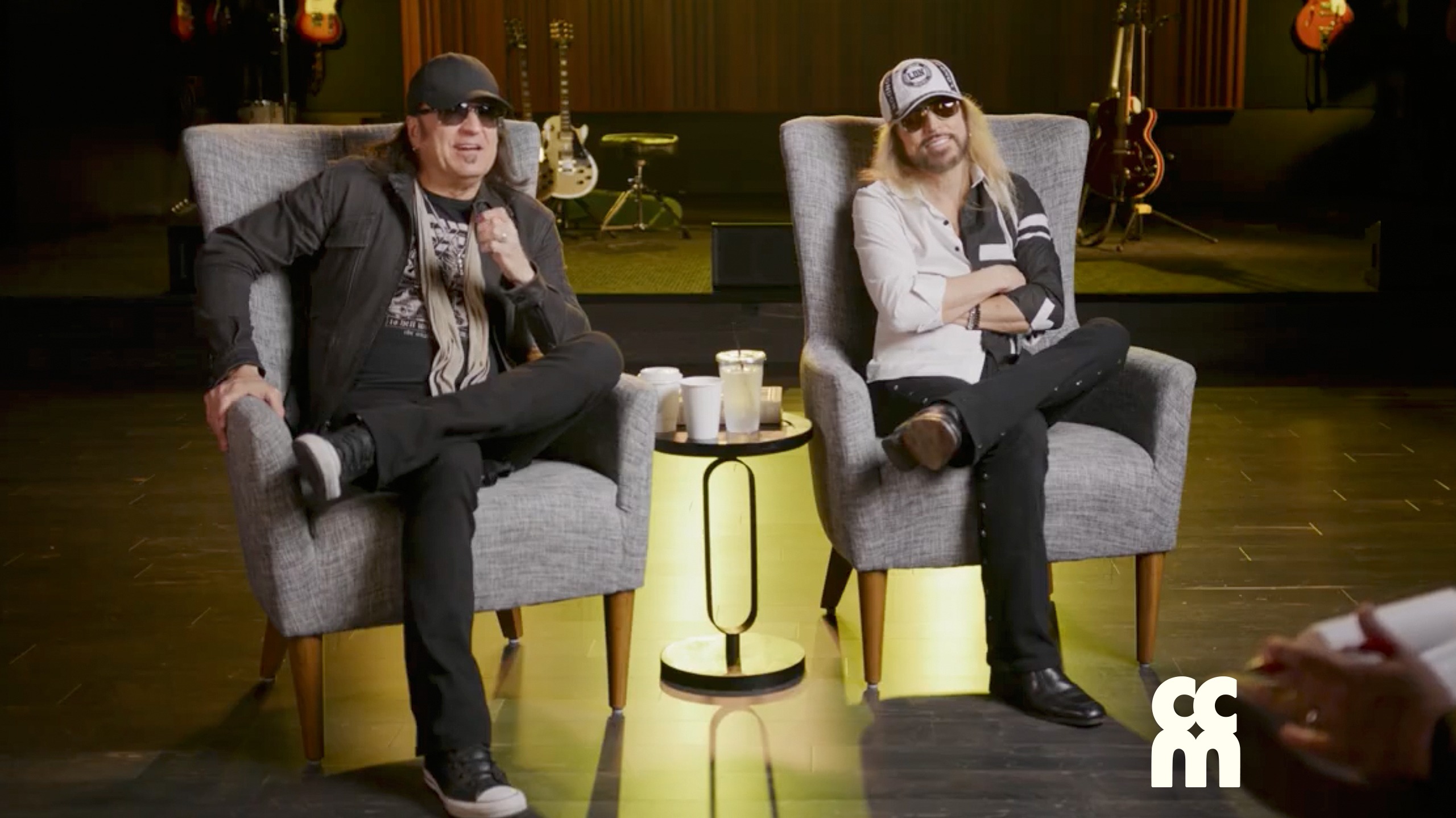
The cultural reach of this backlash extended further than many realize. During their conversation, Michael referenced Skillet frontman John Cooper, who has frequently noted that he was forbidden from listening to Stryper growing up due to the stigma attached to their genre. The thought that one of modern Christian rock’s biggest stars grew up in a household where listening to Stryper was banned highlights the intense friction the band navigated at their peak.
Separation, Reunion, and Renaissance
Despite their monumental success, the pressure cooker of constant touring, internal friction, and external opposition took its toll. In 1991, at the dawn of the grunge era which reshaped the rock landscape, Stryper disbanded.
For Michael Sweet, that appeared to be the final chapter. "I thought it was over in ’91 when we went our separate ways… and I really, truly thought that that was one part of my life."
However, the story was far from finished. In 2003, the band reunited for what was initially intended to be a nostalgia run, but it quickly evolved into a creative renaissance. Free from the commercial pressures of the 1980s music industry, the band experienced an astonishing second wind.
Reflecting on the longevity of the reunion, Robert marvels at their trajectory: "We got back together in ’03, and we’ve done more now from ’03 to ’26 than ’84 to ’91, and I mean way more, three times as much." Four decades after their inception, the Sweet brothers—now in their sixties—continue to defy expectations. "I don’t think Michael and I sat down and went, wow, we’re going to be doing this when we’re 66 and 63," Robert muses. "But God’s given us the ability to do it."
Supporting Context & Metrics
To fully understand the magnitude of To Hell with the Devil, one must examine the metrics and cultural backdrop of 1986.
- Sales Milestone: To Hell with the Devil achieved RIAA platinum status, selling over two million copies worldwide. It remains the best-selling Christian heavy metal album of all time.
- Chart Success: The title track and power ballads like "Honestly" achieved heavy rotation on mainstream radio and MTV, with "Honestly" peaking at #23 on the Billboard Hot 100.
- Grammy Recognition: The album earned Stryper a Grammy Award nomination in 1988 for Best Gospel Performance, further bridging the gap between sacred and secular artistic validation.
- Visual Identity: The band’s signature yellow-and-black Spandex outfits, designed by Michael and Robert’s mother, became instantly recognizable pop culture touchstones, symbolizing alertness, caution, and unyielding faith.
Official Statements and Retrospective Insights
The enduring ethos of Stryper is rooted in a sense of divine calling and artistic authenticity. During their anniversary retrospective, the members articulated the philosophy that sustained them through decades of triumphs and trials.
Michael Sweet on their perseverance against cultural resistance:
"But still, despite all that, we still broke out… This is what we do. This is what we were born to do. This is what we always dreamed about doing. So let’s enjoy the ride… the ride is still going. It’s not over."
Robert Sweet on the miraculous longevity of the band:
"We were legitimate. We were sincere. We mean it. And it’s so out front. It’s right there. You can’t deny it… God’s given us the ability to do it."
These statements underscore a band that views its longevity not merely as a commercial enterprise, but as a vocational and spiritual mission fulfilled over forty years.
Future Outlook: The Ongoing Legacy of the Yellow and Black Attack
As Stryper celebrates the fortieth anniversary of To Hell with the Devil, the landscape of contemporary Christian music looks vastly different—largely because of the doors Stryper kicked open. Today, artists crossing over between faith-based markets and mainstream venues is commonplace. Christian bands regularly headline secular festivals, collaborate with mainstream artists, and occupy spaces that were once entirely closed off to them.
Stryper did not wait for permission. They plugged in their instruments, turned up their Marshall amplifiers, and delivered high-caliber heavy metal that compelled listeners to pay attention. They demonstrated that artistic excellence and deep-seated religious conviction do not have to be mutually exclusive.
Looking forward, the band shows no signs of slowing down. With active international touring schedules, critically acclaimed recent studio albums, and a loyal, multigenerational fan base, Stryper continues to expand its legacy. Forty years after donning their iconic colors, the "yellow and black attack" remains as vital, uncompromising, and thunderous as it was on that afternoon in 1986—proving that a truly great record can conquer controversy, defy industry expectations, and stand the ultimate test of time.