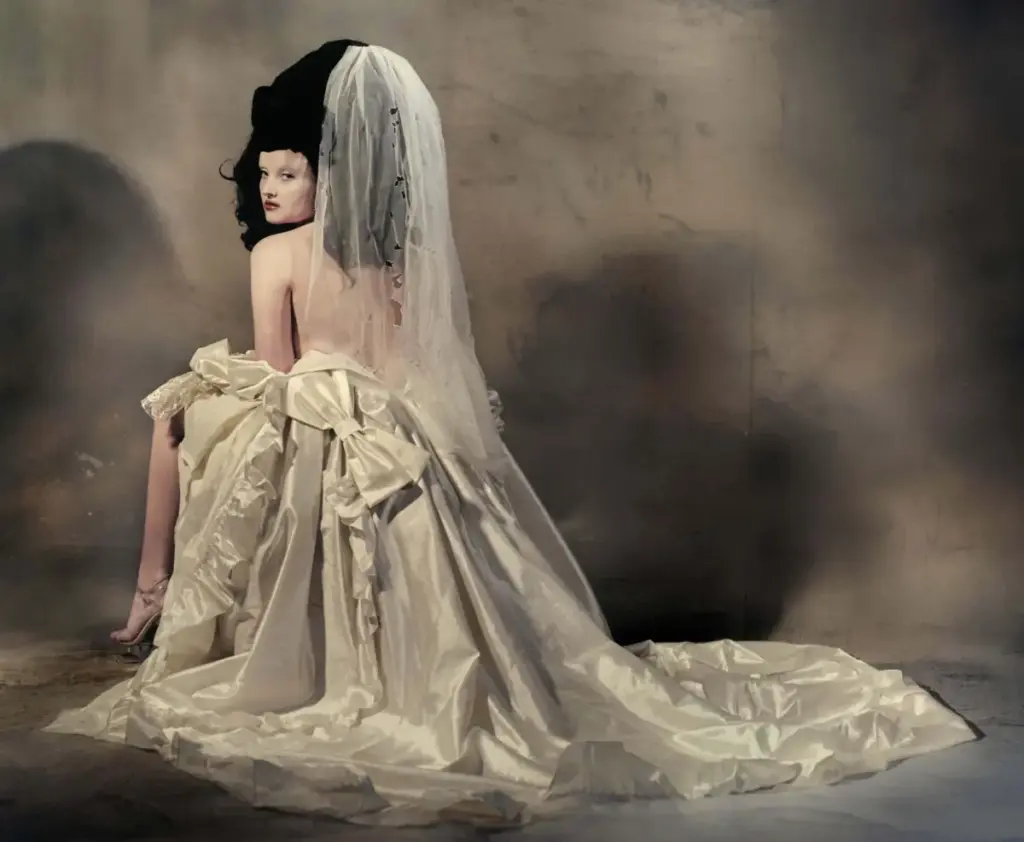

For over a decade and a half, Elly Jackson—the singular creative force behind the synth-pop project La Roux—has built her artistic identity on a foundation of stylistic archaeology. From her 2009 self-titled global breakout to the late-70s and early-80s disco excavations of 2014’s Trouble in Paradise and the nocturnal electronics of 2020’s Supervision, Jackson has consistently looked backward to move forward. Yet, her latest musical era represents her most radical and personal excavation yet.
With her fourth studio album, Old Flames, Jackson turns her lens toward the turn of the millennium—an era defined by the golden age of R&B, the dawn of modern pop excess, and, crucially, a pre-digital innocence that she and millions of contemporaries deeply yearn for. However, Old Flames is far more than a stylistic exercise in late-90s and early-00s pastiche. The record functions as a dual exorcism: it marks both the painful dissolution of a foundational 17-year relationship and Jackson’s profound reckoning with her own arrested development at age 38.
Speaking from Australia—where she is currently touring as a direct support act for Hilary Duff—Jackson opened up in an exhaustive interview about the sonic architecture of Old Flames, her complex, evolving relationship with her era-defining 2009 smash hits like "Bulletproof," and why she is finally ready to speak candidly about her sexuality and the true origins of her career.
Detailed Chronology: From Global Overnight Sensation to Radical Introspection
To understand the weight and urgency of Old Flames, one must trace the dizzying trajectory of Jackson’s early career. Emerging in the late 2000s, La Roux became an overnight international phenomenon. The project’s self-titled debut yielded era-defining tracks such as "In For the Kill" and "Bulletproof," the latter of which spent an astonishing 27 weeks on the Billboard Hot 100, peaking at No. 8.
Yet, rather than celebrating, Jackson found the sudden, global exposure deeply unmooring. At just 21 years old, she was thrust into the spotlight across America, Europe, and Russia without having earned her stripes through the traditional, incremental grind of developing an audience.
[2009: Global Breakout] ---> [2014: Trouble in Paradise] ---> [2020: Supervision] ---> [2024: The Breakup & Awakening] ---> [Present: Old Flames]This sudden catapult to fame created a complicated, often antagonistic relationship with her own catalog. While "Bulletproof" paid the bills and funded her career, Jackson privately resented its hyper-pop, ultra-feminine energy, feeling it mischaracterized her as a dance-pop artist rather than the nuanced, organic producer and songwriter she truly was.

For years, that tension simmered alongside a domestic life that shielded her from the realities of conventional adulthood. Jackson entered a committed relationship at age 20 that would span 17 years—a bond that finally dissolved amid painful ups and downs in 2024. Simultaneously, Jackson recognized that her lifestyle as a successful touring artist had fostered an unhealthy "Peter Pan" syndrome. Heavily reliant on cannabis and lost in the daydreams of a creative mind, she realized she was aging chronologically while remaining emotionally static.
The recording of Old Flames became the crucible through which Jackson processed these converging crises. Conceptualized initially as a warm, comforting sonic bath rooted in the American R&B and casual wear aesthetics of her childhood, the album gradually evolved into a raw inventory of personal accountability, heartbreak, and emotional maturation.
Supporting Context & Metrics: The Cultural Architecture of Old Flames
The American Aesthetic and the Millennial Ache
Visually and sonically, Old Flames breaks away entirely from the avant-garde, androgynous, sharp-suited British tailoring that previously defined La Roux. Instead, Jackson deliberately sought to construct an unequivocally American aesthetic.
Drawing inspiration from the Pacific Northwest, Ralph Lauren, L.L. Bean, and The Gap, the album’s visual world replicates a pre-internet utopia. Jackson points to age nine—around 1995—as the terminal point of collective safety for her generation, just prior to the all-consuming takeover of smartphones and social media.
"Everything from about 2000 on was just getting scarier and scarier, and just going back to that period where everything wasn’t so scary—I genuinely ache for it. I wanted to create something that made me feel like I could be back there, sonically, visually, everything," Jackson reflects.
This longing for simpler times is underpinned by sonic touchstones from the peak era of Rodney Jerkins, SWV, All Saints, Mariah Carey, and early Justin Timberlake. Yet, beneath the slinky, soulful R&B grooves lies the sobering reality of the modern world. Jackson acknowledges that the album is, at its core, an act of escapism from contemporary anxieties like artificial intelligence and climate change—a burning building that modern society watches helplessly.

Deconstructing the Tracklist: The Anatomy of a Breakup
Old Flames operates on a precise emotional arc, balancing the intoxicating haze of fantasy with the unvarnished agony of reality.
- "Cabin Fever": Serving as the album’s jarring, racing opener, the track captures Jackson’s spiral of anxious internal dialogue—questioning her career viability, her talent, and her sanity.
- "Lose Myself": A candid reckoning with cannabis addiction, this track charts her active decision to walk away from the chemical haze that kept her emotionally frozen.
- "Your Lover" & "Night Vision": These tracks explore the complexities of her 17-year relationship, the confinement of being with only one person since youth, and unexercised desires.
- "Final Fantasy": Named deliberately to signal a permanent closure, this song marks her vow to stop retreating into unhealthy daydreams.
- "I Just Keep Crying": Positioned just before the album’s triumphant conclusion, this raw ballad allowed Jackson to finally process acute sadness.
- "Babyline" & "Old Flames": The album’s euphoric closing tracks deliver the earned payoff of joy, arriving only after the listener has navigated the deep psychological labor of the preceding tracks.
Official Statements & Insights: Unveiling the Truth Behind the Music
In her extensive conversation with Billboard, Jackson offered rare, candid disclosures regarding her personal life and the hidden meanings behind her iconic early work. Most notably, she addressed the true narrative behind her 2009 debut album.
"My first album is actually about me falling in love with my best friend. ‘In for the Kill’ maps that journey," Jackson reveals.
Despite the song and album becoming anthems for a generation of young queer listeners finding their footing, Jackson admitted she never explicitly clarified its autobiographical nature at the time. Overwhelmed by the sudden onset of international fame and fiercely protective of her private life, she kept her sexuality shielded from the public eye.
"I never really spoke about that before, and this album has given me a weird confidence to talk about what that record was actually about… It became a big record for a lot of young gay people—it was a coming-out record for them, and I never admitted it was a coming-out record for me. There’s something to be lost in that."
Furthermore, Jackson addressed the profound irony of touring alongside Hilary Duff, another artist managing the dual burden of performing decades-old, era-defining hits while introducing deeply mature new material. Reflecting on her ongoing arena tour, Jackson noted how time has softened her resentment toward "Bulletproof."

"Thank f—k [for ‘Bulletproof’], because it has paid for me to have the mental-health crisis I needed to have, and I’ll be eternally grateful to the song for that. It’s really lucky to write a song when you were young that can carry your whole career."
Future Outlook: A New Chapter of Alignment
As Old Flames makes its way into the world, Elly Jackson stands at a revitalized crossroads. Her tenure opening for Hilary Duff in massive amphitheaters and arenas—performing in front of 15,000 to 20,000 seated fans nightly—has served as a grueling yet invaluable bootcamp for her stagecraft. After a decade-long hiatus from touring, the experience has forged a new ease within her performance style.
Ultimately, Jackson’s goals for this era are rooted in artistic integrity and audience alignment. She is no longer interested in running from her past or fighting the shadow of her early hits. Instead, she seeks a unified front where her creative direction, mature worldview, and sonic evolution seamlessly intersect.
"It would be nice to feel like the alignment finally makes sense—that people can see the things you said you saw in the album, and feel that nostalgia," Jackson concludes. "I’d really like it to reach some new people who maybe wouldn’t have listened to La Roux before, but might now—and to realign myself with the audience that feels more akin to who I am as a person and as an artist."