
SEATTLE, WA — In the modern digital landscape of music education, the ability to rapidly and accurately interpret written notation remains one of the most formidable bottlenecks for instrumentalists. While technological innovations have democratized access to music instruction, quality sight-reading resources have historically been plagued by rigid constraints: limited libraries of repetitive exercises, a lack of human-in-the-loop accountability, and opaque pricing structures that fail to scale with a student’s ambition.
Addressing these industry-wide friction points head-on, SightReadingMastery—a premier digital platform founded in 2011 by composer, software engineer, and educator Evan R. Murphy—has announced a sweeping series of platform upgrades. Rolling out across the ecosystem over the past several months, these enhancements represent the most significant structural evolution in the company’s history.
From the complete removal of historical practice caps to the introduction of dedicated one-on-one live instruction, expanded grading frameworks, and modernized tier nomenclature, these updates signal a fundamental shift in how musicians can interact with digital sight-reading curricula. This comprehensive report explores the anatomy of these updates, the operational philosophy driving them, and what they mean for the future of musical literacy.
Executive Overview
At its core, SightReadingMastery was built to solve a pervasive problem: sight reading is the undisputed gateway to musical independence, yet it is chronically under-practiced and poorly taught in traditional academic settings. By marrying professional composition with software delivery, Murphy’s platform carved out a unique niche in the online education space.
The latest wave of platform updates, however, transcends simple software patches or content additions. It represents a mature maturation of the business model. The headline announcements include:
- The Total Abolition of Practice Caps: Subscribers on qualifying tiers can now access an endless stream of professionally composed sight-reading material without monthly restrictions.
- The Launch of Private Lessons: Formerly trialed as "Personal Workshops," dedicated 30-minute video-call sessions with expert music teachers are now formally integrated into the platform’s core service offerings.
- Curriculum Expansion: The rollout of brand-new grade levels designed to accommodate a wider spectrum of instrumentalists at varying stages of development.
- Tier Realignment: A complete overhaul of the platform’s subscription nomenclature—transitioning from traditional solfège terms (Do, Re, Mi) to intuitive, professional designations (Student, Musician, Pro).
By addressing the twin pillars of volume (unlimited practice) and guidance (live instruction), SightReadingMastery is positioning itself not merely as an exercise repository, but as a holistic ecosystem for musical fluency.
Detailed Chronology: Scaling from Handcrafted Roots to Unlimited Scale
To understand the magnitude of SightReadingMastery’s current capabilities, one must examine the logistical hurdles the company has systematically dismantled over the last decade.
Phase One: The Solo Composition Era
When Evan R. Murphy launched the platform in 2011, every single piece of music presented to users was handcrafted. Drawing on his academic background in composition, Murphy personally wrote the exercises to ensure they adhered to pedagogical best practices—progressing logically through intervals, rhythms, and key signatures without falling into the trap of algorithmic, machine-generated sterility.
However, handcrafted music carries a severe bottleneck: time. Composition is a labor-intensive art form. As the user base expanded, the platform faced a constant race against time to produce enough fresh material to satisfy hungry sight-readers who quickly memorized the existing library.
Phase Two: Building the Composer Collective
Recognizing that individual output could not sustain a growing global audience, Murphy transitioned the platform into a collaborative studio model. SightReadingMastery recruited and cultivated a team of talented, professional composers. This shift yielded a dual benefit: music could be produced at a vastly accelerated rate, and the stylistic diversity of the exercises improved, exposing students to a richer tapestry of modern compositional styles.
Yet, even with a growing team, the sheer volume of consumption by dedicated users meant that supply perpetually chased demand. To manage server loads and library turnover, the platform, like many digital subscription services of its era, implemented monthly caps on the amount of music a user could access. While necessary for resource management, these caps introduced an artificial ceiling for the platform’s most dedicated students.
Phase Three: The Infinite Library Breakthrough
Today, through years of sustained composition and library accumulation, that threshold has finally been crossed. By leveraging a vast, deep repository of professional-grade compositions, SightReadingMastery has reached a tipping point where artificial constraints are no longer required.
Effective immediately, users subscribed to the Musician and Pro tiers enjoy entirely unlimited sight reading. There are no longer monthly meters to monitor or artificial walls to halt a productive practice session. This structural pivot transforms the software from a metered utility into an open-ended studio space, allowing students to drill down on weak spots, explore unfamiliar time signatures, and build instinctive muscle memory without hesitation.
Supporting Context & Metrics: The Pedagogy of Sight Reading
Why does the removal of practice caps and the introduction of live coaching matter so profoundly in the broader landscape of music education? Cognitive science and music pedagogy offer clear insights.

The Danger of Memorization vs. True Reading
A fundamental trap in sight reading is the phenomenon of pseudo-reading—where a student inadvertently memorizes a short exercise within two or three attempts, thereby bypassing the cognitive decoding process entirely. When platforms enforce strict volume caps, users are forced to repeat the same restricted pool of exercises, leading to false confidence driven by memory rather than genuine sight-reading acuity.
By providing an effectively infinite supply of fresh, professionally composed exercises at matching difficulty levels, SightReadingMastery ensures that every run-through is an authentic test of real-time decoding skills. The brain is forced to continuously engage pattern-recognition networks, processing clefs, accidentals, and rhythmic subdivisions on the fly.
The Psychology of the Plateau
Simultaneously, the introduction of live instruction directly tackles the psychological barriers inherent in mastering an instrument. Sight reading is a high-friction activity; it requires vulnerability, exposes technical weaknesses, and frequently induces performance anxiety.
When an instrumentalist hits an unassisted plateau, frustration sets in. In traditional self-guided digital learning environments, frustration is the primary precursor to churn—the point at which the user abandons the subscription entirely. By deploying live, human-led private lessons as a safety net, SightReadingMastery bridges the gap between automated software delivery and personalized mentorship.
Official Statements & Structural Overhauls
In conjunction with the content and feature updates, SightReadingMastery has implemented strategic overhauls to its user experience and pricing architecture to make the platform more accessible and intuitive.
Private Lessons: The Human Lifeline
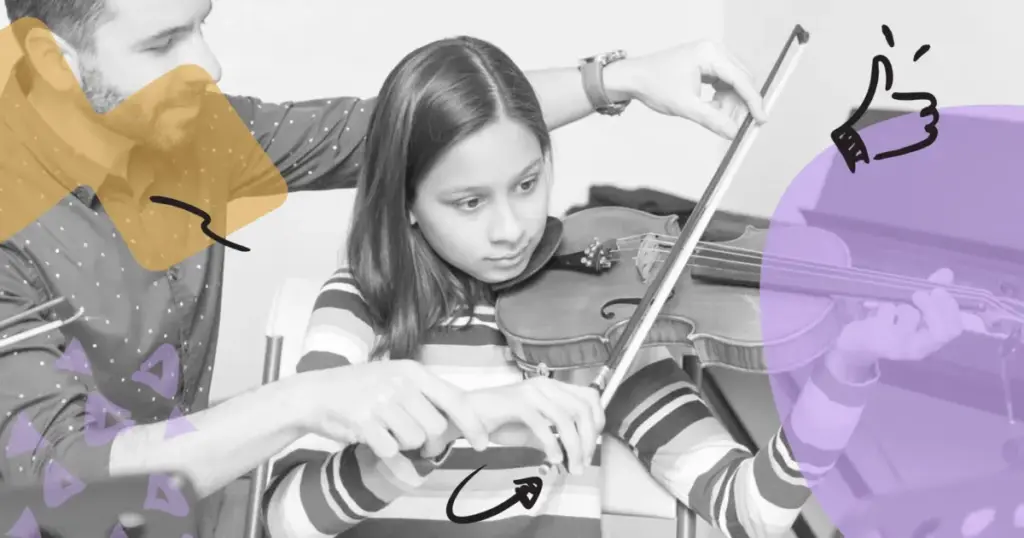
Formerly introduced under the working title "Personal Workshops," the platform’s one-on-one video coaching sessions have been officially branded as private lessons.
Available to all Musician and Pro tier subscribers, these roughly 30-minute video calls connect students directly with experienced music educators. The utility of these sessions is twofold:
- Crisis Intervention: When a student encounters a persistent roadblock—such as a specific time signature, a challenging clef transition, or paralyzing reading anxiety—a 30-minute diagnostic session with a teacher can diagnose the mechanical or psychological root cause and restore forward momentum.
- High-Leverage Optimization: For students whose practice is already moving smoothly, a teacher can act as a strategic advisor. By reviewing the student’s technique and reading habits, the instructor can pinpoint micro-adjustments—such as eye-tracking habits, grouping strategies, or anticipatory scanning—that exponentially accelerate progress.
Curriculum Expansion and Instrument Support
To ensure the platform serves instrumentalists across the board, SightReadingMastery has rolled out several new grade levels. While instrument-specific roadmaps and grade inventories are continuously evolving, the platform maintains real-time public trackers via its dedicated Instruments and Grade Levels portals. These updates ensure that whether a user is a beginner picking up an instrument for the first time or an advanced conservatory-bound student, an appropriately challenging rung on the pedagogical ladder is available.
Modernizing the Pricing Tiers
To align the platform’s external image with its expanded internal value proposition, SightReadingMastery has retired its legacy pricing tier names (Do, Re, Mi). The plans have been rechristened into three clear, intuitive categories:
- Student Plan
- Musician Plan
- Pro Plan
Crucially, company leadership emphasizes that these structural upgrades and name changes have been executed without increasing the base subscription prices. Customers receive exponentially more utility—unlimited reading libraries, advanced grading levels, and access to human coaching infrastructure—at the same baseline cost.
Future Outlook: The Intersection of Software and Artistry
As SightReadingMastery looks toward the horizon, the platform serves as a compelling case study in how niche digital education companies can mature without compromising artistic integrity. In an era dominated by rushed, AI-generated sheet music apps that often violate basic harmonic rules and stymie organic learning, SightReadingMastery’s stubborn adherence to human composition remains its greatest competitive moat.
By coupling this human-crafted musical core with modern software scalability and personalized human mentorship, the company has forged a hybrid model that respects both the science of software delivery and the art of music pedagogy.
For prospective students, returning veterans, and educators alike, the platform’s message is clear: the barriers to musical fluency have officially been lowered. With unlimited practice libraries now unlocked, private mentorship within arm’s reach, and expanded grade levels deployed across the board, the company invites musicians to test the waters through its accessible free trial framework.
As founder Evan R. Murphy aptly notes, mastering sight reading is no walk in the park—but with the right maps, unlimited terrain to explore, and expert guides along the way, the summit of musical independence is closer than ever before.