
By David Salazar
Published by OperaWire
Executive Overview
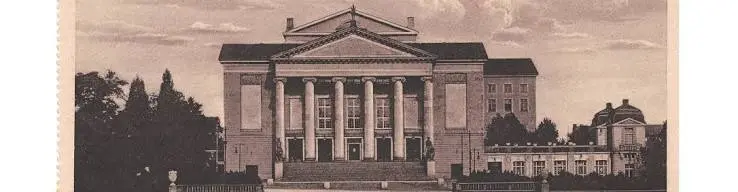
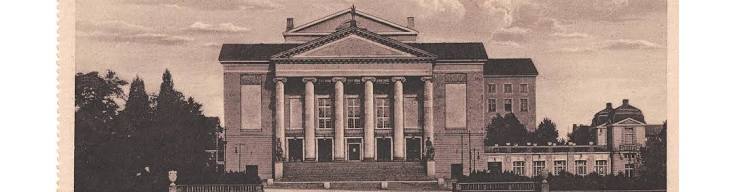
On November 20, 2026, the cultural landscape of Central Europe will bear witness to a theatrical event of profound psychological and political urgency. The Grand Theatre (Teatr Wielki) in Poznań, Poland, will host the world premiere of Art of War / Sztuka wojny, a boundary-pushing contemporary opera that interrogates the chilling intersection of human conflict, mass media, and modern aesthetics. Featuring an original score by composer Maciej Henel-Celis and a libretto by dramatist Beniamin Bukowski, the production is directed and choreographed by Tobiasz Sebastian Berg, an emerging visionary known for dismantling traditional staging conventions.
At its core, Art of War / Sztuka wojny tackles a deeply unsettling premise: the conceptualization of war not merely as a geopolitical failure, but as a contemporary art exhibition. In this stark metaphorical universe, the perpetrator of violence is recast as the "Artist," while War itself assumes the role of the "Curator." Acts of devastation, human displacement, and systemic destruction are meticulously curated and presented to the public as monumental artistic achievements. As the narrative unfolds, the production pulls the audience into a psychological trap, forcing spectators to reckon with their own passive complicity in a globalized system that commodifies violence, transforming bloodshed into spectacles to be consumed, admired, and judged through an aesthetic lens.
Unlike traditional operatic undertakings that rely on historical distance or mythical grandeur, this production is deeply rooted in the raw, bleeding reality of the twenty-first century. The creative team has taken the unprecedented step of embedding the development of the opera within communities directly impacted by active armed conflict. By bridging the gap between Polish and Ukrainian youth, and collaborating directly with veterans and artists in Kyiv, the production team has forged an artistic language born from firsthand trauma, resilience, and the urgent necessity of youth representation in geopolitical discourse.
Set within a claustrophobic, hybrid physical space that mimics a military tent, a high-fashion runway, and an elite contemporary art gallery, Art of War / Sztuka wojny promises to challenge the very parameters of what opera can achieve as an investigative, socio-political medium.
Detailed Chronology of Production & Collaborative Development
The genesis of Art of War / Sztuka wojny is characterized by an extensive, multi-phase developmental process that prioritizes community engagement, ethnographic research, and rigorous cross-border collaboration. Rather than developing the opera behind the closed doors of a traditional European rehearsal room, director Tobiasz Sebastian Berg and his creative collaborators integrated external voices from the project’s inception.
Phase 1: The Polish-Ukrainian Youth Laboratories (2024–2025)
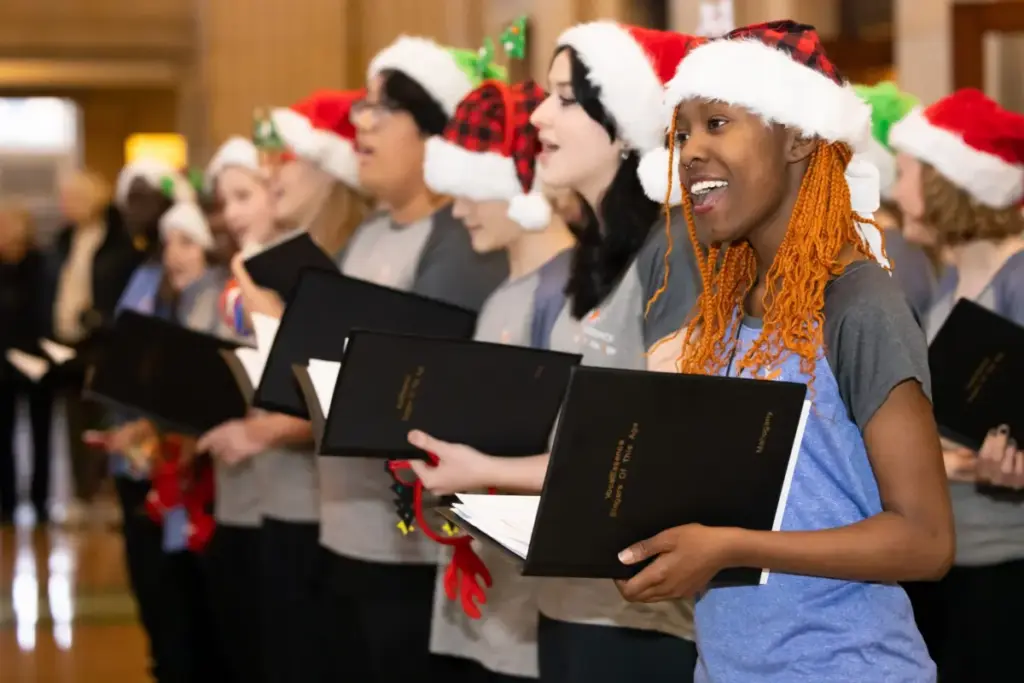
The foundational structural phase of the opera began months prior to the finalization of the score and libretto. The creative team issued an open invitation to 30 young people hailing from both Poland and Ukraine. These participants were brought together for a series of intensive artistic laboratories focused on dramaturgy, physical movement, musical composition, and, most importantly, their personal perceptions of modern warfare.
For these young individuals, war is not a historical abstraction found in textbooks; it is an active, omnipresent reality that dictates their futures, shapes their geopolitical anxieties, and redefines their daily lives. Through facilitated workshops, these participants analyzed how modern media frames conflict—how algorithmic feeds blur the line between entertainment and tragedy, and how digital detachment desensitizes populations to distant suffering. Their direct input fundamentally shaped the narrative architecture and artistic language of the libretto penned by Beniamin Bukowski, ensuring that the voice of the generation destined to live with the consequences of current conflicts forms the emotional core of the work.
Phase 2: Kyiv Fieldwork and Institutional Partnerships (Late 2025 / Early 2026)
To deepen the authenticity of the production, the creative team undertook a critical 10-day research and workshop expedition to Kyiv, Ukraine. Operating amidst the constant backdrop of air-raid sirens and wartime uncertainty, the team engaged in deep-dive documentary research alongside local artists, sociologists, students, and war veterans.
Key collaborations during this period involved members of the Theatre of Veterans in Kyiv—an organization utilizing performance art as a therapeutic and communicative tool for those returning from the front lines—as well as artists and staff from the Kyiv National Operetta. These workshops were designed not to extract trauma for artistic exploitation, but to establish a bidirectional dialogue. Ukrainian veterans and youth shared their lived experiences of the psychological transition from civilian life to combat, and subsequently to post-trauma existence, offering the Polish creative team sobering insights into how violence is experienced when it strips away all aesthetic pretension.
Phase 3: Spatial Design and Rehearsal Integration (Mid-to-Late 2026)
As the production enters its final preparatory stages at the Grand Theatre in Poznań, the focus has shifted to the physical realization of Berg’s staging concept. The spatial design deliberately eschews the traditional proscenium arch configuration. Instead, the audience will be seated on two opposing sides of a narrow, elongated performance space.
This architectural choice is loaded with symbolic weight: the playing area functions simultaneously as a military tent (evoking tactical planning and frontline encampments), a high-end art gallery (representing the detachment of the elite observer), and a runway (signaling the commodification of spectacle and the transient nature of media trends). As the audience faces one another across this liminal corridor, they become mutually visible, transforming the spectatorship into a mirror that reflects their own complicity.
Supporting Context & Metrics: The Intersection of Art, War, and Youth
To fully appreciate the gravity of Art of War / Sztuka wojny, one must examine the socio-cultural and geopolitical metrics that inform its creation. The production arrives at a historical juncture defined by a paradox: never before has humanity had such immediate, high-definition access to the realities of war, yet never before has the public been so psychologically insulated from its true cost.
The Gamification and Aestheticization of Conflict
In the digital age, warfare is increasingly mediated through high-definition drone footage, cinematic social media edits, and curated aesthetic feeds. This technological mediation transforms human suffering into digital content, inviting viewers to "like," share, and critique geopolitical tragedies with the same detached mentality applied to contemporary art exhibitions or fashion shows.
Berg’s concept of the "Artist" as a perpetrator of violence and the "Curator" as War itself directly critiques this phenomenon. It holds a mirror up to a globalized media ecosystem that frames devastation through the lens of performance. By presenting destruction as an "artistic achievement," the opera exposes the chilling rationalizations used by aggressors to justify imperialism and violence under the guise of historical necessity or grand vision.
The Demographic Burden of Modern War
The production’s heavy reliance on youth input is grounded in sobering demographic realities. According to sociological data regarding protracted conflicts in Eastern Europe, the generation aged 15 to 30 bears the psychological, economic, and developmental brunt of geopolitical instability. They face disrupted educations, forced migrations, economic stagnation, and the psychological burden of a fractured continent.
Despite this, youth participation in formal diplomatic and geopolitical discourse remains statistically negligible. By involving 30 young Poles and Ukrainians in the foundational laboratories, the Grand Theatre in Poznań has created a rare institutional bridge, empowering a demographic that is systematically ignored by traditional political institutions to voice their realities through high art.
Official Statements and Artistic Vision
The philosophical backbone of Art of War / Sztuka wojny is articulated most clearly by its director and choreographer, Tobiasz Sebastian Berg. In correspondence with OperaWire, Berg shed light on the primary catalysts driving the production:
"We began with a fundamental question: Why are young people, who will live with the consequences of today’s wars for decades, so rarely invited to participate in public conversations about them?"
This inquiry serves as an indictment of traditional socio-political structures that treat youth as passive inheritors of crisis rather than active stakeholders in peace and memory. Berg’s staging seeks to dismantle this hierarchy by placing the raw, unvarnished perspectives of youth at the center of the operatic canon.
Furthermore, the collaboration between composer Maciej Henel-Celis and librettist Beniamin Bukowski aims to translate these complex socio-political dynamics into a visceral sonic and textual language. Henel-Celis’s score is anticipated to utilize dissonance, industrial soundscapes, and haunting lyrical motifs to mirror the jarring juxtaposition of high culture and brutal reality. Bukowski’s libretto avoids didactic moralizing, opting instead for a satirical yet tragic exploration of power, exhibitionism, and the human capacity to normalize atrocity.
Representatives for the Grand Theatre in Poznań have emphasized that hosting Art of War / Sztuka wojny aligns with the institution’s mission to serve not merely as a museum for nineteenth-century masterworks, but as a vibrant, critical forum for contemporary social discourse. By investing in risky, politically engaged contemporary opera, the theatre positions itself at the vanguard of European cultural institutions daring to confront the crises of our time.
Future Outlook and Legacy
As the premiere date of November 20, 2026, approaches, anticipation within the international opera community continues to mount. Art of War / Sztuka wojny is poised to spark intense debate among critics, musicologists, and political commentators alike.
Its legacy will likely be measured on multiple fronts. Artistically, it tests the limits of how contemporary opera can integrate ethnographic fieldwork and community-engaged devised theatre into a traditional institutional framework. Sociopolitically, it offers a searing critique of the mechanisms through which modern societies consume violence, challenging audiences to look beyond the curated frames of media and art.
In an era where geopolitical tensions threaten to normalize endless conflict, Art of War / Sztuka wojny reminds us of the profound ethical responsibilities carried by artists, creators, and audiences. By transforming the opera house into a space of uncomfortable reckoning, the creative team ensures that the voices of those bearing the true cost of war are neither silenced nor aestheticized out of existence, but projected with unmistakable, resonant force.