
As part of Playbill’s annual Back to School week, the theater community turns its attention away from the footlights and toward the drafting tables, rehearsal rooms, and composition desks that power the Great White Way. The newly released higher education report maps out the creative DNA of the 2025–2026 Broadway season, identifying the colleges, conservatories, and universities that have graduated the highest volume of behind-the-scenes talent working on Broadway.
For the purposes of this definitive ranking, the scope of "creatives" is meticulously defined. The data captures alumni working as directors, scenic and costume designers, lighting and projection designers, sound designers, choreographers, music directors, book writers, composers, lyricists, playwrights, and production stage managers. The analyzed window spans April 28, 2025, through April 26, 2026, directly aligning with the Tony Award eligibility period for the theatrical season. Personnel contributing to productions opening after April 27, 2026, will be rolled into next year’s tracking data.
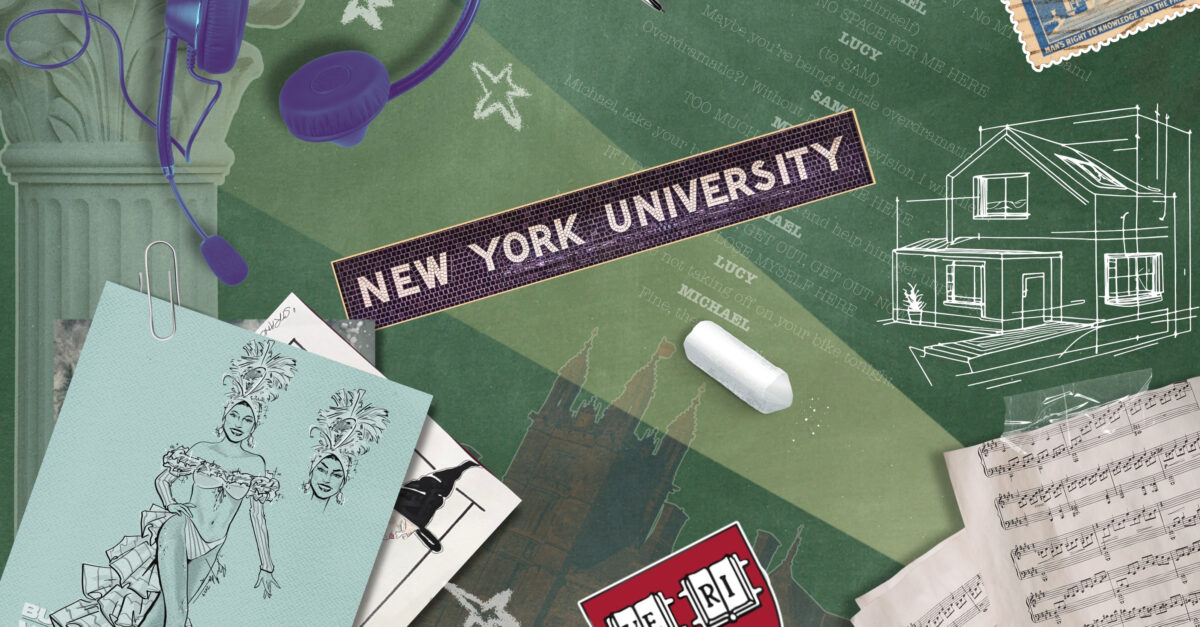
Unlike the traditional performer rankings—which often lean heavily toward a handful of elite musical theater training programs—the creative personnel roster reveals a vast, intricate web of institutions. Because the theatrical design, writing, and directing sectors feature significant ties and cross-disciplinary collaborations, the creative list has been structured to accurately reflect the sheer breadth of schools that feed the American theater ecosystem. Sourced from public records, institution databases, Playbill archives, and professional resumes, this year’s report underscores how higher education continues to shape the aesthetic, sonic, and structural landscape of modern Broadway.
Detailed Chronology & Institutional Rankings
The 2025–2026 academic rankings illustrate a powerful concentration of talent emerging from both massive urban research universities and specialized arts conservatories. Below is the comprehensive breakdown of the top-performing institutions, detailing the alumni shaping the current Broadway season.

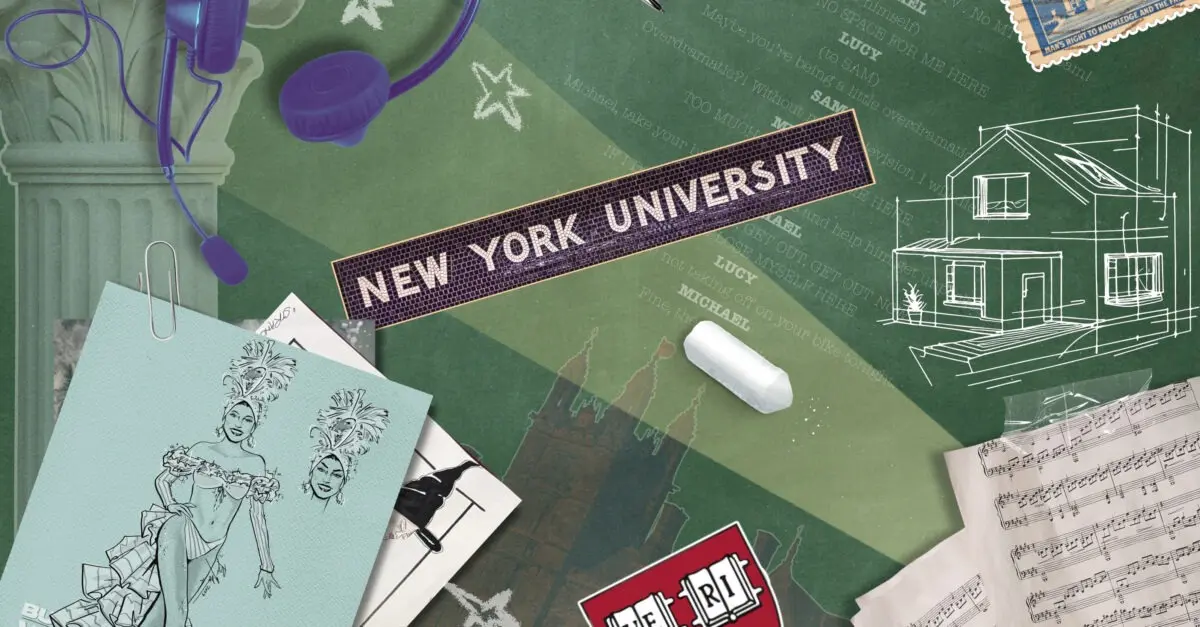
1. New York University (NYU)
Claiming the top spot with an unmatched density of representation, New York University anchors the modern Broadway design and writing community. Its alumni list spans every facet of production, bridging traditional dramatic structures with contemporary spectacle.
- Brenda Abbandandolo (Costume Design: Dog Day Afternoon, Good Night and Good Luck)
- Will Aronson (Music-Book-Orchestrations: Maybe Happy Ending)
- Gregg Barnes (Costume Design: Aladdin, BOOP! The Musical)
- Chad Beguelin (Book: Aladdin)
- David Bengali (Projection Design: Beaches: A New Musical, Good Night and Good Luck)
- Robert Billig (Musical Director: Chicago)
- Beowulf Boritt (Scenic Design: Smash)
- Amith Chandrashaker (Lighting Design: Purpose)
- Sarah Cimino (Makeup Design: Marjorie Prime, Moulin Rouge! The Musical)
- Ben Cohn (Music Director: Wicked)
- Jane Cox (Lighting Design: The Rocky Horror Show)
- Stacey Derosier (Lighting Design: Becky Shaw, Joe Turner’s Come and Gone, The Last Five Years)
- Kristoffer Diaz (Book: Hell’s Kitchen)
- Fred Ebb (Lyrics: Cabaret, Chicago)
- Lindsey Ferrentino (Playwright: The Fear of 13, The Queen of Versailles)
- Rupert Goold (Director: Dog Day Afternoon)
- Winnie Holzman (Book: Wicked)
- Allen Lee Hughes (Lighting Design: The Balusters)
- Samuel D. Hunter (Playwright: Little Bear Ridge Road)
- Branden Jacobs-Jenkins (Playwright: Purpose)
- Lee Jellinek (Scenic Design: Marjorie Prime)
- Christine Jones (Set Design: Harry Potter and the Cursed Child)
- Cookie Jordan (Hair & Wig Design: The Queen of Versailles)
- Bradley King (Lighting Design: Hadestown)
- Kris Kukul (Orchestrations: The Rocky Horror Show)
- Justin Levine (Orchestrations: Moulin Rouge! The Musical, The Outsiders)
- Lisa Loomer (Book: Real Women Have Curves)
- Arnulfo Maldonado (Scenic Design: The Fear of 13, Buena Vista Social Club, Dead Outlaw, Real Women Have Curves)
- Nikiya Mathis (Hair Design: The Balusters, Liberation, Cats: The Jellicle Ball, Purpose)
- Michael Mayer (Director: Chess)
- Elaine J. McCarthy (Projection Design: Wicked)
- Alan Menken (Music: Aladdin)
- Itamar Moses (Book: Dead Outlaw)
- Jessica Pabst (Costume Design: Little Bear Ridge Road)
- Hue Park (Book-Lyrics: Maybe Happy Ending)
- Michael J. Passaro (Production Stage Manager: Giant)
- Marco Pennette (Book: Death Becomes Her)
- Sam Pinkleton (Director: The Rocky Horror Show, Oh Mary!)
- Marco Ramirez (Book: Buena Vista Social Club)
- Clint Ramos (Costume Design: Maybe Happy Ending)
- David West Read (Book: & Juliet)
- George Reeve (Projection Design: Maybe Happy Ending, Stephen Sondheim’s Old Friends)
- Dan Moses Schreier (Sound Design: The Balusters)
- Cha See (Lighting Design: Liberation, Oh Mary!)
- Nevin Steinberg (Sound Design: Hadestown, Hamilton)
- Rachel Sterner (Production Stage Manager: Death Becomes Her, Harry Potter and the Cursed Child)
- Matt Stine (Orchestrations: Moulin Rouge! The Musical)
- Ani Taj (Choreography: The Rocky Horror Show, Dead Outlaw)
- Paul Tazewell (Costume Design: Joe Turner’s Come and Gone, Death Becomes Her, Hamilton, MJ The Musical)
- Stuart Thompson (Book: The Book of Mormon)
- Howard Tilkin (Production Stage Manager: Call Me Izzy)
- Nathan Tysen (Lyrics: The Great Gatsby)
- Brian Usifer (Orchestrations: Chess)
- Kaye Voyce (Costume Design: Becky Shaw)
- Sebastian J. Weber (Wig Design: Titanique)
- Teresa L. Williams (Scenic Design: Proof)
- George C. Wolfe (Director: Gypsy)
- Lauren Yalango-Grant (Choreography: The Lost Boys, The Queen of Versailles)
- Joshua Zecher-Ross (Music Director: Operation Mincemeat)
- David Zinn (Set Design: Liberation, Becky Shaw, The Last Five Years)
- dots (Santiago Orjuela-Laverde, Andrew Moerdyk, Kimie Nishikawa) (Set Design: The Rocky Horror Show, Oh Mary!)
2. Yale University
Renowned for its rigorous graduate programs in design, playwriting, and directing, Yale secures the second spot with a roster of visionaries who command the visual and aural architectures of major Broadway plays and musicals.

- Narda Alcorn, Dede Ayite, John Lee Beatty, Brittany Bland, Tom Broecker, Linda Cho, Trip Cullman, Rick Elice, Lindsey Ferrentino, Adam Guettel, Kai Harada, Palmer Hefferan, Susan Hilferty, Takeshi Kata, Daniel Kluger, Tina Landau, Eugene Lee, William Ivey Long, Robert Lopez, Santo Loquasto, Mikiko Suzuki MacAdams, Derek McLane, Itamar Moses, Lynn Nottage, Scott Pask, Cinco Paul, Andrew Resnick, Todd Rosenthal, Caroline Shaw, Mikaal Sulaiman, Alex Timbers, Ken Travis, Hannah Wasileski, Bess Wohl, Catherine Zuber.
3. Harvard University
Harvard’s footprint on the 2025–2026 season highlights a powerful convergence of literary minds, innovative composers, and technical stage management:
- Will Aronson, Nell Benjamin, Haley Bennett, T.S. Eliot, Rick Kuperman, Tina Landau, Grace Laubacher, Derek McLane, Hue Park, Bill Rauch, Scott Rowen, Nevin Steinberg, Bess Wohl.
4–7. Institutional Tiers (Tie Group)
Carnegie Mellon University
As one of the pioneering conservatory programs in American theater, CMU maintains an enduring presence among Broadway’s technical and artistic elite:

- Meghann Zervoulis Bate, Iris Rainer Dart, Peggy Eisenhauer, Chris Hoch, David Hornsby, Peter Hylenski, Eugene Lee, Ryan Park, Ann Roth, Stephen Schwartz, Thom Thomas.
Columbia University
Breeding ground for groundbreaking dramatists, lyricists, and orchestrators, Columbia continues to shape the intellectual core of musical theater:
- Saheem Ali, Fred Ebb, John Kander, Tom Kitt, Katie Kresek, Sarna Lapine, Clarissa Marie Ligon, Terrence McNally, Sid Ramin, Dan Moses Schreier, Benjamin Velez.
The Juilliard School
Representing the apex of conservatory training, Juilliard alums command the theatrical writing and choreographic disciplines:

- David Auburn, Kris Bowers, Bryan Carter, Branden Jacobs-Jenkins, Lorin Latarro, David Lindsay-Abaire, Lonny Price, Marco Ramirez, David West Read, Michael Thurber, Jonathan Tunick.
University of North Carolina School of the Arts (UNCSA)
UNCSA dominates the specialized technical arts, particularly in stage management, wig and makeup design, and costume architecture:
- Peyton Taylor Becker, Camille A. Brown, Matt Cowart, Joe Mantello, Johnny Milani, Karen Moore, Liz Printz, Loren Skora, Barclay Stiff, Paul Tazewell, Victoria Tinsman.
8–9. Institutional Tiers (Tie Group)
Boston University
BU’s contributions span scenic innovation, meticulous projection design, and expert stage operations:

- Howard Ashman, Paul Tate dePoo III, Drew Levy, Gregory T. Livoti, James Noone, Jillian M. Oliver, Benjamin Pearcy, David Israel Reynoso, Walter Trarbach.
Northwestern University
Northwestern continues its legacy as a formidable engine for musical theater writing, choreography, and direction:
- Nancy Renée Braun, Tracy Christensen, Elizabeth Doran, Sara Gammage, Michael Greif, John Logan, Stefan Musch, Marco Paguia, Whitney White.
10. SUNY Purchase
Rounding out the top ten, SUNY Purchase punches well above its weight class with a powerhouse contingent of lighting designers and production stage managers:

- Lisa Dawn Cave, David Gallo, Brian MacDevitt, David Neumann, Kenneth Posner, Jen Schriever, Thom Widmann, Michael P. Zaleski.
Supporting Context & Methodological Metrics
The compilation of this year’s data required a rigorous cross-referencing protocol. Unlike actors, who are typically visible on stage and whose credits can be easily tracked via playbills, creative team members often operate across multiple overlapping regional, Off-Broadway, and Broadway engagements.
- The Tony Eligibility Window: Restricting the survey to the April 28, 2025–April 26, 2026 window ensures that the data reflects active, current employment on Broadway rather than historical or legacy credits. Shows that entered previews or officially opened outside this timeframe were excluded to maintain absolute parity with Tony Administration Committee guidelines.
- Multi-Disciplinary Overlap: A striking takeaway from the data is the high frequency of dual-threat or multi-hyphenate artists. Creators such as Lindsey Ferrentino, Itamar Moses, Tina Landau, and Paul Tazewell appear across multiple institutions or multiple production roles, demonstrating how cross-training in universities fosters versatile theater-makers who can pivot between writing, directing, and physical design.
- The Rise of Technical Specialties: While traditional liberal arts institutions like Harvard and Columbia produce high volumes of book writers, lyricists, and directors, specialized conservatories like UNCSA and SUNY Purchase supply the structural backbone of Broadway production management, lighting, and wig/hair design. Without these graduates, the physical realization of modern technical blockbusters (Wicked, Hamilton, Moulin Rouge!) would be impossible.
Honorable Mentions
Several institutions narrowly missed the top ten cutoff but boast remarkable concentrations of elite Broadway creatives whose work defines the current season:

- Berklee College of Music: Nicholas James Connell, Alex Lacamoire, Cian McCarthy, Mike Morris, Stephen Oremus, and The Rescues (Kyler England, Rob Giles, Adrianne "AG" Gonzalez).
- University of California San Diego (UCSD): Erin Gioia Albrecht, Robert Brill, Michael Greif, Kamra A. Jacobs, Anne Kauffman, Paloma Young.
- Brown University: John Lee Beatty, Gina Gionfriddo, Jordan Harrison, Lee Jellinek, Lynn Nottage, Whitney White, David Yazbek.
- Duke University: Rob Fisher, John Gromada, Michael Kosarin, Jennifer Marik, Danya Taymor.
- Ithaca College: Ben Cohn, David Hyslop, Takeshi Kata, Pelle Melio, Ben Truppin-Brown.
- Oberlin College: Rob Bowman, John Kander, Natasha Katz, Charlie Rosen, Julie Taymor.
Future Outlook
As the American theater landscape continues to evolve in the wake of economic shifts, technological integration (such as advanced projection and sound design), and shifting audience demographics, the pipeline between higher education and Broadway is changing. Universities are increasingly breaking down silos between traditional liberal arts training and conservatory-style technical education.
The dominance of institutions like NYU and Yale demonstrates that access to major metropolitan arts hubs remains a significant catalyst for professional theatrical careers. However, the strong showings from regional conservatories and mid-sized liberal arts colleges prove that world-class theatrical craftsmanship can originate anywhere. As next season approaches—bringing with it new productions, experimental stagings, and fresh generations of theater-makers—the academic institutions tracked in this report will undoubtedly remain the foundational breeding grounds for the future of the American stage.