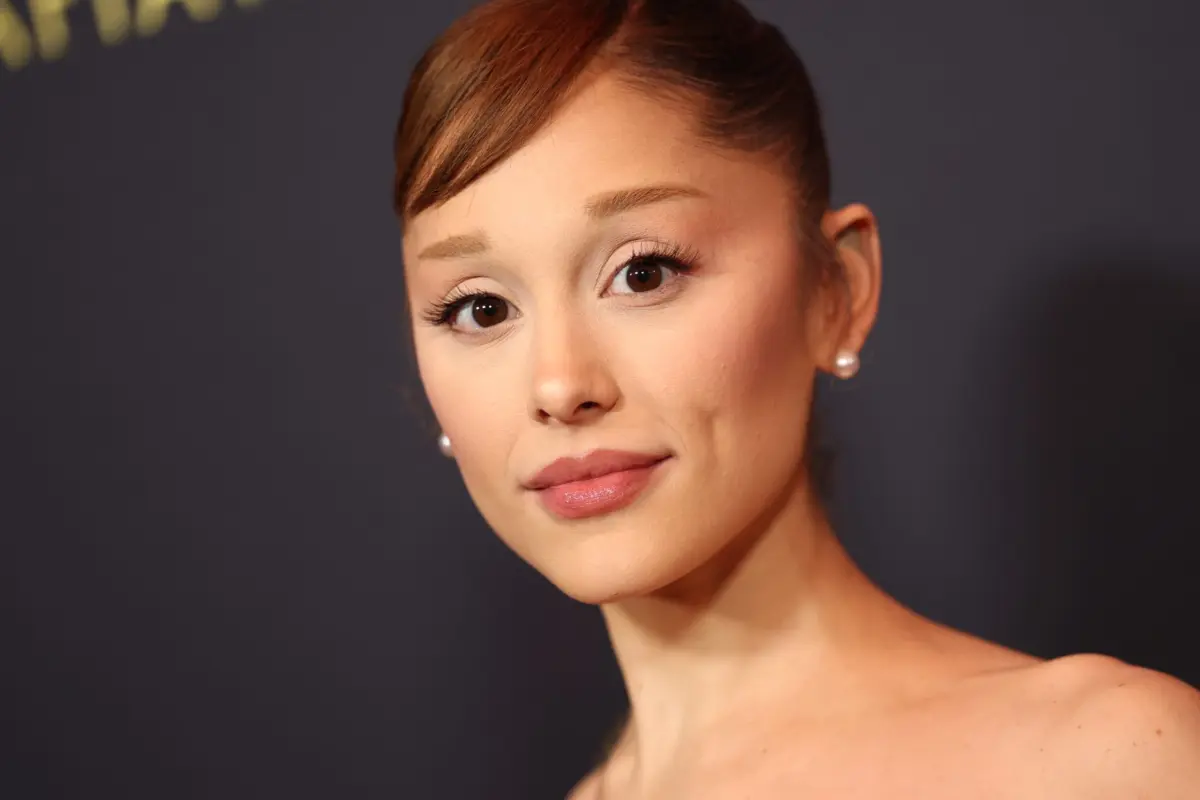

The intersection of modern pop culture and partisan American politics has once again produced a high-profile collision. Pop superstar Ariana Grande has issued a swift and uncompromising rebuke of the Donald Trump presidential campaign following its unauthorized utilization of her 2024 chart-topping single, “We Can’t Be Friends (Wait for Your Love).” The dispute, which flared up on TikTok, marks the second major instance in a matter of months where the multi-Grammy-winning artist has found herself at odds with the Trump administration over the co-optation of her intellectual property for political messaging.
The latest controversy underscores a mounting tension between major recording artists and political campaigns regarding digital copyright, fair use, and the weaponization of commercial art for ideological causes. For Grande, a 33-year-old powerhouse whose cultural footprint extends far beyond the confines of the Billboard charts into active socio-political advocacy, the unauthorized TikTok post was not merely a copyright infraction—it was an ideological assault. By pairing her introspective, melancholic hit with hardline conservative talking points regarding transgender athletes and women’s sports, the campaign triggered an immediate escalation that reverberated across social media platforms, mobilizing her dedicated fan base—known as Arianators—and drawing sharp lines in the sand ahead of an increasingly polarized political cycle.
This comprehensive report examines the genesis of the TikTok post, the specific lyrics and political rhetoric deployed by the campaign, Grande’s direct public retaliation, her history of friction with the current administration over immigration enforcement, and the broader commercial and cultural context surrounding her recent artistic triumphs, including her record-shattering seventh number-one album, petal.
Detailed Chronology of the TikTok Incident
The digital confrontation erupted on Thursday, August 20, when the official TikTok account operated by the Trump campaign—commonly known as "Team Trump"—published a short-form video designed to capture algorithmic traction and generate political discourse.
The video opens with footage of Donald Trump striding purposefully toward a podium at a high-profile speaking engagement, an aesthetic designed to project authority and determination. To maximize emotional resonance and capture the attention of younger demographics scrolling through the platform, the campaign selected an audio snippet from Ariana Grande’s critically acclaimed 2024 single, “We Can’t Be Friends (Wait for Your Love),” a track originating from her acclaimed Eternal Sunshine era.
Specifically, the campaign’s video utilized the haunting opening lines of the chorus: "Me and my truth we sit in silence."
However, the juxtaposition of Grande’s vulnerable, synth-pop meditation on heartbreak and detachment with the campaign’s hyper-partisan agenda quickly shifted the video’s tone. Superimposed on the screen and expanded within the video’s caption was a direct policy stance regarding gender identity and competitive athletics. The post read: "Men can’t have babies and should never compete in women’s sports. This shouldn’t be controversial! #trump #arianagrande #maga."
Within hours, the video had amassed hundreds of thousands of views, drawing mixed reactions from TikTok users. While conservative accounts rallied around the rhetoric, Grande’s fanbase immediately recognized the unauthorized use of her audio. Fans flooded the comment section to alert the pop star, with one widely circulated comment reading: "Does Ariana know he’s using her song AGAIN?"
The alert did not go unanswered. Within a short window of the video’s publication, Grande herself intervened directly in the comment section of the Team Trump post. Cutting through the digital noise with surgical precision, she wrote:
"Never use my music again. Also, your truth is false."
The concise yet devastating rebuke instantly became the top-liked comment on the post, garnering tens of thousands of affirmations from her supporters and transforming the campaign’s promotional tool into a public relations disaster regarding intellectual property rights.
Supporting Context & Metrics: A History of Contentious Deployments
This late-August clash is far from an isolated incident; rather, it represents the latest chapter in a running battle between Ariana Grande and the Trump administration over the political misappropriation of her catalog.
Just two months prior, in June, Grande publicly condemned the Trump administration following an immigration-focused TikTok clip released by U.S. Immigration and Customs Enforcement (ICE). That video utilized her 2024 upbeat track “Bye.” At the time, Grande did not mince words, commenting on the post:

"Please do not ever use my music in relation to this barbaric, inhumane, heinous nonsense. F— ICE."
The June incident galvanized a coalition of prominent pop artists who have increasingly used their platforms to challenge federal immigration policies and executive agency messaging. Grande’s peers—including Olivia Rodrigo, Billie Eilish, and Sabrina Carpenter—have all similarly condemned the deployment of ICE and the administration’s broader domestic enforcement strategies.
Grande’s opposition to the current administration’s platform is not merely rhetorical; it has manifested in high-profile public demonstrations. Most notably, the 33-year-old singer made headlines at the 2026 Golden Globes by prominently wearing an “ICE Out” lapel pin, cementing her status as an active and vocal participant in the progressive anti-detention movement.
From a legal and copyright perspective, the unauthorized use of commercial music by political campaigns presents a persistent gray area in American jurisprudence. While campaigns frequently attempt to claim "fair use" or rely on blanket performance licenses secured by venues (such as ASCAP and BMI political campaign licenses), the digital realm—particularly TikTok, where custom audio uploads and direct sound-stitching are common—frequently circumvents traditional licensing structures. Furthermore, artists retain the moral right and statutory pathways under right-of-publicity laws and the Lanham Act to challenge unauthorized associations that falsely imply endorsement. By directly demanding the removal of her music and refuting the campaign’s premise, Grande utilized the most potent tool available to a modern celebrity: direct-to-consumer digital counter-messaging.
Official Statements and Industry Reactions
As the fallout from the TikTok deployment continued to spread across social media, legal experts, music industry analysts, and political commentators weighed in on the implications of the feud.
Representatives for Ariana Grande have not yet issued a formal, long-form press release regarding the incident, relying instead on the undeniable clarity of the artist’s direct digital intervention. However, music law specialists note that Grande’s public comment serves as an official notice of revocation of any implied license to use her sound recording or composition for political campaigning.
Conversely, representatives for the Trump campaign have historically defended the use of popular music at rallies and in digital media by asserting that public venues and digital distribution platforms operate under overarching public performance rights. Yet, unlike physical rallies where background music plays over a public address system, targeted TikTok videos created by political action committees often invite heightened scrutiny from copyright holders who fiercely protect their brand equity from partisan entanglements.
Industry insiders point out that pop superstars of Grande’s magnitude—whose demographic base skews heavily progressive, young, and socially liberal—face significant brand dilution risks when their art is co-opted by figures representing diametrically opposed political ideologies. By reacting swiftly and forcefully, Grande effectively insulated herself from fan backlash, reassuring her audience that her artistic output does not condone or support the administration’s policy positions.
Future Outlook: Art, Advocacy, and the Digital Battlefield
As Ariana Grande navigates the zenith of her professional career—fresh off the July release of her blockbuster seventh studio album, petal, which debuted at No. 1 on the Billboard 200 with an astounding 295,000 equivalent album units earned in the United States—her cultural and commercial capital has never been higher.
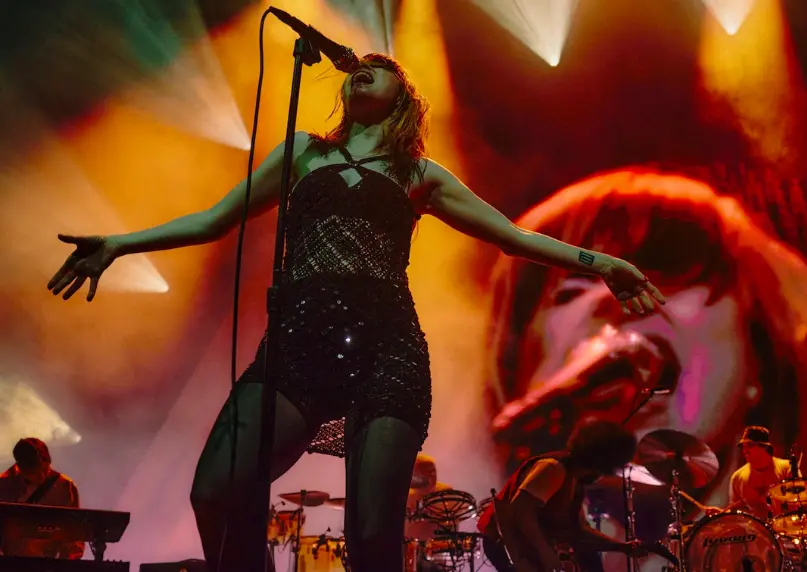
Currently immersed in a grueling, high-demand 10-show residency at London’s iconic O2 Arena as part of her expansive Eternal Sunshine Tour, Grande continues to balance massive global commercial obligations with unyielding personal convictions.
The August 20 TikTok confrontation highlights a permanent paradigm shift in modern media: the collapsing boundary between entertainment and statecraft. As political campaigns increasingly turn to short-form video platforms like TikTok to bypass traditional media filters and court younger voters, artists find themselves thrust onto the front lines of the digital culture war.
For Grande, the strategy moving forward is clear: zero tolerance for political co-optation. As campaigns continue to mine popular culture for algorithmic velocity, artists with the global reach and fearlessness of Ariana Grande are proving that creative works cannot be weaponized without swift, public, and damaging repercussions. Whether the Trump campaign will heed her warning and strip the audio from its digital archives remains to be seen, but one reality is immutable—when it comes to her art and her truth, Ariana Grande will not sit in silence.