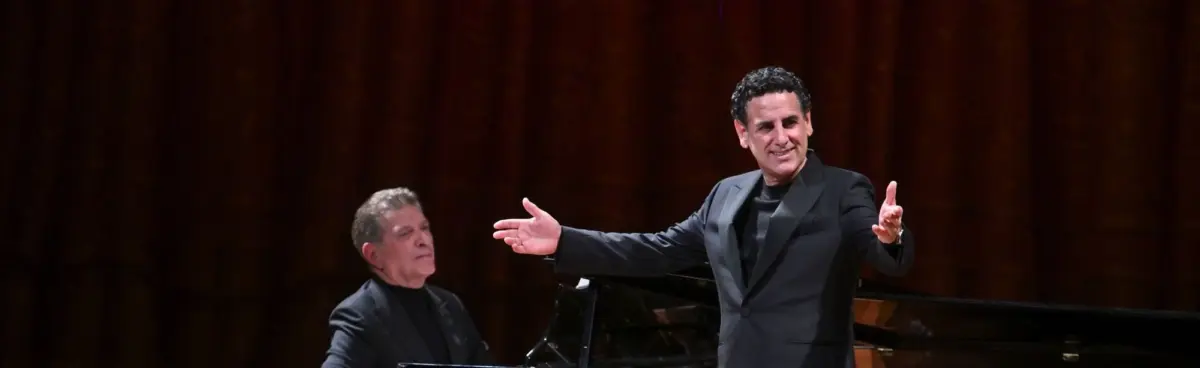

Renowned lyric tenor Juan Diego Flórez recently commanded the stage of the legendary Teatro Colón, delivering a masterclass in vocal artistry, stagecraft, and emotive performance. Accompanied by the distinguished collaborative pianist Vincenzo Scalera—who coincidentally was celebrating his birthday—Flórez placed the legendary opera house under an undeniable spell from the very moment he stepped into the light. Despite his illustrious global career, this landmark performance marked a historic milestone: Flórez had never before performed a full role at the famed Argentine institution.
Now comfortably navigating his middle-age years, the Peruvian-born tenor defied conventional vocal aging timelines. He remains at the absolute peak of his powers, exhibiting a lyric tenor characterized by astonishing clarity, razor-sharp focus, and a newfound dramatic punch. His command of a musical phrase is second to none, and his stage presence is nothing short of immense.
While the formal concert program—judged strictly on paper—offered a somewhat unorthodox sequence of repertoire, the execution transformed structural quirks into a compelling study of vocal versatility. Spanning a rigorous arc from Mozart and bel canto masterworks to Spanish Zarzuela, French opera, and unexpected Italian detours, the evening ultimately transcended traditional recital boundaries. Culminating in an electrifying, guitar-wielding encore marathon that lasted long past the printed schedule, Flórez reaffirmed his status as one of the preeminent vocal artists of the 21st century.
Detailed Chronology: A Night of Bel Canto, Zarzuela, and Surprises
Part I: The Bel Canto Foundation and Italian Mastery
Flórez opened the evening with a bold and somewhat surprising choice: Mozart’s concert aria, “Misero! O sogno… Aura che intorno spiri.” Rather than easing gently into the recital, the tenor attacked the opening recitatives with tremendous forcefulness, allowing his voice to rapidly warm up within the vast acoustic space of the Teatro Colón before unfurling glorious legato lines. This piece effectively served as a programmatic statement of intent for the rest of the evening, showcasing the full spectrum of his vocal agility. The demanding, high-intensity climax was rendered with unwavering drive and theatrical focus.
Transitioning directly into the bel canto core of the first half, Flórez explored several Rossini songs from Péchés de vieillesse, notably “La Lontananza” and “L’esule.” Here, the tenor scaled back the thunderous volume utilized at the close of the Mozart aria, demonstrating spotless breath control and aristocratic phrasing. The Rossini segment culminated with “La speranza più soave” from Semiramide. While the first section featured characteristic fluidity and brightness of tone, the subsequent “Sì, sperar voglio contento” revealed a tenor who must now carefully negotiate tempos for clarity of execution. Having largely transitioned into heavier theatrical repertoire in recent years, Flórez’s coloratura execution has naturally slowed, leading to a slightly more deliberate, rallentando-heavy approach. Nonetheless, execution remained masterful, anchored by high notes that have lost none of their legendary luster—in fact, they have gained a thrilling, laser-precise resonance.
Providing a welcome respite for the singer, collaborative pianist Vincenzo Scalera took center stage to perform “Une caresse à ma femme.” Built upon a delicate, rising three-note motif, Scalera’s articulation was a masterclass in subtlety. By micro-phrasing and subtly stressing the final note of the motif, he delivered one of the most arresting instrumental moments of the night.
Flórez then returned to scale two of his most triumphant vocal summits of the evening. First came the iconic “Una furtiva lagrima” from Donizetti’s L’elisir d’amore, universally recognized as a pinnacle of the performance. Every phrase was meticulously chiseled. Flórez expertly differentiated between the delicate crescendo on the dotted half-note E (“cercando io vo”) leading into “M’ama!” and the subsequent, soaring climatic high note that shifts the musical key into A major. The cadenza runs sparkled with pristine clarity, while the final “Sì può morir” featured a breathtaking contrast, concluding on an impassioned yet tender mezza di voce that sent shockwaves of adoration through the audience.
To close the first half, Flórez tackled an excerpt from Donizetti’s Roberto Devereux (“Ed ancor la tremenda porta… Come uno spirto angelico… Bagnato il sen di lacrime”). Where his Nemorino was characterized by fragile grace, his portrayal of Devereux was resolute, resonant, and remarkably potent.
Part II: The Thematic Detour through Spain, France, and Verdi
The second half of the recital proved structurally adventurous, shifting abruptly from Italian masterworks to a curated mosaic of Spanish Zarzuela and French opera, before making a curious detour back to Italy.
The sequence opened with “Bella enamorada” from Soutullo and Vert’s El último romántico. While Flórez maintained a degree of classical restraint during the first half, here he granted himself interpretive freedom, luxuriating in broader rubato and richly varied vocal colors. This was immediately followed by “Suena, guitarrico mío” from Pérez Soriano’s El guitarrico, an impassioned plea to a lover. Flórez weaponized a series of text-based anaphoras (“Dile que…”), utilizing exquisite diminuendos before bursting into robust crescendos on the concluding lines. The effect was as surprising as it was thrilling. He rounded out the Spanish segment with the bouncy, graceful energy of “Aquí está quien lo tiene tó.”
Scalera returned for a brief instrumental interlude, showcasing his virtuosic glissandos in Ernesto Lecuona’s Mazurka Glissando, injecting sophisticated humor without distorting the underlying tempo.
Flórez then ventured into French repertoire, beginning with “Vainement, ma bien-aimée” from Lalo’s Le roi d’Ys, sung with a warm, honeyed sweetness. This served as the direct precursor to his second major vocal climax of the night: “Ah, lève-toi, soleil!” from Gounod’s Roméo et Juliette. Flórez approached the legendary tenor showpiece with immense rhythmic drive. Eschewing the traditional, prolonged elongation of the two “Ah! lève-toi!” phrases preceding the high B-flat, he injected an urgent, propulsive rhythm. The final ascent to the high B-flat was sustained with generous power and a brilliant tonal core, triggering another massive wave of audience adulation.
Following another delicate piano interlude—Godard’s Berceuse de Jocelyn, delivered with crystalline finesse by Scalera—the formal program concluded with an unexpected choice: “Ah, sì, ch’io senta ancor… ch’io respire” from Verdi’s Il corsaro. While hearing Verdi sung by Flórez is always a privilege, the placement and execution raised questions. Serving as the final item of the printed program, the aria lacked the narrative weight required for a grand conclusion, and the omission of a full repeat severely truncated the cabaletta. Although Flórez sang the music with technical brilliance, the piece felt jarringly out of place following a sustained journey through Spanish and French soundscapes.
Part III: The Encore Marathon
Any initial programmatic quibbles, however, were instantly obliterated by the ensuing encore sequence. Returning to the stage bearing his acoustic guitar, Flórez transformed from a formal classical recitalist into an intimate troubadour.
Sensing the energy of the Buenos Aires audience, he opened his impromptu second recital with Carlos Gardel’s immortal tango, “El día que me quieras.” The phrasing here shifted from theatrical grandeur to conversational intimacy. Every note was caressed with a tender, unhurried precision, the acoustic guitar providing a warm, rhythmic cushion.
Ignoring competing audience shouts for various favorites, Flórez transitioned smoothly into Chabuca Granda’s “La flor de la canela,” followed by “Zamba de mi esperanza”—a deeply personal selection dedicated to his mother, who had sung it to him during his childhood. Without pausing, he segued into the heavily requested “Cucurrucucú paloma.” Demonstrating breathtaking breath control, Flórez executed a miraculous, sustained high note in a delicate pianissississimo falsetto, holding the tone indefinitely against a softly vamping guitar while the audience erupted in preemptive ecstasy.
The surprises did not end there. Flórez invited Scalera back to the piano, announcing to the house that his longtime collaborator was celebrating a birthday. The entire Teatro Colón spontaneously united to belt out a rousing rendition of “Que lo cumpla feliz” (Happy Birthday). As a tribute, Flórez performed Leoncavallo’s “Mattinata,” brilliantly stepping upstage at the climax to cede the visual and artistic spotlight directly to Scalera.
Finally, as the clock ticked past 10:30 p.m.—far exceeding the scheduled 9:50 p.m. finish time—the house lights flickered on and patrons began moving toward the exits. Undeterred, Flórez returned for one final offering: “Amapola.” Singing with effortless grace, his golden tone effectively halted the departing crowds in their tracks, tempting many to turn around and retake their seats.
Supporting Context & Metrics
- Venue Significance: Teatro Colón, Buenos Aires—globally celebrated for its peerless acoustics and historic architectural grandeur.
- Historical Milestone: This engagement marked Juan Diego Flórez’s debut performing a complete, formal program on the Teatro Colón stage, despite decades at the apex of international opera.
- Collaborative Partnership: Vincenzo Scalera, veteran collaborative pianist, marked his birthday on stage alongside Flórez, underscoring a professional partnership spanning decades.
- Performance Duration: The concert commenced at 8:00 p.m. and, driven by an extensive, crowd-pleasing encore catalog, stretched past 10:30 p.m., significantly exceeding the printed run time.
- Repertoire Span: The evening traversed four distinct musical traditions: Mozartian concert arias, 19th-century Italian bel canto (Rossini, Donizetti, Verdi), Spanish Zarzuela, and French romantic opera (Lalo, Gounod), alongside South American folk traditions during the guitar encores.
Official Statements & Critical Reception
While institutional press releases prior to the event focused primarily on the historic nature of Flórez’s Teatro Colón debut, critical and public consensus following the final curtain centered on the tenor’s astonishing vocal longevity.
Musicologists and local critics noted that while Flórez has strategically expanded his repertoire into heavier dramatic territory—inevitably impacting the blistering, breakneck velocity of his signature Rossinian coloratura—his vocal core has actually thickened and acquired a more authoritative middle-register weight.
Furthermore, the palpable chemistry between Flórez and Vincenzo Scalera received universal acclaim. Observers noted that Scalera’s nuanced, highly articulate solo interludes (“Une caresse à ma femme” and “Mazurka Glissando”) functioned not merely as breathing spaces for the singer, but as structural pillars that elevated the entire recital into a true collaborative dialogue.
Future Outlook
Juan Diego Flórez’s triumphant debut at the Teatro Colón establishes a powerful precedent for his future engagements across South America and international concert halls. As he gracefully navigates this mature chapter of his illustrious career, Flórez has demonstrated a masterclass in vocal preservation and artistic evolution.
By successfully bridging the gap between hyper-technical bel canto acrobatics, heavier romantic idioms, and vernacular folk traditions, the Peruvian tenor has proven that his artistic currency lies not merely in physical vocal agility, but in deep interpretive maturity, commanding stage presence, and an authentic, magnetic connection with his audience. As opera houses globally continue to seek out artists who can anchor both major theatrical stagings and intimate recital formats, Flórez remains a gold standard against which contemporary lyric tenors are measured.