
Executive Overview
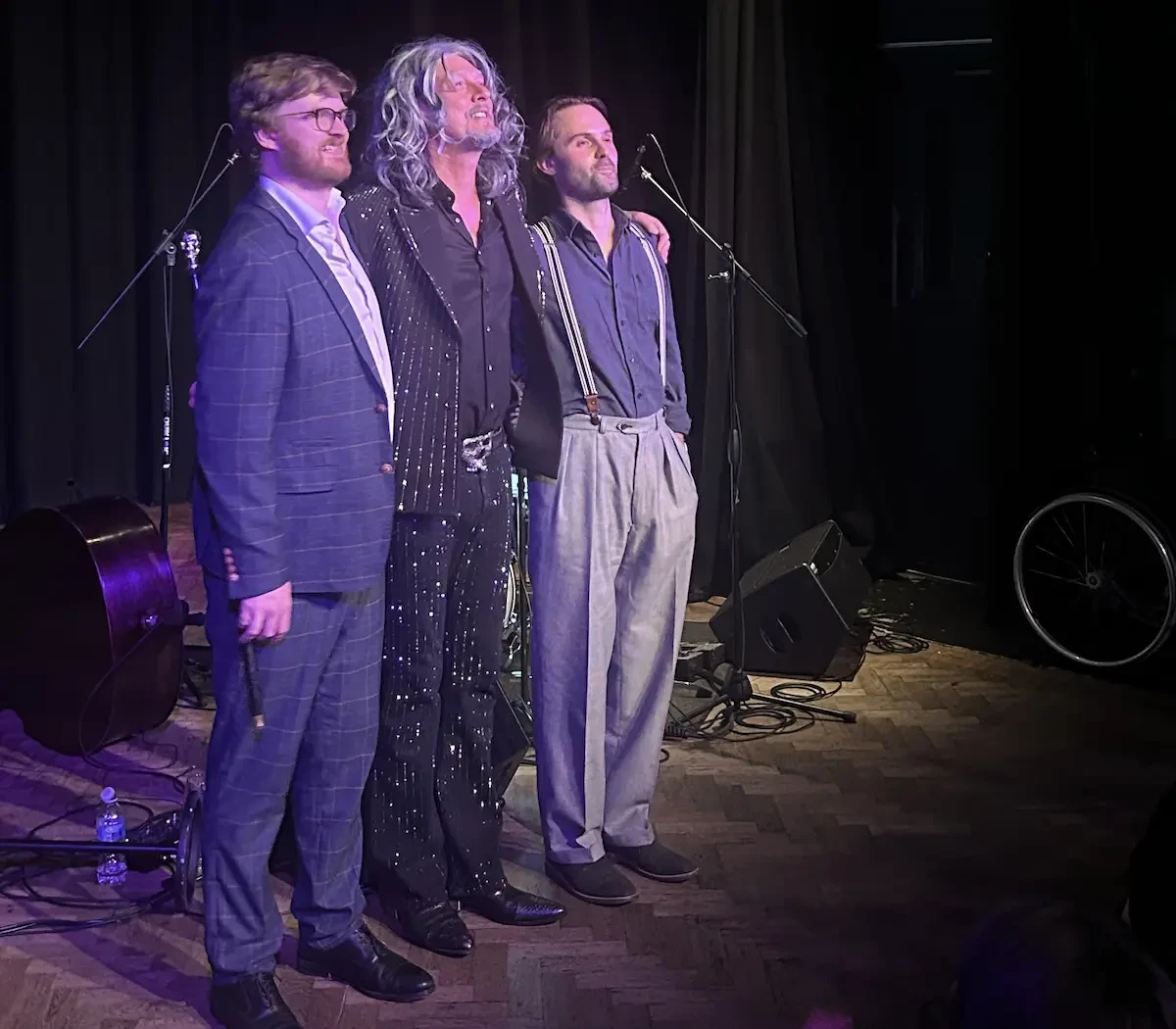
On the evening of September 22, 2026, the historic market town of Windsor bore witness to a musical illusion so masterfully constructed that it blurred the lines between historical fact and elaborate theatrical fiction. Inside The Old Court—a vibrant community arts hub housed within a sprawling Victorian complex that once served as a police station, magistrates’ court, and fire station—an octogenarian named Milton Keanes took to the stage. Shuffling forward with the deliberate, fragile aid of a silver-tipped cane and resplendent in a glittering spangly jacket, Keanes cut a poignant, eccentric figure. He was there to regale the packed auditorium with tales from a bygone era of rock and roll, setting the stage for his legendary, long-lost jazz outfit, Jazz Sabbath.
Of course, Milton Keanes does not truly exist, at least not in the geriatric form presented to the audience. In reality, the grey-haired persona is the brilliant theatrical vehicle of Adam Wakeman—accomplished touring keyboardist for both Black Sabbath and Ozzy Osbourne, and son of progressive rock royalty Rick Wakeman. Joined by bassist Jonny Wickham and world-class percussionist Arthur Newell, Wakeman brought to life a musical concept that is as brilliant as it is cheeky: the premise that Black Sabbath did not invent heavy metal in Birmingham in the late 1960s, but rather stole these iconic compositions from a pioneering, avant-garde jazz trio known as Jazz Sabbath, who had the misfortune of losing their master tapes and being wiped from the historical record by corporate misfortune and warehouse fires.
What followed was a masterclass in musicianship, improvisation, and self-aware British humor. Far from being a mere novelty act, Jazz Sabbath delivered a tightly wound, intellectually stimulating, and viscerally entertaining two-set performance that reimagined the heaviest sludge-metal anthems of the twentieth century through the sophisticated, smoky lens of post-bop and modal jazz. By fusing virtuosic instrumental prowess with self-deprecating comedy, audience participation, and a staggering display of genre-hopping improvisation, the trio proved that beneath the elaborate backstory lies a musical powerhouse. As the band prepares to embark on an extensive, cross-continent UK and European tour, this intimate Windsor showcase provided an illuminating glimpse into one of the most delightfully subversive acts currently operating on the live music circuit.
Detailed Chronology of the Evening
Act I: The Arrival of Milton Keanes and the Mythology of Theft
The atmosphere inside the auditorium of The Old Court was thick with anticipation well before the house lights dimmed. The venue itself—a brilliant piece of architectural recycling that merges the austere authority of a 19th-century municipal building with the warm, inclusive conviviality of a modern community arts centre—provided an appropriately idiosyncratic backdrop for the evening’s proceedings. The building’s former lives as a police station and fire station seemed to subtly foreshadow the themes of arson, lost master tapes, and institutional cover-ups that form the bedrock of the Jazz Sabbath lore.
When the house lights finally fell, a ripple of empathetic applause greeted the shuffling figure of Milton Keanes. Leaning heavily on his silver-tipped cane and catching the stage lights in his glittering jacket, Keanes took the microphone with a theatrical sigh. In a gravelly, world-weary tone, he launched into the foundational myth of Jazz Sabbath: the contention that back in the late 1960s, a visionary jazz ensemble was writing complex, avant-garde arrangements that were subsequently intercepted, plagiarized, and slowed down by a group of upstart Brummies who would go on to launch global heavy metal.
The brilliance of Adam Wakeman’s performance as Keanes lies in the absolute deadpan sincerity with which he delivers these absurdities. The audience—a diverse demographic spanning die-hard heavy metal purists sporting vintage Black Sabbath tour shirts alongside local jazz aficionados—ate up every word. It is a narrative that can be explored in greater detail on the band’s official website or through their meticulously produced promotional video materials, but experiencing it live elevates it from internet lore to performance art.
With the narrative foundation firmly established, Keanes unceremoniously dropped the frail old man facade (or at least suspended it in spirit) as Wakeman slid onto the piano bench. Joined instantly by Jonny Wickham’s upright-leaning basslines and Arthur Newell’s feather-light cymbal work, the trio tore straight into the heart of their repertoire, kicking off a night where the boundaries between straight-ahead jazz and doom metal were gleefully obliterated.
Act II: Sonic Alchemy and Subversive Setlists
The musical architecture of Jazz Sabbath is a marvel of arrangement. Songs originally defined by Tony Iommi’s tectonic, down-tuned guitar riffs and Ozzy Osbourne’s haunting, apocalyptic wails were stripped of their distortion and rebuilt using complex jazz harmonies, syncopated time signatures, and sparkling acoustic piano runs.
The setlist drew heavily from the band’s critically acclaimed live recordings alongside reimagined cuts from their studio releases. They opened with driving, swinging interpretations of staples such as Children Of The Grave and Spiral Architect. In Wakeman’s hands, the menacing gallop of Iron Man was transformed into a sophisticated modal vamp, allowing Wickham to lay down a hypnotic, walking bassline while Wakeman deployed cascading, Bill Evans-esque chord voicings that danced around the familiar vocal melodies without ever leaning into cheap pastiche.
What elevated the performance from a clever covers gig into high-art performance was the telepathic interplay between the rhythm section. Arthur Newell proved why he is regarded as a world-class percussionist. Eschewing the thunderous, stadium-filling bombast of a traditional rock drummer, Newell utilized an economical, understated style that relied on nuance, dynamic shading, and rhythmic displacement. With the mere flick of a wrist and a split-second transition from wooden sticks to wire brushes, Newell could completely pivot the emotional gravity of a song, allowing the trio to segue seamlessly between disparate movements without breaking their hypnotic spell.
Midway through the first set, Wakeman demonstrated the kind of improvisational genius that clearly runs in the family. Much like his father, legendary keyboard wizard Rick Wakeman, Adam possesses an uncanny ability to weave entirely unrelated musical themes into the fabric of a standard composition with effortless, jaw-dropping skill. During an extended vamp on Fairies Wear Boots, Wakeman seamlessly interpolated snatches of the iconic James Bond theme and several distinct Beatles hooks, delighting jazz purists and pop-culture historians alike.
Act III: Culinary Warnings and the Birth of Raw Pigs
Humor remained a central pillar of the evening, preventing the high-level musicianship from ever slipping into self-serious academicism. Between songs, Wakeman regaled the crowd with further historical fabrications and tangential anecdotes. One particular highlight involved a lengthy, highly detailed cautionary tale regarding the existential perils of consuming undercooked pork while on tour in the West Midlands during the winter of 1969.
This shaggy-dog story served as the comedic runway for a blistering, tongue-in-cheek rendition of War Pigs, which was retitled and performed for the evening as Raw Pigs. The thematic pivot—from the harrowing anti-war sentiment of the original metal classic to a humorous ode to food poisoning—elicited a roar of approval from the Windsor crowd.
While certain gags undeniably resonated more deeply with die-hard Black Sabbath historians who could spot the deep-cut lyrical and musical references, the show’s broad physical comedy and infectious energy ensured that no audience member was left behind. You did not need to own a copy of Paranoid to appreciate the sheer joy radiating from the stage.
Act IV: The Vacuum Cleaner Finale and Encores
As the evening hurtled toward its climax, the trio delivered a soaring, labyrinthine reading of Paranoid that stripped the high-octane punk-metal anthem of its aggression, reconstructing it as a dizzying, up-tempo bebop workout that left the front rows breathless.
For the mandatory encore, Jazz Sabbath returned to the stage to push the envelope of musical comedy even further. The segment began with an extended, masterclass drum solo by Arthur Newell. Demonstrating absolute command over polyrhythms and dynamic tension, Newell built the solo to a thunderous crescendo before Adam Wakeman and Jonny Wickham returned to the stage carrying an unexpected guest star: a classic Henry vacuum cleaner.
In a moment of pure, unadulterated British slapstick, the vacuum cleaner was integrated directly into the performance, featuring acoustically within Newell’s ongoing percussion solo. The visual absurdity of a world-class jazz drummer incorporating household cleaning appliances into a climax usually reserved for avant-garde free jazz was a masterstroke of theatrical release. The audience erupted into rapturous applause and gales of laughter, fully embracing the surrealist spirit of the evening.
Supporting Context & Metrics
To truly understand the phenomenon of Jazz Sabbath, one must examine the cultural landscape they inhabit. Tribute bands are a dime a dozen, but conceptual parody acts that achieve genuine critical and commercial credibility are exceedingly rare.
- The Lineup Pedigree: Adam Wakeman is not an outsider cashing in on a joke; he is an industry insider with deep, authentic ties to the legacy he is subverting. Having spent years touring the globe as the keyboardist and rhythm guitarist for Black Sabbath and Ozzy Osbourne, Wakeman possesses an insider’s access to the catalog, granting his jazz arrangements an authenticity that an outside observer could never replicate.
- The Tour Footprint: The Windsor show was not an isolated eccentric experiment; it served as the launchpad for a massive, multi-date routing spanning major cities across the United Kingdom and continental Europe throughout late 2026. Ticket sales indicate strong, demographically diverse demand, proving that the project has outgrown its internet-meme origins to become a legitimate, self-sustaining touring entity.
- The Thematic Symmetry: In a stroke of historical poetry, holding one of the tour’s foundational gigs inside a repurposed fire station in Windsor aligned perfectly with the band’s fictional mythology—specifically the legend that an entire batch of early Jazz Sabbath records was allegedly destroyed in a catastrophic warehouse fire in 1970.
Official Statements & Artist Insights
While the band maintains a strict commitment to the "Milton Keanes" fiction during their live performances, the underlying philosophy of the project has been addressed in various promotional communications. Speaking on the motivations behind Jazz Sabbath, the collective has consistently emphasized that the project is born out of a deep reverence for the melodic genius hidden beneath the heavy amplification of original Black Sabbath compositions.
"People forget that beneath the walls of distortion, Tony Iommi’s riffs and Geezer Butler’s basslines possess an incredible harmonic sophistication," production notes associated with the band’s latest live releases suggest. "By stripping away the amplifiers and looking at these songs through the framework of 1960s modal jazz, we aren’t mocking the music—we are revealing its true architectural bones."
Furthermore, the band’s management has noted that the inclusion of comedy and theatrical lore is designed to subvert the often overly solemn atmosphere of traditional jazz concerts.
"The jazz world can sometimes take itself far too much in earnest," an anonymous insider close to the production remarked following the Windsor performance. "We wanted to create an environment where top-tier musicianship and absolute absurdity could sit comfortably side-by-side. If people leave the venue smiling, shaking their heads, and humming a heavy metal riff played with jazz chords, we’ve done our job."
Future Outlook
As Jazz Sabbath packs up their gear, packs away Milton Keanes’ spangly jacket and silver cane, and sets their sights on the broader horizons of their UK and European tour dates, the project stands at an intriguing crossroads. What began as an internet-age musical prank and a clever viral marketing campaign has steadily evolved into a formidable live institution driven by undeniable instrumental excellence.
The market demand for high-concept, genre-defying live entertainment has rarely been stronger. Audiences increasingly crave experiences that defy easy categorization—performances that combine the intellectual stimulation of high art with the unpretentious joy of community theatre. Jazz Sabbath delivers this synthesis in spades.
Future dates on their 2026 itinerary are projected to draw larger crowds, potentially expanding from intimate arts venues like The Old Court into more traditional jazz clubs and mid-tier concert halls across Europe. Whether the band will eventually introduce new material—perhaps imagining what a jazz-era Sabotage or Master of Reality might sound like—remains to be seen. However, if their Windsor showcase was any indication, Adam Wakeman, Jonny Wickham, and Arthur Newell have plenty of tricks left up their sleeves.
For jazz enthusiasts, metalheads, and lovers of high-concept British eccentricity alike, catching Jazz Sabbath live is no longer just a curious option; it is an essential cultural experience. The master tapes may have burned in 1970 according to the legend, but the music has never sounded more alive.