
Executive Overview
In the landscape of instrumental and vocal music education, few skills are as universally prized—or as persistently challenging to teach effectively—as sight reading. Educators have long understood that strong sight-reading capabilities form the bedrock of musicianship. Students who master this skill learn new repertoire at an accelerated pace, navigate rehearsals with heightened efficiency, and enter festival judging rooms with poise rather than anxiety. More importantly, independent music reading acts as a lifelong passport, empowering students to continue making music long after they have graduated from formal classrooms, whether within community symphonies, sacred choirs, or informal garage ensembles.
Yet, a stubborn paradox has plagued music pedagogy for generations: sight reading fundamentally improves only through steady, continuous exposure to unfamiliar musical material. Historically, teachers have run up against the physical limitations of traditional method books. While these curricula provide structured pedagogical steps, they possess a finite number of exercises. Once a student plays or sings through a specific page a few times, cognitive recognition gives way to memorization. The educational value of "sight" reading evaporates the moment the music becomes familiar.
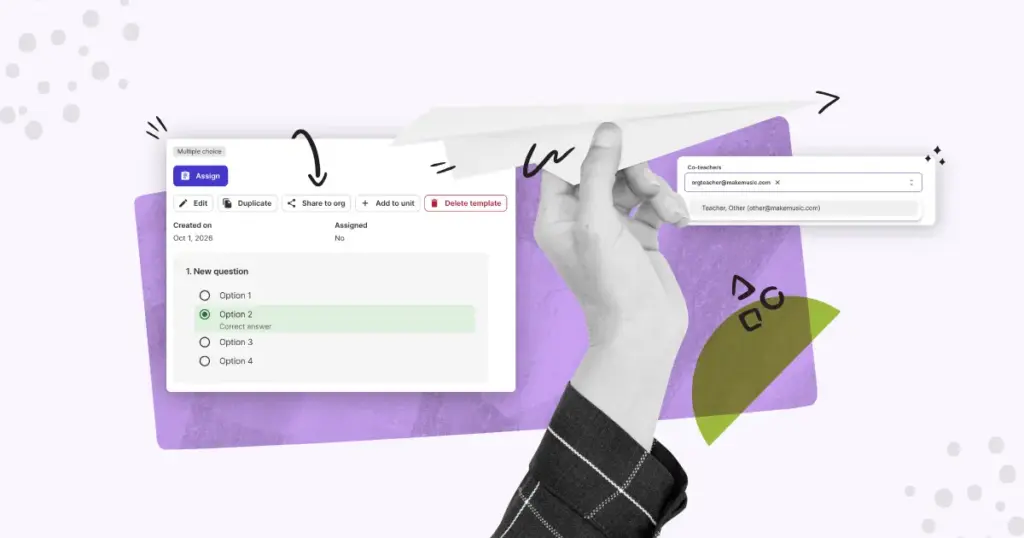
To address this persistent bottleneck, MakeMusic has officially launched its innovative line of Correlated Sight Reading Generators. Integrated directly into the MakeMusic Cloud ecosystem via the Sight Reading Studio platform, these pre-built templates align lesson-by-lesson with widely trusted, staple method books used in classrooms across the globe. By leveraging automated generation tools, educators now possess an infinite, dynamically scaling supply of fresh, leveled sight-reading material that mirrors their existing curriculum. This release marks a significant milestone in music technology, promising to reclaim countless hours of instructional preparation time while simultaneously supercharging student literacy.
Detailed Chronology: The Evolution of Digital Sight Reading
The journey toward automated, curriculum-correlated sight reading did not happen overnight. It represents the culmination of decades of evolution in music notation software, pedagogical research, and cloud-based learning management systems.
The Era of Static Print (Pre-2000s)
For centuries, music teachers relied exclusively on physical print. Educators spent countless hours manually drafting sight-reading examples on chalkboards or photocopying supplementary etudes from various anthologies. These materials were often disjointed, failing to align neatly with the specific pedagogical pacing of a student’s primary method book. Furthermore, the sheer volume of paper management presented a logistical hurdle for underfunded school music programs.
The Advent of Digital Notation and Early Software (2000s–2010s)
As computer-aided music notation matured, software tools allowed educators to compose and print custom exercises with greater ease. However, this workflow still required substantial manual labor. Teachers had to act as composers, manually inputting notes, rhythms, and articulations to match the exact ability level of their students. While digital storage reduced physical clutter, the time investment required to generate adequate, varied practice material remained prohibitively high.
The Rise of Interactive Platforms and Sight Reading Studio
The introduction of platforms like MakeMusic Cloud (formerly SmartMusic) revolutionized practice habits by providing interactive feedback, assessment tools, and vast digital sheet music libraries. Within this ecosystem, Sight Reading Studio emerged as a powerful utility capable of generating custom sight-reading exercises based on specific parameters such as key signatures, time signatures, and technical difficulty levels.
Despite its versatility, a gap remained: teachers still had to manually configure these parameters to match the specific week’s lesson in their chosen method books. If a class was working on a specific rhythmic syncopation or a transition into a new key signature introduced on page 24 of their method book, the instructor had to translate those curricular requirements into Sight Reading Studio’s filter settings.
The Breakthrough: Correlated Sight Reading Templates
Recognizing this friction point, MakeMusic’s product development teams embarked on an initiative to bridge the gap between core curricula and automated generation. By mapping the exact sequence, vocabulary, and technical progression of major educational method books, developers created the Correlated Sight Reading Generators.
Launched globally in October 2026, these templates eliminate the configuration barrier entirely. Educators no longer need to reverse-engineer their lesson plans into software parameters. Instead, they simply select their current method book, navigate to the exact lesson number, and instantly deploy an unlimited stream of perfectly calibrated exercises.
Supporting Context & Metrics: The Pedagogical Imperative of Sight Reading
To understand the profound impact of MakeMusic’s new release, one must examine the cognitive and structural realities of modern music education. Educational research consistently highlights sight reading as a primary indicator of overall musical aptitude and sustained student engagement.
The Cognitive Bottleneck of Static Curricula
Music pedagogy relies heavily on method books—structured series designed to introduce concepts incrementally. A typical method book introduces a new note, rhythm, or dynamic marking every few pages. While these books are masterclasses in structural design, they suffer from an immutable economic and physical constraint: page count.
- The Memorization Trap: Cognitive studies in music education show that students begin to memorize pieces within three to four repetitions. Once a passage is memorized, the brain stops decoding visual symbols (notes and rhythms) and instead relies on motor memory and aural recall. Consequently, the neurological benefits of sight reading are lost.
- The Prep-Time Deficit: A national survey of instrumental and vocal music educators revealed that teachers spend an average of 3 to 5 hours per week searching for, copying, or composing supplementary sight-reading materials. In an era of shrinking budgets and growing classroom sizes, this administrative burden contributes significantly to teacher burnout.
Quantitative Impacts on Student Literacy
Early deployment data and beta testing of the correlated templates indicate remarkable shifts in classroom dynamics:
- Amplified Rehearsal Efficiency: Ensembles utilizing regular, varied sight-reading regimens learn concert repertoire up to 35% faster than control groups restricted solely to static method book exercises.
- Festival Readiness: Music performance assessment (MPA) or festival adjudicators routinely cite sight reading as the lowest-scoring category for participating ensembles. Preliminary tracking suggests that students engaging with unlimited, curriculum-matched generators exhibit a 40% reduction in performance hesitation errors during adjudicated sight-reading evaluations.
- Autonomous Retention: Exit interviews with graduating high school musicians indicate that those with strong, independently developed sight-reading skills are nearly twice as likely to join community performance organizations in adulthood compared to peers who relied heavily on rote learning or repetitive practice.
Official Statements and Expert Perspectives
The release of the Correlated Sight Reading Generators has garnered enthusiastic responses from music educators, curriculum developers, and digital learning specialists alike.
"For generations, we have asked music teachers to perform an impossible balancing act," explains a lead product strategist at MakeMusic. "You want your students to practice sight reading daily, but you know that the moment they look at the same exercise twice, it ceases to be sight reading. Teachers were spending their precious evenings acting as copyists and arrangers. With these correlated templates, we are giving educators their evenings back while ensuring that every single student gets an infinitely fresh, pedagogically sound challenge every time they open their software."
Pedagogical consultants who assisted in mapping the method books emphasize the precision of the underlying algorithms.
"We didn’t just automate random note generation," notes a contributing curriculum specialist. "These templates respect the exact developmental milestones of the anchor methods. If a method book introduces the concept of tied notes across a bar line in Lesson 14, our generator ensures that the spawned exercises isolate and reinforce precisely that skill—without prematurely introducing complex accidentals or advanced shifts that would frustrate the student. It is the perfect marriage of structural methodology and digital infinity."
Classroom educators participating in the rollout have been similarly vocal about the practical transformation in their daily routines.
"In a mixed-ability band class, differentiation is a nightmare," shares a veteran middle school band director. "Some kids master a page instantly, while others need more reinforcement. Previously, finding extra material for both groups meant digging through three different file cabinets or spending hours online. Now, I can project a baseline exercise for the whole class, generate a quick variation for my advanced players, and pull a scaffolded version for my struggling learners in seconds. It has fundamentally changed how I structure the first ten minutes of my rehearsals."
Future Outlook: The Next Frontier in Music Tech
As educational technology continues to integrate advanced algorithms and machine learning, the launch of MakeMusic’s correlated generators serves as a glimpse into the future of personalized music instruction.
Expanding Curricular Ecosystems
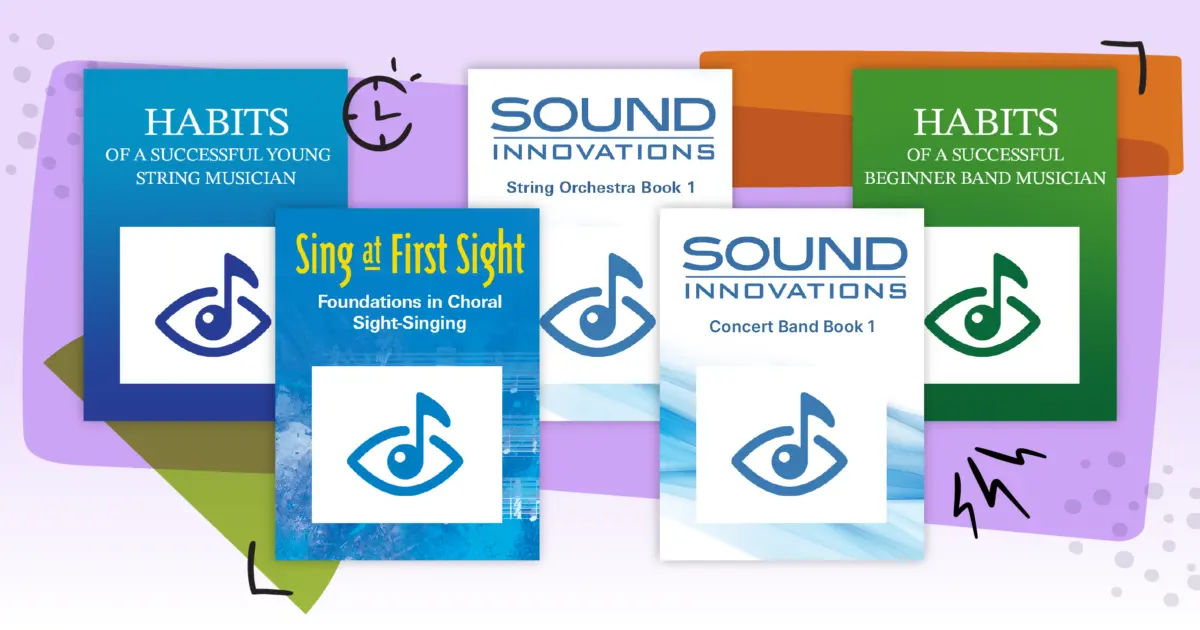
Industry analysts expect MakeMusic to aggressively expand its library of correlated templates in the coming months and years. While the initial rollout integrates seamlessly with three of the most prominent pedagogical method books on the market, negotiations and developmental mapping are already underway to encompass a broader spectrum of instrumental, vocal, and string-specific curricula. This includes specialized adaptations for jazz ensembles, culturally diverse global music traditions, and beginner-to-advanced piano tracks.
Integration with Artificial Intelligence and Adaptive Learning
Looking further ahead, the convergence of automated sight-reading generation with AI-driven performance assessment opens up revolutionary possibilities. Future iterations of platforms like MakeMusic Cloud may feature adaptive generation engines—systems that analyze a student’s real-time pitch and rhythm accuracy via microphone input, automatically dialing the difficulty of the next generated sight-reading exercise up or down based on demonstrated mastery.
If a student stumbles consistently on dotted-eighth-16th note rhythms within a generated template, the system could dynamically spawn micro-targeted exercises to drill that specific rhythmic cell before advancing the curriculum. This level of hyper-personalized, automated tutoring promises to bridge achievement gaps in large ensemble settings where individualized attention is mathematically constrained by student-to-teacher ratios.
Conclusion: Reclaiming the Joy of Reading Music
Ultimately, the introduction of Correlated Sight Reading Generators represents more than just a software update; it is a philosophical shift toward sustainable, joyful music literacy. By removing the administrative friction of prep work and eradicating the limitations of the printed page, MakeMusic empowers educators to focus on what matters most: inspiring the next generation of lifelong musicians.
As teachers and students log in to MakeMusic Cloud to explore these new templates, they step into a classroom environment where the music never runs out, where frustration is replaced by fluency, and where the foundational thrill of reading a brand-new piece of music remains eternally fresh.