
In the contemporary musical landscape—where digital algorithms frequently dictate stylistic trends and hyper-produced pop dominates mainstream consciousness—discovering an artist who serves as a living, breathing bridge to the golden age of 20th-century popular music is a rare and arresting experience. Enter Frances Madden. In less than a year, the Sydney-born vocalist, pianist, composer, and arranger has transitioned from an obscure name on the international radar to an essential asset to the modern jazz and vocal standards circuit.
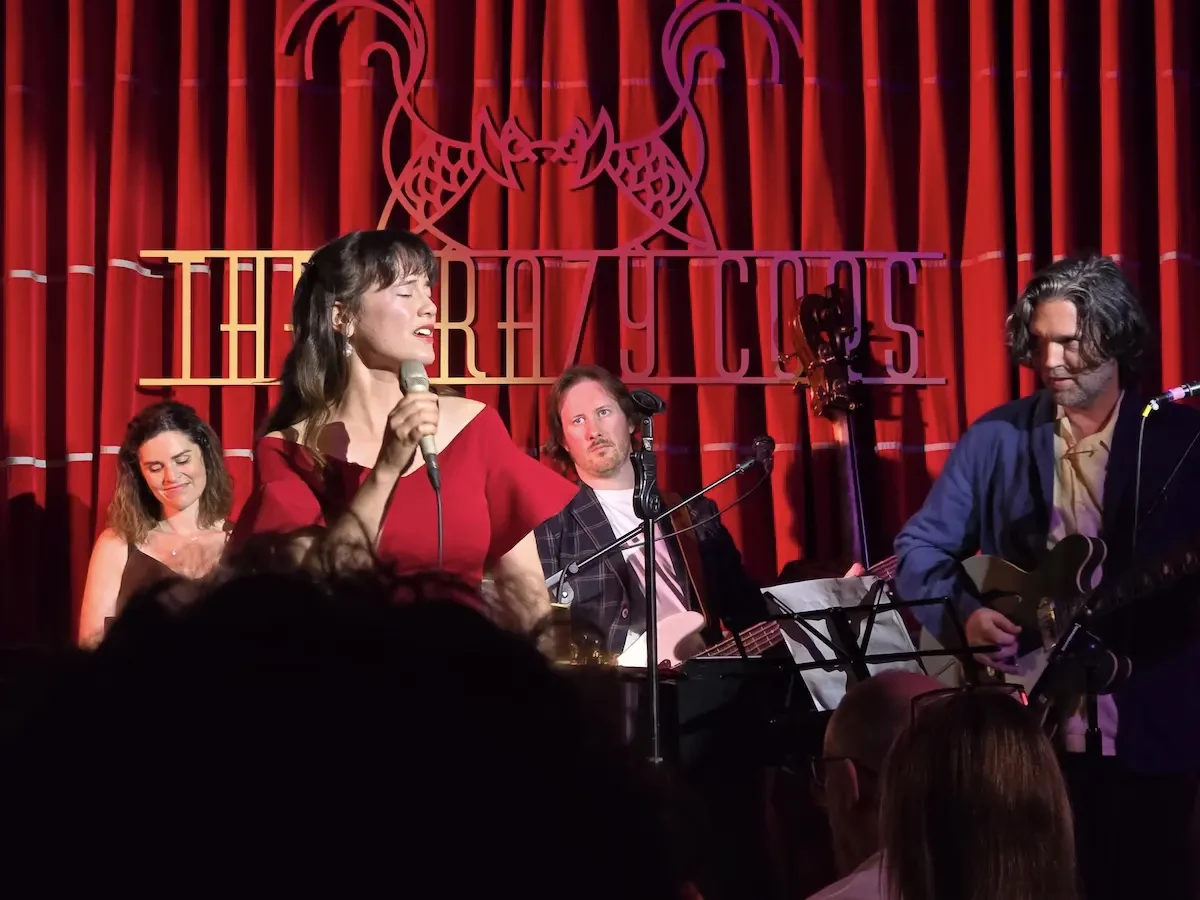
Following a riveting live performance at London’s prestigious Crazy Coqs—and supported by a compelling digital footprint of online clips and performances at legendary venues like Ronnie Scott’s—Madden has captured the attention of critics and purists alike. She evokes the timeless sophistication of the 1900–1950 musical landscape, seamlessly channeling the spirit of icons like Ella Fitzgerald while firmly establishing her own distinct, contemporary identity.
This comprehensive profile explores Madden’s meteoric rise, tracing her journey from a musically enriched childhood in Australia to international residencies in London, European festival circuits, and upcoming sessions in Nashville. Through an exclusive interview, we unpack her formative years, the serendipitous encounters that launched her professional career, her rigorous approach to arranging and songwriting, and her ambitious vision for the future of vocal jazz.
Detailed Chronology: From Sydney Beginnings to International Acclaim
Formative Years and Early Musical Immersion
Born and raised in Sydney, Australia, Madden’s entry into the world of music was neither accidental nor forced, but rather the natural byproduct of an environment saturated with artistic passion. While she does not come from a lineage of professional performers or instrumentalists, her household was governed by a profound appreciation for sound.
"Yes and no," Madden explains when asked about her musical heritage. "No in the sense that no older generation of my family sang, or played a musical instrument, but yes in the sense that I grew up in a musical environment. Both my parents were passionate about music, everything from classical to Ella Fitzgerald. In fact, they were so passionate that they insisted all their children learn to play a musical instrument."
Unlike many households where parents dictate the child’s instrument of choice, the Madden household fostered autonomy. Given the freedom to explore, the siblings remarkably gravitated toward entirely different instruments without conflict. For Frances, the piano was an immediate and absolute calling.
Family lore records that at the tender age of three, she pointed directly to a piano and declared, "I want to play that"—a moment lost to her own infancy, yet indicative of an innate calling. By age five, she had commenced formal piano lessons. Rather than experiencing the instrument as a rigorous chore or an imposition, Madden embraced it immediately. "No, never," she recalls when asked if she ever chafed against practice. "I loved it from the first."
University Days and the Shift to Vocal Performance
Despite her lifelong proficiency at the keyboard, vocal performance entered the picture much later. It was not until she was sixteen and attending university that Madden found her voice.
During this transitional period, she connected with fellow university students who played guitar and drums. Together, they formed a casual ensemble, cutting their teeth in local bars, clubs, and even private functions like weddings. This grassroots experience provided her with essential stagecraft, teaching her how to engage varied audiences and navigate the unpredictability of live performance environments.
Songwriting followed shortly thereafter. At age twenty-one—roughly three years after she began singing publicly—Madden penned her first original compositions, sparking a creative journey that remains the core driving force behind her artistic ambitions today.
The Serendipitous Break: The Basement, Sydney
Establishing a foothold in the local music scene is notoriously difficult for emerging artists, and Madden admits she had not yet reached the level of local renown where patrons would check gig guides specifically for her name. Instead, her professional breakthrough arrived cloaked in frustration, ultimately redeemed by serendipity.
The turning point occurred during a performance for a local women’s club. By all accounts, the gig was a disaster from an acoustic and atmospheric standpoint. The attendees were engaged in loud conversations and raucous laughter, rendering the music practically inaudible. It was the kind of soul-crushing gig that has derailed many a young musician.
However, as the evening concluded, a single attendee approached the bandstand. She offered a sincere apology on behalf of the unruly crowd, noting that she had intently listened to every bar and lyric, and was deeply impressed. Revealing that she managed a local venue, she extended an invitation for Madden to perform there.
That venue was none other than The Basement—widely regarded as Sydney’s premier jazz club. What began as a cacophonous failure transformed into the catalyst that launched Madden into the upper echelons of the Australian jazz scene, leading to the recording of her debut album and regional acclaim.
Crossing Oceans: The UK, France, and Nashville
Having established a solid reputation, recorded her debut album, and achieved significant milestones in her homeland, Madden confronted a familiar hurdle for Australian artists: the geographical and cultural glass ceiling of the domestic market.
"I guess I thought I’d run into a glass ceiling in terms of Australia," Madden reflects. "I’d established myself, recorded my first album, and I suppose I wanted to see if I could replicate what success I’d had in Oz, in the UK."
Relocating to the United Kingdom, Madden quickly integrated herself into London’s hyper-competitive live music circuit. Over the past four years (comprising non-consecutive stays that include extensive European touring), she has performed twice at both Ronnie Scott’s and Crazy Coqs, alongside international dates in France—including a celebrated run of gigs in and around Nantes—and preparations for an upcoming creative pilgrimage to Nashville.
Supporting Context & Metrics: Craft, Arrangement, and Repertoire
Instrumentation and the Art of the Chart
While Madden frequently performs in the intimate, highly responsive configuration of a classic trio (piano, bass, and drums), her sonic palette often expands. Audiences tracking her online performance clips will frequently spot horns, including trumpets and saxophones, augmenting her core rhythm section.
A hallmark of a serious bandleader is the ability to write and orchestrate for a larger ensemble. When asked if she writes the charts for her auxiliary players, Madden confirms her hands-on approach: "Yes, I’ve always written charts." This meticulous control over her arrangements ensures that every horn line, harmonic voicing, and rhythmic kick serves the emotional core of the song, bridging the gap between traditional small-group jazz and sophisticated vocal arrangements.
Songwriting Retreats and the Forthcoming Album
At the time of this publication, Madden is deep in the production cycle for her highly anticipated sophomore album. Having completed intensive five-day songwriting retreats over the past year—experiences she credits with fundamentally elevating her compositional craft—she has already laid down six tracks toward a finalized 12-track running order.
This forthcoming record represents more than just a commercial release; it is a vital step in her mission to transition from a sought-after interpreter of jazz standards to a celebrated contemporary songwriter in her own right.
Current London Residencies and the Tension of the Repertoire
Currently, London audiences can experience Madden’s artistry firsthand through her high-profile residencies at landmark establishments including The Brasserie at The Dorchester and The Londoner.
These residencies serve as both a blessing and a creative paradox. While they provide invaluable stage time, financial stability, and exposure to discerning international audiences, they also present a specific artistic challenge. Patrons frequenting luxury hotel lounges and brasseries typically demand familiar comfort—beloved jazz standards and recognizable covers from the Great American Songbook.
Madden navigates this tension with grace, delivering world-class interpretations of classic repertoire while quietly harboring her true ambition: "Of course, those audiences want to hear covers of songs they already know, and my ambition is to be recognised for my own songs."
Official Statements & Direct Insights
The following selections from our exclusive interview capture Frances Madden’s philosophy on musicianship, family, and artistic identity:
- On her musical upbringing: "Both my parents were passionate about music, everything from classical to Ella Fitzgerald. In fact, they were so passionate that they insisted all their children learn to play a musical instrument… Strangely enough [there were no clashes]; we each gravitated towards a different instrument."
- On her early affinity for the piano: "Definitely. In fact, mom tells a story that when I was about three I pointed to the piano and said ‘I want to play that,’ although of course, I have no memory of that… I had formal lessons from the age of five. [Did I take to it naturally?] No, never [did it feel like a chore]. I loved it from the first."
- On her accidental entry into jazz performance: "We were playing a gig for a group of ladies… and it was a really bad experience. They were talking loudly, laughing raucously… At the end one of the women approached me and apologised on behalf of her colleagues… She added that she ran a local club and wanted me to play for her. The club turned out to be The Basement—the top jazz club in Sydney."
- On transitioning from covers to original work: "At the moment I have several residencies… but of course, those audiences want to hear covers of songs they already know, and my ambition is to be recognised for my own songs."
Future Outlook: The Horizon for Frances Madden
As Frances Madden looks toward the remainder of the decade, her trajectory points toward sustained international expansion and creative validation. With six tracks already recorded for her upcoming 12-song album—informed by rigorous songwriting retreats and a deepened mastery of composition—she is poised to shift the narrative from her prowess as a phenomenal live interpreter to her strength as a major contemporary songwriter.
Her upcoming trip to Nashville later this year signals an exciting cross-pollination of genres, suggesting that while her roots remain deeply embedded in jazz standards and swing-era elegance, her compositional horizons are expanding. Furthermore, while she has yet to embark on a formal, multi-city national or international tour, the demand for her live shows across the UK and continental Europe makes a major tour an inevitability rather than a possibility.
For promoters, critics, and jazz aficionados alike, Frances Madden represents a rare commodity: a classically trained pianist with pristine vocal control, a fierce dedication to self-penned arrangements, and an authentic reverence for the roots of popular song. As she steps off the stage of her London residencies and into the recording studio, one thing is certain—Frances Madden is no longer just a blip on the radar. She is a defining voice of the modern jazz renaissance.