
Executive Overview
Forty years ago, a quartet of musicians draped in matching yellow-and-black spandex walked into a recording studio and attempted something the modern music industry deemed structurally impossible. They married the thunderous, high-octane sonic architecture of 1980s heavy metal—complete with soaring dual-guitar harmonies, thunderous double-bass drumming, and operatic lead vocals—with an unapologetically orthodox Christian message.
When Stryper released their landmark third studio album, To Hell with the Devil, in October 1986, they did not merely update the aesthetic of contemporary Christian music (CCM). They detonated the boundaries separating sacred art from secular entertainment. At the height of MTV’s cultural hegemony, when image-driven arena rock ruled the global charts alongside acts like Mötley Crüe, Bon Jovi, and Poison, Stryper infiltrated the mainstream consciousness. They claimed a coveted spot at the top of the Dial MTV viewer-voted countdown, proving a faith-based band could compete toe-to-toe with secular heavy metal titans without diluting its theological convictions.
Yet, this monumental cross-cultural breakthrough was met with profound irony. While mainstream youth and rock critics embraced the band’s high-production virtuosity and infectious hooks, significant factions of the traditional Christian church launched aggressive campaigns against them, often picketing their concerts while leaving secular bands performing in neighboring venues untouched.
Today, as the music industry looks back across four decades of shifting landscapes, the reverberations of To Hell with the Devil remain unmistakable. In an exclusive retrospective interview, founding brothers Michael and Robert Sweet reflect on the creation of an era-defining record, the culture war that surrounded its release, an unexpected second act that has outpaced their initial run, and how the "Yellow and Black Attack" permanently altered the trajectory of modern rock.
Detailed Chronology: From Garage Ambitions to MTV Stardom
To understand the seismic impact of To Hell with the Devil, one must contextualize the precarious landscape of the mid-1980s music industry. Heavy metal was undergoing a golden era of commercial dominance, fueled by visual media, radio airplay, and an insatiable appetite for theatrical stage shows. Concurrently, Christian music was largely quarantined within a subculture of specialty bookstores, independent Christian radio stations, and insulated youth groups.
Formed in Orange County, California, originally under the moniker Roxx Regime before rebranding as Stryper (derived from the biblical verse Isaiah 53:5, "by his stripes we are healed"), the band consisted of Michael Sweet (lead vocals/guitars), Robert Sweet (drums), Oz Fox (lead guitars), and Tim Gaines (bass). Following their independent EP The Yellow and Black Attack (1984) and their official full-length debut Soldiers Under Command (1985)—which became the first Christian metal album to achieve Gold certification—the band entered Baby Blue Studios in Studio City, California, with producer Stephan Galfas. They were gunning for a record that could transcend niche demographics.
The creative lightning in a bottle was palpable even before the record hit store shelves. Drummer Robert Sweet vividly recalls driving his IROC-Z Camaro, dropping an early cassette mix of "Sing-Along Song" into the deck, and experiencing an immediate premonition. "I was just like, wow, something’s going to happen here," he remembers.
Frontman Michael Sweet shares a similarly cinematic memory regarding the album’s title track. Sitting inside his black Ford Escort, the brothers popped a cassette of the rough mix into the dashboard player. As the dramatic, operatic intro gave way to heavy, driving riffs, the two musicians locked eyes. It was, as Michael describes, a "holy moly moment."
"We got something going on here," Michael recalls sensing in that precise instant. "And you could just feel it… It was definitely a God thing. It was anointed, and the power came out of that album. God’s power, unlike anything else."
Released in October 1986, the album capitalized on a rapidly changing media landscape. MTV was the undisputed kingmaker of pop culture, shaping the tastes of an entire generation through round-the-clock music video broadcasting. Despite industry gatekeepers who assumed Christian acts were commercially non-viable, Stryper bypassed traditional gatekeeping barriers through sheer fan demand.
"We had TV," Michael explains. "When MTV started Dial MTV, that really pushed To Hell with the Devil over the top."
Unlike late-night specialty programming tucked away from mainstream audiences, Stryper entered a direct daily battle for supremacy. "Here is the difference with us," Michael continues. "We were on a countdown of ten videos, ten songs up in the countdown against Mötley, Bon Jovi, Poison, and going to number one. It was unheard of. I even think MTV was floored by that. They didn’t know what to think about that."
Sonically, Stryper fit the auditory palette of 1986 seamlessly: razor-sharp guitar solos, stadium-sized drum fills, and soaring anthemic choruses. Lyrically, however, they charted a radically divergent course. While secular metal bands sang of hedonism, nightlife, and romantic escapades, Stryper sang of redemption, spiritual warfare, and salvation. Remarkably, the audience proved less concerned with rigid industry genre classifications than with undeniable musicianship and high-energy performance.
Supporting Context & Metrics: Breaking Barriers and Facing Backlash
The commercial milestones achieved by To Hell with the Devil read like an impossible ledger for a faith-based niche project in the 1980s. The album eventually sold over two million copies worldwide, earning a Platinum certification from the Recording Industry Association of America (RIAA)—a historic first for a Christian metal album. Furthermore, the record earned a Grammy Award nomination in 1988 for Best Gospel/Contemporary Christian Music Performance. Hit singles like "Free", "Honestly" (which cracked the Billboard Hot 100 top 30), and the title track established the band as legitimate radio contenders.
Yet, these unprecedented metrics tell only half the story. The cultural friction generated by the album exposed a deep ideological divide not just within secular entertainment circles, but within the church itself.
While mainstream rock critics and secular youth embraced the band for delivering a high-caliber heavy metal product, conservative religious communities often viewed heavy metal music as inherently demonic—regardless of its lyrical content. Consequently, Stryper found themselves fighting a war on two fronts.
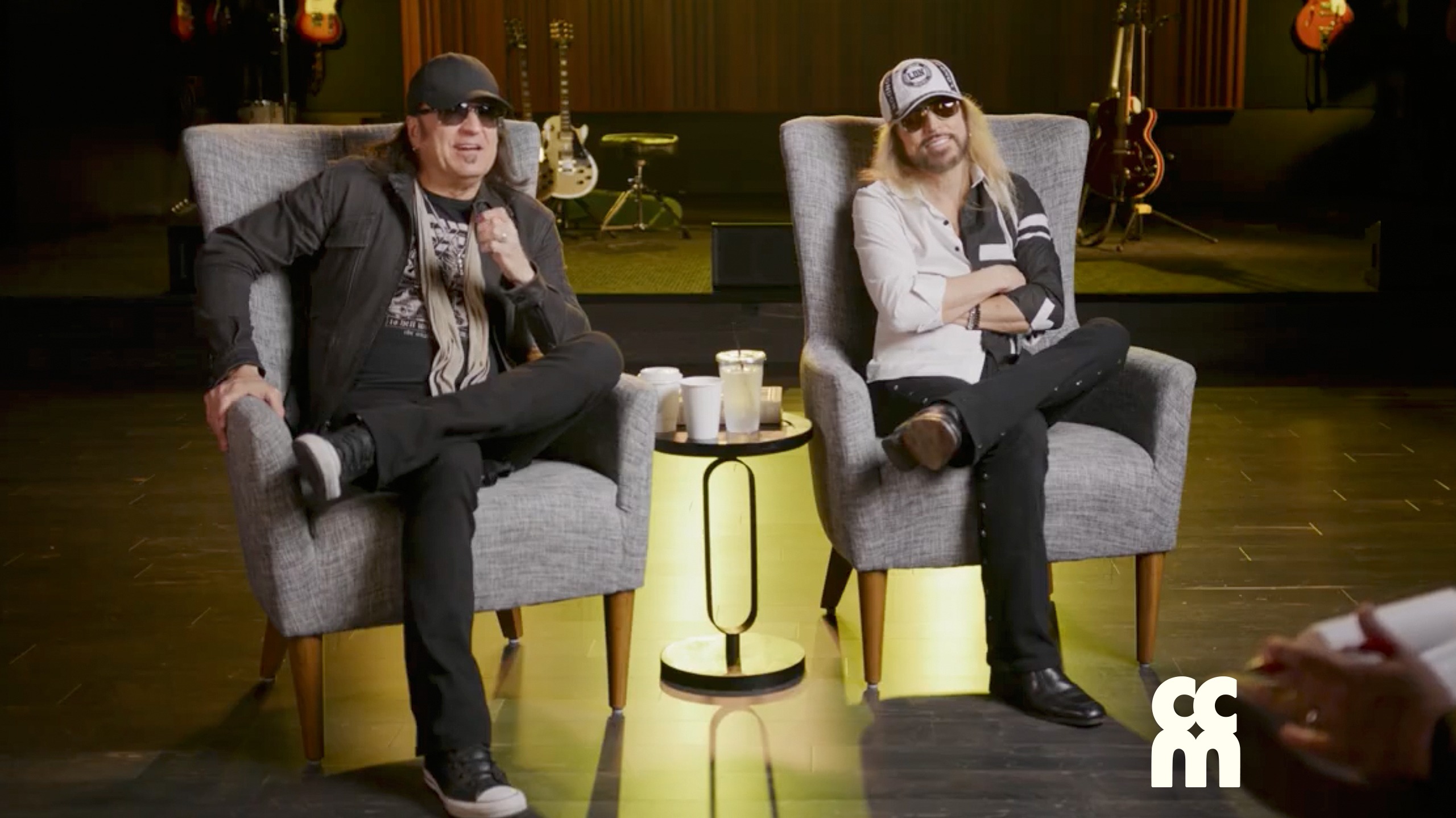
"Back then, you had a lot of people going, ‘These guys are the devil, you know, have nothing to do with these guys,’" Robert Sweet recalls, noting the irony of religious opposition. Michael dryly interjects, "Preaching against us."
Robert highlights a particularly surreal anecdote from the height of their touring cycle. As their tour bus pulled up to a major arena venue, the band was met not by secular protestors, but by a large contingent of picketing Christians condemning their use of heavy metal instrumentation and rock-and-roll aesthetics. Meanwhile, the rock band AC/DC was performing at a nearby venue on the same night, entirely unbothered by religious demonstrations.
This misplaced ecclesiastical hostility left lasting scars on the band members, who frequently questioned the collateral damage of closed-minded theological gatekeeping. "How many people would have been touched if they could have understood what we were saying?" Robert muses. "And we were legitimate. We were sincere. We mean it. And it’s so out front. It’s right there. You can’t deny it."
The insular nature of 1980s Christian culture also meant that many future artists in the genre were barred from experiencing Stryper’s pioneering work firsthand. During their conversation, Michael referenced Skillet frontman John Cooper, who has frequently discussed growing up in a religious household where listening to Stryper was strictly forbidden.
The idea that one of modern Christian rock’s most successful standard-bearers was raised in a home where Stryper was categorized as taboo underscores the revolutionary, counter-cultural nature of the band’s initial run. "But still, despite all that, we still broke out," Michael notes.
Official Statements & Reflections: The Unexpected Second Act
For many bands of the 1980s, commercial success proved fleeting, consumed by changing musical trends such as the grunge explosion of the early 1990s. Stryper was no exception; exhausted by internal tensions and shifting cultural tides, the band disbanded in 1991. For Michael Sweet, that chapter of his life felt definitively closed.
"I thought it was over in ’91 when we went our separate ways… and I really, truly thought that that was one part of my life," Michael admits.
However, the story of Stryper did not end with a permanent dissolution. A reunion in 2003 ignited a creative renaissance that has far outpaced their initial 1980s output in both volume and longevity.
"We got back together in ’03, and we’ve done more now from ’03 to ’26 than [from] ’84 to ’91," Robert Sweet points out, emphasizing that their modern era has yielded nearly triple the output of their classic period. "I don’t think Michael and I sat down and went, ‘Wow, we’re going to be doing this when we’re 66 and 63.’ But God’s given us the ability to do it."
Reflecting on the enduring journey, Michael summarizes the band’s resilience with a philosophy rooted in purpose and artistic calling:
"This is what we do. This is what we were born to do. This is what we always dreamed about doing. So let’s enjoy the ride… the ride is still going. It’s not over."
Future Outlook: The Enduring Legacy of the Yellow and Black Attack
Four decades after the release of To Hell with the Devil, the music landscape has shifted irrevocably. Today, Christian artists regularly cross over into mainstream spaces, chart on secular Billboard lists, and share festival stages with secular rock acts without triggering moral panics. The structural barriers that once kept sacred and secular music rigidly segregated have largely eroded.
That integration did not happen organically. Stryper acted as shock troops in a cultural war, kicking doors open through sheer instrumental excellence, undeniable melody, and unwavering conviction. They refused to ask permission from religious gatekeepers or secular skeptics; they simply plugged in, turned up their Marshall stacks, and delivered stadium-ready rock music that resonated across demographic lines.
As Stryper continues to record critically acclaimed studio albums and tour international stages today, their historical footprint remains secure. Forty years later, the message of To Hell with the Devil—and the striking visual identity of the yellow and black attack—remains as vital to heavy metal history as any conventional secular milestone of the 1980s.
Not bad for a record that some self-appointed watchdogs once tried to silence.