
Executive Overview
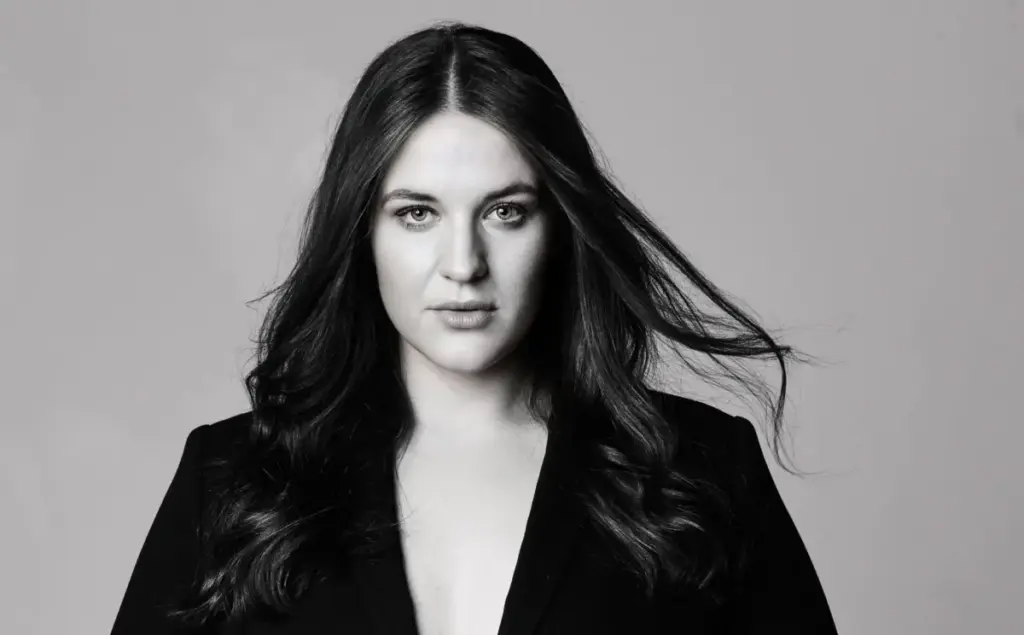
For the Chicago-born, Los Angeles-based singer-songwriter known simply as Forest, the path to her debut album, Swan Dive, was paved by unrequited adolescent crushes, late-night hotel room epiphanies, and the heavy, isolating transition from collegiate structure to independent artistry. At just 23 years old, Forest has crafted a record that deliberately dwells in the shadows, balancing a fascination with the bizarre against delicate, evocative sonic landscapes.
Swan Dive is not an accidental collection of tracks; it is a meticulously constructed exploration of womanhood, bodily autonomy, isolation, and the morbid beauty found in fatal attachment. Drawing inspiration from 2000s emo-theatrics, industrial rock bites, and the intimate acoustic arrangements of indie icons, Forest has delivered a striking opening statement. Anchored by its brooding lead track, "Vulture," the album serves as both a therapeutic excavation of personal displacement and a testament to an emerging artist finding absolute clarity in her creative convictions.
Detailed Chronology: From Unrequited Crushes to the LA Move
The Accidental Beginning
Forest’s introduction to music did not arrive through a formal conservatory track or a lifelong classical instrument regimen. Instead, her journey began at the age of fifteen for a remarkably pedestrian teenage reason: a crush.
"He played guitar, and I was like, ‘He’s going to love me if I play guitar,’" Forest recalls with a self-aware laugh. "And that didn’t happen, which is totally fine. But I think I won the guitar game."
Before picking up the fretboard, Forest had cycled through a myriad of creative outlets. She spent years in ballet, sang constantly as a child, and dabbled in drawing, visual arts, and even cinematic makeup design. Yet, music had eluded her until her mid-teens. The moment she learned enough basic guitar chords to fumble her way through original compositions, a profound psychological shift occurred.
"I was like, ‘Oh fuck, this is the thing,’" she says. "I finally found the thing that is going to stick."
The Boston Bathroom Epiphany
The conceptual spark for Swan Dive ignited roughly two years ago in a setting entirely divorced from glamour: a cramped Boston hotel bathroom. Forest had returned from a night out with friends to a room she was reluctantly sharing with her parents. Her father was asleep, bracing himself to run a marathon two days later, while her mother slept with a loud sleep apnea mask.
"I stumble in, like, very drunk into this hotel room that I’m sharing with both of my parents," Forest remembers. "My mother had a sleep apnea mask on and I was totally bothering her. My dad is running the marathon in two days, so he’s knocked out cold."
Seeking refuge from the snoring and commotion, she retreated to the bathroom. There, an ordinary, mass-produced hotel painting caught her eye. "I’m just transfixed on this swan," she says. "I’m like, ‘Wow, what a beautiful picture.’"
She snapped a photo of the artwork. Though she had no immediate plans for it, the image planted a seed. She began researching the mythology surrounding swans, specifically recalling an internet myth claiming that a swan will intentionally dive to its death after losing its mate.
"It’s not a real thing," Forest clarifies, "but I was just kind of thinking about a lot of swan visuals, and I was like, ‘Wow, what a beautiful name for an album—Swan Dive.’"
The Leap to Los Angeles
The underlying themes of the album—abandonment, codependency, and the stark reality of solitude—mirrored Forest’s real-world environment. Having left her music studies in Boston, she convinced her skeptical family to let her move to Los Angeles for a year, presenting her pitch via a carefully structured PowerPoint presentation.
Three years later, she remains rooted on the West Coast, though the transition was far from seamless.
"The first six months to a year was pretty rough," she admits. "I was like, ‘I don’t have friends. I’m not in college. I can’t walk three minutes and see a bunch of my friends.’"
Navigating the cutthroat Los Angeles music industry without a roadmap compounded her isolation. "It was a really exhausting and rough time for me," she notes. Rather than letting the loneliness derail her, she channeled that exact brand of existential exhaustion straight into the recording sessions for Swan Dive.
Supporting Context & Metrics: Sonic Influences and Aesthetic Dualities
Musical Lineage: From Emo-Theatrics to Industrial Bite
To understand the sonic texture of Swan Dive, one must trace Forest’s musical evolution. As a youth, her obsessions leaned heavily toward the theatrical angst of Panic! At The Disco’s breakthrough record, A Fever You Can’t Sweat Out, alongside the cult favorite stylings of Chicago’s 1990s rock scene, such as the Smoking Popes.
When it came time to conceptualize her own debut LP, those foundational adolescent tastes merged with more abrasive, complex textures. She drew inspiration from the industrial bite of Snake River Conspiracy, as well as the masterclasses in raw intimacy delivered by the Smashing Pumpkins and Elliott Smith.
"I love soft vocals over a heavy guitar," Forest explains, outlining the core juxtaposition that defines Swan Dive. This tension between delicate vulnerability and heavy instrumentation creates a dynamic listening experience that constantly keeps the audience off-balance.
The Art of Juxtaposition: Ugliness Meets Beauty
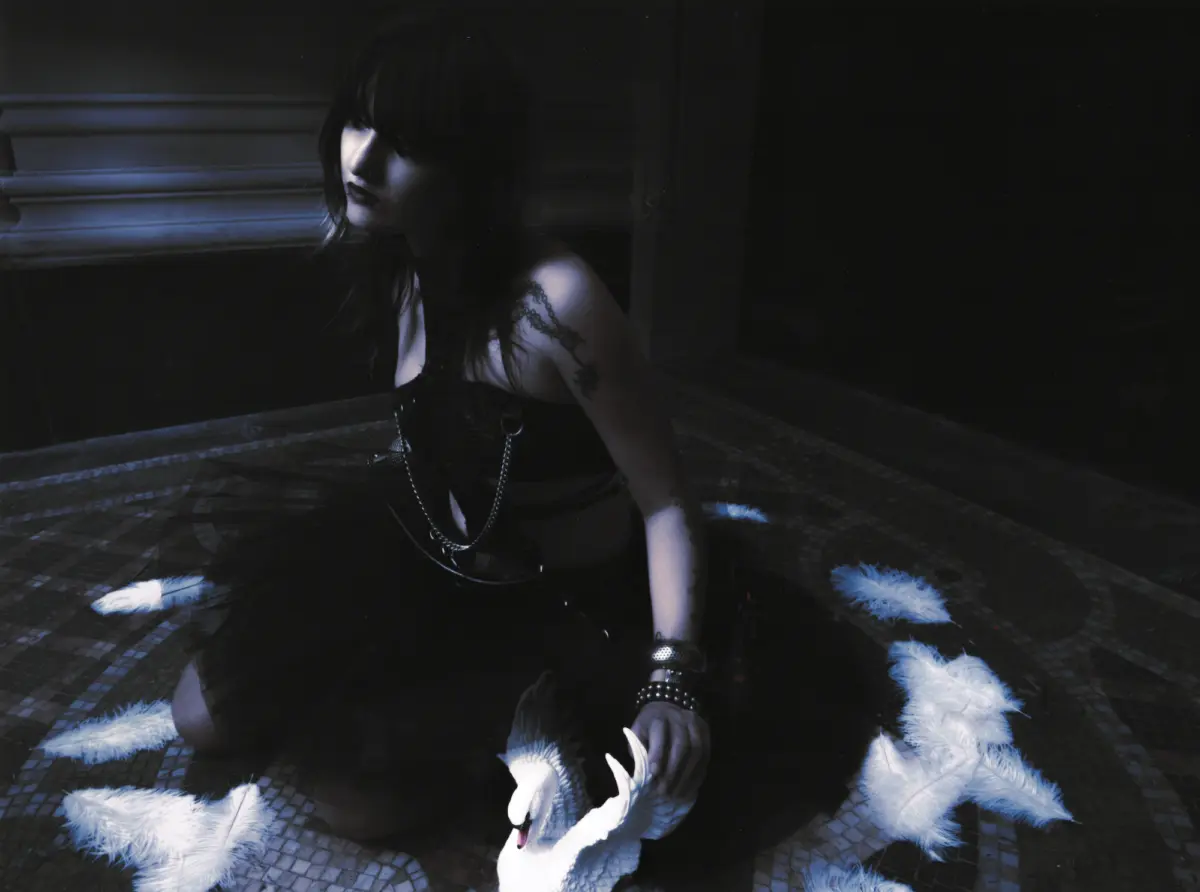
This dedication to contrast extends far beyond the audio tracks and directly into the visual branding of the album. The cover art for Swan Dive features Forest draped in elaborate, restrictive corsets layered over delicate lace, tenderly cradling a swan in her arms. Yet, this traditional elegance is deliberately corrupted: feathers are violently splattered across the frame, and the entire scene is swallowed by a claustrophobic, dark room.
"Writing about things that are kind of dark and a little bizarre and weird—that’s my forte," she asserts. For Forest, beauty loses its resonance if it is not challenged by a touch of the grotesque or the morbid.
Official Statements & Direct Perspectives
Deconstructing "Vulture" and Modern Womanhood
No song on Swan Dive encapsulates Forest’s artistic vision quite like the opening track, "Vulture." Serving as the emotional doorway into the record, it was one of the few pieces where the songwriter possessed absolute, unshakeable clarity from inception to final master.
Alongside companion tracks like "Bodies," Forest views "Vulture" as an exploration of "womanhood in relation to other people," including her complicated "relationship with my body" and the external pressures projected onto it by society.
"I really love the writing on it," she reflects. "I loved how the production turned out. I think it was very well-rounded."
Unlike songs that underwent dozens of rewrites or agonizing production overhauls, "Vulture" demanded to be heard exactly as it was conceived. "I was really strong in my convictions about that," she says. "This is the song on the album for me. This is my song."
Loneliness Versus Solitude
A recurring theme across interviews and press cycles for the album is Forest’s careful delineation between being lonely and being alone. As an only child, she has spent a lifetime cultivating an internal world that requires plenty of breathing room.
"I’m not a lonely person," she clarifies. "I’m a very alone person. I’m an only child. I’m a very ‘fester with my own thoughts’ type of person."
This distinction is vital to understanding the emotional weight of Swan Dive. The album does not lament the absence of company; rather, it investigates the heavy, sometimes terrifying majesty of being entirely bound to one’s own consciousness, or conversely, the tragedy of losing the single entity that anchored one’s existence—much like the mythical mated swan.
Future Outlook: Maturation and the Next Chapter
At just 23 years old, Forest possesses a rare self-awareness regarding the impermanence of artistic perspectives. While Swan Dive captures a specific snapshot of young adulthood, displacement, and body politics, she acknowledges that her worldview is actively shifting.
"It’s a topic that is definitely changing as I get older," she says regarding her lyricism surrounding womanhood. "I’m having different perspectives on it as I’m getting older."
Yet, even as she grows and her artistic lens inevitably broadens, the absolute conviction displayed on Swan Dive establishes a formidable foundation. By fearlessly blending the morbid with the melodious, and transforming hotel room daydreams into industrial-tinted indie rock, Forest has proven that she is not merely visiting the music industry—she is here to claim her space within it.
As Swan Dive makes its way into the world, audiences are invited to take the plunge alongside her: descending willingly into the dark, beautiful, and unapologetically bizarre waters of an artist who has finally found the thing that is going to stick.