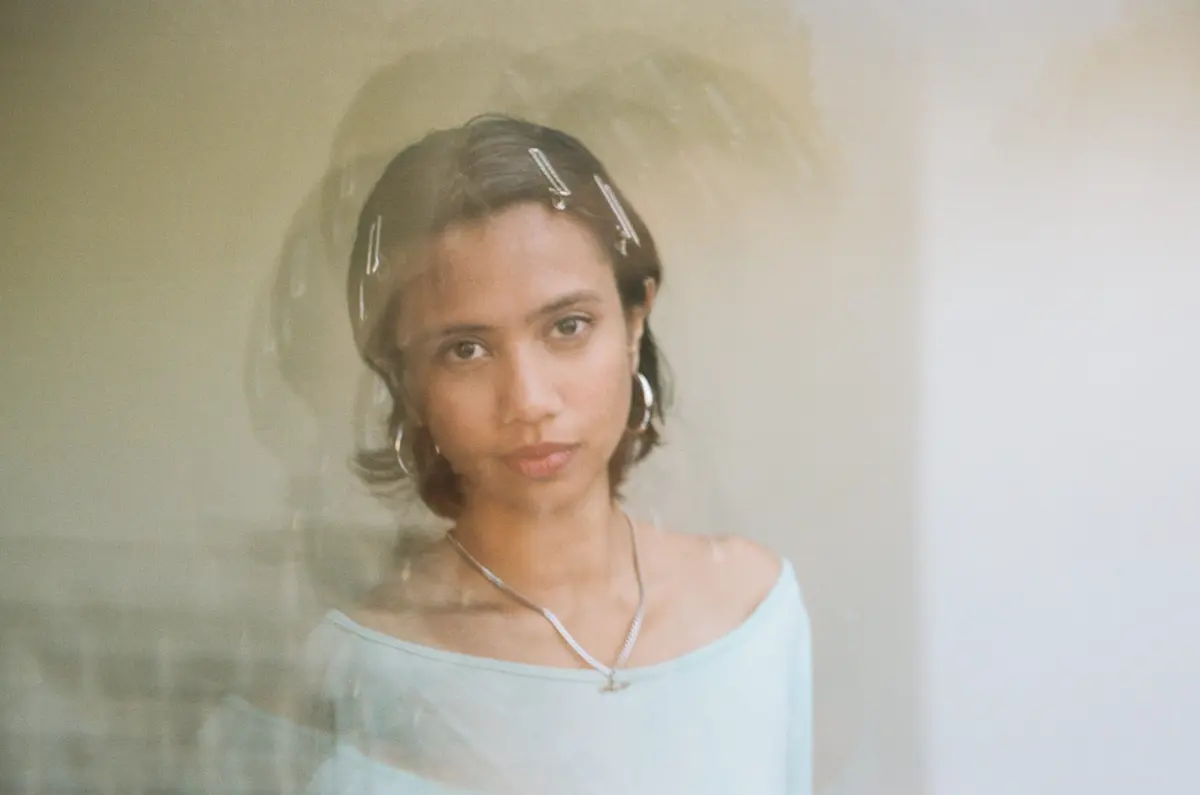
In the modern landscape of the music industry, few phenomena are as volatile as overnight success. For most emerging artists, the dream of a viral moment is the ultimate validation—a golden ticket that promises instant industry recognition, global listenership, and a fast-track career. Yet, as 25-year-old independent artist Naya Yeira has learned firsthand, early virality without a solidified artistic foundation can feel less like a triumph and more like an existential crisis.
Yeira’s debut EP, almost there, represents the culmination of a grueling, three-year journey of self-discovery, artistic reclamation, and technological independence. While her 2021 breakout single, the pop-jazz number “Afterglow,” racked up millions of streams and thrust her into the spotlight while she was still a student at London’s BIMM Music Institute, the sudden wave of attention left her isolated and overwhelmed. Unsure of her sonic identity and lacking the infrastructure to process her sudden prominence, Yeira temporarily retreated from the digital world, turning off her phone to escape the strange, disorienting reality of going viral before she even knew who she was as an artist.
Today, Yeira has emerged from that crucible with a richer, more complex sound that blends neo-soul vocal delivery, indie-rock textures, digital maximalism, and cloud-rap sensibilities. Across the six tracks of almost there, she has systematically dismantled the cookie-cutter mold of her early commercial success, opting instead for a fiercely independent, DIY approach to music-making and visual world-building. Refusing to succumb to the sterile tide of corporate algorithms and artificial intelligence, Yeira proudly stamps her handmade, Y2K-inspired visualizers and digital art with a “Not AI” badge. By learning how to code, master 3D software like Blender, and build her own tech hardware, she is spearheading a counter-movement of artists taking the digital realm back from corporate exploitation.
This deep-dive profile explores Naya Yeira’s evolution from an accidental internet sensation to a visionary independent auteur, examining the psychological hurdles of early success, her eclectic sonic palette, her pioneering approach to DIY visuals, and her steadfast belief in the power of human-made digital art.
Detailed Chronology: From BIMM Halls to the Digital Underground
To understand the emotional and artistic depth of almost there, one must trace the winding trajectory of Yeira’s career back to its accidental inception.
The Genesis: “Afterglow” and the Shock of the Virality
In 2019, Yeira began her formal musical education at London’s prestigious BIMM Music Institute. It was during a songwriting class that encouraged students to experiment with David Bowie’s abstract, non-linear lyric-writing techniques that she penned her very first song, a breezy pop-jazz track titled “Afterglow.”
Released in 2021, “Afterglow” was initially nothing more than a class assignment. However, upon submitting the track to sync licensing agencies, the song caught the attention of a major corporate entity that heavily backed and pushed it into commercial rotation. Overnight, the track exploded, accumulating over a million streams and dominating regional listening charts. To this day, “Afterglow” remains her most-listened-to track on Spotify, single-handedly sustaining her monthly listener metrics.
Yet, rather than celebrating, the young artist felt profoundly alienated. “It literally didn’t mean anything, it came from a school project,” Yeira reflects. “When it went massive, I didn’t know what I wanted to look like, I was just a kid that went viral. I think I even switched my phone off as it was scary, weird.”
The Loss of Momentum and the Three-Year Pivot
The psychological aftermath of her debut’s success triggered a severe creative block. Stranded with a hit song that did not reflect her true artistic identity, Yeira suffered from a debilitating loss of momentum. She admits to being hard on herself during this period, grappling with imposter syndrome and the realization that unearned, ungrounded success is inherently fleeting.
“It was such a pivotal moment for me; to learn and realise that if success is given to you, it’s not going to last,” she notes. “My first song ever got a million streams, and then it all fell apart.”
Rather than rushing to capitalize on her fleeting viral moment with a stream of hurried releases, Yeira made the courageous decision to slow down. She spent the next three years agonizing over her sonic identity. She experimented with different genres, abandoning the pressure to conform strictly to R&B—a pigeonhole she was frequently pushed into due to the rich, soulful tone of her voice—and instead leaning into jazz, pop, indie, and electronic textures. It wasn’t until early 2025 that she finally felt she had locked down her authentic artistic voice.
The Arrival of almost there
Released to critical acclaim, almost there marks a stark departure from the radio-friendly formulas of “Afterglow.” Comprising six meticulously crafted tracks, the EP showcases Yeira’s ability to weave soulful, commanding vocal melodies into genre-bending sonic landscapes. From the indie-leaning wallow and drum echoes of “raffle ticket” to the digital maximalism and gunfire beats of “i might hit record,” and the cloud-rap cadence of “do my dance,” the EP proves that Yeira has firmly cemented her place among the most innovative creators of her generational cohort.
Supporting Context & Metrics: Sound, Subjectivity, and Self-Actualization
Sonic Architecture and Genre Fusion
almost there is a masterclass in modern sonic hybridity. While Yeira’s foundational vocal training anchors the music in deep emotional resonance, the production choices across the EP are unapologetically experimental.
“raffle ticket”: Built on a slow, R&B-driven groove, the track merges melancholic indie-rock guitar wallowing with delayed drum echoes. Lyrically, the song serves as an exploration of romantic vulnerability. “It’s about how love is a lottery,” Yeira explains, reflecting on the anxieties of falling in love young. “Especially if you fall in love quite young and you hope to grow together and they don’t turn out to be an asshole later.”
“i might hit record”: This high-energy, upbeat track introduces a playful splash of digital maximalism. Featuring sharp, cascading electronic prongs and rhythmic, gunfire-like percussion, the song serves as an anthem for self-preservation. When asked about its thematic core, Yeira describes it as a definitive track about self-love: “You don’t know what’s going to happen, but you keep going and love yourself during the process.”
“wicked games” & “twenty9”: Continuing her exploration of immersive, textured soundscapes, these tracks anchor the EP’s broader meditation on heartbreak, digital surrealism, and human resilience.
The Philosophy of the Love Song
Lyrically, Yeira operates under a fascinating artistic hypothesis: that every great song is fundamentally a love song, regardless of its explicit subject matter.
To illustrate this point, she draws comparisons beyond her own catalog. Referencing The Beatles’ classic “Hey Jude” and Arlo Parks’ critically acclaimed single “Black Dog”—a track written about a friend battling severe depression—Yeira notes that expressions of care, empathy, and emotional protection are inherently romantic in their deepest sense. “It’s not an ‘I love you’ song, but it’s about saying ‘I care about you and [would] do anything to make you feel OK,’” she observes.
Official Statements & Industry Insights
Navigating Independence and Creative Burnout
Operating as a fiercely independent artist in the modern era comes with distinct challenges. Without the financial backing or marketing machinery of a major label, Yeira has had to become a multi-disciplinary creator, taking charge not only of her music production and songwriting, but also her visual aesthetics, marketing campaigns, and video production.
Her Instagram and TikTok feeds offer a transparent look into this hustle, featuring everything from tour vlogs supporting Craig David to behind-the-scenes clips of her crafting her own visualizers. Initially, this hyper-focus on music and self-promotion led to severe creative burnout. However, pivoting into visual arts actually rejuvenated her passion for songwriting.
"When you’re independent, you’re faced with constraints and you learn to do things yourself," Yeira muses. "I really do enjoy making my own visuals and giving a world to the sonics. I was so hyperfocused on music, I got kind of burnt out. By doing other things, I became more passionate about writing."
Reclaiming Technology from the AI Doomsphere
Perhaps one of Yeira’s most defining characteristics as an artist of the 2020s is her relationship with digital media and emerging technology. Self-describing as a “digital daughter” of surrealism, she actively embraces digital tools while remaining fiercely opposed to the homogenization of art driven by artificial intelligence.
To achieve the distinct Y2K, rough-and-ready aesthetic of her music videos, Yeira taught herself complex software programs including Blender 3D, TouchDesigner, and coding. For her 2025 track “wicked games,” she bypassed expensive studio setups by filming herself in front of a modest £20 green screen, subsequently layering her footage onto a pixelated, 3D city map where the camera pans and zooms like a rudimentary Google Earth interface. Similarly, the visualiser for “twenty9” functions as a digital portal, offering a multi-dimensional escape from heartbreak.
In an era where many artists are abandoning the internet for analog seclusion, Yeira takes a radically different stance. She explicitly labels her work “Not AI” across her social media captions, urging fans to reject automated digital slop in favor of human-crafted ingenuity.
"Yes. The girls are taking [tech] back," Yeira smiles, discussing the grassroots counter-movement against corporate tech dominance. "Have you seen that cyberdeck trend? I’m building one. We’re trying to take control of it again because it is such a big part of our lives, it’s not going to go away. So what we can do is make it cute—there’s no big corporation behind it trying to take away your data and soul."
Future Outlook: Building from the Ground Up
As Naya Yeira looks toward the remainder of 2025 and beyond, her journey serves as a powerful case study for the modern independent musician. Whether she succeeds in building her custom gaming-style cyberdeck or continues to push the boundaries of DIY digital surrealism, her trajectory is defined by radical authenticity.
Reflecting on her tumultuous entry into the music industry, Yeira harbors no bitterness—only hard-earned wisdom.
"Having that [success] at the start of your career, and not knowing what to do with it, was an interesting moment to have. It was a very interesting lesson," she reflects. "I had to figure it all out from scratch. I understand that if you have artistic development and you know creatively what you want to do, that will build more of a foundation. The reason why I make music is to have a connection with people—not be famous."
almost there is not a record defined by glossy corporate perfection or algorithmic engineering. It is raw, honest, and constructed entirely with her bare hands. It may not be flawless, but in the most profound sense possible, it is precisely where it needs to be: right on the precipice of greatness.