
Executive Overview
In the ever-shifting landscape of contemporary popular culture, artists who effortlessly bridge the gap between bygone eras and modern sensibilities are exceedingly rare. Less than a year ago, Australian-born singer, songwriter, and pianist Frances Madden was an undiscovered name to many international critics. Yet, propelled by a magnetic live performance and a series of evocative internet clips, she has firmly established herself as a vital, direct conduit to the golden age of popular music—spanning the vibrant soundscapes of 1900 to 1950.
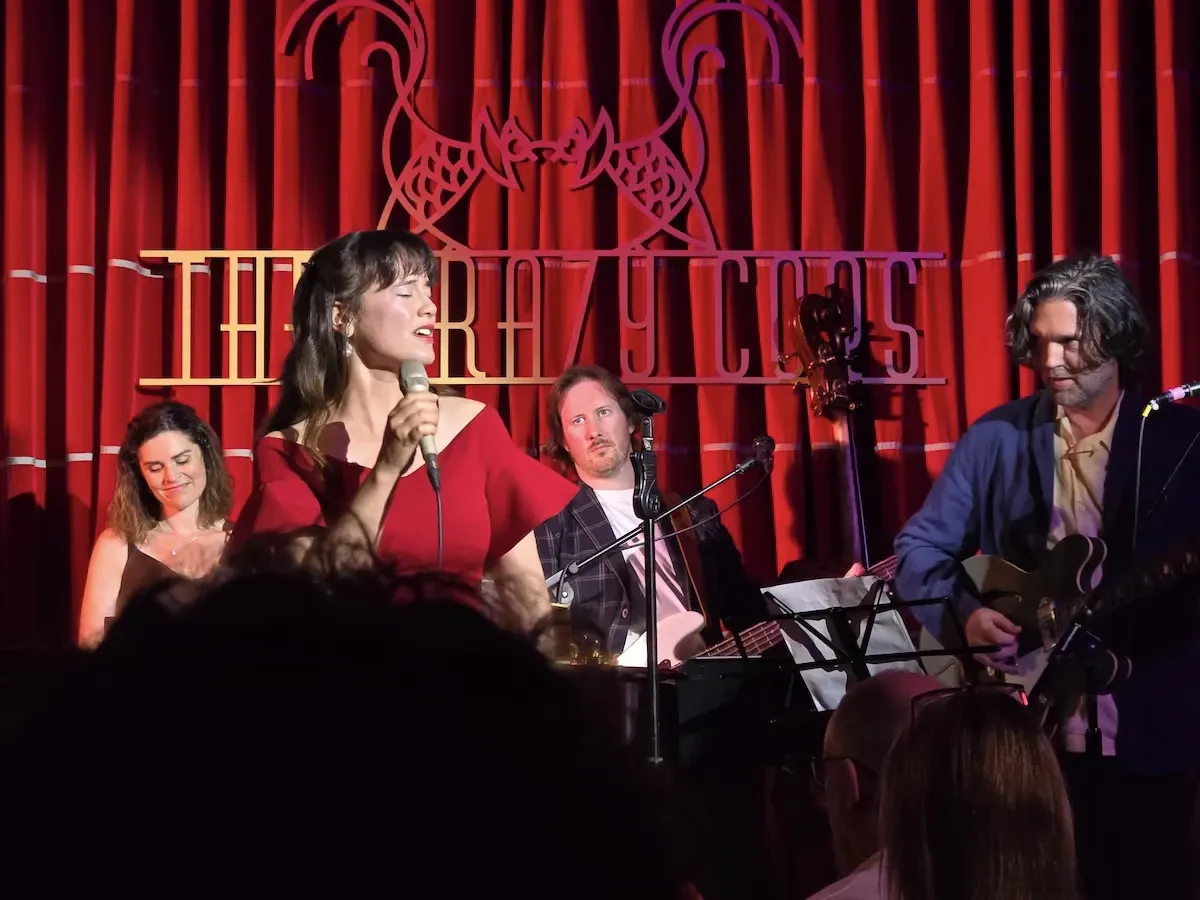
Madden’s artistry is not merely a nostalgic exercise in pastiche; rather, it is a living, breathing continuation of timeless vocal jazz and classic songwriting traditions. Her journey from a music-filled household in Sydney to the prestigious stages of London’s West End—including acclaimed runs at Ronnie Scott’s and Crazy Coqs—reads as a masterclass in organic artistic evolution.
This comprehensive profile explores Madden’s formative musical upbringing, the serendipitous encounters that catalyzed her professional career, her strategic expansion into international markets like the United Kingdom and France, and her upcoming creative endeavors. As she transitions from a celebrated interpreter of jazz standards to an ambitious, self-actualized original songwriter, Frances Madden stands poised at the threshold of global stardom.
Detailed Chronology: From Prodigy to International Performer
Formative Years and Musical Immersion in Sydney
Born and raised in Sydney, Australia, Madden’s entry into the world of music was neither a clichéd family dynasty nor an accidental discovery. When asked whether she hailed from a musical background, Madden offers a nuanced perspective:
"Yes and no. No in the sense that no older generation of my family sang, or played a musical instrument, but yes in the sense that I grew up in a musical environment."
Her parents fostered an intensely passionate household where auditory stimulation ranged from classical masterpieces to the timeless vocal stylings of Ella Fitzgerald. This passion was not passive; Madden’s parents instituted a household mandate requiring all of their children to learn a musical instrument. Remarkably, without authoritative parental assignment or sibling rivalry, each child naturally gravitated toward a distinct instrument, establishing a harmonious domestic orchestra without professional clashes.
For Frances, the piano was an immediate, undeniable calling. Though she retains no conscious recollection of the event, family lore holds that at merely three years of age, she pointed directly to a piano and declared, "I want to play that." True to her early declaration, formal lessons commenced at age five. Far from experiencing the instrument as a chore—a common hurdle for young prodigies—Madden formed an immediate, lifelong affection for the keyboard.
Today, while her core instrumental mastery remains anchored to the piano, Madden contemplates expanding her repertoire. She is considering picking up the guitar, noting that the shift is motivated less by a desire for public performance and more as a functional tool to unlock new dimensions in her songwriting. Interestingly, while none of her siblings pursued music as a primary vocation, each achieved professional-standard proficiency, maintaining music as a lifelong cornerstone of personal enrichment.
The Late Bloom: University Bands and Vocal Emergence
Despite her early instrumental grounding, vocal performance entered Madden’s life much later. She was sixteen years old and navigating university life when she first began to sing.
It was during this academic chapter that she coalesced with fellow students—guitarists and drummers—to form early collaborative units. This ensemble cut its teeth in the time-honored crucible of local establishments: neighborhood bars, university clubs, and private functions such as weddings. This grassroots experience provided invaluable stagecraft, teaching the young artist how to command a room long before the glossy spotlights of international jazz clubs found her.
Songwriting, too, arrived as a secondary wave. Madden began composing her own material at age twenty-one, roughly half a decade after she first found her voice as a singer.
Serendipity at The Basement
Every rising artist’s narrative requires a turning point, and for Madden, it arrived wrapped in the disguise of a thoroughly disastrous gig.
While playing for a local women’s club, Madden and her ensemble faced an indifferent, disruptive audience. The attendees engaged in loud conversations and raucous laughter, effectively drowning out both the music and the lyrical narrative. To all intents and purposes, it was a performance destined to be forgotten.
However, as the adage goes, fortune favors the prepared. At the conclusion of the set, a lone woman approached the stage to offer a sincere apology on behalf of her unruly peers. More importantly, she revealed that she had listened intently, appreciated the artistry, and happened to run a local music venue. She promptly invited Madden to perform at her establishment.
That venue was none of, other than The Basement—widely regarded as Sydney’s premier jazz sanctuary. This serendipitous encounter served as the springboard for Madden’s professional visibility in Australia, leading to the recording of her debut album and cementing her reputation in her native land.
Supporting Context & Metrics: The International Leap
Having established a solid foundation, recorded her debut album, and achieved notable acclaim across Australia, Madden confronted a familiar hurdle for antipodean artists: the geographic and professional glass ceiling. Seeking to test whether her distinct brand of jazz and classic songwriting could transcend cultural boundaries, she set her sights on the Northern Hemisphere.
Expanding the Footprint: UK, France, and Nashville
Though her initial arrival in the United Kingdom felt like a recent chapter, Madden reflects that she has spent approximately four non-consecutive years cultivating her European presence. Her touring and performance footprint has steadily widened:
- London Residency & Club Circuit: Madden has twice headlined the legendary Ronnie Scott’s Jazz Club and the intimate Crazy Coqs, cementing her status within the UK capital’s elite live music circuit.
- Continental Europe: Recent touring cycles have seen her perform multiple dates in and around Nantes, France, successfully engaging French audiences with her sophisticated musicality.
- Transatlantic Collaborations: Looking ahead, Madden’s itinerary includes planned sessions in Nashville later this year, signaling a bridge between classic jazz-pop sensibilities and the legendary songwriting capital of the world.
Orchestration and Arrangement
While Madden frequently performs with a tight, dynamic rhythm section comprising bass, drums, and guitar—and is frequently witnessed online commanding larger horn sections featuring trumpet and saxophone—her behind-the-scenes contribution is total. She personally writes all the charts for her backing musicians, maintaining strict creative control over her sonic arrangements.
Official Statements & Industry Insights
During our exclusive interview, Frances Madden offered candid insights into her creative philosophy, the realities of the contemporary jazz market, and her overarching career ambitions.
On the Realities of Residencies vs. Original Ambitions
Madden currently maintains prestigious London residencies at high-end establishments including The Brasserie, The Dorchester, and The Londoner. While these high-profile gigs provide stability and exposure, they come with specific artistic compromises:
"At the moment I have several residencies… but of course, those audiences want to hear covers of songs they already know, and my ambition is to be recognised for my own songs."
This tension between performing beloved jazz standards that satiate high-end hospitality crowds and advocating for her original compositions remains a driving force in her career strategy.
On the Craft of Songwriting
Songwriting is not a casual pastime for Madden; it is an evolving discipline. To sharpen her lyrical and structural abilities, she participated in two intensive five-day songwriting retreats over the past year.
"I’ve been on two five-day songwriting retreats this year and I really learned a lot from them."
This dedication to continuous learning is translating directly into her upcoming studio output.
Future Outlook: The Sophomore Album and Beyond
As Frances Madden looks to the horizon, her immediate focus is squarely on the completion and release of her upcoming sophomore album.
Production and Tracklist Metrics
- Current Progress: Six tracks have already been officially laid down in the studio.
- Target Album Length: The completed record will feature precisely 12 tracks, balancing concise pop structures with deep jazz-harmonic exploration.
- Touring Ambitions: While she has yet to embark on a formal, multi-city national or international concert tour, Madden expresses an eager readiness to take her expanded ensemble on the road.
Conclusion: A Definitive Rising Star
Frances Madden represents a rare bridge across musical generations. By melding the sophisticated vocal phrasing and harmonic richness of the early-to-mid 20th century with modern work ethic and global ambition, she has crafted a formidable artistic identity.
As she transitions from a celebrated interpreter of the Great American Songbook to a recognized auteur of original compositions, the music world would do well to heed her trajectory. Frances Madden is no longer just a blip on the radar—she is a blazing fixture in the modern musical firmament.