
By Francisco Salazar
Published by OperaWire
Executive Overview
Few works within the operatic canon command the theatrical urgency, emotional turbulence, and enduring public fascination of Giacomo Puccini’s Tosca. Blending high-stakes political intrigue with intimate, consuming jealousy, this masterwork of verismo realism remains a cornerstone of the global lyric theater repertoire. This coming season, the Metropolitan Opera at Lincoln Center is set to reaffirm its dedication to grand theatrical spectacle by mounting a monumental, multi-cast, 25-performance revival of the tragedy, running from November 1, 2025, through May 27, 2026.
This ambitious scheduling represents one of the most extended and heavily cast-rotated runs of a single opera in recent Met history. Designed to accommodate an array of international vocal superstars, highly anticipated company debuts, and world-renowned conductors, the upcoming presentation of Tosca promises to be a defining anchor of the New York cultural season. Featuring three distinct, star-laden blocks of performances spanning late autumn, mid-winter, and spring, the run will offer opera aficionados a masterclass in interpretive variation. From rising European talents making their long-awaited bows on the historic Met stage to venerated company veterans returning to definitive roles, the production is engineered to showcase the pinnacle of contemporary vocal art.
Furthermore, recognizing the global appetite for world-class opera, the institution has devised a robust broadcast strategy. Select performances will reach international audiences via the SiriusXM app and the historic Metropolitan Opera International Radio Network, ensuring that this sweeping theatrical journey transcends the physical confines of the Upper West Side opera house.
Detailed Chronology and Cast Lineups
To sustain a grueling 25-performance arc over nearly seven months, the Metropolitan Opera has assembled a revolving roster of world-class artists. The production is meticulously partitioned into three distinct phases, each offering a unique alchemy of vocal timbre, dramatic temperament, and musical leadership.
Phase I: The Autumn Opening and Landmark Debuts (November – December 2025)
The grand opening on November 1, 2025, marks a watershed moment for the season, introducing a trio of performers to drive the opening arc of six performances. Most notably, Spanish soprano Saioa Hernández will make her highly anticipated Metropolitan Opera debut in the title role of Floria Tosca. Hernández, celebrated across major European houses for her soaring top notes, dramatic intensity, and commanding stage presence, is expected to bring a fresh, visceral urgency to the iconic diva.
Opposite Hernández, tenor SeokJong Baek steps into the role of the idealistic painter and political revolutionary Mario Cavaradossi. Baek, whose recent performances at the Met and international stages have earned acclaim for his robust Italianate spinet and thrilling upper register, provides a passionate counterpoint to Hernández’s Tosca. Completing the principal triumvirate for these opening nights is baritone Quinn Kelsey as the corrupt, predatory Chief of Police, Baron Scarpia. Kelsey, a reigning vocal heavy in the dramatic baritone repertoire, is renowned for his chillingly nuanced portrayals of operatic villainy, injecting psychological depth into Scarpia’s tyranny.
In the pit, Ukrainian maestro Oksana Lyniv takes the podium to conduct the first six performances. Lyniv, whose meteoric rise has made her one of the most sought-after conductors on the international symphonic and operatic circuits, brings her trademark precision, structural clarity, and emotional dynamism to Puccini’s lush orchestrations.
Phase II: Mid-Winter Mastery (January 2026)
As the calendar turns to the new year, the Met shifts into its second major wave of Tosca performances, beginning on January 6, 2026. This leg of the run sees the return of beloved Polish soprano Aleksandra Kurzak to reprise her celebrated portrayal of the tempestuous heroine. Kurzak, whose vocal versatility spans bel canto agility to heavy lyrical dramatic roles, infuses Tosca with profound vulnerability and fiery theatricality.
She is joined by her frequent collaborator and husband, star tenor Piotr Beczała, who brings his golden-toned, emotionally resonant voice to the role of Cavaradossi. Beczała’s interpretation of the painter’s defiant "E lucevan le stelle" remains one of the most anticipated vocal highlights of the winter season.
The role of Baron Scarpia will be shared by two formidable baritones: the commanding Georgian artist George Gagnidze and the internationally acclaimed Željko Lučić. Both bring decades of experience and distinct dramatic gravitas to the role of Rome’s chief inquisitor.
Musical leadership during this winter chapter is equally formidable. The performances will be shared between Met Principal Guest Conductor Daniele Rustioni—known for his blistering theatrical instincts and deep affinity for the Italian repertoire—and Yannick Nézet-Séguin, the Metropolitan Opera’s Jeanette Lerman-Neubauer Music Director, ensuring the highest standards of orchestral execution and artistic cohesion.
Phase III: The Spring Finale and Triple-Cast Climax (April – May 2026)
The final leg of the run, commencing on April 28 and extending through the season-closing night on May 27, 2026, represents a staggering logistical and artistic triumph. This chapter features a rotating matrix of three sopranos sharing the grueling title role, ensuring that the production’s culmination remains fresh, unpredictable, and vocally diverse.
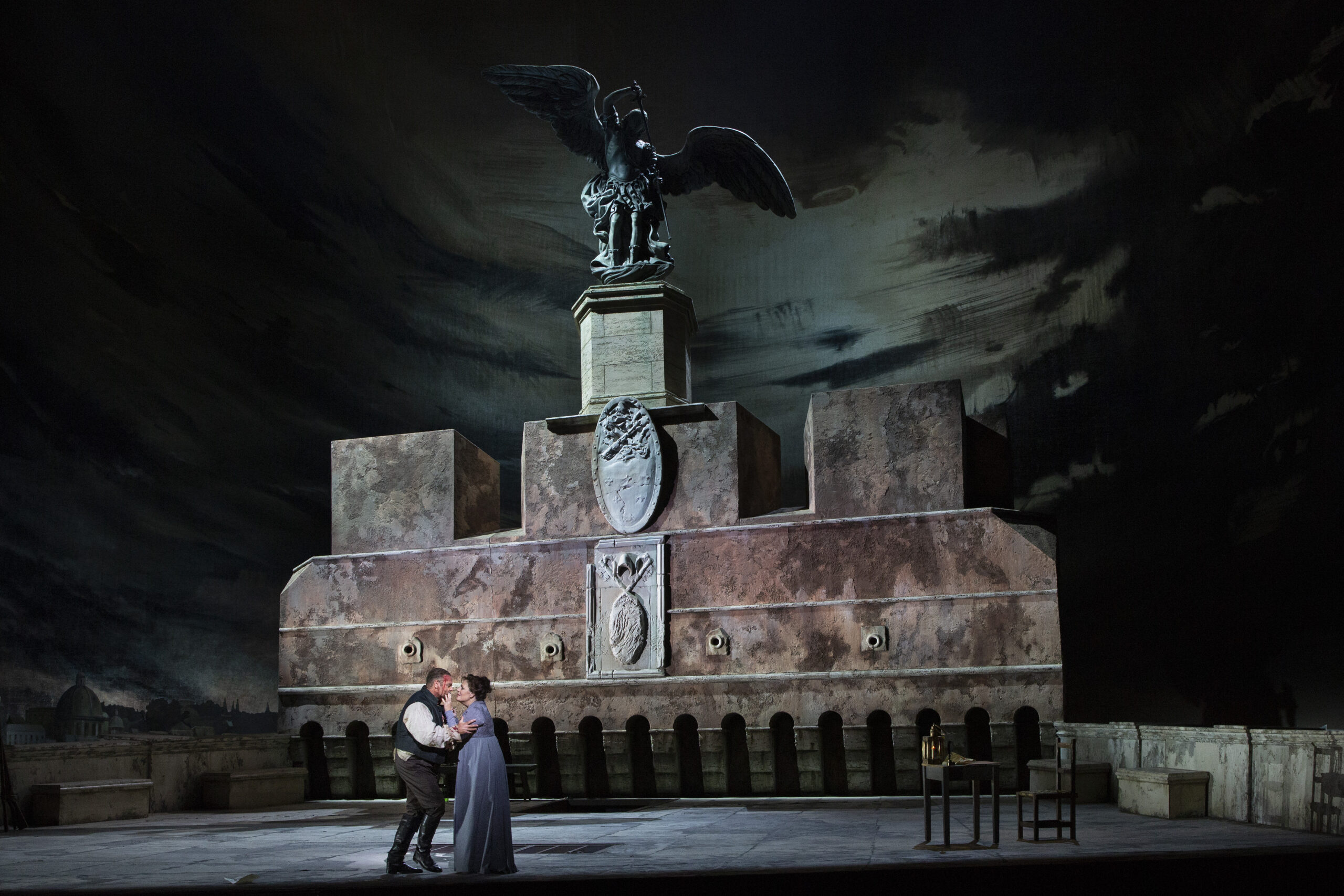
Soprano Natalya Romaniw makes her major company debut as Tosca, bringing her celebrated vocal amplitude and emotional sincerity to the New York audience. She is joined by two reigning sopranos of the international stage: Eleonora Buratto, whose radiant Italianate tone has made her a Met favorite, and Sondra Radvanovsky, an artist whose iconic, fiercely committed interpretation of Tosca has defined the role for a generation of opera-goers.
The romantic lead of Cavaradossi will be anchored by two titan tenors of our era: Roberto Alagna, whose stylistic authenticity and passionate delivery have made him a legendary figure at the house, and Matthew Polenzani, celebrated for his peerless phrasing, lyrical elegance, and vocal stamina.
Meanwhile, the psychological chess match with Scarpia will be contested by baritone Amartuvshin Enkhbat—whose monumental, velvet-toned voice has taken the opera world by storm—alongside the returning Željko Lučić.
Guiding this stellar assembly through the complex vocal and orchestral final stretch are conductors Karel Mark Chichon and Marco Armiliato, two maestros intimately familiar with the demands of Puccini’s sweeping sonic architecture.
Supporting Context, Metrics, and Broadcast Reach
Decoding the Scale of a 25-Performance Run
In the contemporary landscape of international opera, mounting a 25-performance run of a single title is an extraordinary operational feat. Most major opera houses worldwide rely heavily on rotating repertory models, typically limiting individual productions to five to eight performances per season to maximize box office diversity. The decision by the Metropolitan Opera to schedule 25 performances of Tosca underscores the enduring commercial and cultural pulling power of the work, as well as the institution’s strategic need to engage diverse audience demographics across an extended timeline.
From a logistical standpoint, a run of this magnitude requires an intricate web of rehearsal schedules, understudy coverage, costume fittings across multiple physical productions or cast variations, and precise vocal management. By dividing the run into three distinct segments, the Met’s artistic administration has engineered a sustainable model that protects the vocal health of its principal artists while offering subscribers and casual ticket-buyers a multitude of cast combinations to experience.
Global Accessibility Through Modern Media
Understanding that the physical walls of the Metropolitan Opera House can only accommodate a fraction of the global opera community, the institution has prioritized multi-platform broadcasting for this run.
- SiriusXM App Broadcasts: Five pivotal performances—specifically on November 6, January 9, April 28, May 4, and May 27—will be broadcast live on the dedicated SiriusXM app (Metropolitan Opera Radio channel). This ensures that listeners across North America can experience the thrill of opening nights and cast transitions in real-time digital high fidelity.
- International Radio Network: Furthermore, the January 9, 2026 performance will receive a wider terrestrial and digital syndication via The Robert K. Johnson Foundation–Metropolitan Opera International Radio Network, continuing a decades-long tradition of bringing world-class performances to millions of households globally.
These broadcast initiatives align with the Met’s ongoing mission to democratize access to high art, ensuring that geographic or economic barriers do not preclude opera lovers from participating in major cultural milestones.
Official Statements and Institutional Vision
While specific quotes from the individual artists regarding their upcoming engagements will be unveiled closer to the opening dates, the structural design of the season speaks volumes about the Met’s overarching artistic philosophy under the leadership of General Manager Peter Gelb and Music Director Yannick Nézet-Séguin.
The integration of high-profile company debuts—such as those of Saioa Hernández and Natalya Romaniw—signals the Met’s continued commitment to serving as the ultimate global proving ground for top-tier international talent. By pairing these rising and debut artists with established house legends like Sondra Radvanovsky, Roberto Alagna, Piotr Beczała, and Quinn Kelsey, the institution bridges generational divides, fostering an environment of artistic mentorship and high-level theatrical collaboration.
Furthermore, the involvement of Music Director Yannick Nézet-Séguin alongside guest maestros like Oksana Lyniv and Daniele Rustioni highlights a curatorial balance. It ensures that while the vocal fireworks remain front and center, the orchestral execution receives the rigorous, symphonic treatment required to elevate Puccini’s score from standard melodrama to transcendent tragedy.
Future Outlook: The Enduring Legacy of Verismo at the Met
As the Metropolitan Opera looks toward the culmination of this massive Tosca arc in late May 2026, the production serves as a powerful barometer for the health and vitality of the performing arts in New York City. Tosca has long served as a theatrical mirror reflecting the sociopolitical anxieties of its audience: corruption, institutional abuse of power, artistic defiance, and the crushing weight of authoritarianism remain as potent today as they were when Victorien Sardou penned the original play and Puccini transformed it into lyric drama in 1900.
The sheer volume of performances—spanning winter frosts to spring thaws—demonstrates the resilient appetite for grand-scale traditional operatic storytelling. For ticket holders, critics, and global radio listeners alike, the 2025–2026 Tosca revival will undoubtedly be remembered as a defining chapter in the modern history of the Metropolitan Opera—a testament to the enduring power of the human voice when pushed to its absolute expressive limits.
Performance Summary at a Glance:
- Opening Date: November 1, 2025
- Closing Date: May 27, 2026
- Total Performances: 25
- Key Conductors: Oksana Lyniv, Daniele Rustioni, Yannick Nézet-Séguin, Karel Mark Chichon, Marco Armiliato.
- Key Headlining Artists: Saioa Hernández, Natalya Romaniw, Eleonora Buratto, Sondra Radvanovsky, SeokJong Baek, Piotr Beczała, Roberto Alagna, Matthew Polenzani, Quinn Kelsey, George Gagnidze, Željko Lučić, Amartuvshin Enkhbat.
- Broadcast Dates: Nov. 6, 2025; Jan. 9, 2026; April 28, 2026; May 4, 2026; May 27, 2026 (via SiriusXM and International Radio Network).