
By Francisco Salazar
Published in partnership with independent arts journalism networks
Executive Overview
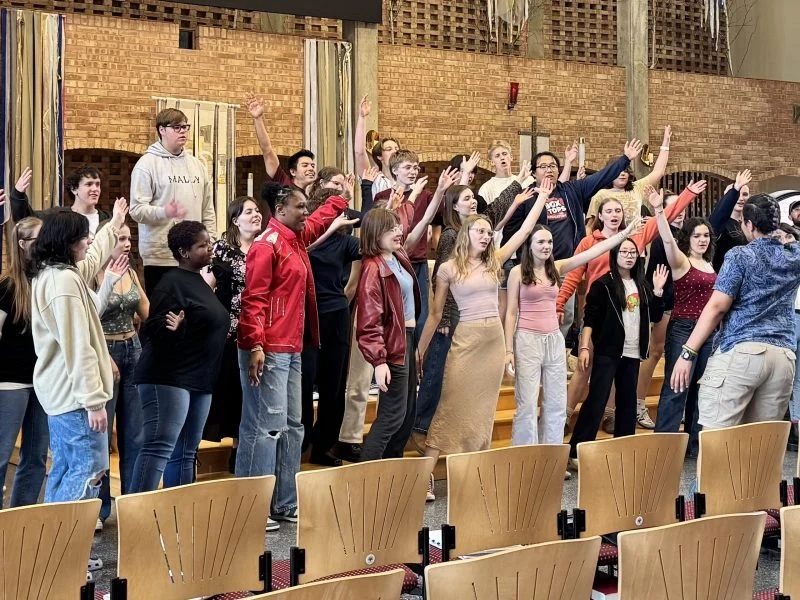
The cultural heartbeat of the nation’s capital is facing an unprecedented existential threat. On September 18, 2026, the advocacy coalition Hands Off the Arts is scheduled to lead a massive, high-profile public demonstration surrounding the John F. Kennedy Center for the Performing Arts. Far from a conventional political picket, the event is envisioned as a "joyful gathering"—a vibrant, community-driven mobilization designed to uplift the historic institution, honor its embattled staff, and celebrate the generations of artists, past and present, who have graced its world-renowned stages.
Yet beneath the celebratory cadence of the upcoming protest lies a grim reality of institutional neglect, administrative failure, and physical deterioration. In recent months, the Kennedy Center—once a dynamic, pulsating nexus of American creativity, theatrical innovation, and musical excellence—has been reduced to a state of near dormancy. Advocacy groups, industry insiders, and cultural workers trace the decline directly to the current administration of the Center, which critics characterize as a board of Trump loyalists who have thoroughly abdicated their fiduciary and cultural responsibilities.
The stakes of this crisis extend far beyond the empty seats and dark auditoriums of the Potomac waterfront. As one of the nation’s premier providers of arts education, the systemic mismanagement of the Kennedy Center threatens to starve communities nationwide of vital youth programming and educational resources. Locally, the livelihoods of stagehands, administrative personnel, front-of-house staff, and independent resident artists remain under immediate economic threat.
Compounding the governance crisis is a shocking physical decay of the facility itself. Following a viral social media campaign that exposed a dangerous ceiling collapse within the complex—a structural failure left unaddressed despite more than a year of documented warnings—public scrutiny has reached a boiling point. The narrative of the Kennedy Center as a thriving temple of the arts has been shattered, replaced by an urgent rallying cry from artists and patrons alike: This is not the Kennedy Center you know and love. It is not the Kennedy Center you deserve.
Detailed Chronology of a Cultural Collapse
To understand how one of America’s most prestigious cultural institutions arrived at this precarious juncture, it is necessary to examine the timeline of administrative shifts, infrastructure failures, and escalating public outrage.
The Shift in Governance and the Onset of Dormancy
The seeds of the current crisis were planted amid sweeping political transitions that prioritized ideological alignment over arts administration expertise. With the installation of a board largely composed of loyalists aligned with former President Donald Trump, the operational philosophy of the Kennedy Center underwent a seismic, inward-turning shift.
Long-time artistic directors, resident companies, and veteran administrative staff reported a sudden chilling effect on programming. Bold, boundary-pushing productions were quietly canceled or downsized, replaced by risk-averse, politically sanitized programming that failed to resonate with contemporary audiences. By early 2025, the vibrant calendar of events that once characterized the Center’s seasons began to thin out. Major national tours bypassed the venue, and community outreach programs saw their budgets drastically curtailed.
As the months progressed, the impact of this operational shrinkage became unmistakable. The sprawling complex, which should have been humming with rehearsals, symphonic performances, theatrical premieres, and educational workshops, frequently sat quiet. The economic repercussions rippled outward through the local Washington, D.C. service economy—affecting nearby restaurants, hotels, and transportation networks that historically relied on the Center’s nightly influx of patrons.
The Warning Signs: October 2025
Long before physical pieces of the building began to give way, structural and administrative red flags were flying. According to internal facilities logs and architectural assessments brought to light by concerned staff members, the roof and ceiling infrastructure of specific sections of the Kennedy Center complex began showing acute signs of distress as early as October 2025.
Water infiltration, hairline cracks in historic masonry, and deferred maintenance on climate-control systems were repeatedly flagged to executive leadership. However, rather than allocating emergency capital funds to remediate these vulnerabilities, administrative priorities shifted toward cost-cutting measures and administrative restructuring. The structural warnings were filed away, minimized, or ignored entirely—setting the stage for a preventable physical disaster.
The Ceiling Collapse and the Viral Reckoning of August 2026
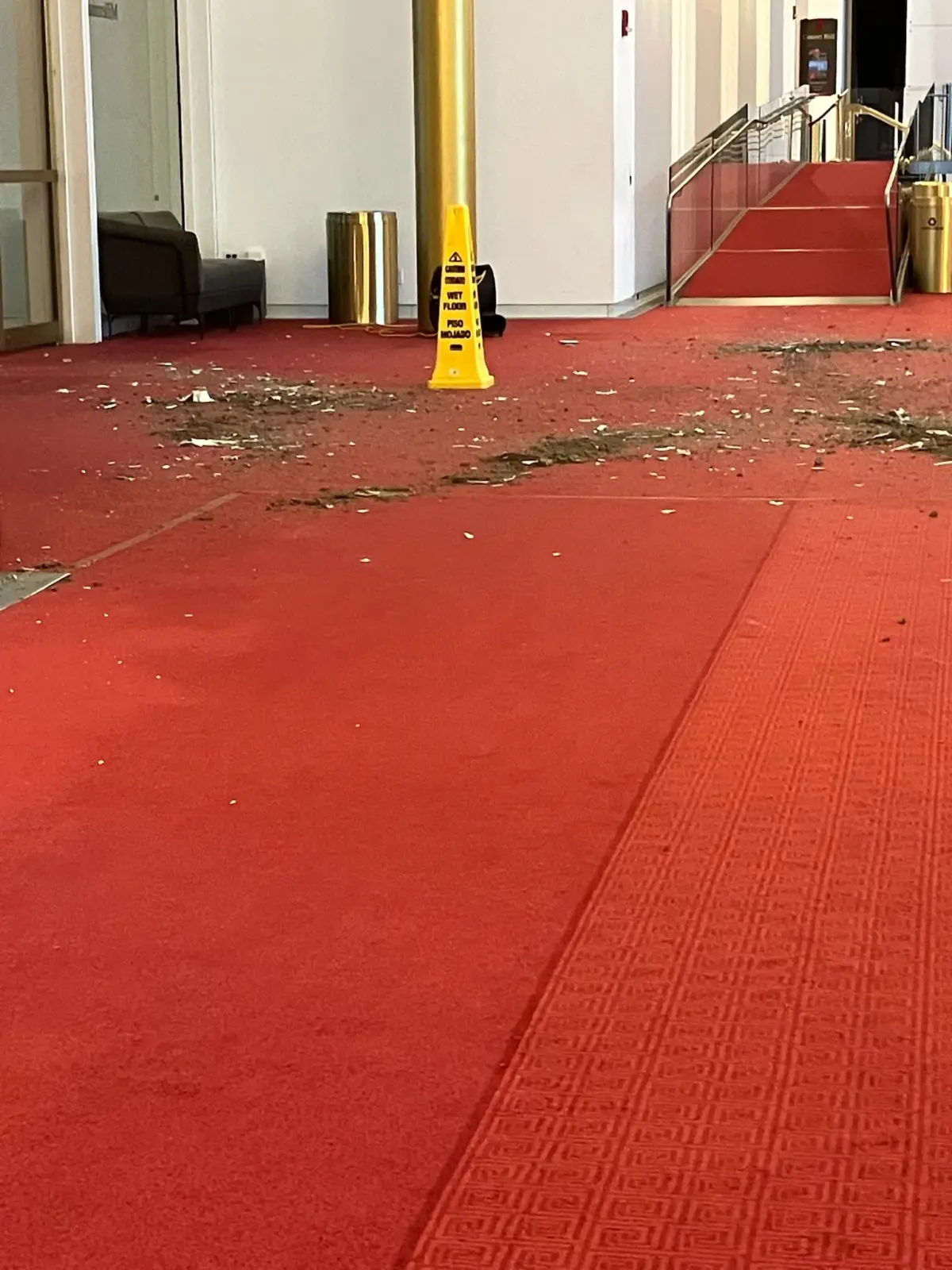
The crisis graduated from an administrative concern to a public safety scandal in late August 2026. A portion of the ceiling within the complex suffered a catastrophic collapse, narrowly missing public areas but laying bare the catastrophic toll of deferred maintenance.
Recognizing the severity of the incident and the systemic neglect it represented, the coalition Hands Off the Arts deployed its digital platform to demand transparency. The organization released a hard-hitting investigative video detailing the ceiling collapse and highlighting the more than a year of administrative inaction that preceded it.
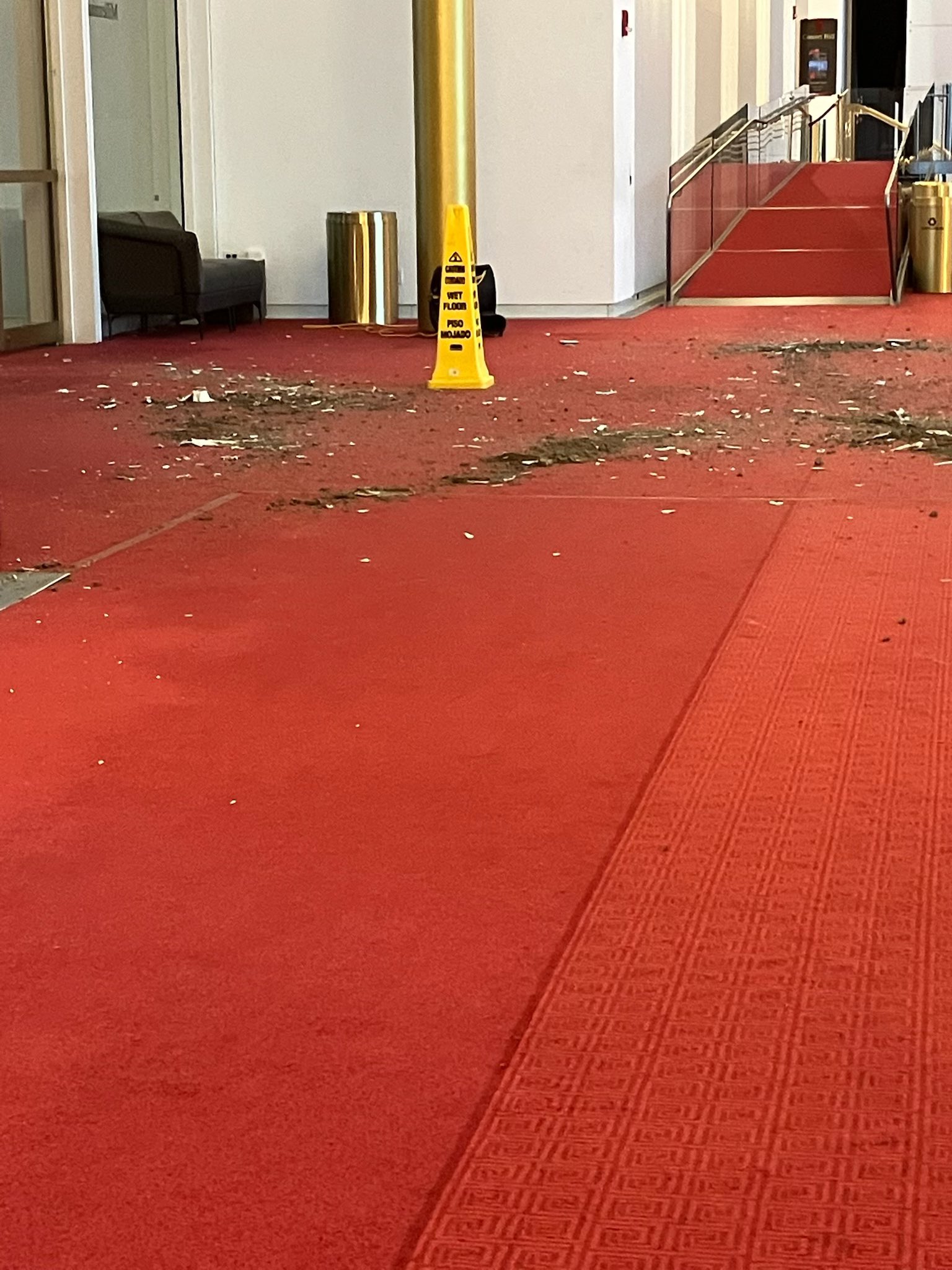
The digital response was unprecedented. Within days, the video amassed over 148,000 views, sparking viral outrage across Instagram, X (formerly Twitter), and independent arts forums. The footage not only documented the physical wreckage of the facility but also connected the structural failure to the broader narrative of institutional mismanagement. The video served as the catalyst for the September 18 mobilization, transforming quiet discontent into an organized, national movement.
Supporting Context & Metrics: The Human and Economic Toll
The degradation of the Kennedy Center cannot be viewed merely as a local real estate or managerial dispute; it represents a body blow to the American cultural infrastructure. Quantitative data and qualitative reports from cultural economists outline a devastating trajectory.
The National Reach of Arts Education Deficits
For decades, the Kennedy Center has operated as a titan of arts education, setting the gold standard for teacher training, youth engagement, and school-partnership programs nationwide. Through initiatives such as Any Given Child and national accessibility festivals, the Center has historically funneled millions of dollars and invaluable curricula into under-resourced school districts across all fifty states.
With the current board’s mismanagement and the subsequent budgetary hemorrhaging, these educational lifelines have been severely compromised. Educational outreach staff have faced layoffs, curriculum updates have stalled, and regional partnerships have dissolved. Education advocates warn that the loss of Kennedy Center-backed programming creates a cultural deficit for hundreds of thousands of students who rely on the arts for cognitive development, emotional expression, and community building.
The Economic Vulnerability of Local Arts Workers
At the micro-level, the human cost is measured in lost shifts, canceled contracts, and precarious livelihoods. The Kennedy Center is one of the largest specialized employers in the Washington, D.C. metropolitan area, supporting hundreds of unionized stagehands, wardrobe technicians, box office workers, security personnel, and administrative staffers, alongside a vast ecosystem of independent artists.
- Union Strain: Relations between stage unions (such as IATSE local chapters) and the current administration have grown increasingly adversarial. Grievances regarding unsafe working conditions—crystallized by the recent ceiling collapse—have compounded ongoing disputes over fair compensation and job security.
- The Independent Artist Ecosystem: Freelance musicians, actors, directors, and designers who depend on Kennedy Center engagements to sustain their careers have found themselves locked out of a stagnant booking market. Without robust, visionary leadership at the helm, the venue has ceased to function as a viable platform for contemporary creative labor.
Official Statements and Stakeholder Perspectives
As the countdown to the September 18 protest continues, pressure is mounting on the Kennedy Center’s leadership, trade unions, and cultural advocacy groups to address the unfolding crisis.
The Stance of "Hands Off the Arts"
In official communiques and manifesto releases, Hands Off the Arts has pulled no punches regarding the culpability of the current administration.
"The current Trump loyalist administration has failed utterly in its duty to this historic institution," the organization stated in a recent press release. "The Center, a formerly dynamic and lively arts hub, sits nearly dormant. The impact is felt far beyond the empty stages. As a top provider of arts education across the country, the fallout of the Board’s mismanagement will reverberate in communities nationwide. In our local neighborhoods, the livelihoods of artists and staff remain under constant threat. This is not the Kennedy Center you know and love. It is not the Kennedy Center you deserve."
The coalition emphasizes that the upcoming September 18 gathering is designed to reclaim the narrative. Rather than allowing the institution to decay quietly under partisan stewardship, the demonstration aims to project a vision of public ownership, artistic freedom, and operational integrity.
Silence from the Board of Trustees
In stark contrast to the vocal mobilization of artists and advocacy groups, the Kennedy Center Board of Trustees and executive leadership have maintained a guarded, largely defensive posture. Requests for comment regarding the structural integrity of the building, the timeline for repairs following the ceiling collapse, and the sharp decline in programming have been met with boilerplate public relations statements emphasizing ongoing "strategic evaluations" and commitments to safety.
Critics, however, interpret this silence as an admission of administrative failure, arguing that the leadership lacks both the competence and the cultural vision required to steward a national monument of the arts.
Future Outlook: What Lies Ahead for the Cultural Capital?
The demonstration on September 18, 2026, marks a crucial inflection point, but the battle for the soul of the Kennedy Center extends far beyond a single day of protest. Cultural analysts, legal experts, and arts administrators are looking toward several potential trajectories as the crisis unfolds:
- Increased Congressional Scrutiny: Because the Kennedy Center receives federal funding and operates as a designated national memorial to President John F. Kennedy, members of Congress are facing mounting pressure from constituents to launch formal congressional investigations into the board’s management, budgetary allocations, and infrastructure maintenance records.
- Structural Remediation Demands: Independent engineering firms and municipal inspectors are expected to demand full, transparent access to the facility to conduct independent safety audits. The cost of bringing the aging complex back up to optimal structural and technological standards is projected to run into the tens of millions of dollars—funds that the current administration has thus far failed to secure or prioritize.
- A Battle for Cultural Sovereignty: Ultimately, the crisis at the Kennedy Center has transcended traditional arts policy to become a frontline battleground in the broader cultural wars. Whether the institution can be wrested from partisan appointees and restored to its status as an inclusive, vibrant beacon of global artistic excellence will depend heavily on the sustained pressure of public coalitions like Hands Off the Arts, labor unions, and the broader creative community.
As September 18 approaches, all eyes in the national capital—and across the international arts community—will be turned toward the Potomac. The message from the streets will be unmistakable: the nation’s cultural home belongs to the artists, the educators, the workers, and the public, and it will be defended at all costs.