
Executive Overview
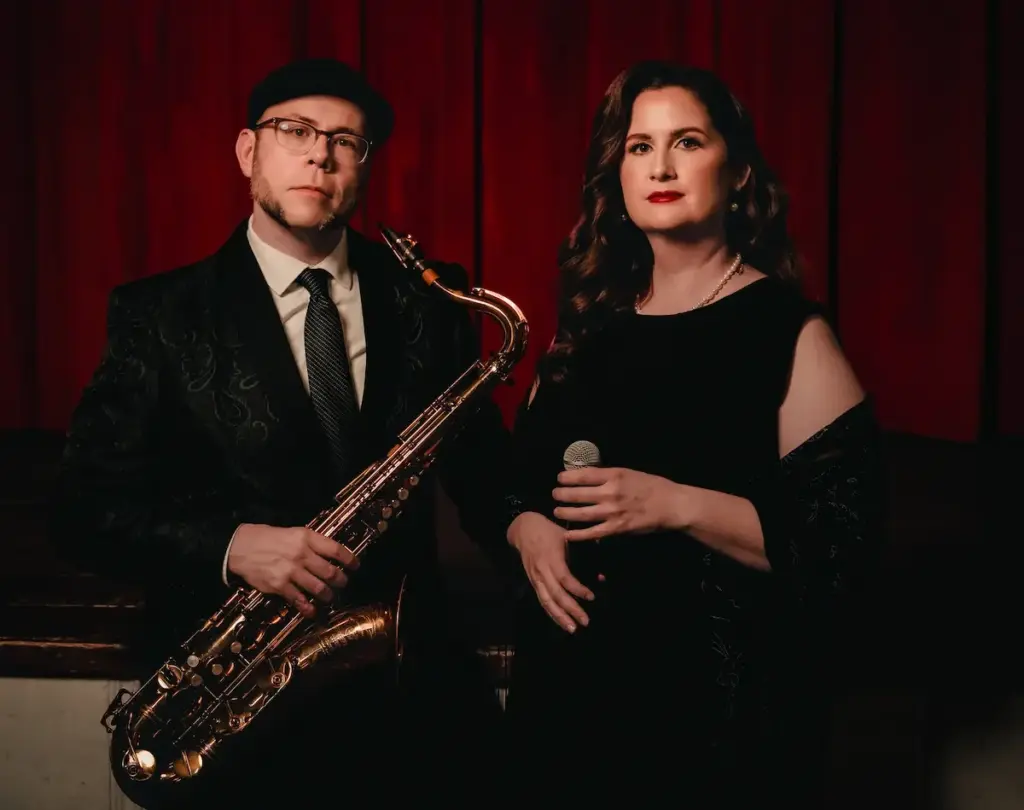
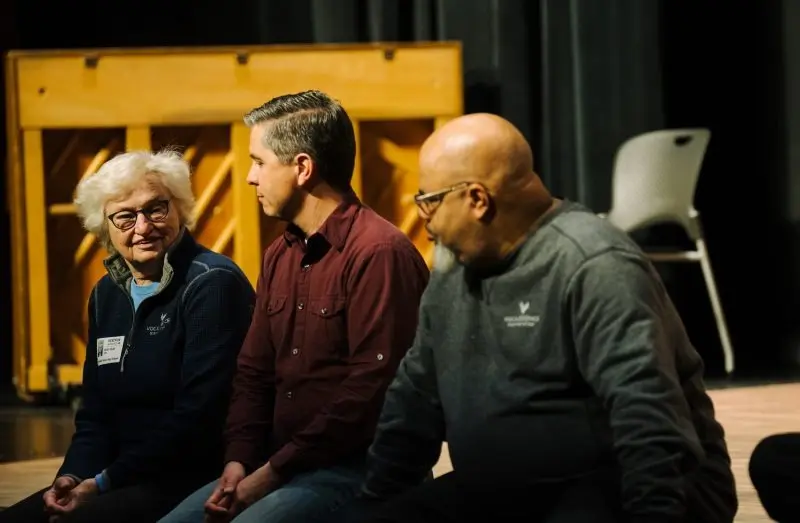
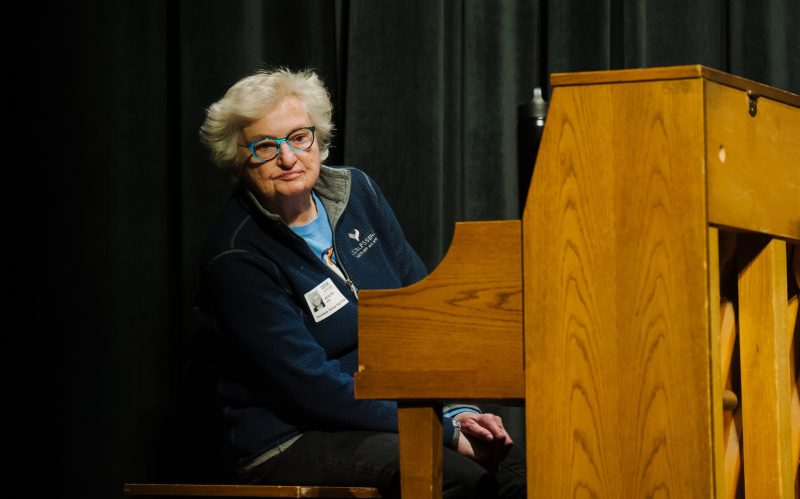
For over two decades, the intersection of music, historical preservation, and special education in Minnesota public schools has been quietly transformed by an enduring artistic partnership. Pianist Anita Ruth and acclaimed vocalist and educator T. Mychael Rambo have served as cornerstone Teaching Artists for the VocalEssence WITNESS School Program, bringing the history, resilience, and cultural legacy of African American Spirituals directly into Twin Cities classrooms.
What began as a chance encounter in a downtown Minneapolis cabaret nearly thirty years ago evolved into one of the region’s most impactful arts education initiatives. Through school residencies, teacher workshops, and interactive auditorium performances, Ruth and Rambo have utilized music not merely as performance, but as a dynamic pedagogical tool. Their work addresses critical gaps in historical literacy while fostering profound breakthroughs in social-emotional learning, particularly among neurodiverse students and children facing severe emotional and behavioral challenges.
As educational institutions increasingly grapple with student engagement and curriculum enrichment, the legacy of the VocalEssence WITNESS program illustrates the measurable impact of embedding professional artists into K-12 academic environments. This investigation details the history, educational framework, and qualitative outcomes of Ruth and Rambo’s long-standing collaboration.
Detailed Chronology: From Cabaret Accompanist to Catalyst for Change
========================================================================================
TIMELINE OF THE ANITA RUTH & T. MYCHAEL RAMBO VOCALESSENCE WITNESS COLLABORATION
========================================================================================
Late 1990s        • Initial Meeting: Anita Ruth meets T. Mychael Rambo at Ruby's
                    Cabaret in downtown Minneapolis.
                  • First Collaborations: Rambo invites Ruth to accompany him for
                    early educational outreach under the Plymouth Music Series.
----------------------------------------------------------------------------------------
Late 1990s/2000s  • The Onstage Catalyst: Rambo encourages Ruth to step beyond
                    accompaniment ("What are you doing behind that piano?").
                  • Formal Appointment: Ruth transitions to a full-fledged Teaching
                    Artist with the WITNESS program.
                  • Organizational Rebranding: Plymouth Music Series officially becomes
                    VocalEssence, expanding its WITNESS outreach footprint.
----------------------------------------------------------------------------------------
2000s–2010s       • Expansion into Special Education: Ruth and Rambo adapt curricula
                    for classrooms serving students with severe emotional, behavioral,
                    and learning disabilities.
                  • Curricular Innovation: Integration of works by contemporary
                    composers such as Melanie DeMore alongside historical Spirituals.
----------------------------------------------------------------------------------------
2020s–Present     • Legacy & Continuity: Marking over 20 years of active engagement;
                    continued delivery of residencies, teacher workshops, and
                    intergenerational arts programming across Minnesota.
========================================================================================
The Cabaret Genesis
The origins of this partnership trace back nearly three decades to Ruby’s Cabaret, a prominent performance venue in downtown Minneapolis. Anita Ruth, an accomplished pianist and musical director, met T. Mychael Rambo during a production run. Rambo, already a recognized vocalist and stage actor known for his civic engagement and artistic versatility, recognized Ruth’s technical facility and intuitive sensibility at the keyboard.
Recognizing the potential for a broader educational partnership, Rambo invited Ruth to accompany him on a series of school auditorium presentations. At the time, these performances were sponsored by the Plymouth Music Series—the choral organization founded by Philip Brunelle that would later be renamed VocalEssence.
The Onstage Paradigm Shift
Initial performances positioned Ruth primarily in a supporting role behind the instrument. However, during an early school presentation, a pivotal moment altered the trajectory of her career. Mid-performance, Rambo turned to Ruth on stage and asked a direct, challenging question: "What are you doing behind that piano?"
The moment served as an invitation to transition from a passive accompanist to an active co-educator. With Rambo’s mentorship and advocacy, Ruth stepped into the spotlight as an official VocalEssence WITNESS Teaching Artist. This functional shift marked the beginning of a multi-decade collaboration focused on co-designing residencies, leading teacher workshops, and co-facilitating student learning modules across diverse educational settings.
+----------------------------------------------------------------------------------+
|                   EVOLUTION OF TEACHING ARTIST ROLE                              |
+----------------------------------------------------------------------------------+
|  [ Accompanist Role ]  --->  [ Onstage Catalyst ]  --->  [ Teaching Artist ]     |
|  - Technical Support         - Rambo's Challenge         - Curriculum Design     |
|  - Piano Accompaniment       - Shared Stage Presence     - Classroom Facilitation|
|  - Background Position       - Active Dialogue           - SEL & Disability Focus|
+----------------------------------------------------------------------------------+
Supporting Context & Metrics: Music Pedagogy, Cultural Literacy, and Neurodevelopmental Impact
Preserving African American History Through Music
The core mission of the VocalEssence WITNESS School Program is to highlight the contributions of African American artists to the nation’s musical heritage. For Ruth and Rambo, the primary medium of instruction has been the African American Spiritual—a genre born out of the lived experiences of enslaved Africans in the American South.
Far from presenting these works merely as historical artifacts, the duo frames Spirituals as living primary sources. The songs convey coded messages of resistance, survival, theology, and community cohesion. By pairing musical performance with historical context, the residencies provide students with an immersive entry point into complex historical narratives that are frequently glossed over in standard textbooks.
+----------------------------------------------------------------------------------+
|                    THE PEDAGOGICAL TRIAD OF WITNESS WORKSHOPS                    |
+----------------------------------------------------------------------------------+
|                                                                                  |
|                        [ Historical Context ]                                    |
|                     /                                                           |
|                    /                                                            |
|                   v                              v                               |
|        [ Artistic Expression ] <----------> [ SEL & Behavioral Breakthroughs ]   |
|                                                                                  |
+----------------------------------------------------------------------------------+
Breakthroughs in Special Education Classrooms
While the program reaches broad student populations across Minnesota, some of its most remarkable outcomes occur in specialized educational settings. Ruth and Rambo have frequently conducted residencies in self-contained classrooms designed for children diagnosed with severe emotional, behavioral, and learning disabilities.
In these environments, traditional verbal instruction often encounters significant barriers. Music serves as a non-threatening, multi-sensory bridge for communication and engagement.
Case Study: The Fourth-Grade Breakthrough
During a residency at a Twin Cities elementary school, Ruth and Rambo were warned by instructional staff about a fourth-grade female student who exhibited selective mutism and complete social withdrawal. The child consistently refused to speak, participate in classroom exercises, or interact with peers.
During a session focused on rhythm and vocal assembly featuring music by contemporary composer and activist Melanie DeMore, the student initially isolated herself near a window, physically turned away from the instructional circle.
- Phase 1 (Observation): As Ruth played the piano and Rambo led the vocal exercises, the student began incrementally shifting her physical position toward the ensemble over a ten-minute period.
- Phase 2 (Approach): The child eventually navigated to the piano bench. Ruth paused, creating an open space, and directly invited the child to join her on the bench.
- Phase 3 (Verbal Engagement): The non-verbal student responded audibly, answering "Yes!" to the invitation.
- Phase 4 (Active Participation): Sitting beside Ruth, the student picked up a tambourine and joined the musical performance in rhythm with the rest of the class.
Instructional staff noted that this sequence represented the child’s first voluntary verbal response and cooperative group participation of the academic year, underscoring the neurodevelopmental and therapeutic efficacy of music-integrated instruction.
+----------------------------------------------------------------------------------+
|               STAGES OF CLASSROOM ENGAGEMENT (CASE STUDY)                        |
+----------------------------------------------------------------------------------+
| Stage 1: Physical Isolation  | Student positioned at window, back turned         |
| Stage 2: Gradual Proximity   | Incremental movement toward piano (10 mins)       |
| Stage 3: Verbal Breakthrough | Student answers "Yes!" to bench invitation        |
| Stage 4: Active Performance  | Student plays tambourine in synchronization       |
+----------------------------------------------------------------------------------+
Quantitative and Structural Scope of VocalEssence WITNESS
To understand the scale of the WITNESS program within the regional educational ecosystem, key programmatic metrics demonstrate its reach:
| Metric Category | Programmatic Scope & Impact |
|---|---|
| Annual Student Reach | Thousands of K-12 students across the Twin Cities metropolitan area and Greater Minnesota. |
| Target Student Demographics | Public, charter, private, and specialized alternative education schools (EBD/Special Ed). |
| Core Components | Teacher training workshops, classroom artist-in-residence visits, and young people’s concerts. |
| Curricular Focus | Fine arts standards alignment, African American history, social-emotional learning (SEL). |
| Artist Retention | Core teaching artists maintaining engagements for over 20 continuous years. |
Official Statements and Artistic Perspectives
Reflecting on her more than twenty years with the program, Anita Ruth emphasized the mutual growth experienced by both educators and students through the WITNESS curriculum:
"Together with T. Mychael, we were able to bring the true history of enslaved Africans to the students who needed to know this story. And best of all, we brought the story to hundreds of students through music. T. Mychael is a wonderful interpreter of the songs created by enslaved Africans—the Spirituals. The effect of the enrichment of African American history that VocalEssence Teaching Artists provide is invaluable. I have gained so much knowledge and important insights from working with these wonderful people."
Commenting on the therapeutic potential of the classroom interventions, Ruth added:
"While doing WITNESS residencies, T. Mychael and I were often in classrooms with students who had severe emotional and learning disabilities. We were fortunate to have the gift of music to share in our communications… It was truly an example of the power of music."
Organizational leadership at VocalEssence has consistently highlighted that the strength of the WITNESS program relies on the long-term commitment of its Teaching Artists. By building multi-year relationships with school districts, artists like Ruth and Rambo offer consistency that extends far beyond a typical one-off assembly, embedding cultural equity and arts access directly into the institutional rhythm of participating schools.
Future Outlook: Sustaining Arts Outreach in an Evolving Educational Landscape
As school districts navigate post-pandemic recovery, budget constraints, and shifting academic priorities, arts-integrated educational models face structural headwinds. However, the outcomes documented by the VocalEssence WITNESS School Program offer a compelling case for the continued funding and integration of teaching artists within primary and secondary education.
+----------------------------------------------------------------------------------+
|                   STRATEGIC PILLARS FOR SUSTAINED ARTS INTEGRATION               |
+----------------------------------------------------------------------------------+
|                                                                                  |
|  1. INTERGENERATIONAL MENTORSHIP                                                 |
|     Pairing veteran artists with emerging educators to preserve institutional     |
|     knowledge and pedagogical techniques.                                        |
|                                                                                  |
|  2. CROSS-CURRICULAR ALIGNMENT                                                   |
|     Explicitly linking music workshops to state history, literacy, and social    |
|     studies academic standards.                                                  |
|                                                                                  |
|  3. ACCESSIBLE / SPECIAL EDUCATION ADAPTATION                                     |
|     Expanding specialized training for teaching artists working in EBD and       |
|     neurodiverse learning environments.                                          |
|                                                                                  |
+----------------------------------------------------------------------------------+
Strategic Priorities for the Program
- Curricular Expansion: Strengthening the bridge between musical education and core academic subjects, such as state history, social studies, and language arts, to justify continuous integration into standard school hours.
- Special Education Methodologies: Formalizing the non-verbal and trauma-informed techniques developed informally by artists like Ruth and Rambo into training modules for incoming Teaching Artists.
- Digital & Hybrid Resources: Expanding digital archives, workshop videos, and teacher curriculum guides to ensure rural and under-resourced schools in Greater Minnesota maintain access to WITNESS programming.
The twenty-year legacy of Anita Ruth and T. Mychael Rambo demonstrates that when historical education and artistic expression are combined with dedicated mentorship, music ceases to be merely extra-curricular. Instead, it becomes a vital tool for historical truth-telling, emotional healing, and student engagement.