
Executive Overview
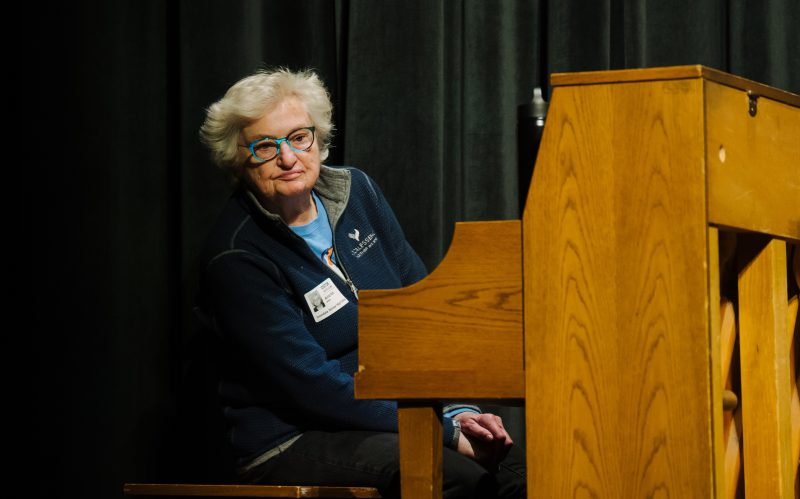
For over two decades, the intersection of music, history, and educational advocacy in the Twin Cities has found one of its most compelling voices in Anita Ruth. A veteran pianist and educator, Ruth has served as a Teaching Artist for the VocalEssence WITNESS School Program for more than twenty years. Her tenure reflects a broader, crucial movement within American public education: using arts integration to teach non-traditional, culturally immersive history while fostering profound socio-emotional breakthroughs among youth.
The VocalEssence WITNESS School Program—originally conceived under the umbrella of the Plymouth Music Series—was designed to center the contributions of African American creators, musicians, and historical figures. Through school residencies, interactive workshops, and live performances, the program brings professional artists into primary and secondary classrooms.
Ruth’s journey within the program, defined by a decades-long partnership with acclaimed performer and educator T. Mychael Rambo, highlights the power of music as both an analytical lens for history and a therapeutic bridge for students facing severe learning and emotional challenges. This report examines the evolution of Ruth’s career, the methodology behind the WITNESS program, the quantitative and qualitative impacts of arts-integrated historical education, and the future trajectory of culturally sustaining creative outreach in public schools.
Detailed Chronology: From Ruby’s Cabaret to the Educational Stage
+-----------------------------------------------------------------------------------+
| CHRONOLOGY OF ANITA RUTH & VOCALESSENCE WITNESS                                  |
+-----------------------------------------------------------------------------------+
| Late 1980s / Early 1990s : Meeting at Ruby's Cabaret (Downtown Minneapolis)       |
| Mid-1990s                 : First WITNESS Audition/Accompanying Engagements       |
| Late 1990s                : Transition from Accompanist to Full Teaching Artist   |
| 2000s–Present             : Over Two Decades of In-Classroom Residencies &      |
|                             Socio-Emotional Educational Breakthroughs             |
+-----------------------------------------------------------------------------------+
The Initial Encounter at Ruby’s Cabaret
The origins of Ruth’s transformative work in Minnesota classrooms trace back roughly thirty years to downtown Minneapolis. While performing at Ruby’s Cabaret, a prominent venue in the city’s nightlife and performance ecosystem, Ruth was introduced to T. Mychael Rambo, a charismatic vocalist, actor, and community advocate. Recognizing Ruth’s exceptional skill at the keyboard and intuitive sense of musical partnership, Rambo invited her to assist him with educational programs he was leading for the Plymouth Music Series (the organization that would later rebrand as VocalEssence).
Stepping Out From Behind the Piano
Initially, Ruth’s role within the organization was defined strictly as an accompanist. She provided key musical backing during auditorium presentations designed to introduce school children to African American musical traditions, specifically Negro Spirituals and choral works.
However, during a live presentation in a school auditorium, a pivotal moment redefined her career trajectory. Turning away from the microphone mid-performance, Rambo looked at Ruth at the keyboard and asked directly: "What are you doing behind that piano?"
The statement was a invitation to step forward into mentorship. Encouraged by Rambo’s guidance, Ruth moved beyond traditional musical accompaniment to become a full-fledged WITNESS Teaching Artist. This shift catalyzed an enduring creative partnership that would span over twenty years, placing Ruth alongside a roster of regional and national artists dedicated to educational equity and cultural preservation.
Two Decades of In-Classroom Residencies
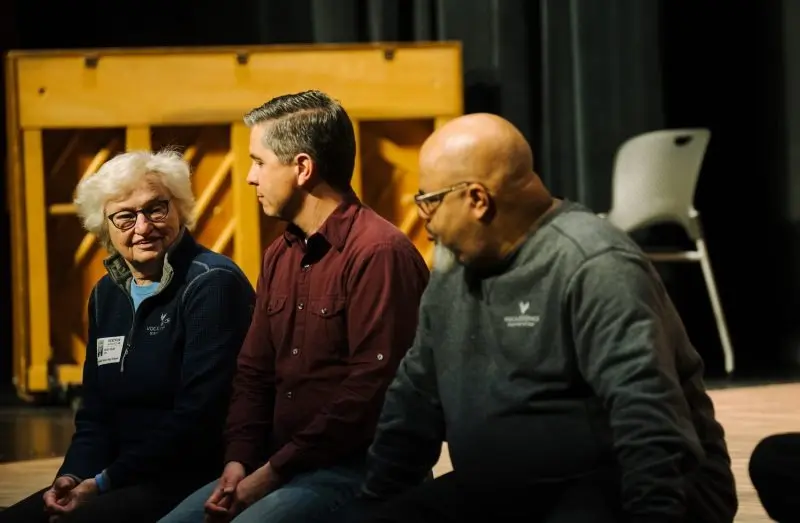
Over the subsequent two decades, Ruth and Rambo conducted hundreds of classroom workshops and school residencies across the Minneapolis-St. Paul metropolitan area and surrounding districts. Working directly with classroom teachers—such as educator Jason Etten and dozens of others—the duo structured their visits around interactive engagement rather than passive lectures.
The residencies were engineered to teach the authentic history of enslaved Africans in North America, grounding historical truths in the songs created during the era of chattel slavery. Through the analysis and performance of spirituals, Ruth and Rambo introduced students to the sophisticated double meanings, communication networks, and resilience embedded within African American sacred music.
Supporting Context & Metrics: Music as a Tool for Pedagogical and Neurological Breakthroughs
Educational Integration and Historical Preservation
The pedagogical strategy of the VocalEssence WITNESS School Program relies on the premise that music serves as a primary historical document. Rather than treating spirituals merely as artistic artifacts, the program positions them as historical texts that detail the lived experiences, geography, socio-political resistance, and emotional endurance of enslaved people.
+-----------------------------------------------------------------------------------+
| PEDAGOGICAL FRAMEWORK: VOCALESSENCE WITNESS PROGRAM                              |
+-----------------------------------------------------------------------------------+
| 1. HISTORICAL CONTEXT     : Examining Slavery & Resistance Through Primary Texts   |
| 2. MUSICAL ANALYSIS       : Decoding Spirituals, Double Meanings, & Rhythms       |
| 3. EXPERIENTIAL LEARNING  : Active Singing, Percussion, & Collective Expression   |
| 4. SOCIO-EMOTIONAL BRIDGE : Connecting Historical Resilience to Student Agency     |
+-----------------------------------------------------------------------------------+
By introducing songs composed by enslaved Africans, artists like Rambo and Ruth provide students with a deeper understanding of American history that complements state social studies standards. T. Mychael Rambo’s vocal interpretations of spirituals offer students an authentic entry point into the oral traditions that sustained families and communities through systematic oppression.
Qualitative Case Study: Breaking Barriers in Special Education
While the program’s historical scope is expansive, its most profound impacts often occur on an individual, socio-emotional level within marginalized student populations. During a residency focused on students with severe emotional and learning disabilities, Ruth and Rambo encountered a fourth-grade girl who had exhibited selective mutism and complete withdrawal from classroom activities.
According to classroom staff, the child routinely refused to speak, participate, or interact with peers, choosing instead to isolate herself at the periphery of the room. During a session focused on teaching a composition by contemporary composer and song leader Melanie DeMore, the young girl was seated away from the group, staring out the window.
As the musical exercise progressed:
- Incremental Proximity: Over a ten-minute period, the child moved incrementally closer to the piano, drawn by the rhythmic and melodic structure of the music.
- Verbal Engagement: Once the student reached the keyboard, Ruth invited her to sit directly on the piano bench. The student, breaking her silence, responded with a clear, verbal "Yes!"
- Active Participation: Encouraged by the welcoming environment, the child selected a tambourine and joined the ensemble in playing along with the rest of the class.
This instance illustrates a well-documented psychological phenomenon: music lowers the "affective filter"—the emotional barrier that prevents anxious, traumatized, or neurodivergent students from engaging in traditional learning environments. By providing a non-judgmental, rhythmically grounded medium, the WITNESS program creates unique access points for cognitive and social development.
+-----------------------------------------------------------------------------------+
| CASE STUDY IMPACT: SOCIO-EMOTIONAL BREAKTHROUGH                                   |
+-----------------------------------------------------------------------------------+
| Student Profile  : 4th Grade; severe emotional/learning disabilities; non-verbal  |
| Initial Behavior : Isolated, seated near window, disengaged from peer group       |
| Intervention     : Rhythmically driven song instruction (Melanie DeMore piece)   |
| Progression      : Physical approach -> Verbal acceptance -> Instrument playing   |
| Outcome          : Total social & auditory reintegration into classroom activity |
+-----------------------------------------------------------------------------------+
Official Statements and Institutional Perspectives
Reflecting on her double-decade tenure with the organization, Anita Ruth emphasized both the personal enlightenment and professional privilege derived from her participation in the program:
"Together with T. Mychael we were able to bring the true history of enslaved Africans to the students who needed to know this story. And best of all, we brought the story to hundreds of students through music! The effect of the enrichment of African American history that VocalEssence Teaching Artists provide is invaluable. I have gained so much knowledge and important insights from working with these wonderful people."
The organizational ethos of VocalEssence highlights the collaborative synergy between guest teaching artists, educators, and the core administration. By embedding artists directly into public school curriculums, the organization seeks to address systemic gaps in cultural education and arts funding.
Educational staff who host the WITNESS residencies frequently note that the presence of seasoned artists transforms classroom dynamics. The collaboration between classroom educators, such as Jason Etten, and Teaching Artists creates an interdisciplinary learning environment where music, social studies, and language arts converge seamlessly.
Future Outlook: The Evolving Role of Arts-Integrated Education
Navigating Modern Classroom Challenges
As public education systems face increasing challenges—ranging from budget deficits in arts funding to rising post-pandemic mental health concerns among K-12 students—programs like VocalEssence WITNESS represent a vital educational model. The integration of socio-emotional learning (SEL) with culturally responsive pedagogy offers public schools a proven methodology for improving student attendance, behavioral metrics, and academic engagement.
+-----------------------------------------------------------------------------------+
| FUTURE OUTLOOK: STRATEGIC PRIORITIES FOR ARTS INTEGRATION                         |
+-----------------------------------------------------------------------------------+
| • Culturally Responsive Pedagogy : Expanding historical representation in curricula|
| • Mental Health & SEL Integration: Utilizing active music-making for trauma relief |
| • Institutional Sustainability    : Strengthening partnerships between schools and  |
|                                    non-profit arts organizations                  |
+-----------------------------------------------------------------------------------+
Sustaining the Legacy of Oral Traditions
The long-term sustainability of programs like WITNESS relies on the continuous training of new Teaching Artists capable of carrying forward the work modeled by Anita Ruth and T. Mychael Rambo. By preserving the oral traditions, historical narratives, and structural complexities of African American spirituals, these programs ensure that future generations of students understand the foundational role of Black creative expression in shaping American history.
As VocalEssence continues to expand its reach across Minnesota, the legacy of Ruth’s twenty-plus years of service stands as a testament to the transformative power of the arts. Through simple acts—such as sharing a piano bench with a disengaged student—teaching artists continue to demonstrate that music is not merely an extracurricular enrichment, but a fundamental tool for human connection, historical literacy, and personal healing.