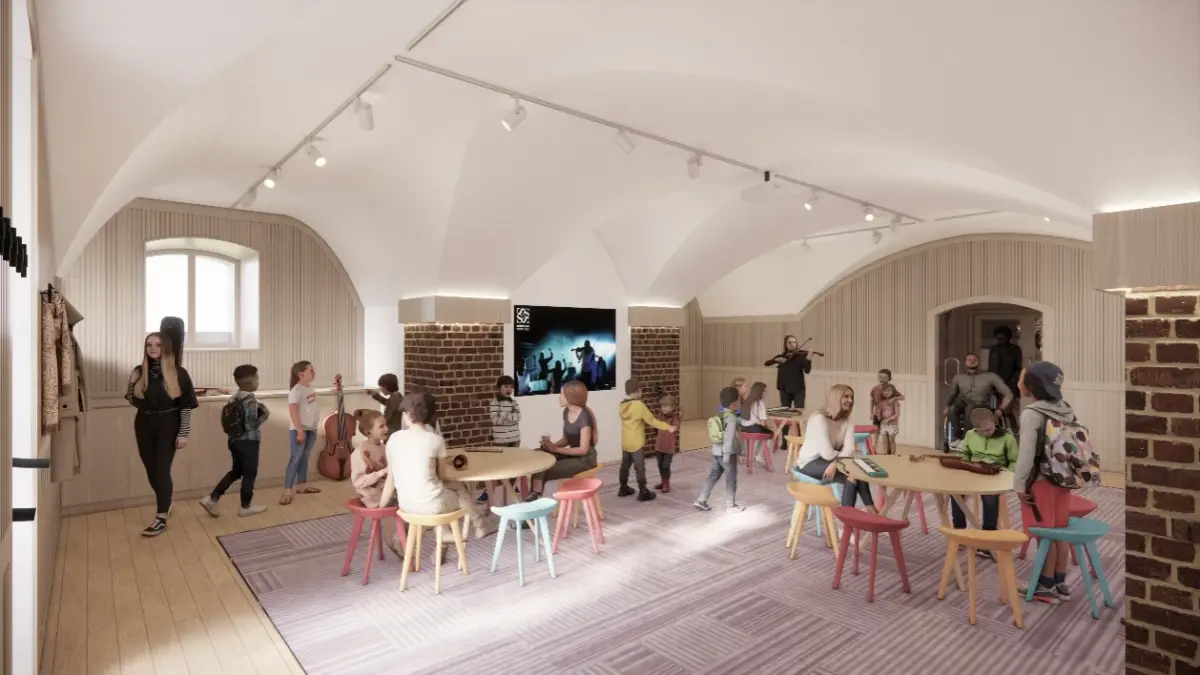

LONDON — Sinfonia Smith Square, a cornerstone of the British classical music landscape, has announced a major milestone in its capital redevelopment campaign. The organization has secured a prestigious £200,000 grant from the Wolfson Foundation to spearhead the comprehensive restoration of its Grade I listed Westminster home, Smith Square Hall.
This financial injection marks a pivotal moment for the ambitious initiative titled "Doors Open: Transforming Lives Through Music." Representing the most substantial redevelopment of the historic building since it was first converted into a dedicated concert venue in 1969, the project aims to harmonize architectural preservation with modern cultural demands. By breathing new life into the historic fabric of the building, the organization intends to secure the venue’s future as a world-class performance space, a vibrant community hub, and a vital incubator for the next generation of orchestral talent.
Executive Overview
At its core, the redevelopment of Smith Square Hall is designed to address decades of wear and tear, resolve critical conservation challenges, and dramatically expand the venue’s operational capabilities. The £200,000 grant from the Wolfson Foundation will directly fund structural and spatial interventions that marry heritage preservation with community accessibility.
The scope of the transformation is vast. Rather than simply restoring the physical masonry and interior aesthetics, the project reimagines how the building serves the public. Key features of the master plan include:
- The Crypt Transformation: The historic crypt beneath the main hall will be completely re-engineered into a dedicated, state-of-the-art learning space. This area will host schools, community music initiatives, and creative workshops, transforming a previously underutilized architectural asset into an interactive educational hub.
- Enhanced Fellowship Facilities: The project delivers vital infrastructure upgrades to support Sinfonia Smith Square’s renowned orchestral Fellowship program. Since its inception in 2002, this program has nurtured over 700 early-career musicians, and the upgraded facilities will provide them with world-class rehearsal and training environments.
- Heritage Rescue: A primary institutional goal of the project is to secure the removal of Smith Square Hall from Historic England’s Heritage at Risk Register, preserving a masterwork of English Baroque architecture for posterity.
- Accessibility and Inclusivity: The renovations will modernize public and backstage areas, significantly improving accessibility for disabled performers, staff, and audience members.
Once construction concludes and the doors reopen, Sinfonia Smith Square projects that the revitalized venue will welcome more than 90,000 visitors annually, cementing its position as a vibrant epicentre of musical life in the heart of Westminster.
Detailed Chronology of the Project
The journey toward the comprehensive renewal of Smith Square Hall spans decades of cultural stewardship, punctuated by careful planning, architectural consultation, and strategic fundraising.
The Heritage Context (Pre-1969 to Present)
Designed by the celebrated English Baroque architect Thomas Archer and consecrated in the early 18th century, the building survived the trials of history, including severe bomb damage during the Blitz of World War II. In 1969, visionary efforts rescued the architectural masterpiece from dereliction, transforming its majestic interior into a premier classical music concert hall renowned for its exceptional acoustic resonance. For over half a century, the venue has hosted legendary soloists, chamber ensembles, and orchestras, earning a cherished place in the hearts of London’s concertgoers.
However, time takes a heavy toll on Grade I listed structures. By the early 2020s, infrastructural constraints, outdated backstage facilities, and accessibility barriers began to limit the venue’s potential. Recognizing the urgent need for modernization, leadership at Sinfonia Smith Square initiated feasibility studies to explore how the building could be preserved while meeting the demands of a 21st-century cultural institution.
The Evolution of "Doors Open"
The "Doors Open: Transforming Lives Through Music" campaign was formulated as a holistic response to these challenges. Over the past three years, the organization has worked closely with heritage bodies, architects, and acoustic engineers to draft a master plan that respects the building’s historical integrity while introducing cutting-edge spatial flexibility.
The securing of the £200,000 Wolfson Foundation grant in August 2026 represents a major catalyst for the capital campaign, validating the project’s cultural and architectural significance.
Upcoming Milestones: 2027 to 2029
With vital funding now locked in, the timeline for the redevelopment enters its next critical phase:
- Late 2026 – Mid-2027: Finalization of architectural blueprints, procurement of remaining specialist contractors, and completion of statutory heritage approvals.
- Late 2027: Official commencement of construction works on-site, involving intricate structural interventions, masonry restoration, and internal spatial reconfiguration.
- 2028 – Early 2029: Deep-phase fit-outs, including acoustic fine-tuning of the main auditorium, technological integration for modern broadcasting and education spaces, and accessibility installations.
- 2029: Grand reopening of Smith Square Hall, accompanied by an inaugural festival celebrating the venue’s rich history and its renewed mission.
Supporting Context & Metrics
To fully understand the magnitude of the "Doors Open" project, it is necessary to examine the scale of Sinfonia Smith Square’s operations, the architectural pedigree of the building, and the socioeconomic impact of the planned renovations.
Architectural Significance and Heritage Status
Smith Square Hall is widely regarded as one of the finest examples of English Baroque ecclesiastical architecture. Its distinctive monumental facade, dramatic massing, and unique interior volume present specific conservation challenges. Being listed at Grade I places the building in the top tier of historically protected structures in the United Kingdom, meaning every brick, molding, and spatial proportion must be treated with rigorous academic and practical care. Inclusion on Historic England’s Heritage at Risk Register underscores the vulnerability of the fabric, making the forthcoming intervention an urgent rescue mission as much as a cultural upgrade.
Sinfonia Smith Square Fellowship: Nurturing Talent
Beyond its bricks and mortar, the institution is internationally recognized for its commitment to professional development. The orchestral Fellowship program, established in 2002, addresses a critical bottleneck in the classical music ecosystem: the transition from conservatoire study to professional orchestral life.
- Over 700 Alumni: More than 700 early-career musicians have passed through the program, many securing positions in major orchestras across the UK and globally.
- Holistic Training: The Fellowship offers rigorous mentorship, performance opportunities, and chamber music coaching.
- Expanded Capacity: The redevelopment provides dedicated rehearsal spaces within the Westminster home, ensuring that future cohorts benefit from acoustic environments tailored to orchestral study.
Audience and Community Metrics
The strategic shift toward public engagement is underpinned by ambitious visitor targets. Prior to the capital campaign, the venue operated primarily as an evening concert hall. The introduction of the crypt learning space enables daytime utilization, shifting the venue into a seven-day-a-week cultural anchor.
- Projected Annual Visitors: 90,000+
- Core Activity Areas: Main stage classical performances, community-led workshops, school-focused music engagement programs, and professional rehearsals.
- Accessibility Expansion: Full compliance with modern equality and accessibility standards, opening the building to previously excluded demographics of performers and patrons.
Official Statements and Institutional Perspectives
The announcement of the Wolfson Foundation grant has elicited widespread praise from leaders within the arts, heritage, and philanthropic sectors, highlighting the collaborative ethos driving the project forward.
Representatives from the Wolfson Foundation emphasized the alignment between the foundation’s philanthropic mission and the goals of the redevelopment. Known for supporting excellence in science, health, education, and heritage, the foundation recognized that transforming Smith Square Hall yields tangible public benefits. By preserving a masterpiece of British architecture while simultaneously creating high-impact learning spaces for young people and community groups, the project exemplifies sustainable heritage stewardship.
Leadership at Sinfonia Smith Square expressed profound gratitude for the award, noting that the grant acts as a powerful endorsement of the organization’s vision. In official communications, executive stakeholders stressed that while the physical building is Grade I listed, the institution’s outlook is resolutely forward-looking. The transformation is framed not merely as an act of preservation, but as a democratization of space—opening the doors of a historically elite architectural monument to schools, local communities, and the broader public.
Arts commentators and heritage specialists have similarly lauded the initiative. By addressing the vulnerabilities that placed the hall on the Heritage at Risk Register, the project guarantees that London will retain a venue prized by musicians for its intimacy, warmth, and peerless acoustic qualities.
Future Outlook: A New Era for Westminster’s Musical Landmark
As Sinfonia Smith Square looks toward the commencement of construction in late 2027 and the anticipated reopening in 2029, the broader implications of the "Doors Open" project come into sharp focus.
The classical music sector operates in an increasingly dynamic environment where relevance, community engagement, and financial sustainability are paramount. Traditional models of concert hall management—relying solely on ticket sales for evening performances—are no longer sufficient to guarantee long-term viability. By diversifying its spatial utility through the crypt learning center, upgrading its artist training facilities, and removing infrastructural barriers, Smith Square Hall is positioning itself as a resilient, multi-functional cultural campus.
Furthermore, the project serves as a model for how heritage institutions can responsibly adapt historic properties. Rather than freezing buildings in time, the intervention demonstrates that sensitive, expert-led restoration can breathe new life into centuries-old stone, allowing them to continue serving active, evolving communities.
When the doors of Smith Square Hall finally reopen in 2029, visitors will step into a space that honors its rich 18th-century origins and 20th-century musical revival, while boldly facing the future. With enhanced rehearsal rooms for its celebrated Fellowship, modern facilities for community outreach, and a secure physical structure removed from the shadows of the Heritage at Risk Register, Sinfonia Smith Square is set to remain a vibrant, beating heart of British musical culture for generations to come.