In an era defined by mega-festivals that sprawl across industrial complexes, demanding marathon walking routines and forcing agonizing logistical trade-offs, Copenhagen’s Syd for Solen has emerged as a masterclass in modern music curation. Staged across the lush expanses of Valbyparken—Copenhagen’s largest public park—the three-day boutique event has quietly positioned itself as a formidable heavyweight on the international festival circuit.
While heavyweights like Primavera Sound, All Points East, and Glastonbury dominate global headlines, Syd for Solen offers something increasingly rare in contemporary live music: a meticulously balanced, high-impact bill that marries global indie royalty with an electrifying showcase of Copenhagen’s local avant-garde underground. With a capped, sold-out capacity of 25,000, the festival manages to reconcile the intimacy of a boutique gathering with the production values and star power of a world-class destination event.
Guided by a deeply collaborative booking philosophy spearheaded by head booker Xenia Grigat, Syd for Solen has successfully pivoted toward a cohesive, genre-fluid identity. By engaging directly with its audience and fostering deep ties to local institutions like the Rhythmic Music Conservatory (RMC) and tastemaking indie label Escho, the festival is not merely reflecting Copenhagen’s current cultural renaissance—it is actively exporting it to the world.
Detailed Chronology: Anatomy of a Three-Day Curation Triumph
Day One: The Power of Context and Surprise
Opening day at Syd for Solen immediately threw down the gauntlet, subverting expectations by anchoring its headline slot with Medina, a homegrown pop icon who has commanded a dedicated cross-generational following in Denmark for two decades. While international attendees might have initially raised eyebrows at a name less globally recognized, head booker Xenia Grigat’s gamble paid massive dividends. Medina’s set functioned as a collective masterclass in communal euphoria, drawing a demographic span from early twenties to forties, all moving in tandem.
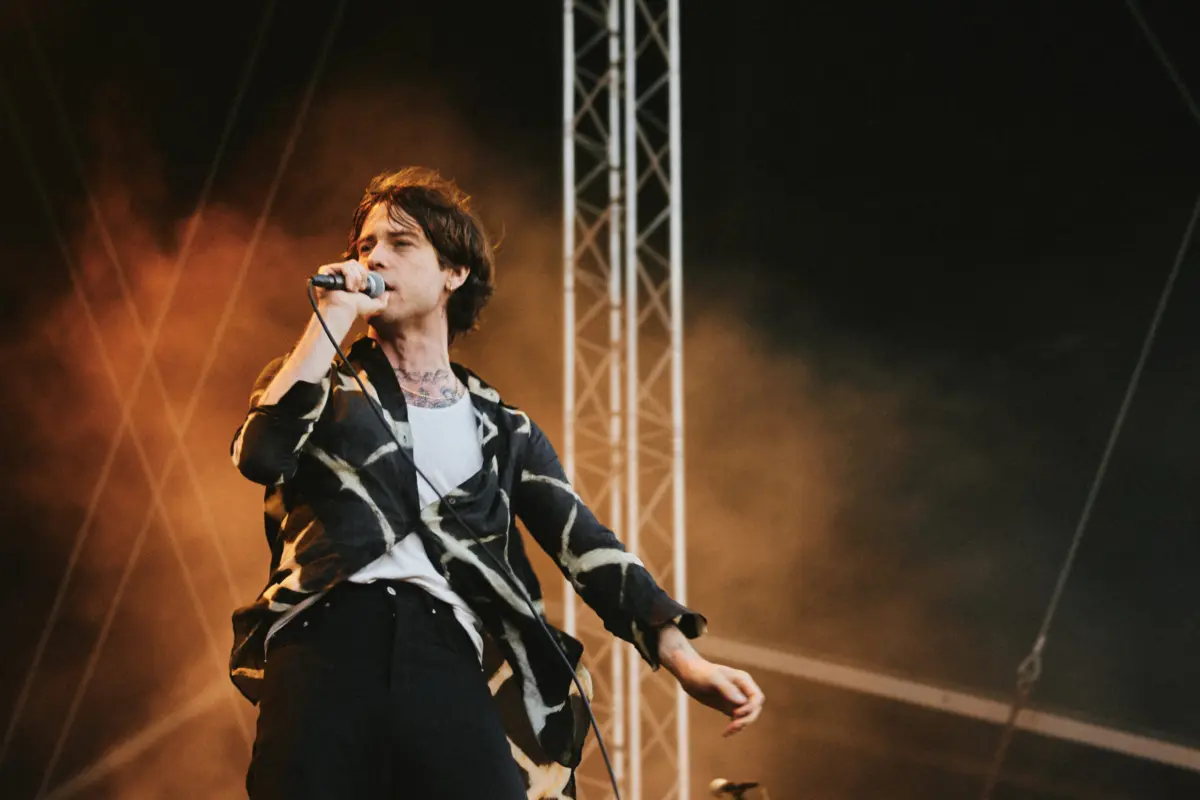
Yet, Thursday’s narrative was equally defined by context and contrast. Lorde performed what must rank as one of the most intimate headline-adjacent sets of her entire touring cycle, trading cavernous arena spaces for the verdant canopy of Valbyparken. Earlier in the day, the festival grounds thrummed with raw, kinetic energy. Amyl and The Sniffers delivered their trademark turbo-charged punk catharsis, while Dijon—making his long-awaited debut on Danish soil—exhibited a virtuosic R&B sensibility that left a rapt, fan-heavy audience spellbound. As the evening culminated, acts like Turnstile and Iceage (fronted by the magnetic Elias Rønnenfelt) seized every square inch of the Over Havet (“above the ocean”) main stage, matching visceral physical intensity with artistic precision.
Day Two: Expanding Horizons and Leftfield Explorations
As the festival footprint settled into its rhythm on Friday, the programming widened its lens to embrace boundary-pushing indie rock, experimental pop, and atmospheric soundscapes. The newly expanded site design at Valbyparken—leveraging its 65-hectare expanse originally established on a former landfill site in 1939—allowed attendees to drift effortlessly between the two massive open-air stages and the secluded tented enclave known as De Første Stråle ("the first rays").
Friday’s schedule highlighted the festival’s commitment to nurturing rising talent. Within the intimate confines of De Første Stråle, emerging acts like Supermodel*, Freakslug, Horsegirl, Tyler Ballgame, and Bleech 9:3 performed to inquisitive, densely packed crowds. Meanwhile, main-stage performances offered breathtaking masterclasses in mood and momentum, seamlessly bridging international touring acts with the crème de la crème of Nordic experimentalism.
Day Three: The Zero-FOMO Finale
Sunday’s final stretch offered what can only be described as a logistical miracle: a densely packed, multi-genre lineup boasting zero schedule clashes and virtually non-existent Fear of Missing Out (FOMO).
The day’s trajectory began early under a blistering sun and persistent dust clouds, where Ninajirachi welcomed early-doors fans with an invigorating 2:00 PM opening set. From there, the path forward read like a curated dream-sequence for modern alternative music lovers: the emotive, brooding art-pop of Brimheim; the jangly, distortion-laden cool of Horsegirl; the cinematic, gothic grandeur of Anna von Hausswolff; and the delicate, crystalline songcraft of Fine.
As dusk approached, the festival accelerated into its home stretch. Geese delivered a blistering display of razor-sharp post-punk urgency, paving the way for a transcendental, career-spanning headlining set by The XX, before the boundary-blurring dance rhythms of Fcukers brought the weekend to a sweaty, triumphant close.
Supporting Context & Metrics: The Nordic Festival Ecosystem
A Compact Contender in a Crowded Market
Syd for Solen does not operate in a vacuum. In the landscape of late-summer European festivals, it directly rubs shoulders with established regional titans: Sweden’s Way Out West, Norway’s Øyafestivalen, and Finland’s Flow Festival.
However, Syd for Solen distinguishes itself through sheer utilitarian efficiency. While regional competitors often force attendees into grueling venue-hopping or agonizing stage clashes across sprawling cityscapes, Syd for Solen’s compact footprint at Valbyparken offers a masterclass in ergonomic festival design. Situated just a 15-minute metro ride from the heart of Copenhagen, followed by a pleasant 25-minute stroll from the Mozarts Plads metro station, the site achieves an optimal balance between accessibility, breathing room, and minimal daily step counts.
The CPH+ Phenomenon and Institutional Breeding Grounds
To understand Syd for Solen’s unique flavor, one must examine Copenhagen’s broader musical ecosystem. Over the past twelve months, the Danish capital has solidified its reputation as a global mecca for vibes-heavy experimental music. This renaissance is fueled in no small part by algorithmic catalysts like Spotify’s Cph+ playlist and institutional powerhouses like the Rhythmic Music Conservatory (RMC).
As Denmark’s premier specialized academy for contemporary music, the RMC has quietly functioned as an incubator for avant-garde brilliance, doing for Danish experimental sounds what the BRIT School achieved for mainstream British pop. A roll call of RMC alumni reads like a who’s who of modern independent music: Erika de Casier, Fine Glindvad, Astrid Sonne, ML Buch, and Smerz’s Henriette Motzfeldt.
Helena Heinesen Rebensdorff—the Danish-Faroese artist who records under the moniker Brimheim and is herself an RMC graduate—notes the collaborative spirit that birthed this movement. Reflecting on her time at the conservatory alongside peers like ML Buch and Smerz, Rebensdorff observes:
"All of these projects people are talking about now—all of these people were making music at the time I was there. ML Buch had put out her first music, and Smerz were at the school much earlier than that too. There was definitely a vibe that all these people were cool and talented, but this was before it became a thing!"
Official Statements & Industry Perspectives
Curating for Cohesion: Xenia Grigat Speaks
For head booker Xenia Grigat, the evolution of Syd for Solen over its first half-decade has been an exercise in bold experimentation. Speaking on the strategic challenges of shaping this year’s lineup, Grigat explains that the primary hurdle was shifting away from compartmentalized, single-genre day programming toward a cohesive, multi-day artistic vision.
"We asked the people who were going if they would prefer a more mixed bill and if they would go more than one day, and so that’s what we did," Grigat explains. "It’s still a challenge getting the artists in because logistically they have to play several festivals in one weekend, and there’s only so much they can do."
Reflecting on the success of legacy bookings like Thursday headliner Medina, Grigat emphasizes the importance of emotional resonance over rigid international trend-following: "She’s not that well known outside the Danish borders, and she’s been going for 20 years—her audience age range spans from the early 20s into the 40s—but we know everyone knows her songs and people want to dance to them."
The Philosophy of Curiosity: Nis Bysted on the Copenhagen Sound
Nis Bysted runs Escho, the ultra-influential independent record label responsible for championing many of the artists central to the Cph+ movement, including Smerz, Fine, Astrid Sonne, Alba Akvama, and Iceage. When asked to define the elusive "moment" currently capturing the global music community’s attention regarding Copenhagen, Bysted offers a grounded, philosophical perspective.
"I get the question a lot about what it is in Copenhagen right now. What is the moment? And I’m reluctant to answer that question," Bysted says from Escho’s headquarters. "It is something… but I like to tell people that this isn’t something special for Copenhagen. There is a certain group of people that are incredibly curious—and their curiosity has completely seeped out into the corners of other people’s thoughts and ways of doing things, and that’s what made some of this music that’s doing relatively well—this curiosity."
Bysted points to the deep generational and cross-genre literacy shared by local artists as the true engine of creativity:
"If you speak to Henriette from Smerz, she knows all music. Talk to Elias, or anyone from Iceage—they all know so much about so much music. They constantly listen to other artists and are always looking constantly for new sounds, new books, new movies, new situations. That’s what I think it is: just curiosity. And when bands love other bands, that’s where the best music is created. Music that touches me is music that’s created in a situation where it’s not the product or a vision of what it’s supposed to be, but it’s created through some sort of symbiosis."
Addressing the role of digital curation tools like the Cph+ playlist, Bysted remains pragmatically enthusiastic:
"I love anything that’s curated. If someone wants to say: ‘Here’s a list of stuff we think is connected’—it has meant so much in terms of opening doors for all of the artists here. And of course, playlists can be closing things down too… but in the end, someone said, ‘I can hear something going on in Copenhagen and I wanted to make a playlist for that,’ and I think that’s great."
Future Outlook: Filling the Void and Expanding Horizons
With heritage festivals like Roskilde operating at a scale four times larger than Syd for Solen, and the short-lived Haven festival (co-founded by members of The National) having shuttered after its 2017–2018 runs, a distinct structural gap long existed in Denmark’s live music market. Syd for Solen has decisively stepped into that vacuum.
By successfully marrying a boutique, fan-consultative booking model with a sprawling, accessible urban park site, the festival has proven that mid-sized events do not need to compromise on ambition to maintain intimacy. Looking ahead, Syd for Solen’s trajectory points toward an increasingly vital role as a cultural bridge—translating Copenhagen’s hyper-curated, avant-garde domestic scene into an unmissable destination for international music tourists.
As long as organizers maintain their commitment to zero-clash scheduling, deep community dialogue, and unbridled artistic curiosity, Syd for Solen will not merely survive the crowded European festival market—it will continue to set the gold standard for how modern live music experiences should feel.