
Executive Overview
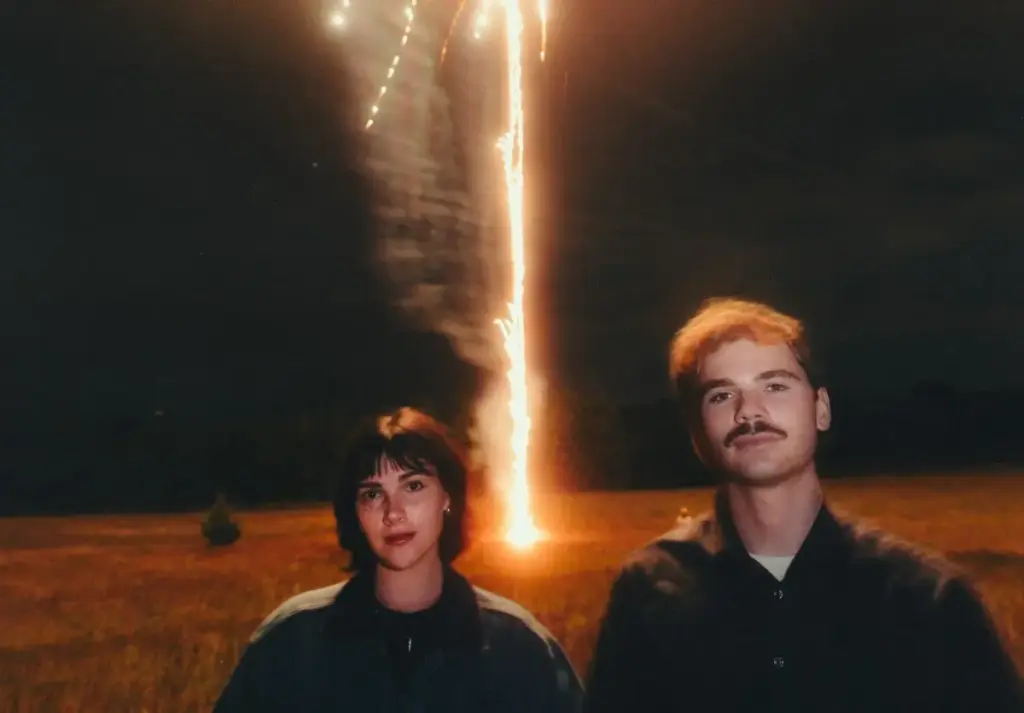
In an era characterized by relentless digital noise, algorithmic anxiety, and systemic exhaustion, few artists possess the piercing clarity and emotional fortitude required to cut through the static. Elizabeth Powell, the creative force and visionary behind the acclaimed indie rock project Land of Talk, has long operated as one of alternative music’s most vital, uncompromising voices. With the announcement of their forthcoming studio album, LASTS—the direct successor to 2023’s critically lauded Performances—Powell is once again preparing to lay bare the machinery of survival.
Set for release via long-time home Saddle Creek, LASTS promises to be a towering achievement in modern songwriting. The album’s genesis lies not in the polished isolation of a metropolitan corporate studio, but in the frostbitten quiet of rural Harrington, Quebec. There, sequestered in a cozy winter cabin alongside trusted collaborators Michael Feuerstack and Michael Belyea, Powell forged a body of work that confronts the crushing weight of contemporary existence.
Yet, LASTS is far more than a standard collection of indie rock tracks; it is an act of reclamation. Across its eight carefully sequenced tracks, the album grapples with a staggering array of heavy cultural and personal grief: the looming specter of climate collapse, global political upheaval, systemic genocide, the predatory mechanics of grooming and sexual abuse within the music industry, the bittersweet mortality of aging parents, and Powell’s own lived experience as a non-binary artist navigating a rigidly binary world.
At the center of this sonic tempest is "4.44," the album’s central emotional pivot. Originally dubbed "Harmonic Nation," the track serves as both a literal artifact of the Harrington cabin sessions and a metaphorical sounding board for Powell’s battle against digital falsehoods and public misrepresentation. Through LASTS, Land of Talk does not merely offer an escape from the unbearable nature of modern life; it provides a crucible in which that pain can be metabolized, understood, and ultimately transformed into transcendent art.
Detailed Chronology: From Cabin Sessions to the Creation of LASTS
The Harrington Retreat: Isolation and Intimacy
The story of LASTS begins in the dead of a particularly biting, isolated Canadian winter. Seeking refuge from the pressures of both the industry and personal burnout, Elizabeth Powell retreated to a rustic cabin nestled in Harrington, Quebec. Accompanied by multi-instrumentalist, engineer, and mixer Michael Feuerstack—who handled bass and pedal steel duties—and percussionist Michael Belyea, Powell sought the raw, unadulterated joy of making music live in a room with kindred spirits.
This conscious stripping away of digital overproduction proved transformative. "It felt so good to finally be playing live in a cosy space with good pals in the dead of an especially lonely winter," Powell reflects. In this analog sanctuary, the foundational blueprints of the album took shape.
Among the earliest compositions tracked during this retreat was "4.44," a song that underwent significant conceptual evolution during its gestation. Initially titled "Harmonic Nation," the track captured the organic warmth of the cabin sessions, contrasting the freezing external wilderness with the vibrant, human pulse of live instrumentation.
Improvised Truths: Deconstructing the Digital Narrative
While the musical bed for "4.44" was laid with organic camaraderie, its lyrical content was born from a place of acute psychological friction. During the recording process, Powell encountered a wave of misleading, speculative comments online concerning their personal life and professional trajectory. The experience of reading distorted reflections of their own identity triggered a profound sense of alienation.
"For a while, I was questioning if I even knew my own story, my own lived experience," Powell admits. Rather than ignoring the noise, Powell channeled this existential disorientation directly into the microphone. The lyrics for "4.44" were entirely improvised on the spot in the studio, transforming a moment of digital violation into an act of immediate creative liberation. By speaking their truth in real-time, Powell reclaimed the narrative arc of their career, turning online vitriol into a profound meditation on authenticity and self-possession.
The Exhaustion of the Modern Machine
LASTS arrives as the definitive follow-up to Land of Talk’s 2023 release, Performances. In the interim period, Powell found themselves increasingly ground down by the grinding, relentless machinery of the modern music industry. Compounding this professional fatigue was the heavy emotional toll of watching their parents age, confronting the inescapable fragility of family bonds.
For Powell, creation has always been a survival mechanism rather than a mere career choice. "Life can become so unbearable, and music is where I go to metabolise it," they explain, offering a stark reminder of art’s utilitarian power in times of crisis. Facing personal and systemic grief, Powell recognized that the studio was the only place left where clarity could be found: "I know the music was the only thing that was going to help me."
Supporting Context & Metrics: The Evolution of Land of Talk
A Storied Discography and Label Legacy
To fully grasp the gravity of LASTS, one must examine the resilient legacy of Land of Talk, a project that has continually defied institutional attrition since its inception in 2006. Emerging during the golden era of mid-2000s indie rock, Powell quickly established Land of Talk as a vital voice, releasing critically acclaimed full-length albums in 2008 and 2010.
However, the trajectory of the project was abruptly interrupted by severe health challenges. Powell was forced into an extended hiatus due to debilitating vocal cord issues, compounded by the heavy responsibilities of caregiving for family members. For many artists, such a multi-year silence spells the permanent end of a career. Yet, true to their tenacity, Powell revived Land of Talk in 2015, embarking on a prolific second act that yielded vital records in 2017, 2020, and 2023.
Throughout this winding, two-decade journey, Land of Talk has maintained a steadfast creative partnership with the legendary Omaha-based independent label Saddle Creek. Known for shaping the landscape of American indie rock, Saddle Creek serves as the institutional home for a diverse roster of forward-thinking artists, including Feeble Little Horse, Ada Lea, and Rilo Kiley. The label’s enduring commitment to Powell’s vision underscores Land of Talk’s status as a revered artist’s artist within the broader alternative music ecosystem.
The Thematic Architecture of LASTS
Musically and thematically, LASTS represents Land of Talk’s most ambitious and unflinching statement to date. While previous albums frequently blended melancholy with soaring, triumphant guitar textures, LASTS is explicitly haunted by the macro-level traumas defining the current global epoch.
The album’s tracklist reads as a map of contemporary anxieties. It wrestles unflinchingly with systemic ecological collapse, widespread political upheaval, and ongoing geopolitical atrocities. Yet, Powell balances these gargantuan global crises with intensely intimate, micro-level traumas. The record fearlessly explores the predatory dynamics of sexual abuse and grooming within the insular music industry—a theme that demands immense courage to articulate publicly. Furthermore, the album serves as an elegiac monument to parental mortality and a proud, unyielding assertion of Powell’s identity as a non-binary person navigating an increasingly hostile cultural landscape.
Official Statements & Tracklisting Analysis
LASTS Tracklisting
The sequencing of LASTS is designed as an immersive emotional journey, guiding the listener through stark confrontations with trauma before arriving at hard-won moments of grace:
- "Broken Tongue"
- "Saffron"
- "4:44"
- "Dogs"
- "Cats"
- "Projections"
- "Cedars"
- "Lasts"
Deconstructing the Sonic Canvas
Each track on LASTS functions as a distinct movement within a larger symphony of survival. From the visceral linguistic hesitation implied in "Broken Tongue" to the earth-bound grounding of "Cedars" and the titular finality of "Lasts," Powell utilizes dynamics as an emotional language.
The inclusion of tracks like "Dogs" and "Cats" hints at domestic grounding amidst existential chaos, while "Projections" directly addresses the psychological phenomenon of casting one’s internal fears onto external spaces—tying back to the digital misinterpretations that birthed "4:44." Throughout these eight songs, Michael Feuerstack’s contributions on bass and pedal steel provide a warm, cinematic undercurrent, perfectly counterbalancing Michael Belyea’s organic, heartbeat-like percussion.
Future Outlook: The Indelible Mark of Land of Talk
As the release date for LASTS approaches, the music community is bracing for an album that refuses to offer easy platitudes or comforting escapism. In an industry increasingly dominated by hyper-processed algorithmic optimization and sanitized pop narratives, Elizabeth Powell remains an outlier: an artist who values radical honesty above commercial convenience.
The journey from the icy solitude of a Harrington cabin to the finalized master tapes of LASTS is a testament to the enduring power of human connection, creative collaboration, and self-determination. By converting online harassment, industry disillusionment, and profound personal grief into a masterwork of alternative rock, Powell has not only secured the legacy of Land of Talk but has also offered listeners a vital lifeline.
When LASTS officially drops via Saddle Creek, it will arrive not merely as another entry in an impressive discography, but as a cultural touchstone for our fractured times. It stands as proof that even in the dead of winter—surrounded by digital noise, institutional decay, and personal loss—the human voice, when driven by a fierce need for truth, can still cut through the dark and sing a world back into focus.