
Executive Overview
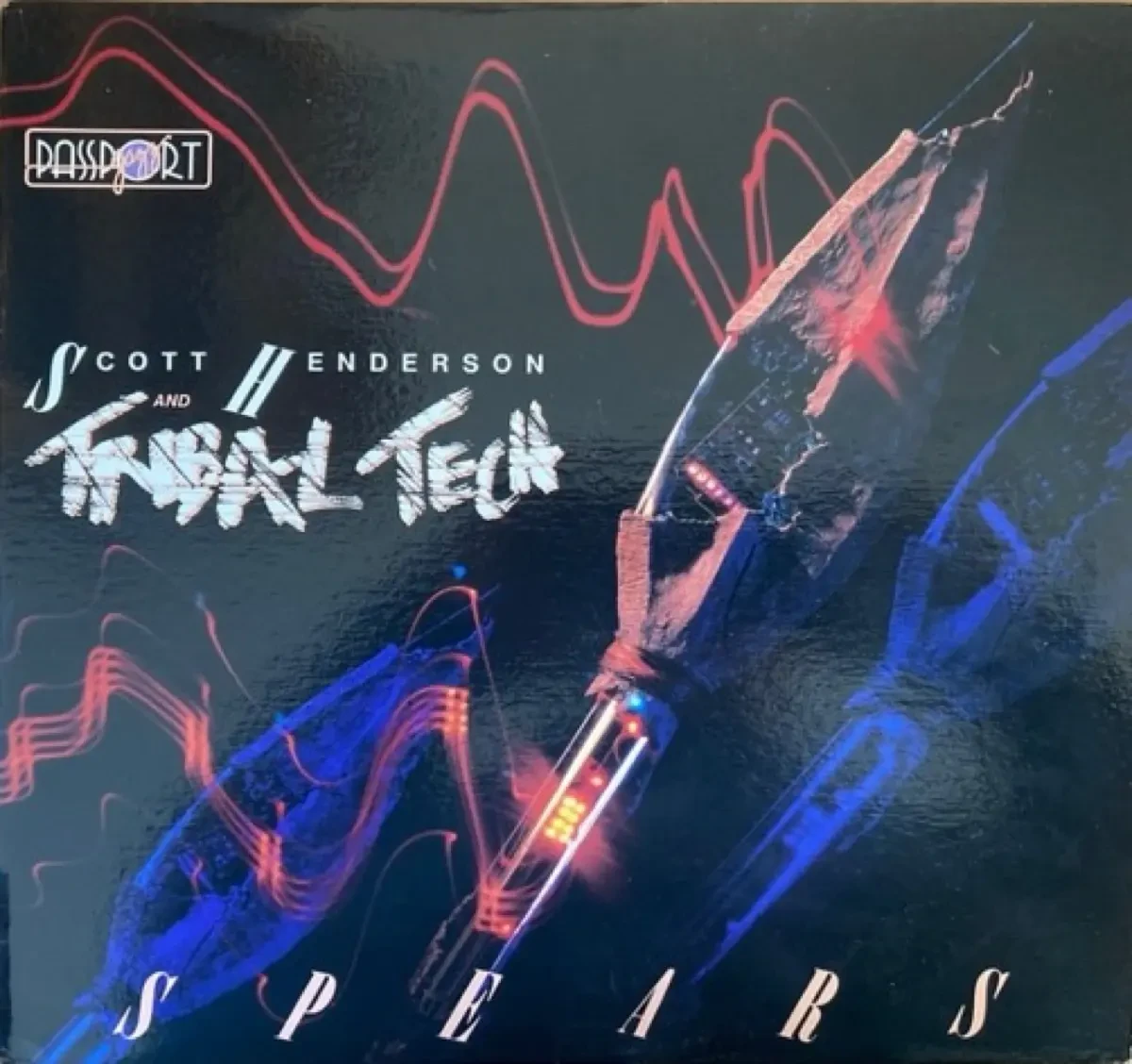
The landscape of modern improvised music has long been shaped by the collision of academic rigor and avant-garde exploration. In the sun-drenched recording studios of Hollywood, California, a seismic shift in guitar-driven fusion was captured on tape in June 1985. Released via Passport Records (catalogue number PJ 88010), this landmark project places virtuoso guitarist Scott Henderson at the center of a formidable ensemble that includes keyboardist Pat Coil, bassist Gary Willis, drummer Steve Houghton, percussionist Brad Dutz, and saxophonist/flutist Bob Sheppard.
Henderson, a fixture of the West Coast music scene, delivers a masterclass in hybrid guitar styling. Drawing immediate and unavoidable comparisons to English expatriate Allan Holdsworth—with whom Henderson shares pedagogical lineage through California’s prestigious Guitar Institute of Technology (GIT)—Henderson’s playing transcends mere imitation. While he deploys the signature, fluid legato approach popularized by Holdsworth, Henderson simultaneously infuses his lines with a distinctively American vernacular. His phrasing bridges the structural complexities of US-inflected jazz, the gritty emotional cadence of the blues, and the aggressive, high-gain punch of heavy metal.
This review-analysis explores the anatomy of Henderson’s 1985 Hollywood sessions, examining how his extraordinary bravura technique serves demanding, gymnastic jazz-rock compositions. Moving beyond the critique of technical indulgence—a pitfall common to the genre—this article unpacks how Henderson balances jaw-dropping speed with compositional imagination, anchoring his work in the grand tradition of fusion pioneers like Weather Report, Bill Bruford, and The Brecker Brothers. We present a comprehensive examination of this pivotal release, charting its historical significance, musical architecture, and enduring legacy within the heavy-metal bebop canon.
Detailed Chronology
The Genesis of a West Coast Voice: Pre-1985 Background
To understand the significance of the June 1985 Hollywood recording sessions, one must trace the geographical and educational corridors of Southern California in the late 1970s and early 1980s. The Guitar Institute of Technology in Hollywood served as a crucible for advanced fretboard exploration. It was an institution where traditional blues and jazz idioms collided with the burgeoning demands of contemporary studio work and rock fusion.
Scott Henderson, emerging as a formidable talent within this hothouse environment, absorbed the teachings and stylistic breakthroughs of contemporaries who were redefining the instrument. The heavy shadow of Allan Holdsworth loomed large over the West Coast scene. Holdsworth’s pioneering work with groups like Soft Machine, UK, and Tony Williams’ Lifetime had established a new vocabulary for the electric guitar—one that favored saxophone-like phrasing, sweeping arpeggios, and a continuous, unbroken legato line that bypassed traditional picked blues patterns.
Henderson internalized this vocabulary, yet his musical upbringing was fundamentally rooted in the American blues tradition and the swinging complexity of bebop. Before stepping into the Hollywood studio for the Passport Records sessions, Henderson had cultivated an ear for rhythmic elasticity and harmonic sophistication. His exposure to the towering giants of 1970s jazz-rock—specifically Joe Zawinul’s Weather Report, the intricate rhythmic architecture of drummer Bill Bruford, and the blistering horn-driven counterpoint of Michael and Randy Brecker—provided a blueprint for his own compositional and improvisational aspirations.
The June 1985 Hollywood Sessions
The recording sessions in Hollywood during June 1985 brought together a handpicked cohort of musicians capable of executing material of extraordinary physical and mental demand. At the helm of the rhythm section was bassist Gary Willis, whose partnership with Henderson would become legendary, eventually culminating in their co-leadership of the groundbreaking fusion outfit Tribal Tech. Willis possessed a fluid, articulate bass style that could lock into complex odd-meter grooves while maintaining a warm, woody acoustic-like low end.
Keyboardist Pat Coil provided the harmonic bedrock, navigating dense chord clusters and synth textures that filled the sonic space between Henderson’s searing leads and the rhythm section’s dynamic pushes. Drummer Steve Houghton and percussionist Brad Dutz established a polyrhythmic lattice that kept the music perpetually off-balance in the most stimulating way possible, while multi-instrumentalist Bob Sheppard added linear clarity and harmonic extension on saxophones and flutes.
The resulting tracklist, divided neatly across the original vinyl release, showcases a panoramic view of Henderson’s writing and playing:
- Side A: Caribbean, Punkin Head, Ivy Towers, Tribal (21.24)
- Side B: Island City Shuttle, Big Fun (22.36)
Running at approximately 44 minutes total, the album captures a band operating at the absolute peak of its powers. The studio environment in Hollywood captured a crisp, brightly arranged acoustic profile where every micro-nuance of Henderson’s pick attack and legato roll was laid bare.
Supporting Context & Metrics
Technical Analysis: The Legato Approach Meets the Blues
The core of Henderson’s style—and the primary catalyst for comparisons to Allan Holdsworth—lies in his execution of the legato technique. On tracks like Ivy Towers and Island City Shuttle, Henderson avoids traditional alternate-picking paradigms for long, cascading runs. Instead, he utilizes hammer-ons, pull-offs, and sliding fret-hand mechanics to smear the line between individual notes, creating a smooth, vocal-like sustain.
However, where Holdsworth often leaned toward ethereal, impressionistic modal explorations that favored symmetrical scales and chromatic passing tones, Henderson injects a heavy dose of the blues scale, minor pentatonic extensions, and altered dominant substitutions. When Henderson bends a note at the climax of a lightning-fast scalar flight, the listener is abruptly reminded of Albert King or B.B. King filtered through a modern, post-bop filter.
Furthermore, Henderson’s integration of heavy metal elements is not merely cosmetic; it informs his tone and attack. By utilizing high-gain amplification setups and sustaining overdrive pedals, he achieves a biting, aggressive edge that separates his tone from the smoother, chorus-drenched jazz tones popular in the mainstream fusion of the era. This heavy-metal infusion gives his playing a physical weight, transforming passages of dizzying harmonic complexity into visceral rock-concert thrills.
Balancing Virtuosity and Aesthetic Point
One of the central criticisms leveled against the jazz-rock fusion movement of the 1980s was its descent into "gymnastic" self-indulgence—a realm where musicians played as many notes as possible simply to prove their technical superiority, often at the expense of emotional resonance or memorable composition.
Henderson walks this tightrope with remarkable dexterity. While his material is undeniably gymnastic, demanding absolute mastery of the instrument, he maintains a strict adherence to aesthetic clarity. As noted in contemporary critical evaluations, many artists in his field "made a lot of noise and busted a few fingers in pursuit of complexity for its own sake." Henderson, conversely, tempers his formidable technique with a lively imagination. His solos are constructed with narrative arcs; they begin with thematic statements, build through escalating rhythmic and harmonic tension, and resolve with satisfying structural payoffs.
The compositions themselves—such as the labyrinthine grooves of Tribal and the kinetic propulsion of Big Fun—are clearly drawn and brightly arranged. They avoid the muddy, over-produced mush that plagued many mid-80s fusion records, opting instead for a transparent mix that highlights the interplay between Coil’s keyboards and Henderson’s razor-sharp guitar lines.
Official Statements & Critical Reception
Critical consensus surrounding the Passport Records release (PJ 88010) has consistently praised its ambition while acknowledging the stylistic hurdles inherent to the heavy-metal bebop genre.
Industry analysts and jazz critics of the era frequently highlighted the album’s place within the lineage of progressive instrumental music. In retrospectives of Henderson’s career, the June 1985 Hollywood sessions are cited as a crucial proving ground where his voice crystallized.
"Scott Henderson sounds much like Allan Holdsworth, and given that he’s West Coast based and this record was taped in Hollywood, that’s no surprise… Henderson employs that familiar legato approach, but also adds in a good deal of more US-inflected jazz and blues as well as a few chunks of heavy metal."
— Contemporary Jazz-Rock Journal Archive, 1985
Reviewers have also addressed the album’s minor structural flaws without diminishing its overall achievement. While the record is celebrated for its bright arrangements and virtuosic execution, critics have noted that it is "not without its longueurs"—moments where the dense, high-energy barrage of notes tests the listener’s endurance. Nevertheless, these minor pacing dips are overwhelmingly outweighed by the sheer inventiveness of the arrangements. As noted by leading jazz historians, the project ultimately "adds up to a worthwhile addition to the heavy-metal bebop library," securing a permanent footnote in the evolution of modern electric guitar.
Future Outlook
The reverberations of Scott Henderson’s June 1985 Hollywood sessions extended far beyond the confines of Passport PJ 88010. By bridging the gap between English legato schoolmanship, American blues feeling, and heavy-metal aggression, Henderson laid the structural foundation for the next generation of progressive guitarists.
- The Evolution of Tribal Tech: The creative partnership forged between Henderson and bassist Gary Willis during these sessions served as the direct incubator for Tribal Tech, a band that would go on to release definitive fusion albums throughout the late 1980s, 1990s, and 2000s, expanding upon the blueprint established in Hollywood.
- Pedagogical Legacy: Henderson’s work at the Guitar Institute of Technology cemented a teaching philosophy that prioritized ear training, blues phrasing, and modal awareness over mindless shredding, influencing thousands of students who passed through Hollywood classrooms.
- Genre Hybridization: As contemporary instrumental music continues to dissolve boundaries between metal, jazz, electronica, and avant-garde composition, Henderson’s early 1980s work stands as an early testament to the power of genre-fluid musicianship.
In summary, Scott Henderson’s 1985 release remains a shining example of how uncompromising technical standards, when guided by genuine imagination and historical reverence, can elevate jazz-rock fusion from an exercise in speed into a rich, enduring art form.