
Executive Overview
In the realm of instrumental and vocal performance, few skills are as universally acknowledged as vital—and as frequently neglected—as sight-reading. At the heart of proficient sight-reading lies note recognition: the immediate, cognitive translation of a graphical symbol on a musical staff into a physical action on an instrument or a pitch in the vocal cords. While advanced musicians often take this foundational skill for granted, even seasoned professionals can suffer from bottlenecks in processing speed and accuracy. Recognizing a systemic gap in available pedagogical technology, musician, educator, and software engineer Evan R. Murphy engineered and released a dedicated, browser-based Note Recognition App through SightReadingMastery.
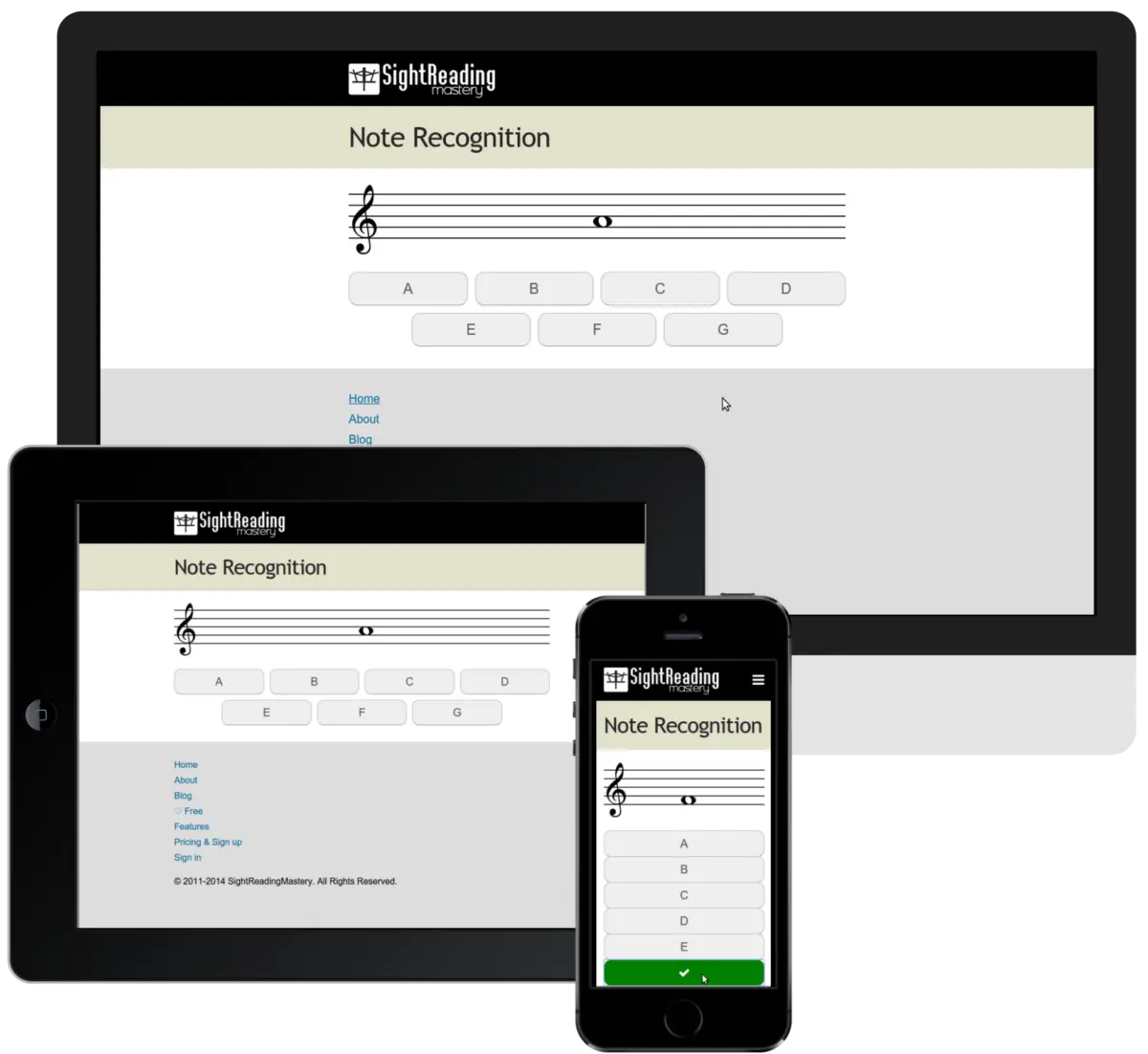
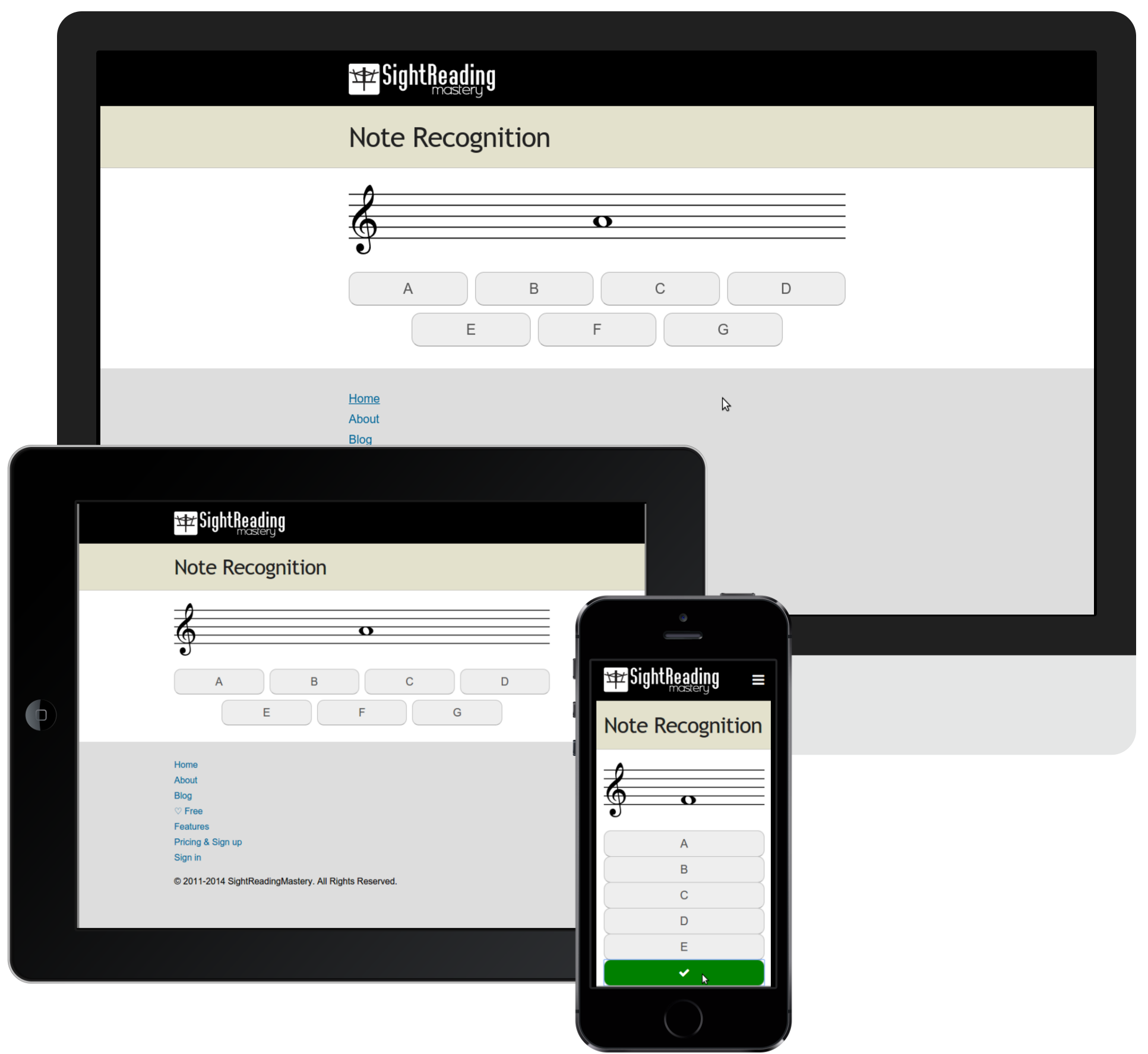
Initially launched as a streamlined web utility, the application was designed to solve a singular problem: making note identification training accessible, immediate, and measurable. Over subsequent updates, the platform evolved from a basic treble-clef drill into a comprehensive, multi-clef training environment equipped with ledger-line support. Optimized for cross-device compatibility—spanning smartphones, tablets, and desktop workstations—the tool democratizes music theory practice, allowing musicians to engage in high-frequency, low-friction repetition regardless of their physical location.
This report provides an exhaustive examination of the Note Recognition App, exploring its pedagogical foundations, the technical challenges overcome during its development lifecycle, its mobile-first architecture, and its broader implications for modern music pedagogy. By analyzing the intersection of cognitive psychology, software engineering, and music education, we uncover how targeted digital tools are reshaping the way foundational musical literacy is acquired.
Detailed Chronology
The trajectory of the SightReadingMastery Note Recognition App reflects an iterative approach to software development, balancing rapid deployment with responsive community-driven updates.
May 1, 2015: The Initial Release
The application made its debut on May 1, 2015, positioned as a free online utility aimed at bridging the gap between theoretical knowledge and practical execution. In its original incarnation, the tool focused exclusively on the fundamentals. The user interface presented notes within the treble clef, challenging users to correctly identify pitches under timed or untimed conditions.
At launch, the scope was intentionally constrained. The application did not yet support the bass clef, nor did it account for notes residing on ledger lines above or below the standard five-line staff. Despite these early limitations, the core value proposition resonated immediately with students and educators: a frictionless, web-based flashcard system built specifically for the musical staff. By removing the need to download heavy software or purchase proprietary hardware, the tool gained rapid traction among independent learners seeking a supplement to traditional method books.
September 14, 2018: Expanding the Musical Horizon
Recognizing that pianists, cellists, bassoonists, and multi-instrumentalists required a more versatile training environment, the development team initiated a major architectural overhaul. On September 14, 2018, the platform underwent significant expansion. The most notable milestone of this update was the integration of bass clef support.
For intermediate and advanced musicians, reading across multiple clefs simultaneously is an essential cognitive requirement. By incorporating the bass clef, the application transformed from a specialized treble-clef trainer into a comprehensive foundational tool suitable for pianists and orchestral musicians alike. Furthermore, this update laid the groundwork for advanced pitch integration, addressing user feedback that demanded greater fidelity to real-world musical literature.
September 23, 2018: Conquering the Ledger Lines
Just over a week after expanding clef support, SightReadingMastery rolled out another critical update on September 23, 2018. This iteration officially dissolved the final major constraint of the original 2015 software: the exclusion of ledger lines.
In standard musical notation, notes that extend beyond the five-line staff require additional short ledger lines. Reading these pitches quickly requires pattern recognition of intervals rather than direct line-space mapping, presenting a major hurdle for students. By adding ledger-line support alongside both treble and bass clefs, the application achieved feature maturity. Users could now drill notes spanning the entire practical range of standard instrumental performance, making the software valuable for conservatory students and hobbyists alike.
Supporting Context & Metrics
To fully understand the significance of the Note Recognition App, one must examine the cognitive science of music reading and the broader ecosystem of music education technology.
The Cognitive Psychology of Sight-Reading
Sight-reading is often compared to reading text in a foreign language. When a fluent reader encounters a sentence, they do not decode individual letters sequentially; instead, they recognize words and groups of words instantaneously. Similarly, expert musicians do not calculate notes on a staff one by one. They process musical chunks, chord shapes, and melodic contours as unified gestalts.
However, this high-level fluency is built entirely upon rapid, subconscious note recognition. If a student must pause to calculate whether a note on the third space of the treble staff is a C or an E, their working memory is overloaded. Consequently, they lose the cognitive bandwidth required to process rhythm, articulation, dynamics, and phrasing.
By isolating note recognition into a digital drill environment, the application targets what psychologists call automaticity—the ability to perform a task without conscious attention. Through high-volume, rapid-fire repetition, users transition note identification from the conscious, analytical brain (the prefrontal cortex) to the procedural memory systems of the basal ganglia.
Cross-Device Accessibility and Responsive Design
In the digital age, educational software lives or dies by its accessibility. Traditional desktop-only music software often suffered from low adoption rates because it required students to sit at a computer separate from their instrument. Recognizing this friction point, Evan R. Murphy engineered the Note Recognition App with a mobile-first, responsive architecture.
Whether accessed via an iPhone on a commute, an iPad resting on a grand piano music stand, or a desktop computer in a university music lab, the application scales fluidly. This multi-platform flexibility encourages micro-learning—short, frequent study sessions (e.g., 5 to 10 minutes per day) which cognitive science proves are significantly more effective for long-term memory retention than sporadic, marathon study sessions.
Official Statements and Developer Philosophy
Behind the architecture of the application is a deeply rooted pedagogical philosophy championed by its creator, Evan R. Murphy. As a musician, music teacher, software engineer, and the founder of SightReadingMastery, Murphy’s perspective is informed by both the art of instruction and the science of software design.
The Vision of Evan R. Murphy
Founded in 2011 in Seattle, Washington, SightReadingMastery was born out of Murphy’s firsthand observations as a music educator. Having witnessed countless talented musicians struggle to unlock career and performance opportunities simply because their sight-reading lagged behind their technical dexterity, Murphy set out to create systematic resources that demystify the reading process.

In commentary surrounding the development of the tool, Murphy emphasizes that sight-reading is not an innate talent bestowed upon the chosen few, but a mechanical skill that can be systematically trained.
"Realizing how important sight reading is to unlocking opportunities in music, we started SightReadingMastery to help musicians develop this valuable skill," Murphy notes.
This philosophy directly influenced the design of the Note Recognition App. Rather than presenting static flashcards or complex, intimidating sheet music, the application strips away extraneous variables, allowing the student to focus entirely on visual-to-pitch translation speed. By keeping the interface clean, responsive, and distraction-free, the software aligns with modern instructional design principles: reducing cognitive load to maximize skill acquisition.
Future Outlook and the Evolution of Digital Pedagogy
As music education continues to intersect with artificial intelligence, gamification, and web-based technologies, tools like the SightReadingMastery Note Recognition App point toward the future of independent music study.
The Shift Toward Data-Driven Practice
Future iterations of note-recognition software are poised to move beyond simple correct/incorrect tracking. By integrating machine learning algorithms, upcoming educational tools can dynamically analyze which specific notes or ledger-line configurations a student struggles with, automatically tailoring future drill sessions to target those exact weak points. This adaptive learning model mirrors the sophisticated spaced-repetition software (SRS) used in language acquisition, representing a massive leap forward from traditional paper flashcards.
Integration with MIDI and Acoustic Input
While visual identification apps are exceptional for building cognitive recognition, the ultimate frontier of music reading software lies in acoustic and MIDI integration. Future expansions of note-recognition ecosystems will likely require users to play the recognized note on a physical instrument—verified via a USB MIDI connection or real-time pitch detection through a device microphone. This closes the loop between visual recognition and motor execution, ensuring that the student is not merely identifying a note visually, but instantly mapping it to the correct finger placement or vocal pitch.
Conclusion
The journey of the SightReadingMastery Note Recognition App—from its humble treble-clef-only origins in 2015 to its robust, multi-clef, ledger-line-inclusive state today—illustrates the power of targeted, user-informed software development in music education. By addressing the foundational bottleneck of note recognition and delivering it through a responsive, cross-platform interface, Evan R. Murphy and his team have provided musicians worldwide with an indispensable tool for mastering the staff. As digital pedagogy continues to mature, tools of this caliber will remain foundational to building the next generation of confident, fluent sight-readers.