
Executive Overview
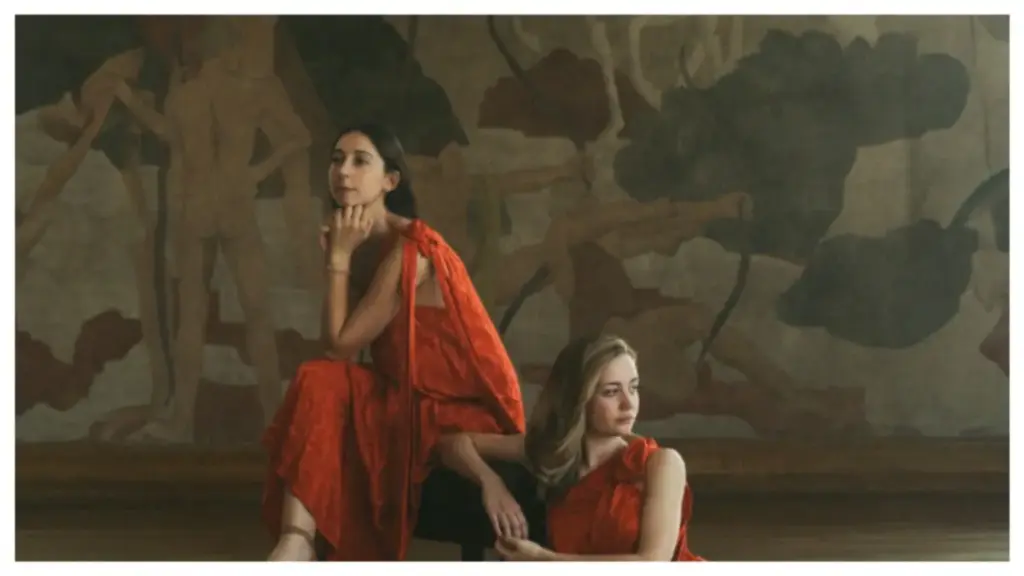
In the sprawling, nocturnal labyrinth of Berlin’s avant-garde and experimental music underground, few collectives have managed to harness the city’s industrial grit and ethereal melancholy quite like Roomer. Emerging as fixtures of a fiercely collaborative scene, the trio—comprising Ronja Schößler, Ludwig Wandinger, and Luka Aron—has carved out a singular niche. Their sonic architecture defies the tidy categorization of contemporary neo-shoegaze, opting instead for a textured pastiche that borrows from traditional folk, electroacoustic experimentation, and the dusty, mythic aura of an unreleased Numero Group archival rediscovery.
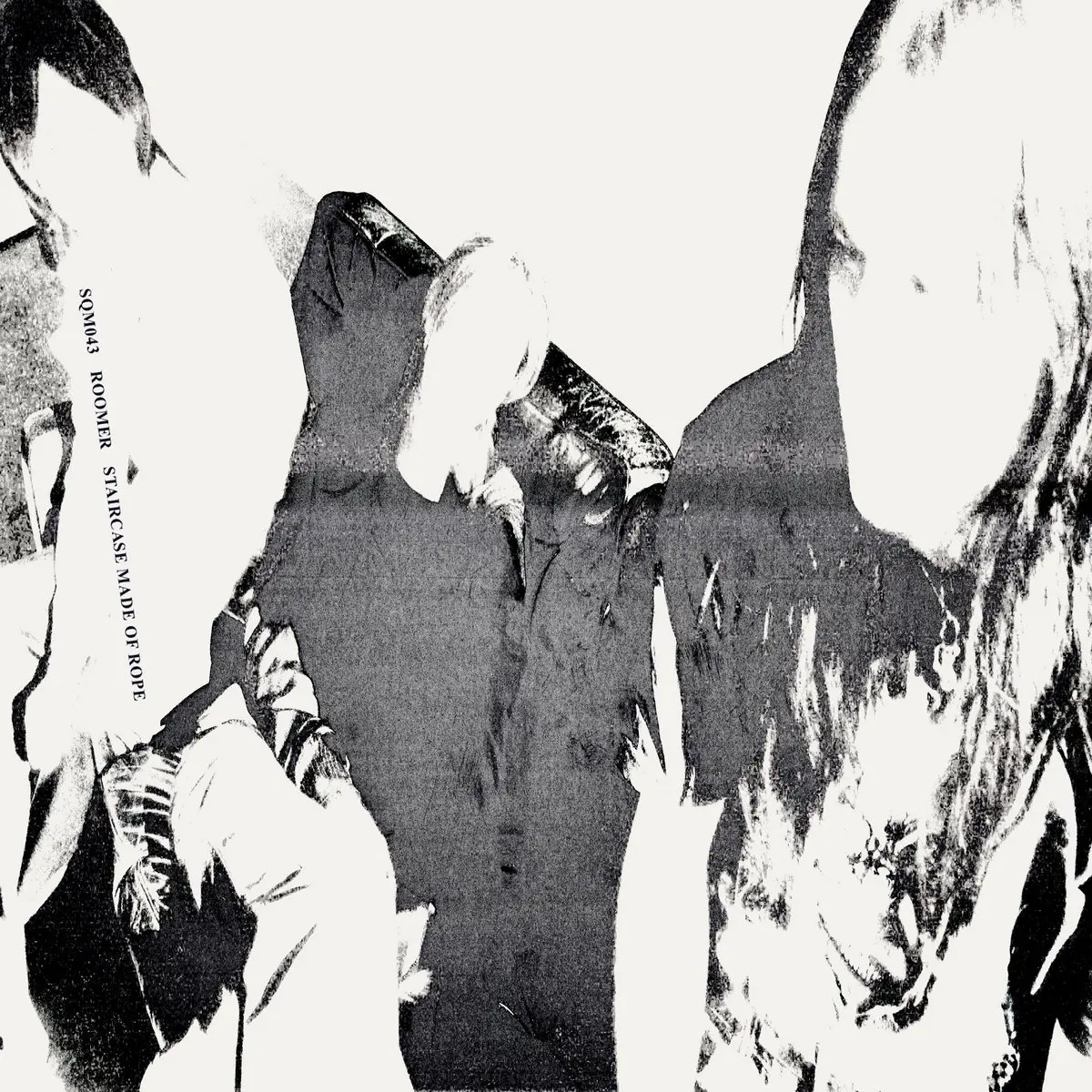
With their sophomore full-length release, Staircase Made of Rope, Roomer confronts the paradox of spontaneity versus refinement. Abandoning the grueling, microscopic micro-editing that defined their earlier recording processes, the trio leaned heavily into improvisation, choosing to preserve their initial takes in raw, unvarnished states. This stylistic pivot was birthed from the deep-seated creative trust forged over years of sustained friendship. Yet, this unedited immediacy introduces a fascinating friction: while the album crackles with genuine impulse and unrehearsed emotion, its refusal to linger in its own sonic expanses occasionally traps the music in a singular lane, leaving listeners yearning for transitions that breathe and textures that fully unfurl.
This report offers a comprehensive examination of Roomer’s latest artistic statement. Drawing on the mechanics of their recording sessions, critical evaluations of tracks like "Something New," "Grey," and "Written By," and the broader socio-cultural context of Berlin’s experimental soundscapes, we explore how Staircase Made of Rope balances the ghosts of shoegaze past with the unruly, impulsive spirit of modern sonic abstraction.
Detailed Chronology: From Laborious Origins to Unvarnished Impulse
The Genesis of Roomer: Forging an Identity in Berlin
To understand the radical creative pivot of Staircase Made of Rope, one must first retrace the developmental arc of Roomer. Long before solidifying their current configuration, Schößler, Wandinger, and Aron operated as independent agents within Berlin’s diverse creative hubs—spaces where jazz improvisation, noise art, classical composition, and minimalist techno violently collide. When these diverse trajectories converged under the moniker Roomer, the objective was clear: to forge a variant of neo-shoegaze that honored the canonical architects of the genre—most notably My Bloody Valentine and Slowdive—while violently dismantling their orthodoxies.
In their early days, Roomer’s output was characterized by a painstaking, almost obsessive approach to post-production. Every frequency was weighed; every layer of cascading feedback was sculpted, repositioned, and polished until the final product was airtight. This laborious methodology yielded a polished, heady-to-weightless guitar introspection, anchored by confessional, sultry murmurs that felt intensely intimate. Yet, this meticulous perfectionism threatened to suffocate the very vitality that drew the trio together in the first place.
The Pivot: Recording Staircase Made of Rope
The transition into the sessions for Staircase Made of Rope marked a psychological and methodological liberation for the trio. According to accounts from the inner circle of production, the band made a conscious, collective decision to strip away the safety net of digital correction and arrangement overhauls.
[Traditional Studio Paradigm]
       │
       ├──> Composition
       ├──> Tracking (Multi-take perfectionism)
       ├──> Over-editing & Re-arrangement (Laborsome phase)
       └──> Final Mix (Polished, uniform output)

[Roomer's *Staircase Made of Rope* Paradigm]
       │
       ├──> Composition & Ideation
       ├──> Live Improvisational Tracking
       ├──> Zero-Edit Preservation (Captured in amber)
       └──> Final Master (Raw, unyielding impulse)
This conceptual about-face prioritized the ephemeral magic of the room over the clinical perfection of the digital audio workstation (DAW). The album’s title—ironically pointing backward to the meticulousness of its predecessor—serves as a wry acknowledgment of this shift. By resolving to trust their collective intuition, Schößler, Wandinger, and Aron sought to capture the raw lightning of live performance.
However, this methodology carries inherent artistic trade-offs. Without the rigorous structural pruning that defined their earlier work, the compositions on Staircase Made of Rope occasionally suffer from a lack of breathing room. Ideas are introduced, executed with fervor, and abruptly abandoned or transitioned away from before their atmospheric weight can fully register with the listener.
Supporting Context & Metrics: Analyzing the Soundscape
Deconstructing the Tracklist: Impulses, Transitions, and Tonal Shifts
The stylistic consequences of Roomer’s improvisational gamble become transparent upon dissecting individual tracks. The album exists in a perpetual state of motion, driven by gut feelings rather than calculated structural arcs.
- "Something New": Serving as a masterclass in atmospheric tension, "Something New" operates as energetically as slowcore is mechanically capable of being. Scintillating, shivering guitar lines weave through a sparse rhythmic frame, setting a contemplative yet propulsive tone.
- "Grey" and the Boris-esque Coda: One of the record’s most striking structural maneuvers occurs when "Something New" bleeds into a pacifying, glacial coda reminiscent of the monolithic, crushing drone aesthetics pioneered by Japanese heavy-rock icons Boris. This heavy, crusting transition into "Grey" possesses immense emotional and sonic gravity. Yet, it highlights the album’s primary structural vulnerability: the transition is swift, denying the listener the opportunity to fully marinate in the preceding sonic devastation.
- "Good On My Own": Propelled initially by an askew, off-kilter rhythmic backbone that disrupts conventional time signatures, the track eventually tapers off into a low-res guitar lullaby. While charmingly fragile, this resolution feels slightly tacked on—a casualty of an impulsive fade-out rather than a fully realized denouement. Prolonging this section could have elevated the song from a fleeting thought to an emotional anchor.
- "Written By," "No Different After All," and the Title Track: As the album progresses, Roomer venture into increasingly surreal sonic territory. "Written By" features jarring, spectral guitar licks that drift like ghosts across the stereo field. This is violently juxtaposed by "No Different After All," an abrupt, cyclonic interlude of pure distortion that tears through the sequencing like a sudden storm. Meanwhile, the title track, "Staircase Made of Rope," functions as a funereal dead-march, utilizing abstruse, buried vocal delivery reminiscent of shoegaze’s foundational pioneers.
Comparative Analytical Metrics of Roomer’s Eras
| Metric / Parameter | Debut Era (Early Works) | Staircase Made of Rope Era |
|---|---|---|
| Production Methodology | High-fidelity, micro-edited, DAW-centric | Live-tracking, zero-edit, improvisational |
| Structural Pacing | Deliberate, expansive, meticulously mapped | Rapid, impulsive, compressed transitions |
| Genre Blending | Neo-shoegaze & Chamber Folk | Electroacoustic, Slowcore, Noir-Rock |
| Dynamic Range | Controlled peaks and valleys | High volatility, abrupt tonal shifts |
| Lyrical/Vocal Presence | Confessional, sultry, front-and-center | Abstruse, textural, buried in mix |
Official Statements and Critical Reception
Inside the Artist’s Mind: The Philosophy of Unfiltered Creation
In rare statements surrounding the release of Staircase Made of Rope, members of Roomer have shed light on their philosophical departure from polish. Speaking anonymously to European experimental music zines, a band representative noted:
"We spent years trying to chisel marble out of mud. Every song had to be justified, structurally bulletproof, sterilized of its mistakes. But music—especially the kind of music born out of late-night Berlin jams—loses its pulse when you sanitize the accidents. With this record, we wanted to see what happened when we stepped away from the mixing desk and let the tape roll, warts and all."
This sentiment echoes the broader artistic fatigue plaguing contemporary independent music, where hyper-quantized drums and pristine digital plug-ins have drained rock music of its tactile imperfections. Roomer’s embrace of the raw take is, at its core, a political act of sonic preservation.
Critical Consensus: Brilliance Tempered by Uniformity
Critical reception of Staircase Made of Rope has been marked by a nuanced dichotomy. Reviewers universally praise the trio’s exceptional musicianship and their uncanny ability to conjure atmospheres that evoke dusty basement tapes unearthed by archival curators like the Numero Group.
However, professional critics have consistently pointed to the album’s pacing issues. Reviewers note that while the individual ingredients—folk-inflected acoustic fingerpicking, electroacoustic drones, and towering walls of fuzz—are individually intoxicating, their rapid-fire deployment creates a sense of uniformity. Because the band resists the urge to dwell within their self-created feedback loops, the album occasionally flattens out, moving from one arresting moment to the next without allowing the listener time to catch their breath.
Future Outlook: Where Does Roomer Go From Here?
Navigating the Synthesis of Polish and Spontaneity
As Roomer looks toward the horizon beyond Staircase Made of Rope, the trio faces a fascinating crossroads. They have successfully proven that they can capture lightning in a bottle through uninhibited, improvisational recording sessions. They have shed the laborious, over-analytical tendencies of their youth and established a distinct auditory signature that sets them apart from the cookie-cutter revivalists of the modern shoegaze boom.
However, the next phase of their evolution will likely require a synthesis of these two opposing philosophies. To truly maximize their impact, Roomer does not need to return to the sterile micro-editing of their earliest days; rather, they must learn to master the art of patience within spontaneity.
[Future Trajectory Model]
  Raw Impulse (Staircase) + Meticulous Pacing (Debut) =
  ┌────────────────────────────────────────────────────────┐
  │   The Ultimate Synthesis: Immersive, Breathing Sonic   │
  │   Masterpieces with Unfiltered Emotional Resonance     │
  └────────────────────────────────────────────────────────┘
By affording their noisy feedback, glacial codas, and low-res lullabies the temporal space to breathe and expand, Roomer can eliminate the stylistic uniformity that occasionally plagues their sophomore outing.
The Broader Impact on Berlin’s Experimental Scene
Roomer’s trajectory serves as a bellwether for Berlin’s broader underground music community. As rising rents, shifting cultural policies, and commercial pressures threaten the physical spaces that foster artistic cross-pollination, bands like Roomer remind us of the vital importance of artistic risk-taking.
Whether their next chapter leans further into the avant-garde or finds a middle ground between raw impulse and structural grace, Staircase Made of Rope remains a compelling, courageous artifact. It is a record that stumbles forward in the dark with its eyes wide shut, trusting that the walls of the labyrinth will guide it—even if those walls are woven from fragile, fraying rope.