
Executive Overview
The modern music streaming ecosystem stands at a profound crossroads. For over a decade, platforms like Spotify have democratized the audio landscape, allowing independent creators from remote corners of the globe to reach millions of listeners without traditional record label backing. However, this unprecedented accessibility has invited a modern Pandora’s box: the mass production of generative artificial intelligence music. While a portion of this technology represents genuine human-machine collaboration and innovative artistry, an overwhelming flood of low-effort content, often referred to as "AI slop," now threatens to drown out authentic human voices.
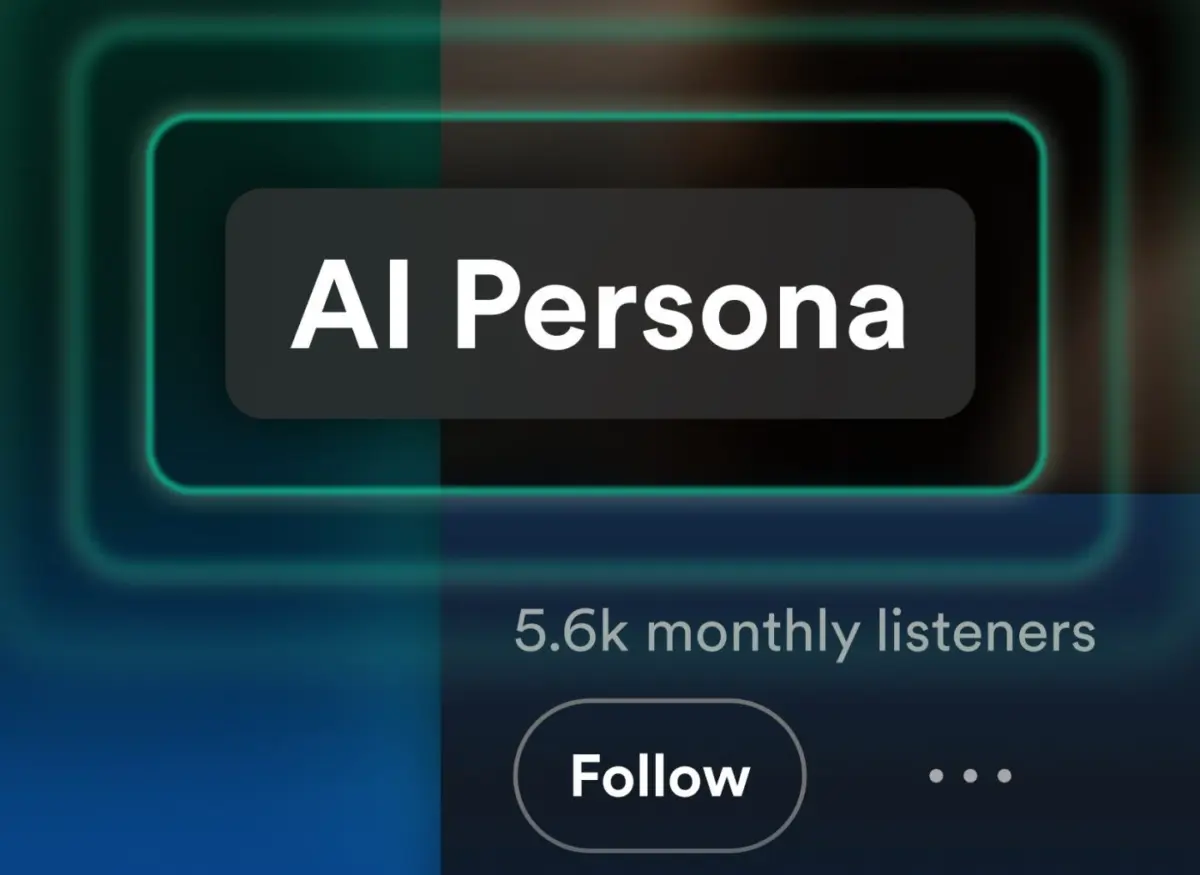
In response to this existential challenge, Spotify has announced a major policy and interface evolution. Set to roll out globally in mid-September, the streaming giant is introducing a distinct "AI Persona" badge. This new visual indicator is designed to provide absolute transparency to listeners, explicitly signaling when an artist’s public identity—including their promotional imagery, biography, and moniker—is synthetically generated rather than representing a living human being.
Crucially, this initiative is not merely about slapping a warning label on profiles. Spotify is fundamentally altering how AI-generated personas interact with its recommendation engine. By default, tracks originating from identified AI personas will be excluded from the platform’s powerful algorithmic and editorial recommendation systems, such as Discover Weekly and Release Radar. Unless a user explicitly chooses to follow an AI persona, these virtual acts will remain quarantined from mainstream discovery pipelines. This move underscores Spotify’s strategic pivot: protecting the economic viability and cultural prominence of human musicians while attempting to corral the chaotic frontier of generative audio.
Detailed Chronology of Spotify’s AI Transparency Initiatives
To fully grasp the gravity of the September rollout, one must examine the systematic, step-by-step approach Spotify has taken to tame the Wild West of generative audio over the past year.
Phase 1: The Credits System (Spring 2026)
The groundwork for Spotify’s current regulatory framework was laid in April 2026, when the platform rolled out a beta credits system designed specifically for musicians. This feature allowed human creators to formally disclose their utilization of artificial intelligence tools during the songwriting, production, or mastering phases. Rather than penalizing technological innovation, this initial phase sought to establish a baseline of accountability, allowing fans and industry watchdogs to understand where and how AI assisted in the creative process.
Phase 2: The Verified Badge and the Human Line (May 2026)
Following the credits rollout, Spotify introduced its coveted "Verified" badge in May 2026. However, company leadership drew a hard architectural line: this badge was strictly reserved for authenticated human artists. Synthetic or virtual acts were explicitly barred from attaining it. This created a bifurcated ecosystem where human identity was elevated, leaving AI-driven acts in a regulatory limbo—until now.
Phase 3: The AI Persona Mandate (September 2026)
Bridging the gap left by the Verified badge policy, the impending September rollout introduces the "AI Persona" badge. This initiative targets the core deception inherent in many virtual acts: the presentation of photorealistic human faces, fabricated backstories, and completely synthetic personas designed to trick listeners into emotional connections with non-existent people.
According to Spotify’s official announcement, the implementation will rely on a dual-pronged strategy. First, creators uploading music will be given the opportunity to self-disclose their AI persona status. Second, and perhaps most importantly, Spotify will not rely solely on the honor system. The company has assembled review teams and automated detection protocols to identify artist profiles whose public imagery and biographical identities match photorealistic AI generation. Furthermore, the platform plans to institute listener-reporting mechanisms, crowdsourcing the identification of undisclosed virtual acts.
Supporting Context & Metrics: The Battle Against "Audio Slop"
The urgency behind Spotify’s aggressive policy changes stems from staggering underlying metrics regarding content saturation. Industry analysts estimate that tens of thousands of tracks are uploaded to major streaming services daily, a significant and rapidly growing percentage of which are entirely generated by text-to-audio models with minimal human intervention.
The Economics of Generative Saturation
The proliferation of AI-generated music introduces severe economic distortions to the streaming royalty pool. Because streaming services typically operate on a pro-rata payment model, every fractional cent diverted to automated, programmatic "slop" reduces the payouts of hardworking, full-time human musicians. Virtual artists capable of churning out hundreds of tracks a day threaten to game recommendation algorithms through sheer volume, overwhelming listeners with repetitive, low-cost content.
Defining the Boundaries: Identity vs. Production
A vital nuance in Spotify’s strategy is the explicit separation between how music is made and who (or what) is presenting it.
- The Credits System handles the technical creation—whether a human used AI to generate a guitar solo, synthesize a backing vocal, or mix a track.
- The AI Persona Badge addresses the sociological and psychological deception—whether the entity looking back at the listener through the artist profile picture actually exists in physical reality.
By keeping these two metrics distinct, Spotify attempts to respect the legitimate tools modern producers use while safeguarding consumers against synthetic catfishing. If a human producer uses AI to enhance their creative workflow, they remain an authentic human artist. If a software engineer spins up a fake pop star with a completely fabricated AI-generated face and biography to farm passive streams, that entity receives the AI Persona badge.
Official Statements and Policy Mechanics
Spotify’s communications surrounding the mid-September rollout highlight a delicate balance between championing creator autonomy and maintaining platform integrity.

"Starting mid-September, you’ll begin to see an AI Persona badge on some artist profiles," Spotify stated in its official newsroom publication. "The badge signals to listeners that an artist’s identity may be AI-generated and does not represent a real person."
Addressing the enforcement mechanisms, the company emphasized that self-reporting is only the first line of defense:
"We hope artists will be transparent, so we are giving them the opportunity to disclose, but we won’t rely on self-disclosure alone. Spotify will also review artist profiles and identify those whose public identity—the identity an artist presents on their profile, including name and imagery—appears to represent photorealistic AI-generated identities."
To ensure maximum impact, Spotify has confirmed that enforcement will prioritize artists who have crossed defined audience thresholds. This ensures that the badges immediately cover the vast majority of profiles that casual listeners are likely to encounter. In the event of administrative error—where a genuine human artist is mistakenly flagged as a synthetic persona—Spotify has promised a formal appeals process to rectify misidentifications.
The Algorithmic Quarantine
Perhaps the most consequential aspect of the official policy is the restriction placed on recommendations. Spotify’s algorithmic curation engines—such as Daily Mixes, Discover Weekly, and AI DJ features—form the lifeblood of modern music discovery. By default, AI Personas are locked out of these spaces.
"By default, Spotify will not include AI Personas in any editorial or algorithmic recommendations," the company clarified. "That means you won’t see any music from AI Personas in your personalised recommendations, unless you follow AI Personas, for example. While we believe all artists have creative choice in determining how they present themselves, Spotify’s programming is focused on elevating music from authentic artists building careers in music."
Furthermore, Spotify utilized the announcement to reaffirm its broader war on low-effort content:
"We tune our algorithms to highlight authentic human artists and, based on available signals, strive to not include spam, slop, or low-effort content in our recommendations."
Future Outlook: What the AI Persona Era Means for the Industry
As the mid-September launch date approaches, the broader music industry is watching Spotify’s experiment with intense curiosity and cautious optimism. Independent labels, major conglomerates, and independent artists alike view this policy as a potential bellwether for the entire digital entertainment sector.
1. Shifts in Marketing and Branding
For creators leveraging generative technology legitimately—such as virtual bands, multimedia art projects, and experimental avatar-driven acts—the AI Persona badge changes the rules of engagement. Rather than hiding behind deceptive human facades, these projects will now operate within a designated category. This may foster a specialized subculture of synthetic music fandom, where listeners knowingly engage with virtual avatars much like they have historically embraced virtual bands like Gorillaz or Hatsune Miku, albeit with fully automated roots.
2. The Pressure on Competitors
Spotify’s proactive stance places immediate pressure on rival streaming platforms—including Apple Music, Amazon Music, YouTube Music, and SoundCloud—to clarify their own stances on generative audio. As consumers increasingly demand transparency in the age of deepfakes and synthetic media, platforms that fail to implement similar verification and labeling systems risk losing consumer trust.
3. Technological Arms Races
As Spotify deploys review teams, automated detectors, and listener-reporting systems to catch undisclosed AI personas, a technological arms race is inevitable. Developers of generative music platforms will undoubtedly seek ways to bypass detection filters, leading to an ongoing cycle of technological cat-and-mouse between streaming platforms and bad actors attempting to game the recommendation algorithms.
Conclusion
Spotify’s introduction of the AI Persona badge marks a watershed moment in the history of digital audio. By drawing a bright line between human authenticity and synthetic fabrication—and by backing that distinction with tangible algorithmic consequences—Spotify is attempting to preserve the sacred bond between creator and fan. As the September rollout takes effect, it will illuminate the path forward for an industry desperately seeking harmony in the digital age.