
By Francisco Salazar
Published by OperaWire
Executive Overview
In an exquisite intersection where contemporary pop superstardom meets centuries-old European high culture, Grammy-winning recording artist Dua Lipa graced the historic halls of Milan’s Teatro alla Scala on September 19, 2026. The occasion was the much-anticipated season-opening performance of Giuseppe Verdi’s timeless masterpiece, La Traviata. For Lipa, the evening was more than a routine celebrity appearance; it was the realization of a publicly stated ambition that she had manifested months prior in the pages of Vogue Italia.
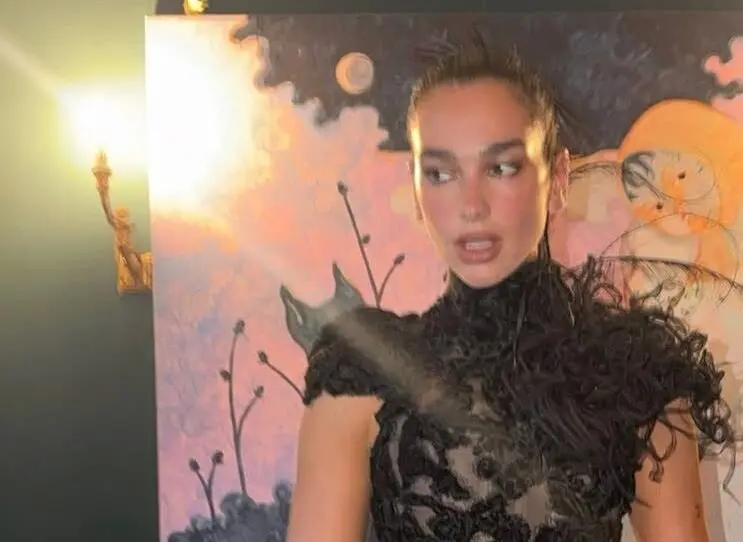
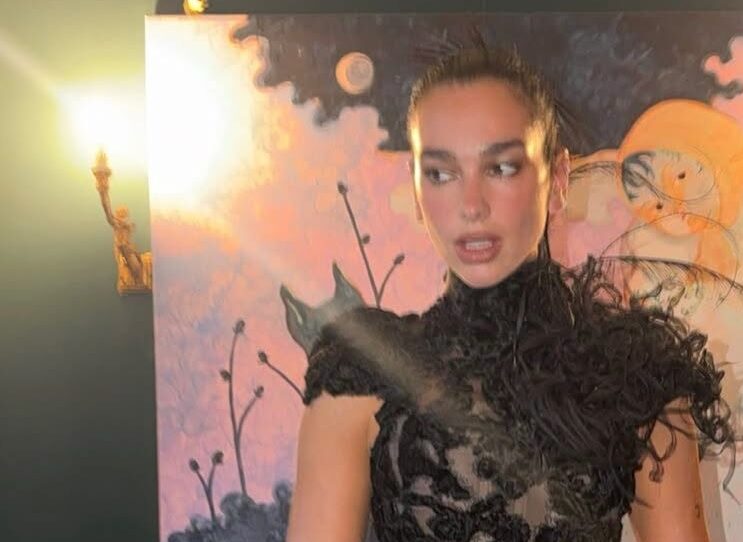
Draped in a breathtaking, semi-sheer embroidered gown straight from Ashi Studio’s Fall 2026 collection, Lipa captivated both the live audience inside the legendary gilded auditorium and millions of followers across her digital platforms. Her presence at La Scala bridges a fascinating cultural divide, proving that the modern pop icon’s artistic curiosities extend far beyond stadium tours and commercial chart-toppers into the rigorous, emotive world of grand opera.
This report provides a comprehensive, multi-faceted look at the evening’s events. We will examine the precise chronology of Lipa’s Milanese pilgrimage, analyze the high-fashion statements that dominated the red-carpet discourse, explore the stellar cast and production details of La Scala’s La Traviata, and contextualize this cultural crossover within the broader trajectory of a multifaceted career that continues to redefine what it means to be a modern global celebrity.
Detailed Chronology: From Vogue Manifesto to the Gilded Auditorium
To fully appreciate Dua Lipa’s glittering evening at Teatro alla Scala, one must trace the timeline back to her interview with Vogue Italia earlier this fall. During the extensive profile, the British-Albanian singer was asked about her cultural bucket list and artistic sanctuaries. Without hesitation, she pointed to the Teatro alla Scala in Milan, declaring it her favorite theater in the world.
With refreshing candor, Lipa confessed to the magazine:
"The only reason I am saying it is because I haven’t been yet and I am dying to go and I know that ‘La Traviata’ is playing there in September so I am trying to go see that."
This declaration transformed a private cultural aspiration into a public countdown. Opera enthusiasts and Lipa’s global fan base—often referred to affectionately as "Lipa’s Navy"—immediately took note. The anticipation reached a fever pitch as September 19 arrived, marking the official opening night of the Milanese theater’s prestigious autumn slate.
True to her word, Lipa touched down in Milan, seamlessly transitioning from international pop export to sophisticated opera patron. Arriving at the Piazza della Scala, she immediately drew the attention of onlookers, international press, and fashion houses alike. Stepping inside the neoclassical fortress of music, Lipa documented her immersion into the house’s storied atmosphere. She shared a series of intimate photographs captured within the opulent, red-velvet-and-gold auditorium, showcasing the intricate architectural details of the historic theater.
As the house lights dimmed and the orchestra struck the haunting, melancholic opening chords of Verdi’s prelude, Lipa joined an enraptured audience. Following the final curtain call—which was met with thunderous, extended applause for the cast—video footage emerged capturing the pop star sharing in the collective post-performance euphoria. Standing near the stage area, Lipa was seen applauding the triumphant artists, visibly moved by the dramatic weight and vocal pyrotechnics of the evening’s tragic heroine, Violetta Valéry.
Sartorial Splendor: The Ashi Studio Fall 2026 Masterpiece
No major public appearance by Dua Lipa is complete without a meticulous breakdown of her fashion choices, and her La Scala debut was nothing short of a masterclass in modern red-carpet styling. Honoring the solemn yet glamorous tradition of Italian opera opening nights, Lipa selected a semi-sheer embroidered gown from Ashi Studio’s Fall 2026 collection.
The dress, a structural marvel of delicate craftsmanship, married contemporary avant-garde silhouettes with the timeless elegance demanded by the Teatro alla Scala dress code. The semi-sheer fabric played masterfully with light and shadow, catching the amber glow of the theater’s crystal chandeliers. Intricate embroidery cascaded down the length of the gown, offering a textural depth that echoed the ornate, gilded neoclassical flourishes of the auditorium itself.
Fashion critics have long noted Lipa’s ability to navigate diverse aesthetic landscapes—shifting effortlessly from Y2K-inspired streetwear and Versace metallic chainmail to minimalist haute couture. Her choice of Ashi Studio for her maiden voyage into Italian opera demonstrated a profound understanding of context. The gown was dramatic enough to command the room without overshadowing the historic institution or the artists performing upon its legendary stage. By aligning herself with cutting-edge independent haute couture while attending a canonical, centuries-old art form, Lipa reinforced her status as a global trendsetter who treats culture and fashion as interconnected mediums of self-expression.
Inside La Scala’s ‘La Traviata’: Cast, Production, and Run Details
While Dua Lipa’s attendance generated a massive wave of digital media engagement, the artistic core of the evening remained Teatro alla Scala’s formidable production of Giuseppe Verdi’s La Traviata. Based on Alexandre Dumas, Jr.’s novel and play La Dame aux Camélias, La Traviata is arguably the most frequently performed opera in the global repertory. Its potent mix of societal hypocrisy, consuming passion, and tragic mortality offers a bottomless well for vocal and dramatic interpretation.
La Scala’s September 19 premiere launched a high-profile run scheduled to continue through October 15, 2026. The production assembled an elite roster of international opera stars, ensuring that the musical standards of the evening matched the grandeur of the occasion.
Headlining the cast in the iconic, vocally punishing role of the courtesan Violetta Valéry is acclaimed soprano Nadine Sierra, who shares the demanding character arc alongside Francesca Pia Vitale. The emotional core of Violetta’s tragedy—her doomed romance with the idealistic Alfredo Germont—is brought to life by tenors Piero Pretti and Iván Ayón Rivas, whose soaring lyricism captures the intoxicating heights of young love and the bitter agony of betrayal.
The paternal antagonist and moral anchor of the tragedy, Giorgio Germont, is portrayed with gravitas and vocal warmth by baritones Boris Pinkhasovich and Amartuvshin Enkhbat. Under the watchful eye of La Scala’s artistic leadership and musical staff, this stellar ensemble navigates Verdi’s sweeping melodies, intricate ensemble numbers, and heart-wrenching death scene with precision and emotional acuity.
For an opera novice like Dua Lipa—as well as the thousands of new fans her presence has introduced to the art form—witnessing this caliber of live vocal performance within the acoustically peerless walls of La Scala provides an unforgettable initiation into the lyric theater.
Supporting Context & Metrics: The Intersection of Pop Culture and Classical Music
Dua Lipa’s pilgrimage to La Scala is not merely a curious celebrity sighting; it represents a fascinating demographic and cultural shift in how classical music institutions interact with contemporary media figures.
The Dua Lipa Phenomenon: A Brief Artistic Retrospective
To understand the cultural weight of Lipa’s endorsement, one must examine her extraordinary career trajectory. Emerging as a dominant force in contemporary pop music, Lipa has released three critically acclaimed studio albums:
- Dua Lipa (2017) – The self-titled debut that established her smoky, contralto vocal delivery and global radio dominance.
- Future Nostalgia (2020) – The Grammy-winning disco-pop masterpiece that earned her first UK number-one album and cemented her status as an elite global touring act.
- Subsequent critically and commercially successful projects that have continued to expand her sonic palette.
Beyond the recording studio, Lipa has successfully expanded her footprint into Hollywood, securing high-profile cinematic roles such as her memorable turn as Mermaid Barbie in Greta Gerwig’s blockbuster phenomenon Barbie (2023) and Matthew Vaughn’s spy thriller Argylle (2024). Furthermore, through her lifestyle and culture platform, Service95, Lipa frequently curates book recommendations, travel guides, and deep-dive cultural interviews, positioning herself as an intellectual curator as much as a pop idol.
Bridging the Generational Divide in Opera
Historically, high-art institutions like La Scala have struggled with the perception of being inaccessible, elitist, or out of touch with younger generations. The inclusion of young global icons in the audience—and their enthusiastic, unfiltered digital documentation of the experience—serves as an invaluable bridge.
When Lipa posts about La Traviata to her tens of millions of Instagram followers, she initiates a cultural exchange. A demographic of digital natives who might never have considered attending an opera are suddenly exposed to the majesty of Verdi, the architecture of La Scala, and the vocal artistry of singers like Nadine Sierra. Conversely, the classical music establishment gains a fresh, energetic validation from one of the most culturally relevant voices of the 21st century.
Official Statements and Social Media Echoes
The synergy between Lipa’s visit and the digital age was instantaneous. Following the performance, Lipa took to her official social media channels, sharing carousel posts featuring her Ashi Studio gown, glimpses of the opulent auditorium, and moments of quiet reflection backstage.
The posts quickly garnered millions of likes and tens of thousands of comments, transforming the digital conversation into a global forum on opera and fashion. Cultural commentators, fashion historians, and opera critics alike weighed in on the crossover event.
While institutional press releases from Teatro alla Scala typically focus on musical directors, staging concepts, and ticket availability, the theater’s public relations ecosystem undeniably benefited from the global spotlight. By welcoming artists of Lipa’s caliber who possess a genuine, articulated passion for the art form, La Scala reaffirms its position not as a dusty museum of antique music, but as a living, breathing epicenter of global culture.
Future Outlook: What This Means for Classical Music and Pop Crossovers
As the curtain rises night after night on La Scala’s current run of La Traviata, the reverberations of Dua Lipa’s opening-night attendance will continue to be felt across both the music industry and the cultural sector.
The event underscores a growing trend where modern pop artists refuse to be confined by genre or cultural segregation. Artists like Dua Lipa, Harry Styles, Rosalía, and Billie Eilish have repeatedly demonstrated that deep appreciation for classical art, literature, opera, and high fashion can coexist harmoniously with stadium-sized pop stardom.
For opera houses, the blueprint moving forward is clear: authentic engagement with contemporary cultural leaders can democratize access and spark curiosity on a global scale. When an artist of Lipa’s magnitude openly admits she is "dying to go" to the opera and follows through with deep respect and sartorial elegance, it signals to the world that high art is not a relic of the past, but a thrilling, living experience waiting to be discovered by anyone willing to take their seat in the dark and listen.
As La Traviata continues its Milanese run through October 15, 2026, the legacy of this specific opening night will be remembered as the evening a global pop superstar tipped her hat to Giuseppe Verdi, proving that great art—whether delivered through a synthesized disco beat or a soaring soprano aria—speaks a universal language.