
Executive Overview
The dawn of a new academic year in music education is universally characterized by a dichotomy of intense excitement and crushing administrative overhead. While August and September pulse with the creative energy of returning ensembles, eager students, and fresh repertoires, they are equally defined by an exhausting marathon of roster management, baseline skill diagnostics, and meticulous grading. For decades, music educators have accepted this administrative burden as an inevitable tax on their primary passion: teaching and making music on the podium.
In an ambitious move to fundamentally shift this paradigm, MakeMusic has rolled out a comprehensive, technologically advanced suite of updates to its flagship platform, MakeMusic Cloud. Designed from the ground up to address the specific friction points of the back-to-school season, these new features target the most time-consuming aspects of modern music instruction. By introducing advanced Learning Management System (LMS) integrations with automated grade passback, an entirely redesigned and intuitive gradebook, flexible co-teaching capabilities, and diverse assessment formats, MakeMusic is positioning its platform not merely as a digital sheet music library, but as an indispensable administrative co-pilot for music directors worldwide.
This report provides an in-depth examination of the newly released feature set, exploring the technical architecture of the updates, the pedagogical philosophy driving the design choices, and the profound implications these tools hold for music educators grappling with the escalating demands of modern classrooms.

Detailed Chronology: The Evolution of Classroom Efficiency
To understand the weight of the current release, it is necessary to examine the historical evolution of digital music education tools. For years, educators utilizing digital platforms were forced to operate in silos. A music teacher might assign a performance test within a specialized music software, only to manually transcribe grades into a district-mandated LMS, and subsequently cross-reference those scores with a physical notebook tracking student attendance and posture development.
The rollout of the new MakeMusic Cloud features marks the culmination of a multi-year listening campaign where developers actively engaged with educators to map out the daily friction of school operations.
Phase One: Conquering Data Fragmentation (LMS and Google Grade Passback)
The first critical milestone in this update cycle addresses data entry redundancy. Historically, onboarding students at the start of a semester involved tedious data management. The enhanced LMS integration bridges MakeMusic Cloud directly with institutional powerhouses like Canvas and Schoology.

However, the crown jewel of this administrative overhaul is the introduction of Google Grade Passback. In a traditional workflow, a teacher evaluating a student’s submission on MakeMusic Cloud would need to keep multiple browser tabs open, viewing the platform’s internal scores while manually typing values into a Google Classroom gradebook. With the new passback architecture, the system automates this entire pipeline. Once a student finalizes an assignment, the metric evaluates and synchronizes natively with the educator’s Google Classroom environment. This eliminates hours of repetitive data entry, drastically reducing human error and freeing up critical hours on Friday afternoons.
Phase Two: The Gradebook Redesign and Co-Teaching Infrastructure
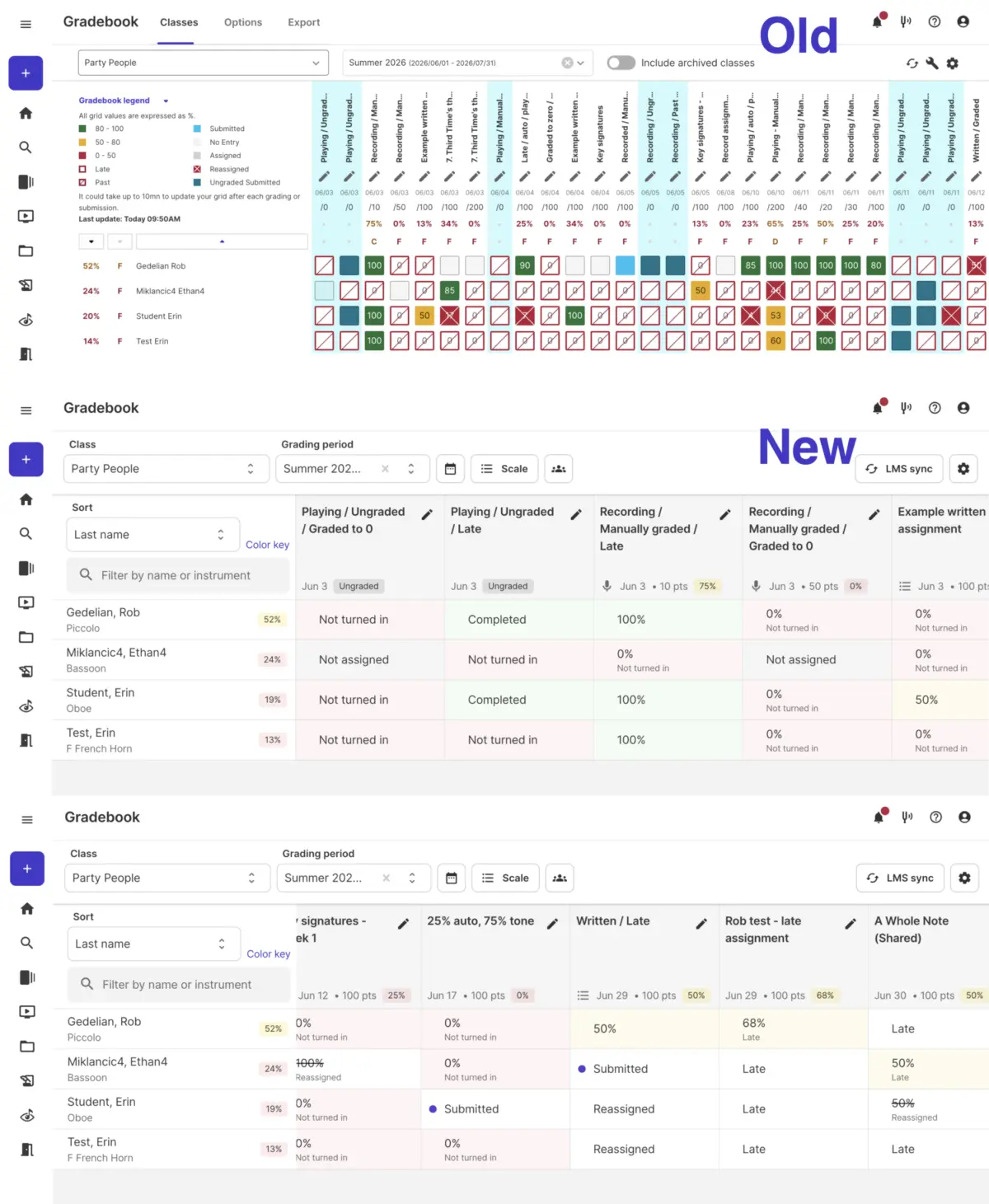
Following the stabilization of data pipelines, MakeMusic turned its attention to the internal user interface of the platform itself. Recognizing that the legacy gradebook layout was reaching its functional limits in handling complex, multi-tiered ensemble data, engineers engineered an entirely new grading environment from scratch.
Launched ahead of the fall term, the new gradebook presents a cleaner, highly accelerated interface. It leverages at-a-glance analytics that allow a director to visualize class trends instantly. During the volatile first few weeks of school—when student skills fluctuate wildly following summer dormancy—this visibility is crucial. Directors can now isolate struggling performers and identify high-achieving sections within seconds.

Simultaneously, the platform addressed the isolation inherent in directing large, multi-section ensembles. Recognizing the traditional axiom that "managing an ensemble takes a village," MakeMusic introduced the Co-Teaching feature. Assistant directors, long-term substitute teachers, student teachers from local universities, and specialized sectional coaches can now be integrated directly into a MakeMusic Cloud class. These co-teachers possess the granular permissions required to assign exercises, review multimedia student submissions, and input grades. This decentralized approach to classroom management allows large band, choir, and orchestra programs to divide and conquer labor right from day one.
Supporting Context & Metrics: Diagnosing and Correcting the Summer Slump
The pedagogical rationale behind the new assignment types and sight-reading templates is deeply rooted in cognitive science and music education best practices: the well-documented "summer slide." Research consistently demonstrates that instrumentalists and vocalists experience a noticeable regression in technical proficiency, musical literacy, and sight-reading accuracy over extended academic breaks.
Expanding Beyond Pitch and Rhythm: Audio/Video and Multiple-Choice Assessments
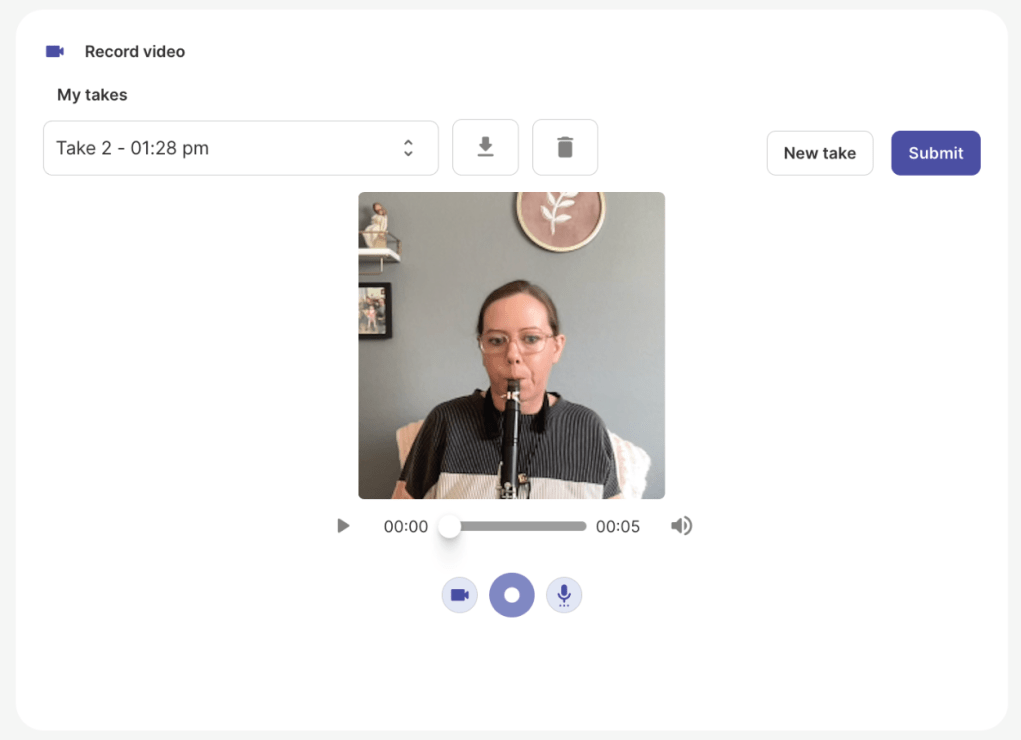
Historically, digital music assessment tools focused heavily on algorithmic pitch and rhythm detection via microphone inputs. While valuable, this narrow focus failed to capture vital physical elements of performance practice. In the first weeks of school, correcting foundational physical habits—such as a deteriorating bow hold, incorrect embouchure, poor posture, or flawed stick grip—takes precedence over complex repertoire mastery.

MakeMusic Cloud’s new Audio/Video and Multiple Choice assignments directly bridge this gap. Educators can now bypass standard pitch-tracking algorithms to request pure video submissions. A band director can evaluate a flutist’s headjoint alignment; an orchestra director can inspect a cellist’s left-hand frame; a choral director can observe breathing mechanics.
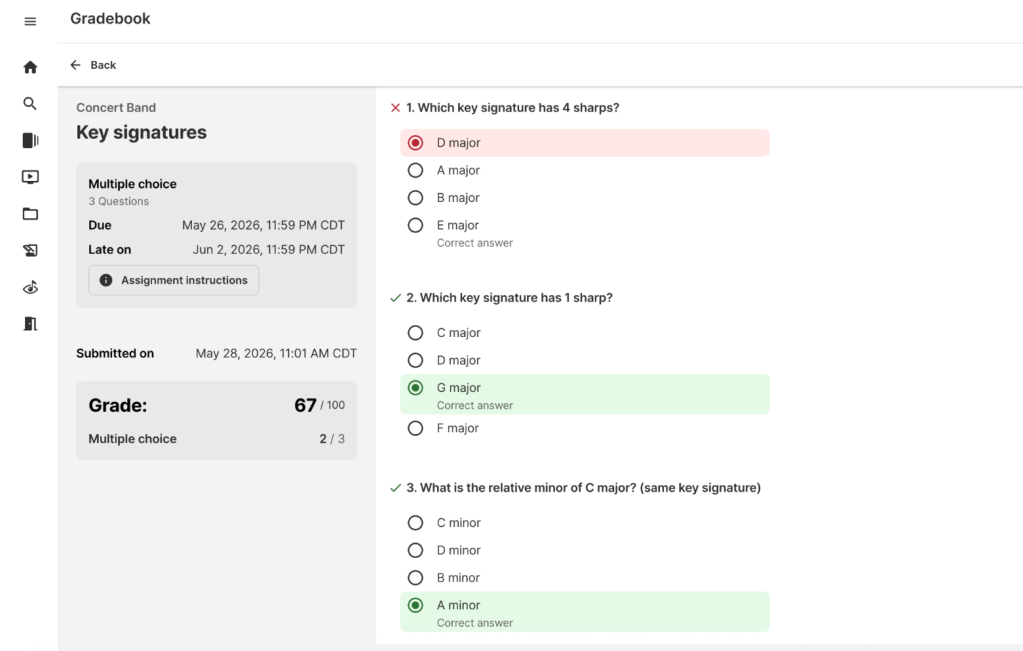
Furthermore, the integration of multiple-choice assessments allows teachers to deploy instantaneous literacy checks. By testing note and symbol recognition, musical terminology, and foundational theory via automated multiple-choice quizzes, directors can rapidly map out the cognitive baseline of an entire ensemble without drowning in manual paper grading.
Instant Content: Sight-Reading Templates and Pinnable Curricula
Time is the ultimate finite resource for an educator. Crafting sight-reading exercises that align with state-specific assessment standards—such as NYSSMA or Texas UIL—traditionally requires hours of dedicated composition or scouring legacy sheet music archives.
The platform’s updated Sight-Reading Templates eliminate this friction. Educators can deploy pre-configured, expertly leveled exercises drawn from renowned pedagogical frameworks, including Sing at First Sight, Habits of a Successful Musician, and Sound Innovations.
Compounding this efficiency is the new ability to pin multiple method books and playlists to a single class. In previous iterations, students and teachers were often locked into viewing singular curricular tracks. Now, educators can pin newly released materials—such as Bethany Main’s Choir Up!—alongside foundational books like Sing at First Sight and selections from The Foundations Series. This creates a centralized, highly accessible digital hub where students are never more than a click away from their core developmental resources.
Official Statements and Industry Perspective
Industry leaders and educational technologists at MakeMusic emphasize that these feature deployments are fundamentally human-centric. The overarching corporate philosophy is rooted in the preservation of the teacher-student artistic connection.
"The beginning of the school year sets the undeniable tone for the months ahead," noted a senior product spokesperson for MakeMusic. "Between finalizing complex rosters, establishing safe classroom environments, and diagnosing where hundreds of students stand after months away from their instruments, August and September can easily feel like an unsustainable marathon. At MakeMusic, our core philosophy is simple: a music educator’s highest and best use of time is spent on the podium inspiring students, not buried beneath administrative paperwork. These new features are engineered to shoulder that administrative burden, clear out the friction, and give teachers their time back."
Music pedagogy experts across the country have echoed these sentiments, noting that administrative burnout remains one of the leading catalysts for educator attrition in the arts. By automating grade passbacks, streamlining multi-teacher environments, and offering diverse, flexible testing formats, platforms like MakeMusic Cloud are transitioning from optional supplementary software into foundational infrastructure for modern scholastic music programs.
Future Outlook: The Next Frontier of Digital Music Pedagogy
As school districts nationwide continue to navigate the complexities of hybrid learning environments, fiscal constraints, and evolving technological standards, the trajectory of music education software points toward deeper integration, greater automation, and more holistic student evaluations.

The successful launch of these back-to-school features signals a clear trajectory for MakeMusic Cloud. Future development cycles are widely expected to lean further into advanced analytics, leveraging machine learning to automatically flag performance regressions or individual learning gaps before they manifest in public concert settings. Moreover, as LMS ecosystems grow more sophisticated, the boundary lines between dedicated music software and universal school grading portals will continue to dissolve, creating an ultra-seamless, frictionless educational ecosystem.
For now, the immediate impact is profoundly clear. By stripping away the administrative friction that traditionally plagues the autumn semester, MakeMusic has provided educators with a powerful toolkit designed to protect their time, elevate their instructional precision, and ultimately return the focus of music education to where it has always belonged: the pure joy of making music.
Educators looking to leverage these tools for the upcoming term can access the upgraded feature set by logging into their accounts via the official MakeMusic Cloud portal.