
Executive Overview
In the modern music classroom, few skills are as universally acknowledged as vital—and yet as notoriously difficult to teach consistently—as sight reading. Educators have long understood that strong sight readers progress more rapidly, execute rehearsals with greater efficiency, and approach adjudicated festivals and performances with poise rather than anxiety. Crucially, independent music literacy is the ultimate key that unlocks lifelong musicianship. It empowers students to continue making music long after they graduate and leave formal classrooms, whether they are joining a local community band, participating in a sacred choir, or organizing informal jam sessions with friends.
However, a persistent bottleneck has plagued music educators for decades: the paradox of practice material. Effective sight reading instruction requires a steady, continuous stream of fresh, unseen musical examples. Traditional method books, while indispensable for foundational instruction, possess finite physical space. After a student reads through a specific exercise two or three times, the cognitive mechanism shifts. The student stops actively decoding and reading the visual notation and instead relies on rote memory.
To resolve this educational hurdle, MakeMusic has officially launched its groundbreaking Correlated Sight Reading Generators. Available within the MakeMusic Cloud ecosystem, these innovative templates are designed to transform standard, widely adopted method books into an endless, self-renewing supply of customized sight reading exercises. By bridging the gap between curriculum pacing and dynamic content generation, this release promises to reclaim countless hours of weekly preparation time for educators while fundamentally upgrading how students develop musical independence.
Detailed Chronology: The Evolution of Sight Reading Technology
To understand the significance of MakeMusic’s latest release, it is necessary to examine the chronological progression of music instruction technology and the persistent challenges music teachers have faced in lesson planning.
The Era of Static Print and Manual Copying
For generations, music teachers operated in a strictly analog environment. Educators spent their evenings and weekends manually writing exercises on chalkboards, photocopying pages from supplementary anthologies, or painstakingly composing original, leveled sight reading snippets using manuscript paper. This process was not only deeply labor-intensive—often consuming several hours of unpaid personal time each week—but it also suffered from severe pedagogical friction. Finding content that perfectly matched the exact theoretical and technical milestone of a specific week’s lesson plan was frequently a matter of compromise. Teachers often had to choose between material that was too advanced (causing frustration) or too elementary (failing to challenge the developing brain).
The Digital Transition and the Limitations of PDFs
As music education entered the digital age in the late 1990s and 2000s, static PDFs and digital repositories emerged. While these resources saved physical storage space and allowed for easier sharing, they suffered from the exact same fundamental flaw as traditional print media: they were finite. Once a digital folder of sight reading excerpts was distributed to an ensemble or class year after year, students could easily access prior years’ materials, rendering the exercises ineffective for genuine sight reading assessment.
The Birth of Dynamic, Algorithmic Generation
Recognizing the limitations of static libraries, MakeMusic pioneered interactive platforms like MakeMusic Cloud (formerly SmartMusic). Yet, even within advanced digital environments, instructors still faced a disconnect. While software could provide vast libraries of repertoire, teachers still had to manually hunt through massive databases to find pieces that corresponded directly to the scope and sequence of the specific method books they were using in their daily curricula.
The introduction of Correlated Sight Reading Generators represents the culmination of this technological evolution. By integrating algorithmic generation directly with established curriculum sequences, MakeMusic has shifted the paradigm from searching for static content to instantly generating contextually relevant, infinitely variable exercises that sync precisely with lesson-by-lesson pedagogical pacing.
Supporting Context & Metrics: The Science and Economics of Music Literacy
Sight reading is not merely an auxiliary skill; it is the cognitive bedrock upon which musical fluency is built. Educational researchers and music psychologists have long studied the intersection of visual processing and motor execution in instrumental and vocal performance.
The Cognitive Mechanics of Sight Reading
When a musician sight-reads, their brain must perform an extraordinary series of rapid-fire operations:
- Visual Anticipation: Scanning ahead of the current note to process upcoming pitch, rhythm, and articulation patterns.
- Cognitive Decoding: Translating abstract graphic symbols into internalized auditory expectations and physical geography on an instrument or vocal tract.
- Motor Execution: Instantly translating those decisions into precise muscular movements while maintaining a steady internal pulse.
According to developmental studies in arts education, students who engage in daily, low-stakes sight reading exhibit a 40% faster acquisition rate for complex repertoire compared to peers who rely strictly on rote learning or prolonged, repetitive drilling of performance pieces. Furthermore, anxiety reduction metrics in festival environments show that students trained with diverse, unfamiliar materials score significantly higher in adjudications regarding musicality and rhythmic accuracy because they possess adaptive problem-solving skills rather than memorized muscle memory.
The Teacher Burnout and Prep-Time Crisis
Beyond student outcomes, the administrative burden on educators has reached critical levels. Recent educational surveys indicate that the average instrumental or vocal music teacher works between 50 and 60 hours per week, with a substantial portion of non-instructional time dedicated to lesson planning, resource curation, and grading.
By eliminating the manual creation and sourcing of leveled sight reading materials, MakeMusic’s correlated generators directly address this administrative strain. If a teacher saves an average of three to four hours per week in material preparation, that equates to roughly 120 to 160 hours saved per academic year—time that can be redirected toward direct student mentorship, ensemble nuance, mental health preservation, and community outreach.
How Correlated Sight Reading Generators Work
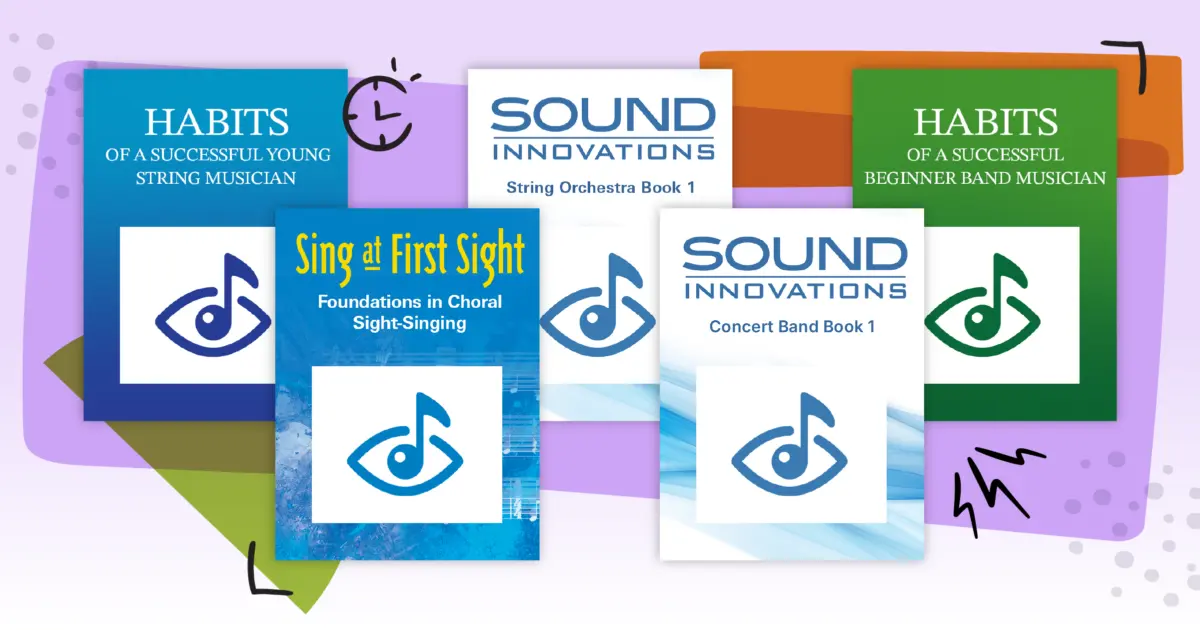
At their core, these new tools are pre-built Sight Reading Studio templates embedded directly within the MakeMusic Cloud library. They are meticulously aligned, lesson by lesson, with industry-standard pedagogical method books.
The Mechanics of Generation
The operational workflow for educators has been streamlined to absolute simplicity:
- Selection: The instructor logs into MakeMusic Cloud and navigates to the template library, selecting the specific method book currently in use by their classroom.
- Alignment: The teacher jumps directly to the exact page or lesson number they are currently covering in class (e.g., Lesson 14, focusing on dotted quarter notes in 3/4 time).
- Execution: With a single click on the "Generate" button, the software instantly produces a brand-new, entirely unique exercise built strictly around the theoretical parameters, note ranges, and rhythmic vocabularies introduced up to that specific lesson.
- Infinite Iteration: If the teacher wants a different example for a second class period, a section breakout, or individual homework assignments, they simply click generate again to receive a fresh, algorithmically distinct piece of music utilizing the exact same pedagogical constraints.
This eliminates the need for manual notation software input, scouring the internet for leveled worksheets, or worrying about students cheating the system using remembered melodies.
Practical Applications: Classroom Integration and At-Home Reinforcement
The versatility of the Correlated Sight Reading Generators allows them to be deployed with equal effectiveness inside the physical rehearsal space and across asynchronous at-home practice environments.
In the Classroom
- Ensemble Warm-Ups: Directors can project a newly generated sight reading example onto a smartboard at the start of a rehearsal. This focuses the ensemble’s attention, establishes a collaborative working environment, and reinforces fundamental literacy before diving into concert repertoire.
- Differentiated Instruction: In mixed-ability classrooms, teachers can quickly generate varied examples tailored to different sectional needs—providing reinforcement for struggling learners while challenging advanced students—all while staying tethered to the core lesson’s curriculum.
- Formative Assessment: Instructors can utilize generated exercises for quick, low-stress spot-checks or formal grading, confident that no student has previously seen or practiced the exact melodic configuration.
At Home
- Independent Practice Reinforcement: When students open MakeMusic Cloud at home, they can access the same correlated generators to practice the exact concepts covered in school that day.
- Building Autonomous Habits: Because the exercises are fresh and gamified by their endless availability, students are more likely to engage in self-directed repetition, overcoming the boredom associated with static page-turning in physical method books.
- Bridging the Lesson Gap: For students who miss a rehearsal or lesson, the asynchronous availability of curriculum-aligned sight reading ensures they do not fall behind in their structural reading development.
Future Outlook: The Next Frontier in Music Technology
The launch of Correlated Sight Reading Generators marks a significant milestone in the digital transformation of music education, but industry analysts and educators are already looking toward the horizon.
As artificial intelligence and adaptive learning algorithms continue to mature, the integration between curriculum pacing and real-time student performance data is expected to deepen even further. Future iterations of these tools may soon feature automated diagnostic feedback—listening to a student sight-read a newly generated exercise via microphone and instantly identifying specific rhythmic or pitch inaccuracies to generate targeted remedial exercises on the fly.
Furthermore, as more publishing houses and method book authors partner with digital platforms like MakeMusic, the breadth of supported curricula will continue to expand, ensuring that educators across classical, contemporary, and culturally diverse pedagogical traditions have seamless access to automated literacy tools.
For now, music educators no longer need to choose between spending their valuable personal time crafting makeshift sight reading worksheets or settling for the limitations of static, memorized textbook pages. By bridging the gap between trusted pedagogical methods and infinite digital generation, MakeMusic has provided the educational community with a powerful instrument for fostering lifelong musical independence.
Get Started Today
Music educators ready to reclaim their preparation hours and elevate student literacy can take immediate action:
- Log In: Access the digital workspace by logging into MakeMusic Cloud.
- Explore: Navigate directly to the Correlated Sight Reading Templates.
- Implement: Locate your primary method book, match it to your current classroom lesson, and provide your students with a dynamic, freshly generated sight-reading experience today.