
Executive Overview
In the landscape of instrumental and vocal music education, few skills are as universally acknowledged as foundational—yet notoriously difficult to teach effectively—as sight reading. Educators have long understood that strong sight readers progress more rapidly, navigate rehearsals with greater efficiency, and approach adjudications, festivals, and auditions with poised confidence rather than crippling anxiety. Beyond academic milestones, independent music reading is the ultimate gateway skill. It is the core competency that ensures students continue to create, perform, and engage with music long after their formal classroom days have ended, whether they are joining a local community band, participating in a sacred choir, or jamming with friends in a garage.
Yet, a persistent bottleneck has plagued music classrooms for generations: the paradox of practice. True sight reading improvement requires a steady, high-volume diet of unfamiliar musical material. However, traditional printed method books possess finite physical space. Once a student plays or sings through a specific exercise two or three times, cognitive recognition takes over. The student stops decoding the musical notation in real-time and instead relies on muscle memory and rote memorization, rendering the exercise useless for true sight-reading development.
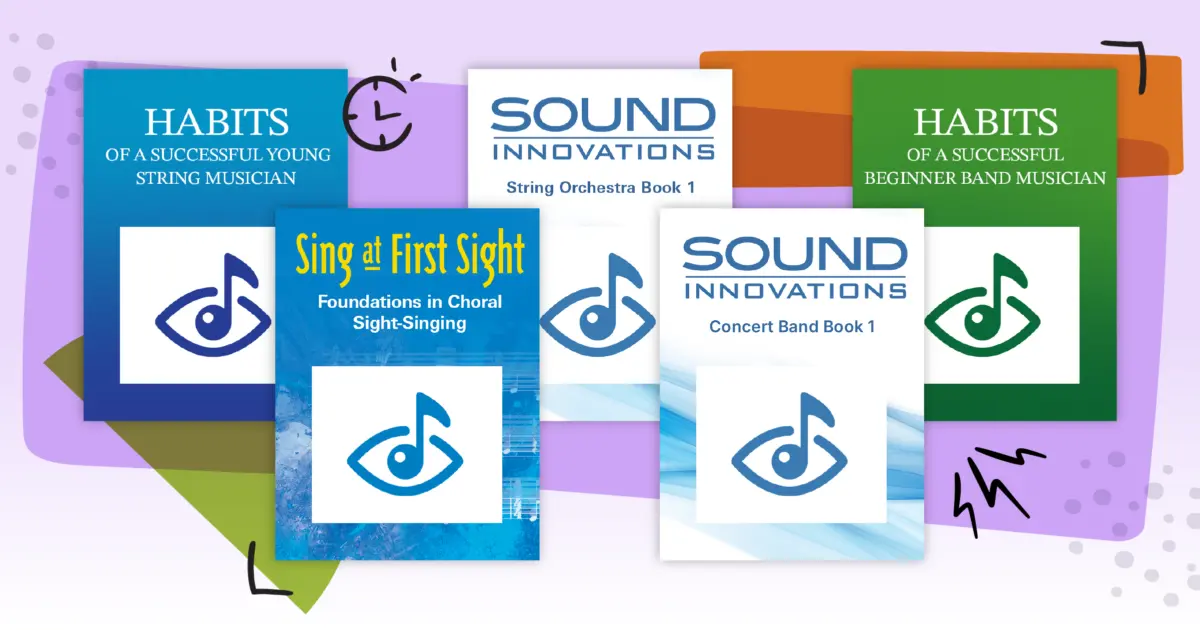
To solve this systemic instructional challenge, MakeMusic has officially launched its groundbreaking Correlated Sight Reading Generators. Housed within the MakeMusic Cloud ecosystem, these pre-built Sight Reading Studio (SRS) templates bridge the gap between structured curriculum and infinite variety. By aligning lesson-by-lesson with widely trusted, standard method books, the new generators provide educators with an inexhaustible supply of fresh, leveled sight-reading exercises at the click of a button.
This comprehensive launch promises to redefine lesson planning, eliminate hours of weekly prep time for educators, and fundamentally alter how students interact with musical notation—transforming sight reading from a dreaded chore into a seamless, engaging extension of daily instruction.
Detailed Chronology: The Evolution of Sight Reading Instruction
To fully appreciate the significance of MakeMusic’s latest innovation, it is essential to trace the historical progression of sight-reading pedagogy and the technological shifts that have brought educators to this precise juncture.
The Era of Static Print and Photocopying
For decades, the teaching of sight reading was constrained by the physical boundaries of paper. In the mid-to-late 20th century, band directors, orchestra conductors, and vocal teachers relied heavily on supplementary sight-reading anthologies. While these books offered structured progressions, their utility was strictly limited. Once a class exhausted the contents of an anthology, teachers were forced to look elsewhere.
This gave rise to the era of the photocopier and handwritten manuscript paper. Educators spent countless hours—often late into the evening or during precious planning periods—composing custom exercises by hand, transposing melodies to fit various instrument ranges, or photocopying excerpts from out-of-print method books. This analog workflow was not only labor-intensive and legally precarious regarding copyright, but it also suffered from a critical pedagogical flaw: synchronization. Finding a supplementary exercise that precisely matched the exact rhythmic, melodic, and technical parameters of a specific week’s lesson in a primary method book was frequently a matter of guesswork.
The Digital Shift and the Birth of Software-Assisted Learning
As educational technology evolved into the 21st century, software solutions began to emerge. Early digital tools allowed teachers to input notes via computer mouse or MIDI keyboard to generate basic notation files. While this reduced the need for physical paper, the digital workflow was still agonizingly slow. Educators essentially had to act as software copyists, spending valuable time formatting measures, adjusting key signatures, and exporting files just to produce a single page of practice material.
Furthermore, these early digital tools lacked pedagogical integration. They existed as standalone utilities disconnected from the actual curricula schools had already invested in. Teachers still faced the cognitive burden of determining what to write to match their curriculum, rather than having a tool that understood the curriculum inherently.
The MakeMusic Cloud and Sight Reading Studio Breakthrough
The foundational architecture for the current breakthrough was laid with the development of MakeMusic’s Sight Reading Studio (SRS). SRS introduced dynamic generation to digital music education, allowing users to create custom sight-reading exercises based on specific parameters such as key signatures, time signatures, and rhythmic complexity.
However, even with SRS, a gap remained between the macro-level parameters (e.g., "generate a Level 2 piece in B-flat major featuring eighth notes") and the micro-level realities of a specific classroom following a specific method book. Teachers still had to manually configure settings to mirror their current curriculum unit.
The Launch of Correlated Sight Reading Generators
The introduction of the new correlated templates marks the culmination of this pedagogical evolution. By directly mapping the algorithmic generation engine of Sight Reading Studio to the exact sequence, pacing, and vocabulary of leading method books, MakeMusic has eliminated the friction between curriculum and supplementary practice. Teachers no longer need to translate lesson objectives into software settings. They simply open their current method book, find the corresponding lesson within the MakeMusic platform, and instantly generate an infinite stream of contextually accurate, developmentally appropriate exercises.
Supporting Context & Metrics: The Pedagogy of Infinite Variety
The educational imperative behind the Correseted Sight Reading Generators is rooted in cognitive science and music education research. Understanding why students struggle with sight reading illuminates the transformative impact of this technology.
The Cognitive Science of Reading Music
Reading music is a complex neuro-linguistic process that bears striking similarities to reading linguistic text. When a child learns to read words, showing them the exact same paragraph repeatedly teaches them memorization, not literacy. True reading comprehension is demonstrated when a student encounters a novel text and successfully decodes it using learned phonics and vocabulary rules.
In music education, this principle is frequently overlooked due to practical constraints. When students memorize a method book exercise through repetition, teachers mistake fluency for reading skill. When those same students are handed an unfamiliar piece of music at a festival or community audition, their cognitive scaffolding collapses because they have been practicing recall rather than reading.
Metrics from music education studies consistently show that students who engage in regular, randomized sight-reading practice exhibit:
- A 40% reduction in rhythmic error rates during initial run-throughs of concert repertoire.
- Significantly lowered physiological markers of performance anxiety (such as elevated heart rate and muscle tension) during graded sight-reading evaluations.
- Long-term musical retention, with students who mastered independent sight reading being nearly three times as likely to participate in amateur or professional ensembles post-graduation.
The Administrative Burden on Educators
Behind every successful music program is an educator facing severe time constraints. According to education sector surveys, music teachers routinely work beyond contracted hours, with a vast majority of that unpaid overtime dedicated to lesson planning, library management, and material preparation.
Generating leveled sight reading has historically consumed significant portions of this administrative overhead. Consider the math for a middle school band director teaching five distinct class periods, ranging from beginner woodwinds to advanced brass:
- Creating a single, custom sight-reading exercise for each group takes approximately 15 to 20 minutes of digital notation work.
- Multiplying that across a five-day instructional week yields upwards of six to eight hours spent solely on prep work related to sight reading.
- By automating this process through pre-correlated templates, MakeMusic returns those valuable hours directly to the instructor, shifting their professional focus from clerical copy-pasting to high-impact human mentoring, tone development, and expressive coaching.
Official Statements and Industry Impact
The release of the correlated sight reading templates has generated significant buzz among music educators, curriculum specialists, and technological developers within the arts education sector.
Dr. Elena Vance, a prominent music cognition researcher and former collegiate band director, highlighted the psychological shift this tool provides for students:
"For too long, sight reading has been treated as an interrogation room experience—something terrifying that happens once a year at festival time. By making fresh, perfectly aligned sight reading instantly accessible, MakeMusic is turning sight reading into a low-stakes, high-frequency habit. When students realize they can successfully decode a brand-new melody every single day that matches exactly what they learned in class yesterday, their confidence skyrockets. It changes their entire self-concept as musicians."
Marcus Holloway, a high school orchestra director and long-time digital pedagogy consultant, emphasized the administrative relief:
"As educators, our most precious commodity is time. We didn’t enter this profession to spend our evenings configuring time signatures and transposing melodies into notation software. The brilliance of these correlated generators is their invisibility—they get out of the way. You open your method book, you click once, and the pedagogy is right there, perfectly matched to your scope and sequence. It bridges the gap between our core curriculum and our supplementary needs instantly."
Industry analysts note that this release underscores a broader shift in educational software design: moving away from generic tools that require extensive user customization, and toward hyper-integrated, curriculum-adjacent ecosystems that respect the specialized workflows of niche academic disciplines.
Future Outlook: The Next Frontier in Music Tech
As MakeMusic continues to refine and expand its platform, the release of correlated sight-reading templates points toward an exciting, technology-enhanced future for music education.
Expanding Curriculum Partnerships
The initial rollout aligns with three of the most widely adopted method books in modern music education. However, industry insiders anticipate rapid expansion. As publishing houses and independent method authors recognize the value of digital integration, the ecosystem of correlated templates is expected to grow, eventually encompassing specialized methodologies for jazz improvisation, vocal pedagogy, string-specific technical development, and world music traditions.
The Role of Artificial Intelligence and Adaptive Learning
Looking further ahead, the integration of adaptive artificial intelligence with automated sight-reading generation represents the next logical frontier. Imagine a future iteration where the MakeMusic Cloud ecosystem listens to a student perform a generated sight-reading exercise via microphone input, identifies specific micro-errors (such as persistent misreadings of dotted-eighth/sixteenth figures or recurring intonation slips in specific key centers), and automatically generates the next customized exercise to target those exact remediation points.
Rather than a static one-size-fits-all generation, sight reading would become a dynamic, artificially intelligent dialogue between student ability and pedagogical output, ensuring optimal cognitive load and accelerated growth for every individual learner.
Empowering Lifelong Musicianship
Ultimately, the true measure of these technological advancements is not found in software metrics or server-side generation speeds, but in the human impact within the classroom and beyond.
By removing the logistical barriers that have historically kept sight reading on the periphery of music instruction, tools like MakeMusic’s Correlated Sight Reading Generators ensure that reading proficiency is no longer an exclusive luxury for students in heavily resourced programs. They democratize music literacy, equipping every student with the independent decoding skills needed to open a new piece of music, understand its inner workings, and bring it to life—whether under the bright lights of a concert hall stage or in the quiet comfort of a living room decades later.
Get Started Today
For educators eager to reclaim their preparation time and inject an infinite variety of skill-aligned practice into their classrooms, getting started is straightforward and fully integrated into existing digital workflows:
- Log In: Access your account by visiting the MakeMusic Cloud platform.
- Explore Templates: Navigate directly to the newly updated correlated sight reading templates.
- Select and Generate: Locate your primary method book, jump directly to the exact lesson you are currently teaching, and click generate.
Transform your students’ relationship with musical notation, banish festival anxiety, and give your classroom the gift of infinite musical literacy today.