
Executive Overview
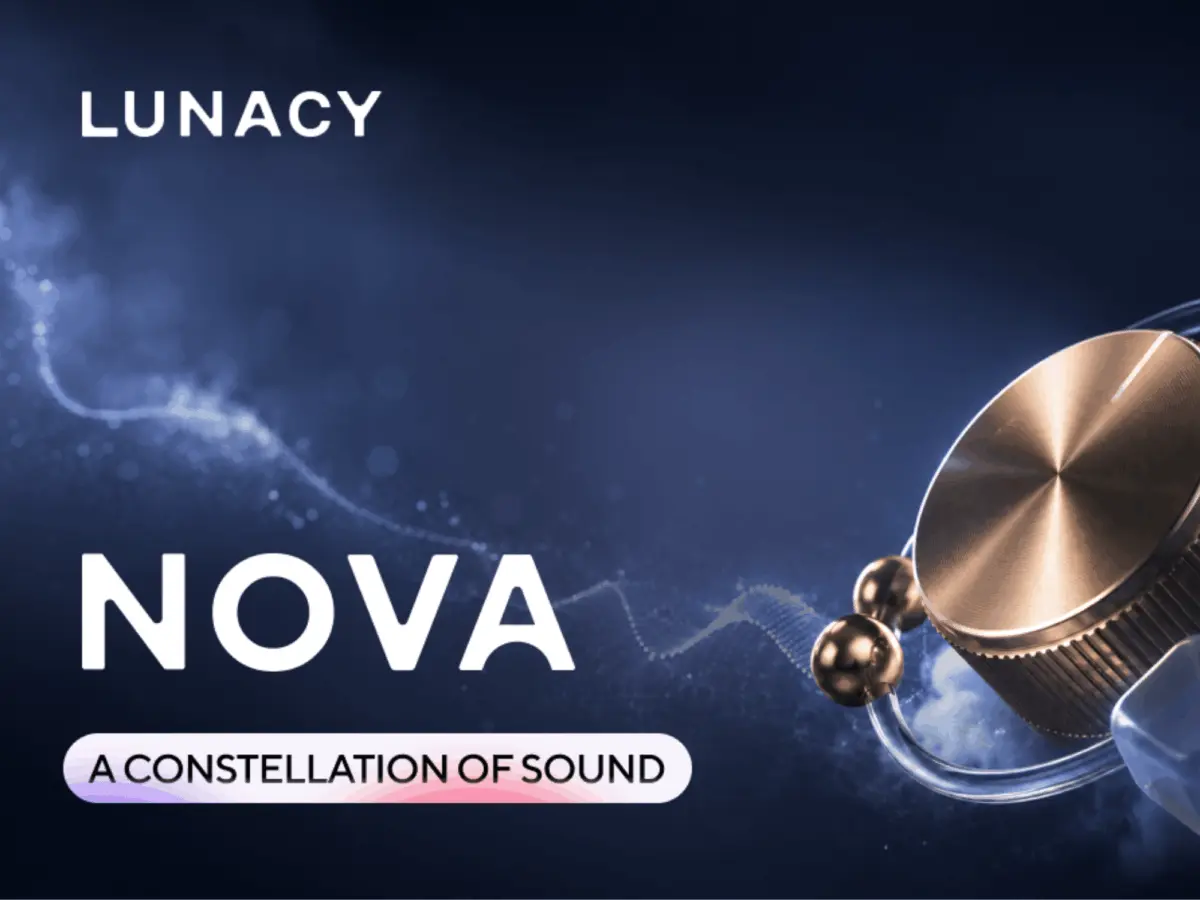
The intersection of software development and music production is undergoing a radical paradigm shift. Lunacy—the innovative audio technology company widely recognized for crafting creative plugins like Cube and Beam—has officially announced its most ambitious venture to date: Nova. Moving beyond the traditional confines of desktop-bound digital audio workstation (DAW) utilities, Nova introduces a dynamic, browser-based marketplace designed to house an expanding collection of web-optimized audio tools.
At launch, Nova debuts with a curated suite of 10 fully functional plugins engineered to integrate seamlessly into any standard DAW workflow. However, the true significance of Nova lies far beyond its initial software catalogue. Later this year, Lunacy will transform the platform into a decentralized, community-driven creation engine. Nova will allow users of all technical backgrounds to design, modify, and collaboratively "remix" virtual instruments and audio effects directly within their web browsers.
By eliminating the traditional barriers to plugin development—such as complex C++ coding, licensing bureaucracy, and localized compilation—Lunacy is democratizing sound design. This comprehensive report explores the architecture of Nova, the vision guiding its creators, and the profound implications this collaborative ecosystem holds for the future of digital music production.
Detailed Chronology: From Boutique Developers to Ecosystem Pioneers
To understand the strategic importance of Nova, one must trace the evolutionary trajectory of Lunacy within the hyper-competitive audio software industry.
The Foundation: Cube and Beam
In its early phases, Lunacy established a reputation for developing boundary-pushing plugins that prioritized intuitive interfaces and out-of-the-box sound exploration. Flagship products like Cube—a 3D morphing sample-based synthesizer—and Beam—a complex spatial multi-effects processor—demonstrated the company’s core philosophy: turning complex digital signal processing (DSP) into a tactile, visually engaging experience. While these tools resonated strongly with modern producers, electronic musicians, and film scorers, they operated within the conventional paradigm of downloadable desktop applications governed by proprietary formats (VST3, AU, AAX) and hardware authentication checks.
The Conceptualization of Nova
Recognizing the friction inherent in traditional software distribution—updates, installer packages, operating system compatibility issues, and restricted user-customization—Lunacy’s leadership began conceptualizing a platform that could bypass these roadblocks. The answer was Nova: a cloud-native, browser-accessible hub that shifts heavy lifting from localized hardware architectures to flexible web environments without sacrificing audio fidelity or processing speed.
The Rollout Strategy
Lunacy has structured Nova’s launch into distinct, calculated phases:
- The Initial Launch: The deployment of 10 standalone, DAW-compatible plugins accessible via the newly minted Nova browser portal. This establishes marketplace infrastructure, user accounts, and core cloud-integration frameworks.
- The Community Creation Phase (Scheduled for Later This Year): The activation of Nova’s user-generated development tools. This milestone introduces modular creation kits, enabling non-programmers and audio engineers alike to build bespoke virtual instruments and signal chains from scratch.
- The Collaborative "Remix" Epoch: The long-term realization of the platform, where users can fork, modify, and share existing instruments via single web links in a manner reminiscent of open-source software repositories like GitHub, but tailored specifically for sonic art.
Supporting Context & Metrics: The Modern Landscape of Audio Software
The release of Nova arrives at a crucial juncture in the audio tech market. Understanding the broader trends in music production software contextualizes why a browser-based, community-driven marketplace could disrupt the status quo.
The Proliferation of Native vs. Cloud-Based Plugins
For decades, the standard for virtual studio technology (VST) has remained relatively unchanged: a developer writes code, packages it into a binary installer, and sells it through an online storefront. The user downloads hundreds of megabytes—sometimes gigabytes—of data per plugin, managing licenses via systems like iLok or proprietary desktop managers.
Nova challenges this legacy model by leveraging modern web technologies (such as WebAssembly and cloud-based rendering/processing) to streamline access. While local processing is still required inside the DAW for real-time audio generation, the discovery, configuration, and modification of tools happen instantaneously in the browser.
The Democratization of Sound Design
The barrier to entry for building custom audio software has historically been exceptionally high. Developing a VST or AU plugin typically requires advanced proficiency in languages like C++, deep knowledge of audio frameworks (such as JUCE), and significant investment in digital signal processing education.
Conversely, the success of modular software environments (like Max/MSP, Pure Data, and Native Instruments’ Reaktor) proves there is massive demand among musicians to build their own tools visually. Nova aims to bridge this gap by offering a streamlined, web-centric abstraction layer. By packaging complex DSP blocks into accessible modules that can be snapped together via a web browser, Nova bridges the gap between passive consumer and active developer.
Official Statements and Visionary Insights
The philosophy driving Nova is rooted in a desire to make sound creation as fluid and interconnected as document sharing or web design. In official communications surrounding the launch, Lunacy leadership emphasized the social and iterative nature of the new platform.
"You’ll be able to dream up any sonic idea or playground, then turn that into a music tool, and then share it with the world with a single link," explained Lunacy CEO Casey Kolb during the initial product unveiling.
Kolb elaborated on the collaborative, community-driven mechanics that will define Nova’s upcoming creator tools, painting a vivid picture of decentralized audio engineering:
"Say someone makes a step sequencer and shares it. You open it and wish you could add a custom shimmer reverb to the end of the signal chain. You can add that, then you can share your new version with a friend, and that friend expands it further."
This quote encapsulates the core innovation of Nova: turning music software from a static, finished product purchased from a vendor into an organic, ever-evolving artifact shaped collectively by its community. It introduces a "version control" mentality to sound design, where a single original instrument can spawn dozens of community-refined iterations, each accessible instantly via hyperlink.
Future Outlook: What Nova Means for Producers, Developers, and the Industry
As Lunacy prepares to roll out the foundational phases of Nova and transition toward its user-generated creation tools later this year, the implications for the broader music production landscape are profound.
Redefining Workflow and Inspiration
For the average music producer, writer, or beatmaker, decision fatigue is a common modern ailment. Faced with thousands of preset options and massive sample libraries, creativity can stall. Nova’s hyper-accessible, lightweight plugins and community-driven remixes promise to inject spontaneity back into the creative process. Because instruments can be modified and shared via simple links, collaboration across geographic boundaries will become frictionless. Producers won’t just share stems or project files; they will be able to share the exact custom-built sonic environments used to generate those sounds.
A New Economic Model for Creators
While details regarding monetization for user-generated plugins within the Nova marketplace are still developing, platforms of this nature invariably open up new revenue streams for boutique sound designers, programmers, and audio nerds. By lowering the technical overhead required to bring a plugin to market, Nova empowers independent creators to build a following, distribute their tools effortlessly, and potentially monetize their unique sonic visions without needing a massive corporate infrastructure.
Potential Challenges and Industry Adaptation
Of course, transitioning audio workflows toward cloud-connected and browser-integrated ecosystems is not without hurdles. Issues surrounding latency, digital rights management (DRM), cross-DAW stability, and offline functionality will be closely monitored by professional engineers and studios. Lunacy’s initial batch of 10 DAW-compatible plugins will serve as a crucial stress test for the platform’s reliability and audio engine integrity.
Conclusion
Lunacy’s Nova represents a bold gamble on the future of music technology. By shifting away from isolated desktop silos and toward an interconnected, web-native playground of collaborative sound design, the company is asking the global music community to reimagine what a plugin can be. If Lunacy successfully delivers on its promise to let users build, modify, and share bespoke music tools with a single link, Nova may well redefine how the next generation of music is made.