
DC JazzFest, Washington, D.C., USA, September 5–6, 2026
dcjazzfest.org
Executive Overview
While historic institutions like the Montreal International Jazz Festival and the Newport Jazz Festival have long defined the global landscape of improvised music, the nation’s capital has officially staked its claim as a premier destination for the genre. Over Labor Day weekend, the DC JazzFest successfully concluded its landmark 22nd year, proving that its momentum is not only sustained but accelerating.
Despite a volatile meteorological backdrop—swinging wildly from oppressive, sun-baked humidity to torrential downpours—enthusiastic crowds converged in droves upon The Wharf neighborhood and surrounding cultural spaces across Washington, D.C. They were not merely attending a concert series; they were participating in a cultural summit dedicated to celebrating the past, present, and boundless future of jazz and contemporary music.
The festival’s 2026 iteration offered a masterclass in artistic curation. Featuring five distinct stages spanning everything from intimate waterfront piers to cavernous theatrical halls, the event presented an embarrassment of riches that frequently left festival-goers paralyzed by scheduling conflicts. Should one sprint to the Arena Stage for the blues-infused gravitas of vocalist Dee Dee Bridgewater, or head to the Transit Pier to catch the post-bop wizardry of pianist Orrin Evans?
Anchored by a blockbuster surprise appearance from music legend Stevie Wonder, and elevated by the brilliant residency of pianist Emmet Cohen, this year’s festival balanced reverence for jazz tradition with daring sonic exploration. Beyond the stellar performances, the event served as a vital forum for community building, industry discourse, and impassioned advocacy for music education. In an era marked by societal friction, the 22nd DC JazzFest stood as a powerful testament to the unifying, healing properties of live performance.
Detailed Chronology: A Weekend of Sonic Masterpieces
Saturday: Weathering the Heat and Embracing the Avant-Garde
Opening weekend began with a palpable, electric current humming along The Wharf. Saturday’s mid-day heat was undeniably draining, yet the atmospheric discomfort dissolved the moment the first notes cascaded over the Potomac River. Nearby restaurants and patios hummed with patrons—a vibrant mix of seasoned jazz aficionados and curious uninitiated listeners—tapping their toes and swaying to the cross-breeze.
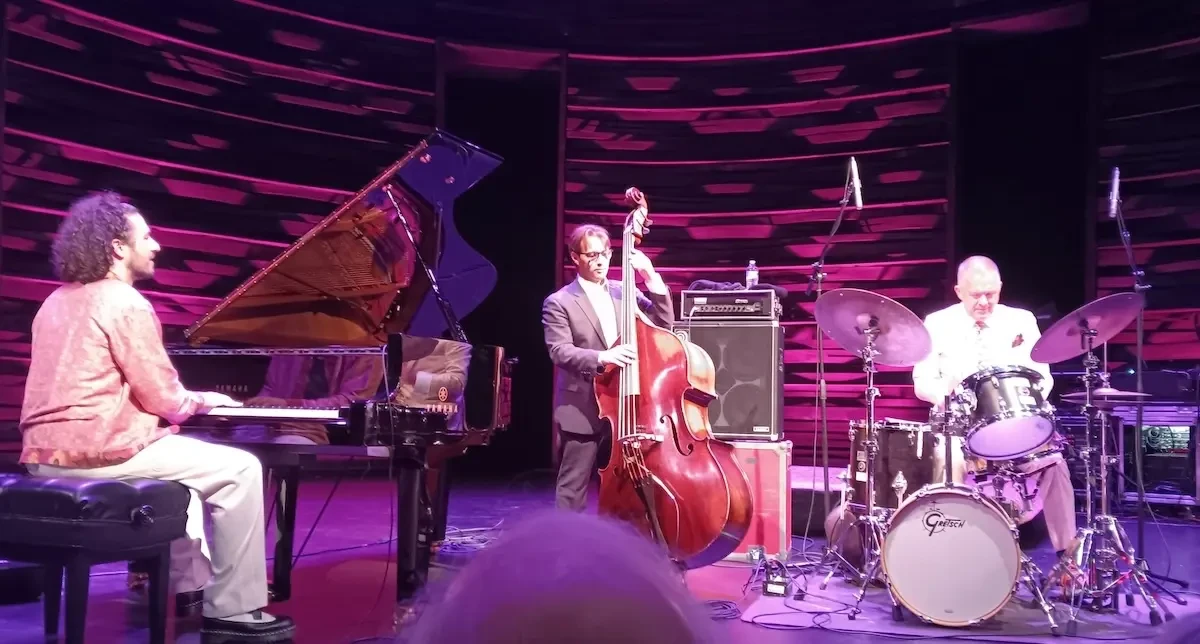
Among the day’s most anticipated presentations was the stellar work of pianist Emmet Cohen, serving as the festival’s official artist-in-residence. Cohen’s choice of ensemble—featuring the legendary, veteran drummer Joe Farnsworth and the remarkably poised 24-year-old bassist Joey Ranieri—embodied the generational continuum of jazz. The trio’s dynamic interaction demonstrated that jazz is a universal language enriched by cross-generational collaboration. Their set was characterized by playful experimentation wedded to striking melodic clarity. Cohen and Farnsworth engaged in a telepathic dialogue, continually shifting tempos and reinventing both standard repertoire and original compositions with infectious chemistry.
Yet, the festival’s appetite for exploration did not stop at swinging modernism. Later in the day, saxophone luminary Joshua Redman took to the stage, offering a compelling case study in the fine line between avant-garde expression and audience alienation. Known for his virtuosic command of tone and his seamless interplay with his backing ensemble of percussion, piano, and bass, Redman pushed his sound into challenging territory.
Early in his set, he embarked on an extended, highly augmented solo punctuated by soaring squeaks, subterranean squawks, and raw emotional intensity. While this brand of sonic deconstruction is a storied tradition in free jazz, it predictably divided the crowd. To purists accustomed to standard melodic forms, the abrasive textures tested their patience. However, true to his exceptional artistry, Redman bridged the divide in the set’s second half, pivoting masterfully into a breathtaking, gorgeous ballad that instantly won back the room.
Saturday also featured the brilliant, idiosyncratic guitar stylings of Bill Frisell. Channeling the expansive, melancholic aesthetic associated with Europe’s ECM Records, Frisell sidestepped conventional harmonic expectations, painting sonic landscapes that stretched the structural limits of traditional jazz composition.
Sunday: Latin Rhythms, Generational Diversity, and Grand Finales
As Sunday evening approached, the emotional intensity of the festival reached a crescendo. Panamanian pianist Danilo Pérez took center stage, mesmerizing listeners with an exquisite masterclass in Latin jazz. A long-time fixture and champion of the DC JazzFest, Pérez utilized his platform to articulate the profound socio-political and cultural power of jazz to dissolve borders.
Drawing from a rich tapestry of influences—ranging from the modal innovations of Miles Davis and the harmonic complexity of Thelonious Monk to the indigenous folkloric rhythms of Panama—Pérez’s set was a revelation. His trio functioned as a seamless extension of his musical consciousness, allowing him to bare his musical soul. Infused with wit, technical brilliance, and deep emotional resonance, Pérez left the audience on the verge of a standing ovation after nearly every number.
The weekend’s programming was a masterclass in breadth. The festival lineup consciously resisted monolithism, presenting an astonishingly diverse ecosystem of sounds. Festival-goers experienced the soaring vocal stylings of jazz master Kurt Elling alongside the rapid-fire bebop innovations of newcomer Alfred Yun. Funk-driven grooves were delivered with surgical precision by Cory Henry & The Funk Apostles and the Muneer Nasser Quartet, while the rich culinary and sonic flavors of the Caribbean and Louisiana were channeled through Etienne Charles & Creole Soul.
Traditionalists found solace in the conservative brilliance of artists like Hannah Marks and Orrin Evans, while global polyrhythms echoed through sets by Son Cubano Subterraneo and the African Rhythms Alumni Quintet. Furthermore, the festival fulfilled its traditional role as an essential tastemaker, introducing audiences to brilliant international talents like Domas Žeromskas and Sakobi—artists whose performances instantly converted casual listeners into dedicated fans.
Supporting Context & Metrics: Growth, Diversity, and Demographics
The 2026 DC JazzFest illuminated broader economic and cultural trends currently shaping the live music industry. Despite facing unpredictable late-summer weather patterns—including sudden downpours that tested outdoor infrastructure—organizers reported robust attendance figures, matching or exceeding pre-pandemic benchmarks across all ticket tiers.
| Festival Metric / Data Point | 2026 Observation / Detail |
|---|---|
| Event Edition | 22nd Annual DC JazzFest |
| Dates | September 5–6, 2026 |
| Primary Location | The Wharf, Washington, D.C. (alongside decentralized venues) |
| Performance Venues | 5 Distinct Stages (e.g., Arena Stage, Transit Pier) |
| Headlining & Special Guests | Stevie Wonder, Emmet Cohen, Dee Dee Bridgewater, Orrin Evans, Danilo Pérez, Joshua Redman, Kurt Elling, Bill Frisell |
| Key Curatorial Themes | Generational collaboration, global genre fusion, sonic experimentation, music education advocacy |
The Economics of the Waterfront
The strategic placement of the festival along The Wharf has proven to be a masterstroke for local commerce. Restaurant owners and hospitality vendors reported capacity crowds throughout the holiday weekend. By integrating open-air stages with the urban ecosystem of Washington, D.C., the festival successfully courted a dual demographic: dedicated jazz tourists who travel explicitly for the headliners, and local residents drawn into the orbit of the music by the vibrant street-level atmosphere.
Diversity as an Operational Ethos
Unlike festivals that pander to commercial homogenization, the DC JazzFest has deliberately cultivated a programming model rooted in radical inclusivity. By balancing legendary headliners with avant-garde explorers, global roots artists, and regional acts, the festival mirrors the evolving definition of jazz itself—not as a static museum piece frozen in the mid-20th century, but as a living, breathing, global conversation.
Official Statements & Industry Discourse
Beyond the notes played on stage, the 2026 DC JazzFest functioned as an intellectual hub for the jazz community. Throughout the weekend, panel discussions, artist talks, and informal symposia convened musicians, educators, and industry leaders to discuss the state of the art form and its cultural footprint.
A central theme across these conversations was the urgent necessity of reinvesting in music education. Artists and administrators repeatedly voiced concern over the systematic defunding of arts programs in primary and secondary public schools.
"Jazz cannot survive as an elite academic exercise confined to university conservatories," noted one prominent industry panelist during a weekend symposium. "It was born in the community, nurtured in the dance halls and the streets, and it must be taught where children live. Bringing music back to our schools is not an extracurricular luxury; it is a fundamental prerequisite for cultural literacy and emotional resilience."
Performers such as Danilo Pérez and Emmet Cohen echoed these sentiments in interviews, emphasizing that their collaborative approach on stage—bridging generational and cultural divides—serves as a working model for how society at large should function. The discourse underscored a collective realization: while technical innovation keeps the music fresh, institutional and community education ensures its long-term survival.
Future Outlook: The Maturation of a Capital Institution
As the dust settles on the 22nd annual gathering, it is evident that the DC JazzFest has transitioned from an ambitious regional showcase into a heavyweight contender on the international festival circuit.
Navigating the logistical hurdles of a multi-venue urban festival while maintaining artistic integrity is no small feat. Yet, the 2026 edition proved that the organization possesses the curatorial vision, administrative resilience, and community backing required to scale new heights.
Looking ahead, the festival’s trajectory points toward an even more integrated role within Washington, D.C.’s cultural infrastructure. By continuing to champion daring sonic experimentation without alienating casual listeners, and by doubling down on its commitment to global inclusivity and youth education, the DC JazzFest has set a high bar for cultural institutions worldwide.
In an increasingly fractured global landscape, the sights, sounds, and shared humanity witnessed along the Potomac River over Labor Day weekend offered a much-needed reminder: good music is good music, and community, when anchored in the universal language of jazz, remains unbreakable.