
Executive Overview
For nearly three decades, the Melbourne International Jazz Festival (MIJF) has served as the southern hemisphere’s premier creative gateway, acting as a vital touring springboard for visiting artists from the United States, the United Kingdom, and Europe. By feeding talent into smaller regional circuits across Auckland, Sydney, Adelaide, and Perth, the 10-day festival anchors the international jazz calendar. It bolsters global artist audiences while driving excellence and innovation among aspiring local musicians.
The 2026 milestone iteration of the festival—encompassing 550 artists from 18 countries across more than 30 venues—was defined by an inherent duality. Its sheer breadth was simultaneously its greatest asset and its primary point of friction. By catering to a massive expanse of musical tastes, socioeconomic backgrounds, and aesthetic preferences through an expanded free-concert program, the festival achieved impressive civic engagement. Yet, it remained stubbornly niche in its consumption patterns; most attendees sampled only one or two events.
Unlike Melbourne’s ubiquitous, highly commercial comedy festival, the MIJF operates within a specialized cultural sphere. However, as artistic director Michael Tortoni curated a masterclass in modern improvisation, cross-genre collaboration, and global lineage, the 2026 festival proved that jazz is not merely surviving—it is aggressively and inventively mutating.
Detailed Chronology: A Ten-Day Sonic Journey
Opening Weekend: Outdoor Spectacles and Genre Debates
The festival kicked off its expanded outdoor programming during the first weekend, headlined by local darlings The Teskey Brothers. Attracting a crowd exceeding 6,000, brothers Josh and Sam delivered a rich, satisfying fusion of blues and soul that doubled as a tenth-anniversary celebration of their breakthrough debut, Half Mile Harvest. The performance carried the communal warmth of a giant pub gig.
However, the booking sparked familiar critical debates within jazz purist circles: while undeniably popular, positioning a group derivative of the American southern soul and blues canon atop an international jazz festival’s marquee rankled those who felt a foundational jazz legend should have held the spotlight.
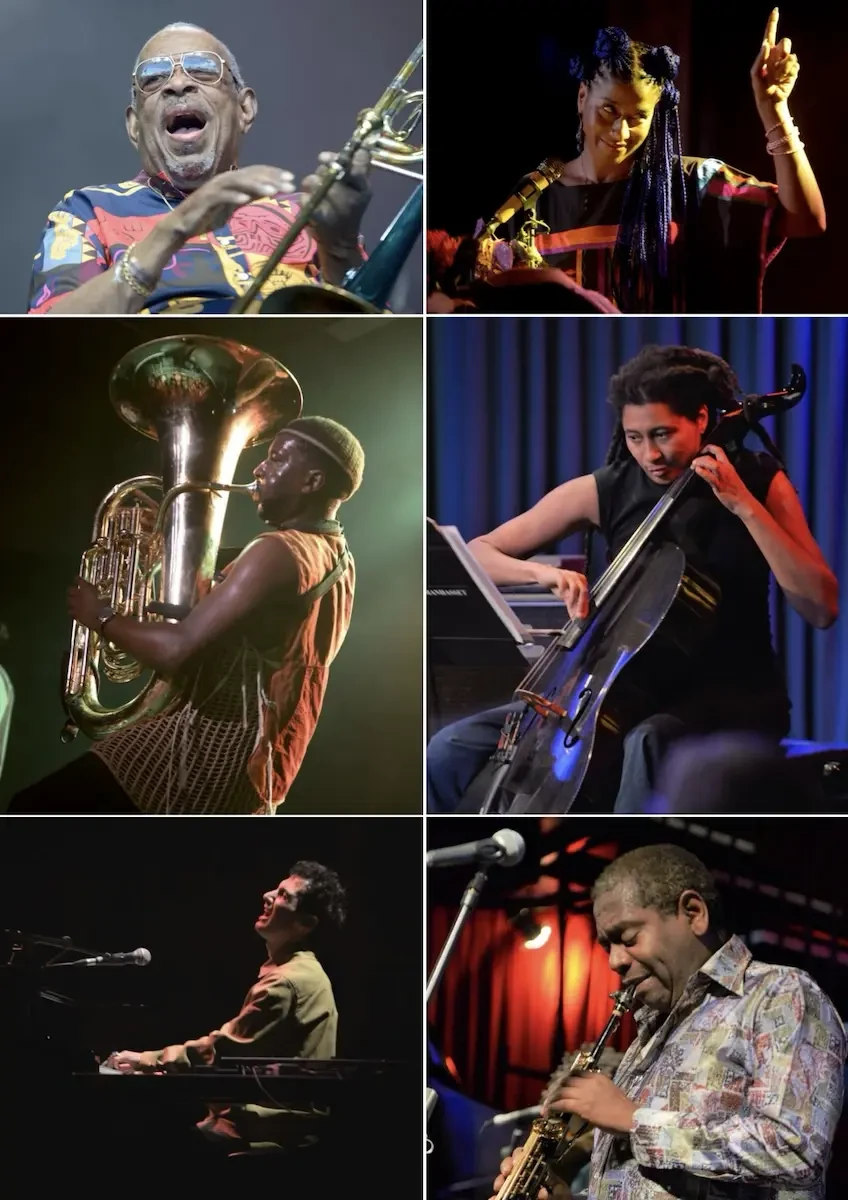
That spotlight nearly belonged to support act Fred Wesley and the New JBs. Wesley, a true funk royalty figure, delivered a masterclass on the trombone, delving deep into the George Clinton catalog and rattling off a medley of iconic James Brown horn arrangements. Backed by an accomplished ensemble featuring powerhouse young drummer Bryan Morris from Mobile, Alabama, Wesley’s set set a high bar for youthful, bluesy intensity.
Mid-Week Intimacies: The JazzLab Sessions and Modern Maestros
As the festival shifted into Melbourne’s smaller clubs and concert halls, Tortoni’s imprint on the city’s infrastructure became unmistakable. Having relocated his legendary Bennetts Lane Club north to Brunswick in 2017 to form JazzLab, Tortoni introduced a second, larger venue space for 2026. Featuring tiered viewing, optimal acoustics, and moody lighting, the space provided a blueprint for modern late-night jazz clubs globally.
Inside JazzLab, the Kris Davis Trio delivered a textbook demonstration of contemporary New York modernism. Pianist Kris Davis was inventive and angular, anchored by the dynamic, free-flowing drumming of Johnathan Blake and the sophisticated pocket-playing of bassist Robert Hurst.
Equally mesmerizing was the Tomeka Reid Quartet. Cellist and composer Tomeka Reid, deeply rooted in Chicago’s avant-garde and improvisational lineages, showcased precision and space across two intimate sets. Sharing front-line duties with guitarist Mary Halvorson, Reid commanded a masterclass in subtle, collective sound-washing, backed by the graceful rhythm section of bassist Jason Roebke and drummer Tomas Fujiwara.
Cuba’s Yosvany Terry brought high-energy Latin intensity to the adjoining room. Playing alto and soprano saxophones with a visceral physicality, Terry was anchored by his brother Yunior on bass and propelled by New York drummer Julien Miltenberger. Local pianist Brett Williams rounded out the group, providing a poignant, sparse solo that highlighted the deep talent pool anchoring Melbourne’s educational and performance spaces.
The London Influx: Poetry, Narrative, and Political Resonance
Mid-size city venues later pivoted toward the London contemporary scene, emphasizing poetry, narrative, and cross-genre storytelling.
British troubadour Benedict Clementine made his Melbourne debut during his Back to Basics tour. Performing barefoot on a center-stage piano wrapped in white muslin, Clementine blended classical technique, vocal dexterity, and theatricality. While his operatic flair invited inevitable comparisons to Nina Simone, the hyper-inflated expectations surrounding his performance occasionally clashed with the reality of his output.
Far more politically and socially charged was the collaboration between Brooklyn-born poet Aja Monet and the Australian Art Orchestra. A prominent voice in the #Say Her Name movement and Palestinian solidarity efforts, Monet foregrounded themes of love and resistance. Her performance of Working Class Musicians stood out, heightened by a breakout performance from young Melbourne drummer Ebs Daramola, who stepped in on 24 hours’ notice to deliver a masterclass in cymbal textures.
Venturing 45 kilometers to Melbourne’s southeastern fringe, the Australian Art Orchestra presented Saltwater, Sugar. Conceived as a "scored fictional narrative" by composer and pianist Aaron Choulai, the 16-piece orchestral work drew parallels between Pacific Islander laborers exploited in 1880s Queensland sugar plantations and African American experiences. Featuring stellar improvisations from Julien Wilson, Scott Tinkler, and Eugene Ball, the production read as a compelling, if occasionally disjointed, work-in-progress destined for theater or film.
The Closing Crescendo: Virtuosity and Mastery
At the Melbourne Recital Centre, Armenian piano virtuoso Tigran Hamasyan drew a sold-out crowd with his Manifeste project. Blending classical techniques, Armenian folklore, choral harmonies, and progressive heavy metal, Hamasyan pushed the boundaries of the genre to its absolute limits, thrilling a crowd of 1,000.
Meanwhile, the cultural partnership between the festival and London’s Jazz re:freshed brought forward-thinking acts to the city, including rapper Pearl Summer and tuba trailblazer Theon Cross. Breaking away from traditional New Orleans marching band constraints, Cross utilized the tuba as an agile lead instrument, trading licks with tenor saxophonist James Akers and guitarist Nikos Ziarkas.
The festival culminated at Hamer Hall with Aziza, the supergroup featuring Lionel Loueke, Chris Potter, Dave Holland, and Eric Harland. Celebrating their tenth anniversary, the quartet exuded unmatched confidence, precision, and collective mastery. They provided a poignant reminder that modern jazz achieves its highest peaks when unique individual voices coalesce into a profound, unified whole.
Supporting Context & Metrics
| Festival Metric | 2026 Data Point | Context / Historical Significance |
|---|---|---|
| Duration | 10 Days | Expanded programming window to accommodate regional tours. |
| Artists Featured | 550 Artists | Sourced from 18 distinct countries across the globe. |
| Venue Footprint | 30+ Venues | Ranging from intimate Brunswick jazz clubs to major suburban halls. |
| Audience Reach | 6,000+ (Teskey Brothers) | Demonstrates cross-genre commercial pull. |
| Key Infrastructure | JazzLab Expansion | Continued evolution of Michael Tortoni’s Brunswick jazz hub. |
The festival’s financial and operational models continue to rely heavily on institutional backing, private patronage, and the symbiotic relationship between international headliners and local performance incubators. By expanding free concert offerings across food markets, wine bars, and public squares, MIJF successfully broadened its demographic footprint without alienating its core listenership.
Official Statements & Industry Perspectives
Festival organizers and participating artists emphasized the evolving landscape of global jazz during press briefings and stage introductions:
- Michael Tortoni (Artistic Director), on booking international acts:
"As soon as I saw this band playing in New York, I knew I had to bring them to my club." (Reflecting on his strategy of curating world-class modern jazz directly from New York and Chicago for JazzLab).
- Fred Wesley, addressing the opening weekend audience:
"I’m here to funk it up." (Highlighting the vital cross-pollination between jazz, funk, and soul lineages).
- Aja Monet, reflecting on performance and solidarity:
Emphasizing that modern poetry and music must actively foreground love, social justice, and respect for the working class.
Future Outlook
As the Melbourne International Jazz Festival looks toward its third decade, the 2026 installment has laid down a clear blueprint for survival and growth in a fractured media landscape.
Future iterations will likely need to address the structural tension between massive commercial draws (such as The Teskey Brothers or pop-adjacent crossover acts) and avant-garde purists. However, the expansion of dedicated cultural incubators like JazzLab, the deepening pipeline of international artist exchanges with London and New York, and the flourishing local mentorship ecosystem ensure that Melbourne remains the undeniable epicentre of southern hemisphere jazz innovation. The challenge ahead will not be finding talent, but continuing to bridge the gap between niche artistic mastery and mainstream civic celebration.