
Executive Overview
There are certain narratives from the sacred texts that occupy a permanent, almost tactile place in our cultural imagination. Illustrated in countless Sunday school textbooks, stained-glass windows, and animated features, stories like the fiery furnace of Babylon have been visualized so many times that audiences almost forget they have never actually seen them rendered in a live-action cinematic scale.
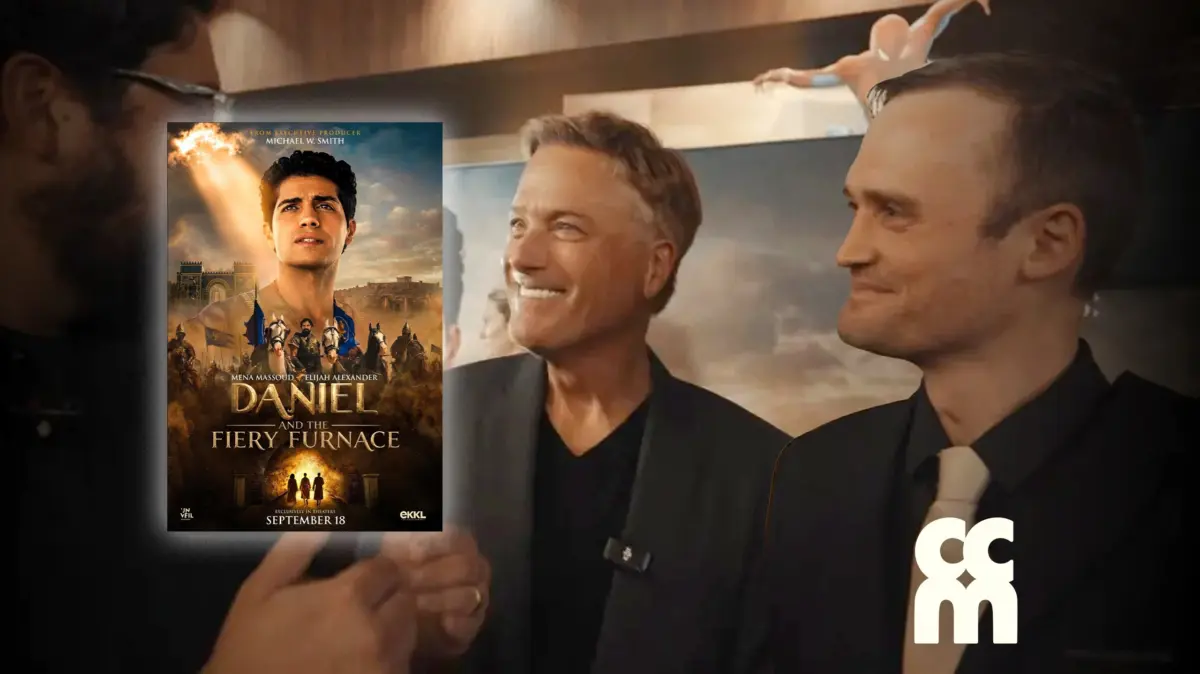
Enter Daniel and the Fiery Furnace, the ambitious new theatrical release from EKKL Entertainment. Directed by visionary brothers Matthew and Daniel Kooman, the film steps boldly into the opening chapters of the biblical Book of Daniel, chronicling the harrowing Babylonian exile, the forced assimilation of young Hebrew nobility, and the ultimate test of faith inside an inferno.
Boasting a powerhouse cast featuring Aladdin star Mena Massoud as Daniel and The Chosen standout Elijah Alexander as the formidable King Nebuchadnezzar, the film avoids the trap of treating historical and religious figures as two-dimensional Sunday school caricatures. Instead, it presents a deeply humanized, politically tense, and emotionally resonant portrait of displacement, power, and unyielding conviction.
Shot on location in India and supported by a robust Contemporary Christian Music (CCM) pedigree—including an original score by Tyler Michael Smith, executive production by Michael W. Smith, and a raucous end-credits anthem by Trevor McNevan of Thousand Foot Krutch and TobyMac—Daniel and the Fiery Furnace represents a fascinating milestone in independent biblical filmmaking. As the film prepares for its wider theatrical release on September 18, this report examines its production, performances, thematic depth, and cultural footprint.
Detailed Chronology: From Biblical Exile to Modern Cinema
The narrative timeline of Daniel and the Fiery Furnace spans the critical introductory chapters of the biblical book, bridging historical documentation with character-driven drama.
The Fall of Jerusalem and the Babylonian Captury
The film opens by plunging viewers straight into the geopolitical turmoil of the ancient Near East. The Kingdom of Judah has fallen to the neo-Babylonian Empire under King Nebuchadnezzar. Among the displaced populace are young, intellectually gifted Hebrew youths—including Daniel and his companions, who will come to be known by their Babylonian names: Shadrach, Meshach, and Abednego.
Directors Matthew and Daniel Kooman utilize this opening act to establish the jarring reality of cultural displacement. Unlike traditional cinematic treatments that gloss over the trauma of exile, the film takes time to emphasize the psychological weight of uprooting young men from their homeland, forcing them to learn a new language, adopt a foreign administrative system, and navigate the treacherous corridors of imperial politics.
The Rise of Daniel and the Tension of the Court
As the story progresses, Daniel’s exceptional wisdom and uncanny ability to interpret dreams thrust him into the inner circle of King Nebuchadnezzar. This relationship forms the dramatic backbone of the movie. Rather than positioning Daniel as an untouchable sage, the script allows him to experience doubt, exhaustion, and the acute danger of living under an unpredictable, absolute monarch.
The Furnace: The Ultimate Test of Faith
While the title may initially cause confusion among purists—after all, Daniel himself is not the one tossed into the fiery furnace; that distinction belongs to his three steadfast friends—the narrative architecture justifies the moniker. The entire film builds toward the furnace as the ultimate crucible of faith within Daniel’s world.
When Shadrach, Meshach, and Abednego refuse to bow before the king’s colossal golden statue, they are cast into flames heated seven times hotter than normal. The filmmakers handle this iconic sequence not merely as a spectacle of divine intervention, but as the culmination of a thematic journey concerning what it means to remain faithful when standing directly in the path of destruction.
Supporting Context & Metrics: Production and Creative Vision
Bringing an ancient Near Eastern epic to life without the safety net of an unlimited $200 million Hollywood budget requires a delicate balance of ambition, resourcefulness, and artistic vision.
Location Shooting and Visual Aesthetic
Shot on location in India, Daniel and the Fiery Furnace adopts a distinct visual identity. Rather than chasing ultra-polished photorealism—which can sometimes feel sterile or overly digital—the production design leans into a slightly heightened, almost painted aesthetic.
This stylistic choice serves the material well. Because modern audiences have spent lifetimes visualizing Babylon strictly through individual imaginations, illustrated sermons, and historical texts, an overly clinical blockbuster look might have felt jarring. Instead, the film creates a dreamlike yet grounded environment. The ancient world is given tangible walls, dusty streets, and vibrant fabrics, all while preserving the imaginative space required for a story of this magnitude.
Furthermore, the soundscape reflects careful historical consideration. While the primary dialogue is delivered in English, the filmmakers weave other languages throughout the narrative—including Hebrew during private and corporate moments of prayer. This linguistic texture acts as a vital reminder that these were not modern English-speaking characters reciting familiar tropes, but real people wrestling with their faith in a foreign land.
The CCM Super-Collaboration
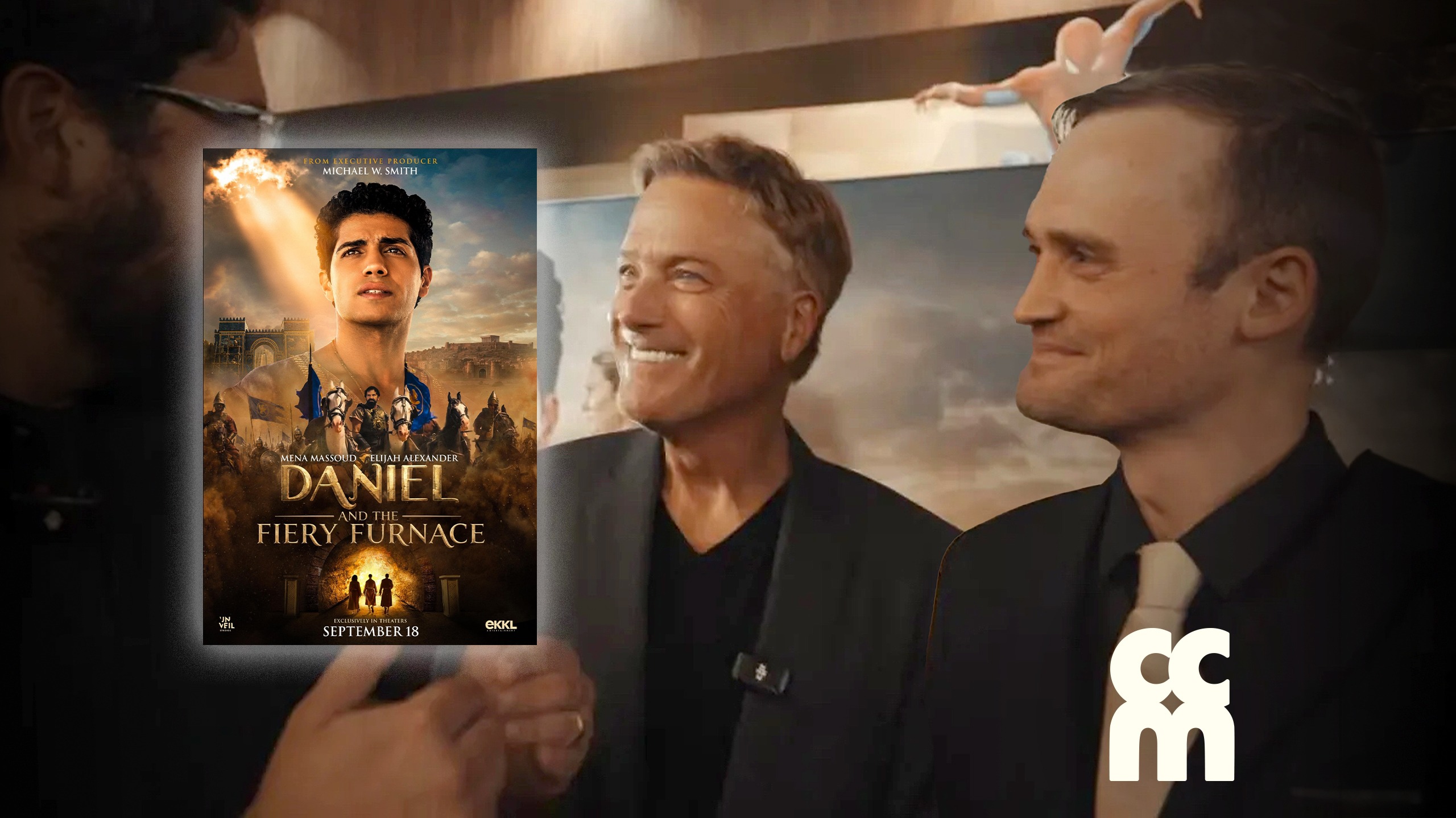
One of the most unique aspects of Daniel and the Fiery Furnace is its deep integration with the Contemporary Christian Music community. The production’s musical pedigree reads like a "who’s who" of the genre.
The project’s involvement with legendary artist Michael W. Smith began organically. Smith’s son, composer Tyler Michael Smith, was brought on to write the film’s original score. Watching his son work on the musical arrangements introduced Michael W. Smith to the rough cuts of the film. Captivated by the emotional gravity of what he saw and heard, the veteran artist quickly signed on as an executive producer.
The musical journey culminates in a daring creative swing during the end credits. As the screen fades, Christian rock heavyweights Trevor McNevan (Thousand Foot Krutch) and TobyMac come crashing into the soundscape with a high-octane track titled "Walk Thru Fire." Written by McNevan and produced by McNevan and Micah Kuiper, the song bridges the ancient period piece with contemporary life. It encapsulates the core takeaway of the cinematic experience: the furnace itself is rarely the point; the true test is the faithfulness required to face it.
Official Statements and Red Carpet Insights
The star-studded red carpet premiere in Franklin, Tennessee, offered a palpable sense of community and personal investment from the cast, crew, and attending artists. Rather than a standard corporate rollout, the atmosphere echoed a gathering of creators who had poured their hearts into a labor of love.
Cast and Creative Reflections
Mena Massoud, speaking on his transition from Disney’s live-action Aladdin to the weighty role of Daniel, discussed the emotional gravity required to anchor the film. Massoud noted that finding the human core of a historical-religious figure demands stripping away the stained-glass perfection often projected onto them.
Elijah Alexander, whose portrayal of King Nebuchadnezzar has already drawn early critical praise, elaborated on his approach to the tyrannical monarch. Rather than playing a one-note villain, Alexander sought to unearth the deep-seated insecurities plaguing the king:
"A ruler with absolute power is often a man driven by absolute terror of losing it. Nebuchadnezzar had a massive empire, but a remarkably fragile ego. Finding that human vulnerability beneath the royal robes was the key to making his dynamic with Daniel actually work."
Directors Matthew and Daniel Kooman emphasized the sheer difficulty of adapting a well-known biblical narrative. In interviews along the red carpet, they noted that audiences approach such films with deeply ingrained expectations, often knowing the outcome and individual verses by heart. The goal, therefore, was not to rewrite history or shock viewers with unnecessary narrative twists, but to provide a fresh, visceral space to sit in a dark theater and experience the emotional reality of those moments anew.
Future Outlook: The Theatrical Rollout and Cultural Impact
As Daniel and the Fiery Furnace prepares for its nationwide theatrical release on September 18 via EKKL Entertainment, industry watchers are eager to see how faith-based cinema continues to evolve in an increasingly crowded media landscape.
The success of recent biblical and faith-inspired visual projects proves there is a robust, highly engaged audience hungry for high-quality storytelling that respects source material without sacrificing artistic integrity. By casting recognizable mainstream talent like Mena Massoud alongside seasoned prestige actors like Elijah Alexander, EKKL Entertainment has signaled a clear desire to cross traditional demographic boundaries.
Furthermore, the hybrid promotional model—leveraging high-profile red carpet events, deep integrations with the CCM community, and grass-roots faith-based marketing—demonstrates a sophisticated understanding of modern audience engagement.
Whether viewers are drawn to the film by its cinematic scale, its musical collaborations, or its faithful exploration of ancient history, Daniel and the Fiery Furnace promises to leave a lasting impression. As the credits roll and the modern chords of "Walk Thru Fire" reverberate through the theater, audiences are left with a timeless, resonant question: When you stand before your own modern-day furnace, how will you respond?
Keep watching CCM Magazine for continuing coverage, full red carpet interviews, and behind-the-scenes features as the film heads toward its September theatrical debut.