
Executive Overview
For the modern music educator, the official job description tells only half the story. Behind every lesson plan, sheet music packet, and concert program lies a multifaceted role that demands the agility of a counselor, the patience of a mediator, the insight of a mentor, the drive of a coach, and occasionally, the resourcefulness of a miracle worker. Music teachers pour their time, energy, and passion into their students, their ensembles, and their wider school communities every single day.
Yet, as educational demands increase and administrative burdens grow heavier, the last thing any instructor needs is a pedagogical tool that introduces unnecessary friction or digital complexity into an already overwhelming workflow. Educators deserve a reliable, intuitive partner designed to work smarter—streamlining operations from the nervous excitement of the first week of school all the way through the high-stakes intensity of spring contest season and beyond.
Enter MakeMusic, a comprehensive digital platform engineered to shoulder the operational and pedagogical weight of music education. By serving as an all-in-one ecosystem for curriculum design, repertoire selection, differentiated instruction, and daily practice management, MakeMusic transforms how educators plan, execute, and evaluate their programs. This report explores how MakeMusic empowers music directors to map out their academic years with intention, select impactful repertoire, utilize robust supplemental supports, and ultimately foster the classroom culture necessary to drive long-term student recruitment and program retention.
Detailed Chronology: Mapping the Academic Year with Intentional Design
Successful music education does not happen by accident; it is the result of meticulous backward design. Industry veterans consistently emphasize the importance of beginning with the end in mind. For music directors, this philosophy translates into structuring the entire academic calendar around ultimate long-term goals—whether those targets involve securing superior ratings at regional evaluations, mastering a complex, dream piece of literature for a spring showcase, or orchestrating a total program rebuild centered around boosting morale and sparking renewed joy in ensemble performance.
Phase 1: Pre-Season Goal Setting and Curriculum Mapping (Late Summer / Early Fall)
Long before the first baton drops, effective educators define their programmatic priorities. During this foundational window, MakeMusic serves as a strategic architectural tool.
- Defining the Target: Directors establish whether their primary metric for success is competitive excellence, technical skill development, or cultural community-building within the school.
- Building the Roadmap: Utilizing the platform’s robust organizational features, teachers align their instructional timeline backward from major performance milestones. By mapping out weekly benchmarks in advance, instructors ensure that no critical technical concept is rushed or overlooked during the holiday-shortened winter semester.
Phase 2: Implementation and Daily Differentiated Instruction (Fall and Winter Semesters)
Once the school year is underway, the challenge shifts from macro-level planning to micro-level execution. Keeping mixed-ability ensembles engaged requires targeted differentiation.
- Reaching Every Student: Whether dealing with an all-state section leader who needs advanced technical challenges or a novice student still mastering basic embouchure and rhythm reading, MakeMusic provides scalable resources.
- Fostering Autonomous Practice: The platform bridges the gap between the classroom and the home. Students utilize interactive practice tools that offer immediate, constructive feedback, allowing them to build confidence outside of formal rehearsal hours.
Phase 3: Festival Preparation and Evaluation Season (Early Spring)
As winter transitions into spring, the focus pivots sharply toward festival and assessment preparation.
- Targeted Repertoire Integration: Instructors pull specific contest pieces and sight-reading materials directly from MakeMusic’s expansive library to simulate evaluation conditions.
- Diagnostic Tracking: Teachers leverage the platform’s assessment tracking to identify individual trouble spots within specific measures or movements, ensuring that rehearsal time is deployed with maximum efficiency.
Phase 4: Reflection, Recruitment, and Program Continuity (Late Spring / Summer)
The conclusion of the spring concert season does not mark the end of the educational cycle; rather, it transitions directly into the recruitment and retention phase.
- Evaluating Success: Educators analyze student engagement data and performance milestones to refine their curriculum for the subsequent year.
- Planting Seeds for the Future: By ensuring that current students leave the spring semester feeling accomplished, valued, and deeply connected to the ensemble, directors build the word-of-mouth momentum necessary to drive robust enrollment for the next academic cycle.
Supporting Context & Metrics: Repertoire That Transcends Box-Checking
A curriculum is only as strong as the materials that populate it. Historically, music educators have had to piece together fragmented libraries, balancing standard contest literature with pop arrangements and foundational method books, often at significant personal or departmental expense. MakeMusic redefines this dynamic by curating a comprehensive, multi-genre library designed to transcend the limitations of traditional, static sheet music.
The Power of Exclusive, Engaging Content
MakeMusic goes far beyond standard public-domain archives and standard contest titles. It serves as a repository for exclusive content specifically engineered to capture student interest and motivate consistent home practice:

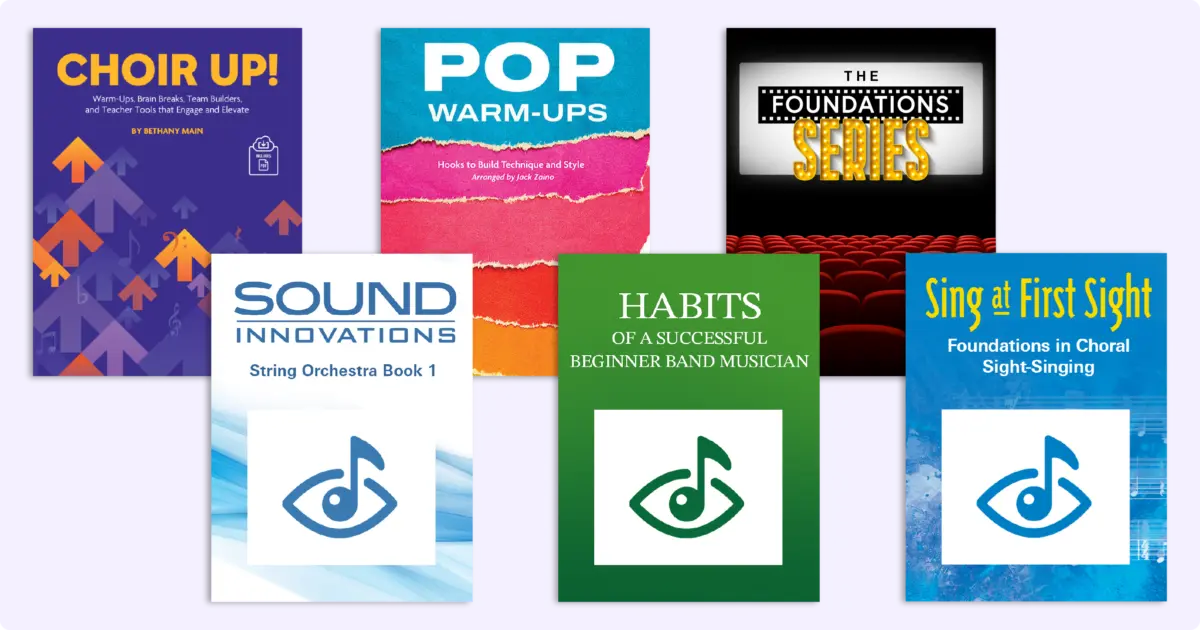
- The Sight Reading Generator Suite: Essential for developing independent musicianship, tools like SI, Habits, and SaFS offer infinite variations of sight-reading exercises tailored to specific grade levels and ensemble types, eliminating the tedious chore of manual test creation.
- Vocal and Choral Development (Choir Up!): Designed specifically for modern vocal ensembles, this resource injects fresh, contemporary pedagogy into traditional choral settings, keeping singers engaged through diverse musical styles.
- Dynamic Warm-Up Libraries (Pop Warm-Ups): By integrating familiar pop idioms and progressive technical patterns into daily warm-ups, educators can seamlessly transition students into focused mental and physical preparation.
- Comprehensive Method Foundations: Digital access to foundational pedagogy series ensures that every student—regardless of instrument or starting skill level—has immediate access to standardized technical building blocks.
Supplemental Supports That Round Out the Program
Beyond interactive sheet music and performance scores, modern music programs require holistic support systems. MakeMusic’s platform includes a suite of supplemental resources that are frequently underutilized yet vital for comprehensive music literacy:
- Integrated Theory and Ear Training: Digital modules allow students to test their comprehension of music theory fundamentals, rhythmic dictation, and interval recognition independently.
- Custom Assignment Workflows: Teachers can rapidly distribute, collect, and grade targeted performance assignments, drastically reducing the administrative hours spent hunched over paper rubrics or listening back to disorganized audio files.
- Flexible Notation Integration: The seamless bridging of composition tools allows students to arrange, transpose, and even compose their own original works, fostering a deeper, creative ownership of their musical education.
Official Perspectives: The Philosophy of Sustainable Music Education
Industry leaders, veteran educators, and curriculum developers increasingly emphasize that the long-term health of school music programs relies as much on emotional climate as it does on technical execution.
Educational psychologists and veteran fine arts coordinators note that a student’s decision to continue in an ensemble program past middle school or early high school is rarely determined by a single festival rating or competition trophy. Instead, retention is inextricably linked to perceived psychological safety, personal validation, and a sense of belonging within the classroom community.
"The way your students feel in your program is directly connected to your recruitment and retention success," notes a leading voice in music education advocacy. "Happy students talk to their friends. Happy parents talk to their neighbors—families who have kids currently deciding what elective activities to sign up for next fall. Being a positive, energizing presence in your school community matters immeasurably more than any single performance score."
Furthermore, pedagogical experts stress that educators must be protected from administrative burnout. By offloading logistical friction—such as music cataloging, assignment distribution, and basic practice tracking—digital platforms like MakeMusic restore the human element of teaching. When teachers spend less time wrestling with paperwork and software complications, they can invest that reclaimed energy into what truly matters: direct mentorship, artistic inspiration, and meaningful human connection with their students.
Future Outlook: Building Sustainable, Choice-Driven Programs
As school districts nationwide navigate shifting educational priorities, budget fluctuations, and evolving student demographics, the resilience of fine arts programs depends on intentional modernization. Programs that rely solely on outdated operational models risk seeing declining enrollment as students gravitate toward more digitally integrated and responsive academic options.
The future of music education points toward intelligent, adaptive, and highly differentiated instruction. Tools like MakeMusic are leading this charge by bridging the gap between traditional ensemble discipline and modern technological capability. By providing scalable resources that meet students at their individual skill levels—whether they are advanced section leaders or novices still finding their footing—the platform ensures that every participant feels challenged, supported, and proud to be part of something larger than themselves.
Ultimately, this level of intentional, differentiated support is what transforms a standard school music class into an elite program that students actively choose to join year after year. For directors looking to elevate their operational efficiency, deepen student engagement, and secure the long-term vitality of their ensembles, adopting an integrated digital partner is no longer just an operational luxury—it is an investment in the future of music education.
Take the Next Step
Ready to make this upcoming academic year your most organized, connected, and effective period yet? Discover how much lighter curriculum planning feels when you have a reliable digital partner in your corner. Start your free MakeMusic trial today and experience the future of music education firsthand.