
Executive Overview
The arrival of August and September traditionally signals a high-stress period for music educators worldwide. Beyond the creative demands of crafting a vibrant curriculum and preparing ensembles for upcoming concert seasons, directors face a mountain of administrative hurdles. Finalizing class rosters, establishing classroom routines, diagnosing summer learning loss, and managing a relentless wave of paperwork routinely turn the start of the academic year into a logistical marathon. For decades, music teachers have been forced to divide their energy between the podium and the desk, sacrificing valuable rehearsal time to administrative data entry and grading.
In response to these perennial industry pain points, MakeMusic has deployed a comprehensive suite of platform updates for MakeMusic Cloud, specifically engineered to eliminate friction in early-year preparation. By leveraging cutting-edge integrations, redesigned gradebook analytics, expanded assessment modalities, and instant-access curricula, the platform seeks to redefine the administrative workflow for modern music educators. This comprehensive overhaul directly targets the administrative bottlenecks that pull directors away from their primary vocation: teaching music and inspiring students. This report provides an in-depth analysis of the new features, examining their operational mechanics, institutional impacts, and long-term significance for music education technology.

Detailed Chronology and Technical Breakdown
The rollout of these advanced pedagogical tools follows months of iterative development and direct consultation with music educators across various grade levels and ensemble types. Designed to target the specific operational phases of the back-to-school cycle, the update is structured around three core pillars: administrative and grading workflows, specialized performance and literacy assessment, and instant-access educational content.
Phase 1: Streamlining Administrative and Grading Workflows
The initial phase of the MakeMusic Cloud upgrade focuses squarely on eliminating redundant data entry and modernizing the educator’s digital workspace.

- LMS Integration & Google Grade Passback: Historically, managing student assignments across multiple platforms required tedious tab-toggling and manual grade transcription. The enhanced Learning Management System (LMS) integration establishes a direct, secure bridge between MakeMusic Cloud and standard scholastic ecosystems such as Canvas and Schoology. Crucially, the introduction of Google Grade Passback automates the transfer of student scores. Once an assignment is completed within MakeMusic Cloud, the evaluation data flows directly into the Google Classroom gradebook without manual intervention, dramatically reducing weekend grading burdens.
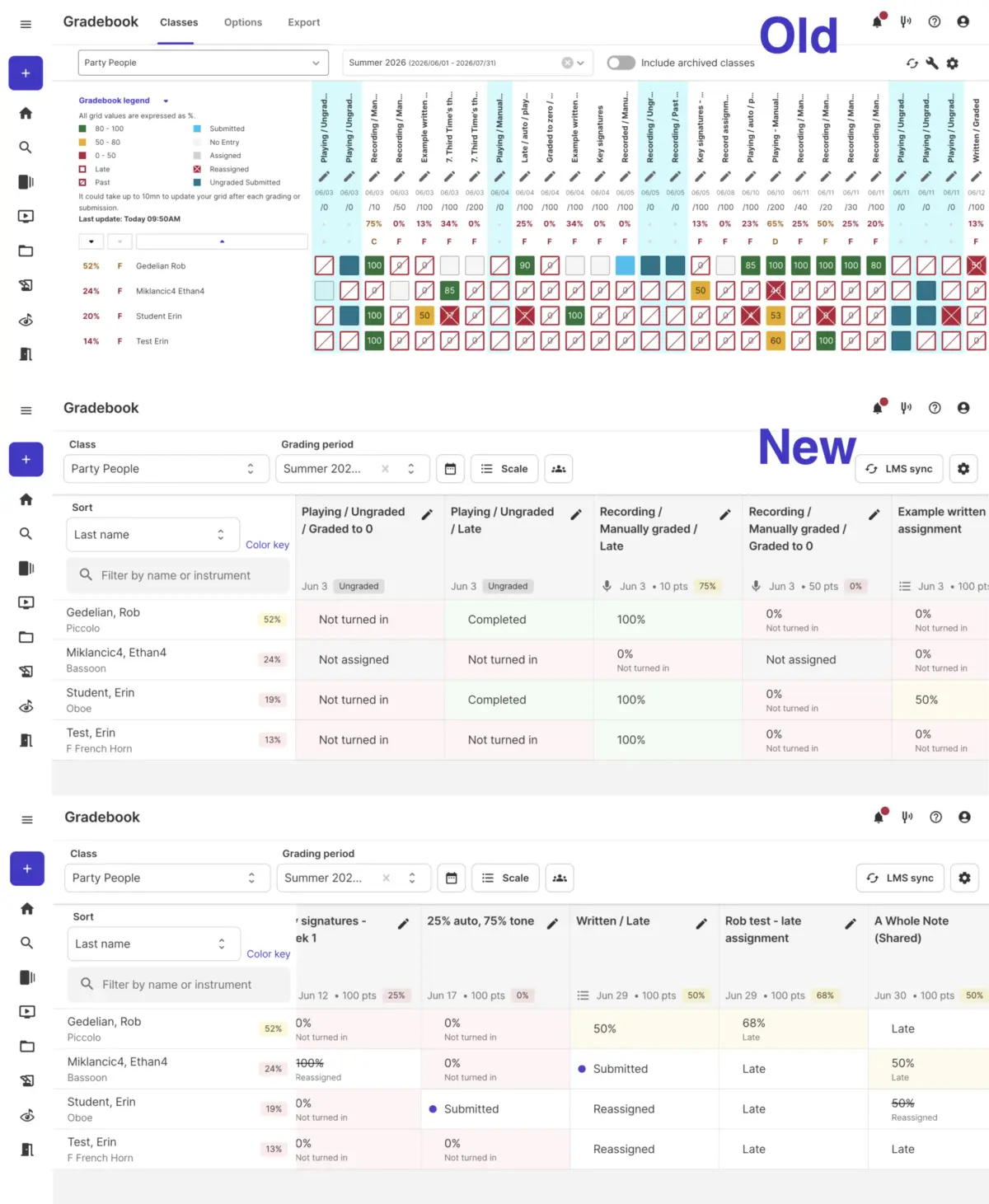
- The Overhauled Gradebook: Recognizing that early-year diagnostics require a macro-level view of student engagement, MakeMusic completely rebuilt its gradebook interface. The new layout prioritizes visual clarity and analytical speed. Educators are now presented with at-a-glance analytics that reveal individual and ensemble-wide progress trends. This allows directors to instantly identify which students are thriving and which require remedial intervention during the critical first month of rehearsal.
- Collaborative Co-Teaching: Large ensembles—ranging from 100-member marching bands to symphonic orchestras and multi-section choir programs—frequently rely on collaborative instructional models. The newly implemented Co-Teaching feature accommodates this reality by allowing lead directors to seamlessly integrate assistant directors, student teachers, and specialized sectional coaches into their MakeMusic Cloud virtual classrooms. Co-teachers are granted permissions to assign targeted exercises, review student media submissions, and input grades, effectively distributing the administrative workload across an entire instructional team from day one.
Phase 2: Advanced Assessment of Playing and Literacy
Moving beyond simple pitch and rhythm recognition, the updated platform introduces multifaceted assessment tools designed to evaluate foundational technique and theoretical understanding.
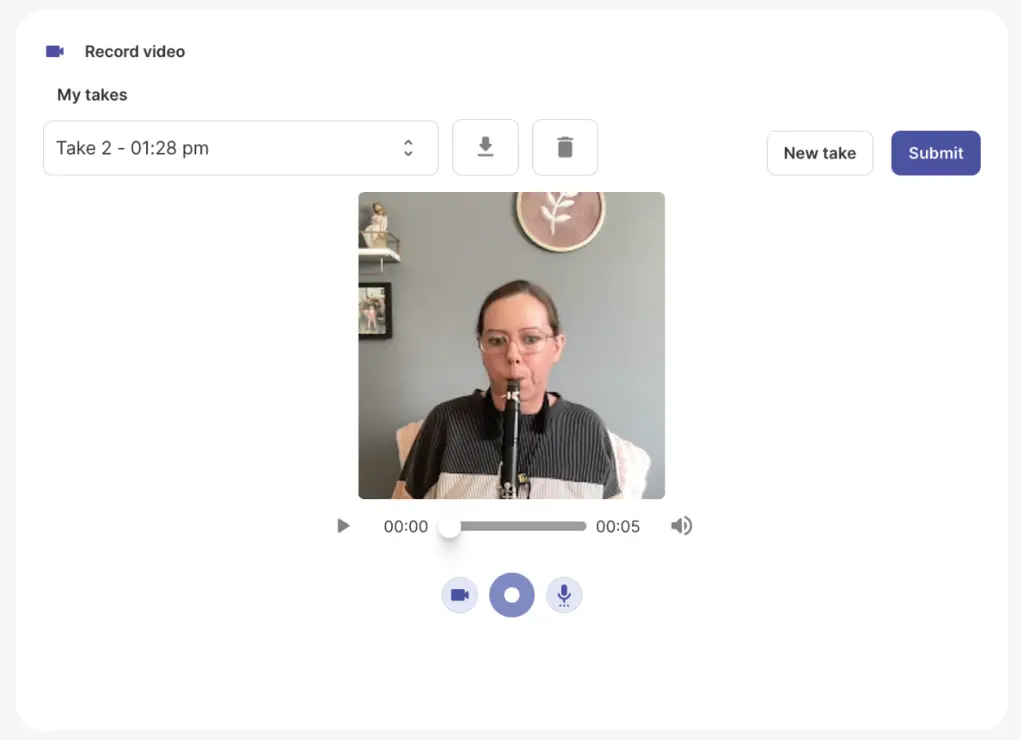
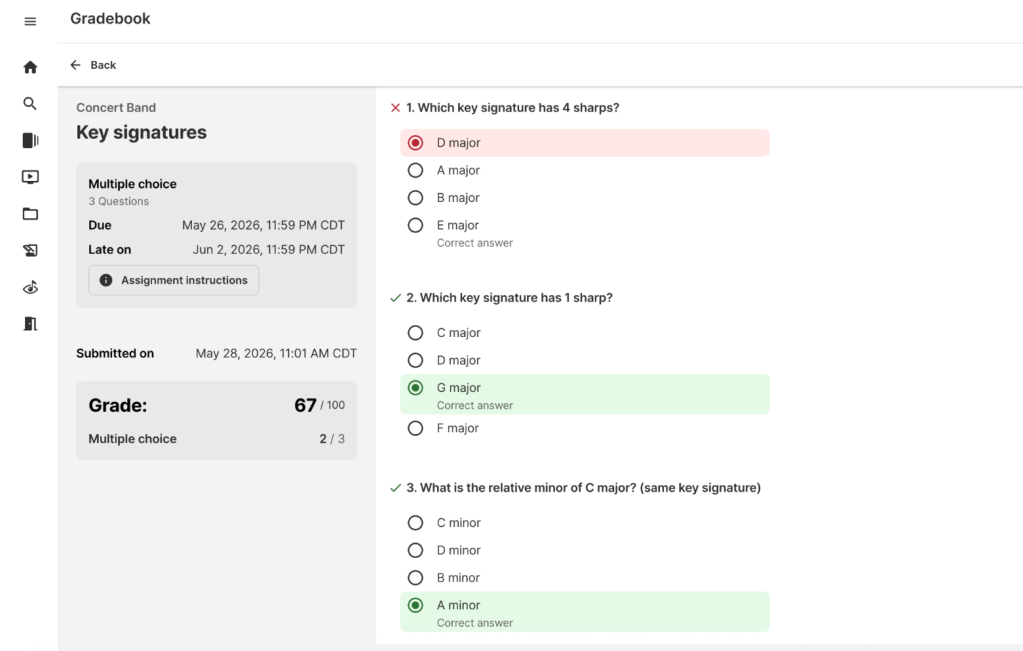
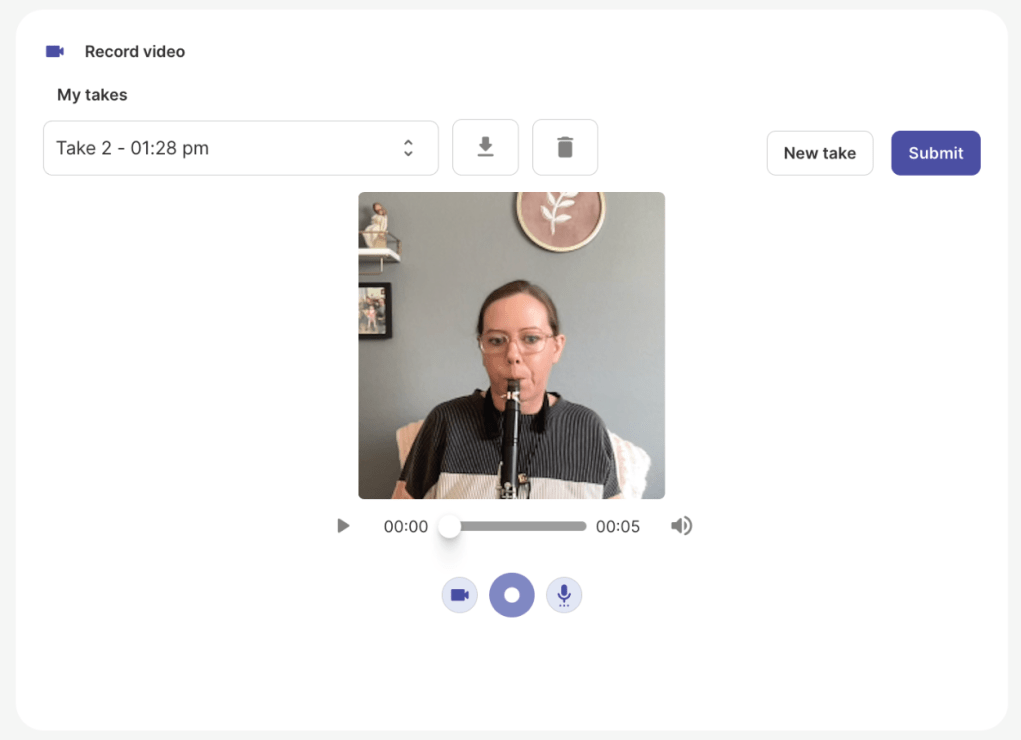
- Audio/Video and Multiple Choice Assignments: Summer breaks frequently encourage the formation of minor technical flaws—ranging from compromised posture and embouchure drift to improper bow holds or incorrect stick grips. To combat this, MakeMusic Cloud now supports dedicated Audio/Video assignments. Directors can prompt students to record brief video submissions, facilitating detailed visual inspections of physical technique that traditional audio-only systems miss. Furthermore, Multiple Choice Assignments enable educators to test note recognition, symbol identification, and music theory retention rapidly. These flexible assessment types are tailored for evaluating marching band stand tunes, get-to-know-you playing tests, and non-catalog repertoire.
- Integrated Theory Worksheets: Building comprehensive musical literacy requires consistent theoretical reinforcement. To streamline this process, MakeMusic has embedded ready-to-use theory worksheets directly into the platform interface, allowing directors to assign, collect, and grade theory homework without resorting to external paper handouts.
Phase 3: Instant Content and Curricular Flexibility
To ensure educators hit the ground running on the first day of class, the platform has expanded its foundational library and enhanced content-pinning capabilities.

- Sight-Reading Templates: Manual creation of sight-reading exercises is notoriously time-consuming. The updated platform introduces pre-configured sight-reading templates aligned with prominent regional standards, including NYSSMA and Texas UIL guidelines, as well as established method books such as Sing at First Sight, Habits of a Successful Musician, and Sound Innovations.
- Pinnable Method Books and Playlists: Addressing direct feedback from long-term platform users, MakeMusic now permits educators to pin multiple method books and playlists to a single class dashboard. This ensures that core instructional texts remain prominent and easily accessible to students. Notably, contemporary resources such as Bethany Main’s Choir Up! and selections from The Foundations Series can now be pinned directly alongside standard methodologies, offering unprecedented curricular customization.
Supporting Context and Metrics: The Cost of Administrative Friction
To fully appreciate the significance of MakeMusic Cloud’s latest infrastructural update, one must examine the broader operational context of contemporary music education. Independent educational surveys consistently reveal that K-12 and collegiate music teachers spend up to 35% of their contracted hours on non-instructional tasks. This administrative overhead includes lesson planning documentation, repertoire cataloging, attendance tracking, and, most notably, grading digital student performance submissions.
In a traditional workflow, evaluating a single ensemble of 60 students performing a weekly playing test requires the following sequence:

- Navigating to the learning management platform or opening an email inbox to retrieve audio files.
- Downloading individual media files to a local drive or streaming them over variable school network bandwidth.
- Listening to each performance while manually cross-referencing a physical or digital rubric.
- Entering individual scores into a grading spreadsheet.
- Manually copying those scores into the district’s primary grading system (e.g., Google Classroom, PowerSchool, or Canvas).
When multiplied by 60 students—and further multiplied across multiple class periods or academic quarters—this manual process consumes dozens of hours every month. By automating the data pipeline through Google Grade Passback and streamlining the interface architecture within the overhauled gradebook, MakeMusic’s updates directly target this operational bottleneck.
Industry analysts project that comprehensive LMS integration and automated grade passback can reduce weekly digital grading and administrative transfer time by as much as 60% to 75%. For an average music director, this recovery translates to multiple hours reclaimed per week—time that can be redirected toward individualized student coaching, repertoire selection, score study, and mental well-being. Furthermore, the inclusion of video-based assessment tools addresses a critical gap in remote and hybrid music pedagogy: the preservation of healthy physical technique and injury prevention, which are notoriously difficult to monitor via automated pitch-matching algorithms alone.
Official Statements and Industry Perspective
While MakeMusic has positioned these updates as a direct response to educator feedback, the broader implications point toward an evolving philosophy within educational technology: the transition from isolated digital tools to fully integrated pedagogical ecosystems.
“The beginning of the academic year sets the foundational tone for the entire calendar,” noted a representative from MakeMusic’s product development division during the feature release briefing. “When directors spend their first weeks buried beneath administrative ledgers, data entry errors, and disconnected software systems, student engagement suffers. Our objective with this latest MakeMusic Cloud release was unambiguous: remove every avoidable point of friction between the teacher, the student, and the music. By automating the administrative machinery—from grade passback to collaborative co-teaching—we are returning educators to where they belong: on the podium, inspiring their ensembles.”
Pedagogical consultants and veteran music educators have echoed these sentiments, emphasizing the psychological toll that back-to-school preparation places on new and veteran teachers alike. The ability to instantly deploy standardized sight-reading templates aligned with state frameworks (such as UIL and NYSSMA) provides a standardized baseline for diagnostic testing that previously required hours of typesetting or score extraction. Similarly, the integration of collaborative co-teaching tools acknowledges the modern reality of large-ensemble management, where assistant directors and sectional coaches are vital components of institutional success.
Future Outlook: The Trajectory of Digital Music Pedagogy
The integration of advanced workflow automation, collaborative management tools, and granular multi-modal assessment into MakeMusic Cloud points toward a broader transformation in how performing arts education is administered and delivered. As school districts increasingly adopt cloud-based infrastructures and blended learning models, standalone pedagogical software is no longer sufficient; platforms must interoperate cleanly with overarching institutional ecosystems.

Looking ahead, the roadmap for music education technology is likely to be defined by three key trajectories:
- Deepened Interoperability: Future iterations of educational software will almost certainly lean further into universal API standards, ensuring that performance evaluation platforms, district-wide SIS (Student Information Systems), and learning management systems communicate in real time without manual configuration.
- Enhanced Diagnostic Automation: While current updates successfully capture audio, video, and multiple-choice responses, subsequent advancements will likely harness machine learning to provide real-time diagnostic feedback on physical posture, embouchure stability, and intonation tendencies before the student even submits their assignment for human review.
- Expanded Collaborative Frameworks: As multidisciplinary and cross-campus arts programs grow more common, features like MakeMusic Cloud’s Co-Teaching will serve as prototypes for borderless music classrooms, allowing master teachers and specialists to mentor students across vast geographical distances seamlessly.
For the immediate future, however, the impact of MakeMusic Cloud’s back-to-school feature rollout is firmly grounded in the relief it brings to the rehearsal room. By modernizing the digital infrastructure of music education, the platform empowers directors to bypass the bureaucratic friction of August and September, ensuring that the first note of the school year rings clear, confident, and unencumbered by paperwork.