
Executive Overview
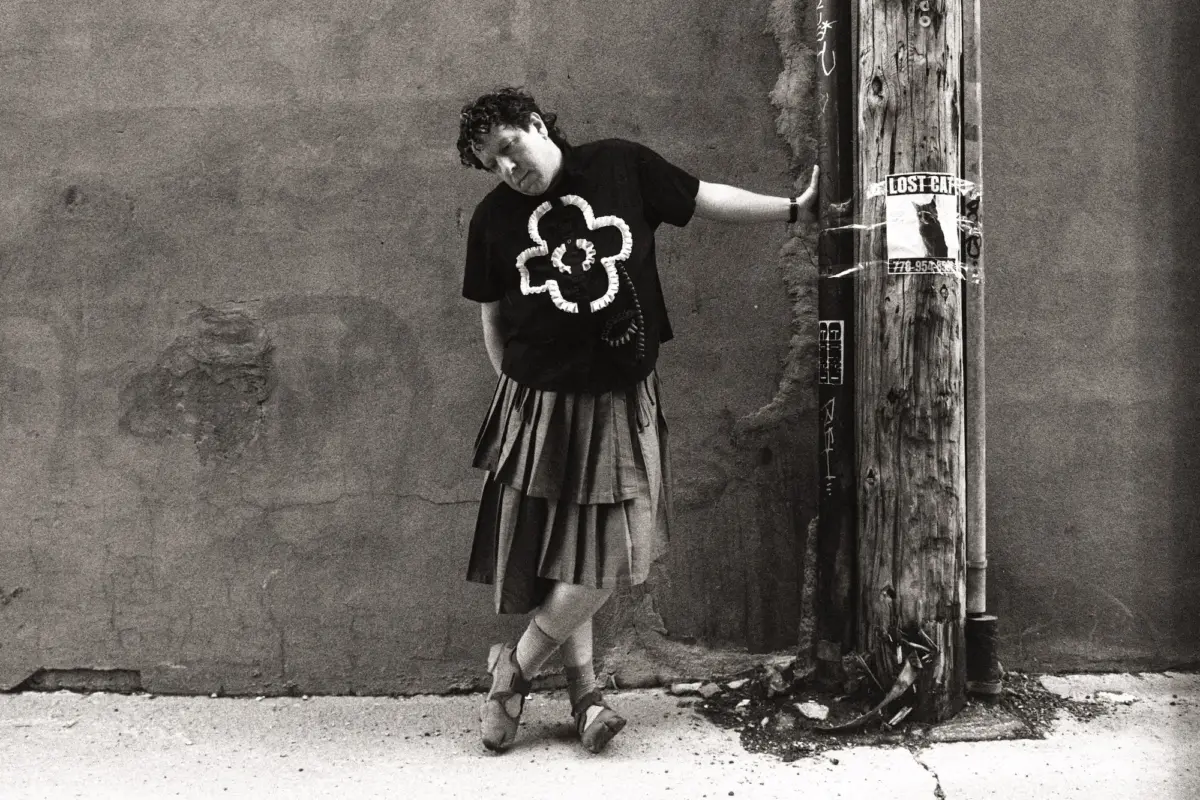
The contemporary underground music landscape is frequently divided by rigid genre boundaries, cordoning off the organic grit of indie rock from the synthetic, pulse-driven machinery of electronic dance music. Yet, every so often, a sonic disruptor emerges to bridge these ideological chasms, tearing down the walls between human vulnerability and industrial coldness. Enter Riley, a seasoned fixture of the post-punk circuit and co-founder of the conscious indie-rock outfit Ribbon Skirt, who is now stepping out on his own.
With his scorching, restless debut solo EP, Walking Home—slated for release on October 23—Riley is venturing into entirely uncharted territory. Eschewing the comfort of the electric guitar entirely, the six-track collection marries the earnest, melodic songwriting sensibilities of the Pet Shop Boys with the pummelling, abrasive soundscapes of Nine Inch Nails.
At the center of this sonic evolution is the EP’s lead single, “Hear the Message.” Propelled by blistering synthesizers and a commanding speak-singing cadence reminiscent of The Fall’s legendary Mark E. Smith, the track serves as an aggressive yet strangely comforting entry point into Riley’s cerebral world. It is a deeply personal meditation on pattern recognition, psychological spiraling, and the uneasy friction between internal anxieties and external realities.
By challenging himself to abandon traditional instrumentation in favor of pure electronic manipulation, Riley has crafted a record that pulses with organic life. Walking Home is not merely a stylistic pivot; it is a masterclass in imbuing artificial soundscapes with human tissue, proving that even within the most disorienting sonic haze, grace and clarity can ultimately be found.
Detailed Chronology: From Ribbon Skirt to Solo Rebirth
To understand the meticulous construction of Walking Home, one must retrace the trajectory of Riley’s creative evolution—a journey defined by an escalating desire to push past personal boundaries and embrace unfamiliar sonic frontiers.
The Genesis of an Electronic Awakening
For years, Riley’s artistic identity was firmly anchored in the realms of conscious indie rock and underground post-punk. Alongside collaborator Tashiina Buswa, he served as a principal songwriter and guitarist for Ribbon Skirt, an outfit celebrated for its biting, propulsive post-punk riffs and socio-political lyricism. However, even within Ribbon Skirt, the seeds of electronic experimentation were already being sown.
The band’s studio album, Bite Down, followed by its accompanying epilogue EP, PENSACOLA, hinted at a broader sonic appetite. These releases showcased how traditional post-punk could be elevated and destabilized when injected with intricate, atmospheric textures. Crucial to this transitional phase was the involvement of Preoccupations’ Scott “Monty” Munro, whose production and instrumental prowess lent a sharper edge to both Ribbon Skirt and Riley’s broader creative circle. Inspired by Munro’s studio sensibilities and galvanized by exposure to cutting-edge electronic and dance music during a formative summer spent frequenting underground clubs, Riley reached a creative crossroads.
Overcoming the Intimidation of the Machine
Despite his deep-seated history in various post-punk bands—where he frequently handled vocal duties—electronic music had long loomed as an intimidating frontier.
“Last summer, I was going out to a lot of places where I was getting exposed to a lot of new electronic and dance music,” Riley recalls. “I think making electronic music was always something that intimidated me quite a lot.”
The breakthrough arrived not through a calculated business strategy, but through a sudden moment of clarity while immersed in the immersive, booming environments of contemporary dance venues. Suddenly, the complex mechanics of electronic production clicked into place. Compounding this realization was a nagging creative void: he desperately missed the raw, visceral catharsis of unbridled vocal performance.
Imposing the Ultimate Constraint: No Guitars Allowed
Determined to avoid resting on his laurels, Riley instituted a rigorous internal mandate for his solo debut.
“I gave myself a little challenge: no guitar on the EP,” he explains. “I didn’t want to fall back on stuff I’m comfortable with. I wanted to create something new. That was important for me to push myself.”
This deliberate restriction forced him to rethink composition entirely, stripping away his primary weapon of comfort and replacing it with raw synthesisers, sequencers, and drum machines. The resulting sessions birthed the six tracks that comprise Walking Home, a cohesive yet volatile suite of electro-belters that showcase an artist fearlessly reinventing his craft from the ground up.
Supporting Context & Metrics: Deconstructing the Sound of Walking Home
The stylistic DNA of Walking Home draws upon a rich lineage of electronic pioneers and avant-garde practitioners, all while carving out a distinct space within modern alternative music.
The Aesthetic Blueprint: Artificiality Meeting Humanity
One of the primary hurdles Riley faced during the assembly of his solo project was the persistent fear of sterility. Electronic music, by its very nature, runs the risk of sounding overly mechanical or emotionally detached.
“I always struggled to see how I could make electronic music sound human,” he admits.
To combat this, Riley looked to historical and contemporary touchstones that successfully merged technological innovation with raw emotional weight:
- Suicide: The pioneering synth-punk duo’s ability to marry affecting, haunting lyricism with scathing, industrial noise provided a foundational roadmap.
- Happy Mondays: The carefree, hedonistic attitude of alt-dance injected a vital sense of groove and organic chaos into the proceedings.
- Debit: The dark, meticulously crafted modern techno soundscapes demonstrated how intricate production could still retain a visceral, beating heart.
This deliberate synthesis of the artificial and the organic extends beyond the audio tracks and into the visual presentation of the EP. The striking artwork, crafted by designer Juliette Dupont-Duchesne, deliberately inhabits an uncanny space between the digital rendering and the tangible real world, perfectly mirroring the thematic tensions of the music itself.
Thematic Exploration: Pattern Recognition and the "Perfect Outfit"
Lyrically and conceptually, Walking Home and its lead single, “Hear the Message,” delve deep into the human psyche, examining the friction between internal cognition and external reality.
“I’m someone who looks for a lot of patterns to explain the world and myself,” Riley notes, shedding light on the psychological underpinnings of his writing. “When I don’t see those patterns resolve themselves, I get into a little bit of a spiral. I wanted to explore how that relates to real life, in the disconnect between what’s going on in your head and what you see.”
This thematic preoccupation with presentation and perception finds a fascinating parallel in the naming conventions of Riley’s creative projects. Both Ribbon Skirt and his solo endeavor share an indirect, yet compelling, thematic motif centered around clothing and personal presentation. While the connection wasn’t consciously planned from the outset, Riley acknowledges the profound significance of attire as a communicative medium.
The moniker for his solo project is derived from a misremembered line in the iconic 1975 documentary Grey Gardens, which ruminates on the ways individuals project their identities outward.
“What you choose to wear means something,” Riley muses. “Going back to the connection between what’s going on in my head and the outside world, I think the clothes you wear are a good bridge between those two things: what you want to present to the world and how the world sees you.”
Official Statements & Direct Insights
To capture the true essence of Walking Home, it is vital to examine the artist’s own reflections on his creative metamorphosis, artistic vulnerability, and the catharsis found within the chaos.
On the Psychology of “Hear the Message”
Discussing the opening track that sets the tone for the entire EP, Riley emphasizes the transition from initial disorientation to eventual self-acceptance:
“When ‘Hear the Message’ finally gains momentum, it turns out it was never disorienting in the first place: Riley finds grace in himself and how his brain works within the off-kilter haze. An observer is something I’ve always felt comfortable being.”
This posture of the "observer"—someone who watches the world unfold from a slightly detached yet deeply empathetic vantage point—provides a stabilizing anchor amidst the track’s blistering synths and driving rhythmic grooves.
On Shedding the Security Blanket
Reflecting on the conscious decision to banish guitars from the studio, Riley highlights the psychological necessity of creative discomfort:
“I didn’t want to fall back on stuff I’m comfortable with. I wanted to create something new. That was important for me to push myself.”
This ethos of self-imposed challenge is what separates Walking Home from a standard side-project vanity release. It represents a genuine artistic rebirth driven by a desire to master an entirely new dialect of sound.
On the Need for Vocal Catharsis
Addressing his return to the microphone in a more aggressive, front-and-center capacity, Riley points to the emotional release inherent in pushing one’s vocal limits within an electronic framework:
“I think I was also missing that catharsis of singing. You’re going a little bit harder.”
Future Outlook: What Walking Home Means for the Underground
As the independent music community prepares for the release of Walking Home on October 23, the implications of Riley’s bold pivot extend far beyond a single EP.
Redefining Genre Boundaries
By seamlessly translating his post-punk sensibilities into the hyper-driven world of electronic music, Riley is setting a new benchmark for cross-pollination within the underground. In an era where audiences increasingly crave hybrid sounds that defy easy categorization, records like Walking Home demonstrate the immense creative dividends that come from stepping outside one’s comfort zone.
Live Performance Potential and Future Collaborations
The translation of these guitar-free, synth-heavy compositions to the live stage remains one of the most anticipated elements of Riley’s upcoming campaign. Given his extensive background in live post-punk performance, translating the volatile, club-adjacent energy of tracks like “Hear the Message” into a live concert environment promises an electrifying sensory experience. Furthermore, the collaborative spirit that has defined his career—ranging from his work with Tashiina Buswa in Ribbon Skirt to production interactions with Scott Munro—suggests that Riley’s solo journey is only just beginning, opening the door for future remixes, live ensembles, and further sonic explorations.
Ultimately, Walking Home is an invitation. In a world characterized by relentless noise, unpredictable shifts, and psychological turbulence, Riley is searching for clarity—and through his unflinching, meticulously crafted electro-belters, he is inviting his listeners to follow suit.