
Executive Overview
To understand the extraordinary trajectory of Quincy Jones is to trace the modern evolution of popular music itself. Four decades ago, critic Mark Gilbert, writing in the Jazz Journal of August 1986, underscored a foundational philosophy that had guided Jones throughout his meteoric career: the conviction that African-American music must evolve "naturally," rooted organically in its own rich cultural soil, rather than through the artificial grafting of European concert traditions.
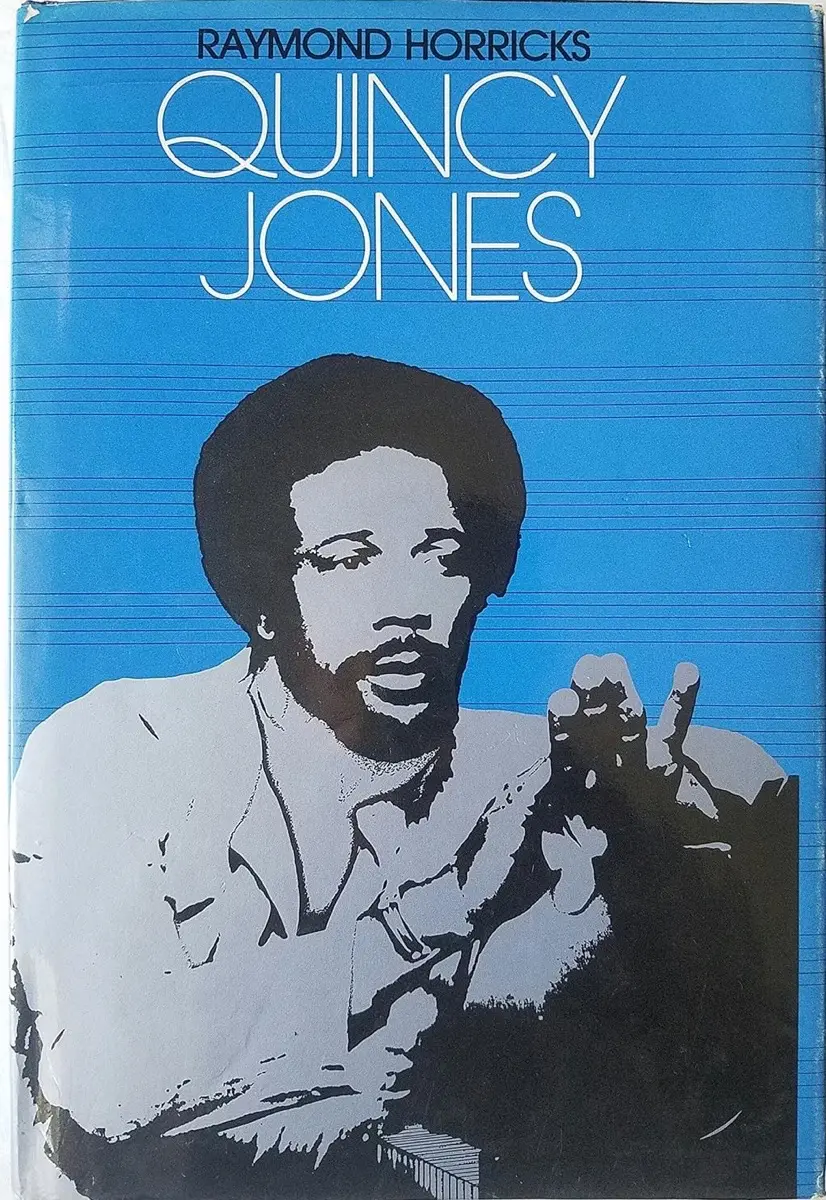
This ideological stance places Jones in a fascinating paradox. To purists locked within the dogmatic gloom of jazz traditionalism, his pop-crossover instincts, commercial ubiquity, and Hollywood orchestration might have occasionally raised eyebrows or drawn critique. Yet, as biographer Ray Horricks brilliantly articulated in his seminal 1986 study Quincy Jones (published by Spellmount Ltd.), Jones is the quintessential "Renaissance Man" of twentieth-century music. He is a creative force whose career effortlessly bridged the divides between bebop, big band swing, avant-garde orchestral arrangement, cinematic scoring, and global pop dominance.
From his formative days in Seattle absorbing the blues-infused brilliance of Ray Charles to his apprenticeship under trumpet master Clark Terry; from touring with the powerhouse orchestras of Jay McShann and Lionel Hampton to directing the State Department tours of Dizzy Gillespie; and finally to shaping the cultural zeitgeist through blockbuster film scores and the best-selling album in human history (Thriller), Jones operated on a scale matched by few others.
This retrospective examines the architecture of Jones’s genius. It analyzes his refusal to abandon his core identity, his brush with mortality following a catastrophic brain aneurysm in 1974, and his unyielding advocacy for the historical integrity of Black American music.
Detailed Chronology: From Seattle to the Global Stage
The Crucible of the Pacific Northwest and the Ray Charles Encounter
The narrative of Quincy Jones begins far from the glitz of Los Angeles or the smoky basements of 52nd Street. Growing up in Seattle, Washington, a young Jones found himself immersed in a burgeoning cultural melting pot. It was here that a transformative meeting occurred: he crossed paths with a blind, teenage piano prodigy named Ray Charles.
Charles became an early lodestar for Jones. In Charles, Jones witnessed firsthand a musician who synthesized the sacred and the secular, the blues and the gospel church, into an uncompromised expression of Black soul. This encounter set Jones on what he would later describe as the "path of righteousness"—a commitment to emotional authenticity that would survive every stylistic shift and commercial temptation he would later encounter.
The Bebop Apprenticeship and the Discovery of the "Whole Orchestra"
Like many ambitious young jazz musicians of the post-war era, Jones rapidly absorbed the dizzying complexities of bebop. Armed with a trumpet and mentored by the legendary Clark Terry—who patiently demystified the instrument’s technical hurdles—Jones developed into a formidable player.
His early professional life reads like a roll call of jazz royalty. He played alongside blues shouter Jay McShann and eventually joined the explosive, high-octane big band led by vibraphonist Lionel Hampton. It was during his tenure with Hampton that Jones experienced a profound epiphany. Standing within the machinery of a major touring big band, Jones recognized the limitations of his own trumpet playing when measured against the titans of the era.
Rather than succumbing to defeat, Jones executed a masterclass in career redirection: he discarded the trumpet as his primary voice and adopted a radically larger instrument—the whole orchestra.
This shift unlocked his true vocation. Jones transformed himself into a master arranger and composer. He began writing charts that honored the swing tradition while pushing harmonic boundaries. His arrangements for Dizzy Gillespie—particularly highlighted in his involvement with Gillespie’s landmark 1956 U.S. State Department tour of the Middle East—demonstrated a sophisticated ear for cultural diplomacy and brass-section dynamics. He subsequently lent his pen to Count Basie, whose swinging, effortless momentum was supercharged by Jones’s sharp, modern charts, and to vocalist Frank Sinatra, for whom Jones arranged and conducted the iconic 1964 live album It Might as Well Be Swing and the massive hit "Fly Me to the Moon."
Crossing the Rubicon: Hollywood, Television, and Thriller
As the jazz industry shifted in the late 1950s and 1960s, Jones made a move that cemented his status as a pioneer: he relocated to New York and eventually to Los Angeles, breaching the color barrier of Hollywood’s studio system.
Before Jones, Black composers were rarely trusted with major studio feature films. Jones broke that ceiling wide open, scoring roughly 40 motion pictures—including In the Heat of the Night, The Pawnbroker, and The Italian Job—alongside prolific television theme work (such as Sanford and Son and The Bill Cosby Show). He became the most famous Black musician in Hollywood history, proving that compositional mastery transcended racial divisions in the film industry.
Yet, his ultimate cultural peak arrived in the recording studio as a producer. Following a fruitful creative partnership with Michael Jackson on Off the Wall, Jones produced 1982’s Thriller. Utilizing his encyclopedic knowledge of rhythm, blues, jazz arrangement, and pop hooks, Jones crafted a sonic masterwork that reshaped the global music landscape. It remains the best-selling album of all time, a testament to Jones’s unique ability to merge street-level groove with immaculate, cinematic production values.
Supporting Context & Metrics: The Philosophy of "Soul" and the 1974 Watershed
The Battle Against Artificial Grafting
To the narrow-minded jazz critic of the mid-20th century, Jones’s willingness to pivot toward commercial pop, film scores, and mainstream production occasionally invited accusations of opportunism or a "mercenary" spirit. However, Ray Horricks’s biography dismantles this reductive view, pointing out that Jones never truly strayed from his personal artistic compass.
The unifying fabric of Jones’s immense catalog is the concept of "soul." This was not merely a genre tag, but a spiritual baseline derived directly from the tradition of Ray Charles, the blues, and gospel music.
This artistic philosophy was further refined during Jones’s time in Paris in the 1950s. While living in the French capital, Jones formally studied composition under the legendary Nadia Boulanger and Olivier Messiaen. While he held immense respect for these giants of European classical music, the experience solidified rather than diluted his convictions. Jones became a staunch proponent of the idea that Afro-American music should grow organically—rooted in its own historical and cultural ecosystem—rather than through the artificial grafting of European concert music techniques onto Black idioms.
This insular yet proud defense of the Black American tradition fueled his long-term, visionary multimedia project: The Evolution Of Black Music, a comprehensive history designed for film and record that sought to trace the lineage of the diaspora from its African roots to contemporary global expressions.
Surviving the Unthinkable: The 1974 Brain Aneurysm
The sheer volume of Jones’s output—he is estimated to have been directly involved in roughly one thousand distinct recordings—becomes all the more astonishing when viewed through the prism of his personal health crisis.
In 1974, at the height of his creative powers, Jones suffered two consecutive brain aneurysms. The medical prognosis was grim, requiring extensive, high-risk brain surgery. The odds against survival were massive, and even if he survived, doctors warned he might never compose or function at a high level again.
Yet, with characteristic resilience, Jones beat the odds. Reflecting on the harrowing ordeal years later, he remarked with characteristic brevity and strength:
"I just wasn’t ready to go . . ."
Surviving this brush with mortality added a profound sense of urgency to the rest of his life. The decades following his recovery saw his most culturally impactful work, including the creation of Thriller, the organization of the historic "We Are the World" charity single, and his expansion into multimedia production through Quincy Jones Entertainment.
Official Statements & Archival Insights
Ray Horricks’s 1986 monograph captures the essence of a man who refused to be boxed into categories. Through extensive interviews—including deep dives into Gillespie’s 1956 State Department missions—Horricks establishes Jones as a cultural ambassador.
In discussions regarding his compositional philosophy, Jones consistently emphasized the primacy of emotional truth over academic detachment. As noted in the historical Jazz Journal coverage by Mark Gilbert, Jones’s insistence that Black music must maintain its natural evolutionary path was a direct challenge to academic elitism. Jones viewed jazz and its offshoots not as museum pieces to be preserved behind glass, but as living, breathing cultural expressions capable of adapting to any modern medium without losing their ancestral soul.
Furthermore, Tony Middleton’s curated discography within the Horricks publication maps out an astonishing breadth of material, demonstrating that whether Jones was writing complex modal jazz charts for a small combo, scoring a gritty urban drama, or crafting a global pop anthem, his signature touch relied on clarity, rhythmic vitality, and deep emotional resonance.
Future Outlook: The Indelible Blueprint of Quincy Jones
As we look back at the historical assessments penned by Mark Gilbert and Ray Horricks, the legacy of Quincy Jones towers over the contemporary musical landscape with absolute clarity.
Jones proved that versatility does not require a dilution of identity. By refusing to choose between high art and popular culture, between the jazz bandstand and the Hollywood mixing console, he carved out a blueprint that modern producers, beatmakers, and multidisciplinary artists follow to this day.
Whether through his unbuilt archival dreams like The Evolution Of Black Music, his foundational mentorship of younger generations, or the timeless resonance of his recorded output, Jones remains the ultimate architect of modern sound. His life’s work stands as an enduring monument to the power of natural artistic growth, unyielding resilience, and the eternal, unifying force of "soul."