
By Francisco Salazar
Published by Arts & Culture Investigative Desk
Executive Overview
In an extraordinary and unprecedented escalation of a multi-year cultural and legal war, the Trump administration has raised the prospect of completely demolishing the John F. Kennedy Center for the Performing Arts. In a shocking new federal court filing, Department of Justice attorneys argued that if the administration is blocked from carrying out its controversial renovation plans—which explicitly include affixing President Donald Trump’s name to the historic federal monument—the iconic structure may be torn down entirely.
The filing, submitted by DOJ attorney Brantley T. Mayers, paints a catastrophic picture of a facility that has allegedly devolved into a "dangerously dilapidated, outdated, and decrepit" structure. According to government lawyers, without immediate, sweeping interventions overseen by the administration’s loyalist-packed board, the structural integrity of the facility will continue to fail, leaving the federal government with no choice other than demolition. In its place, the administration suggests, could rise a much simpler, highly economical open-air amphitheater overlooking the Potomac River—a proposal that has circulated in various policy circles for years, but which critics argue would effectively erase a living presidential memorial.
This explosive legal maneuver represents the latest and most destructive chapter in an ongoing saga that has seen the Kennedy Center—long considered the crown jewel of the nation’s capital for the performing arts—transformed into a lightning rod for political polarization. Since President Trump reassumed control over federal cultural appointments, the institution has been battered by mass departures of resident artistic companies, high-profile boycotts by world-renowned performers, multiple federal investigations into alleged financial mismanagement, and bitter boardroom infighting.
Should the administration succeed in its efforts, the destruction of the Kennedy Center would mark an unprecedented milestone in American cultural history: the demolition of a designated National Historic Landmark. It would follow closely behind other controversial administration-led transformations of historic Washington D.C. sites, including alterations to the East Wing of the White House and the National Mall’s Reflecting Pool. As federal judges weigh the constitutionality and legality of the board’s recent closure vote and proposed renaming, the future of the nation’s premier performing arts center hangs delicately in the balance.
Detailed Chronology: The Decline and Politicization of a Cultural Monument
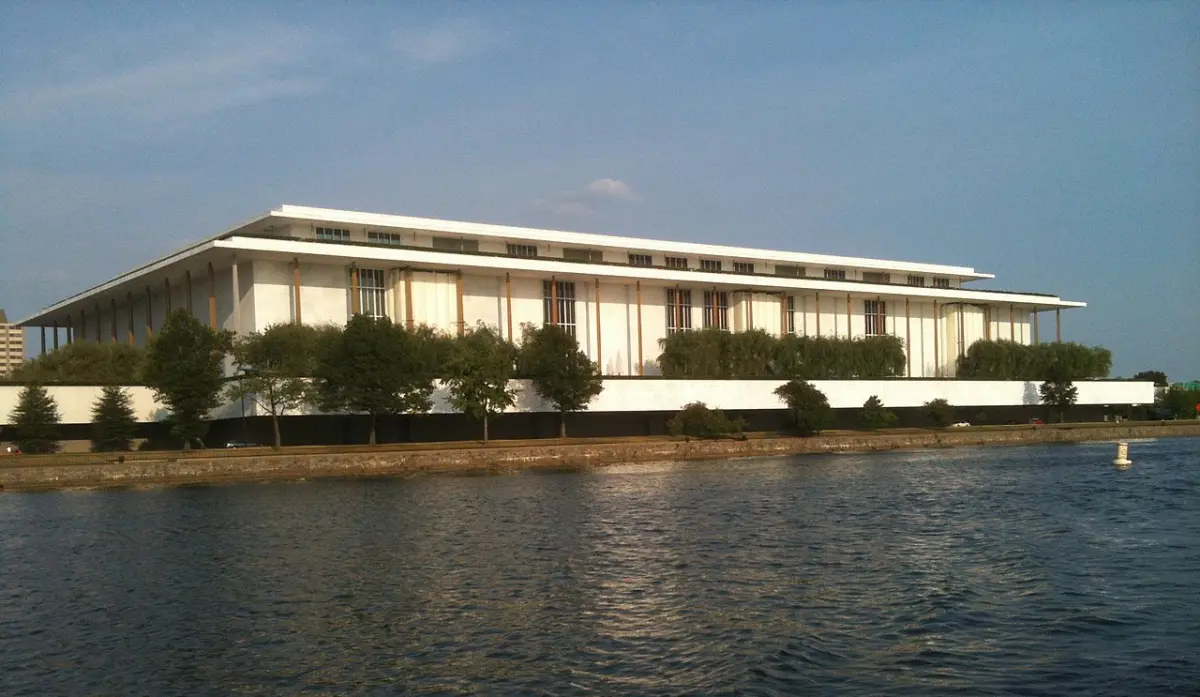
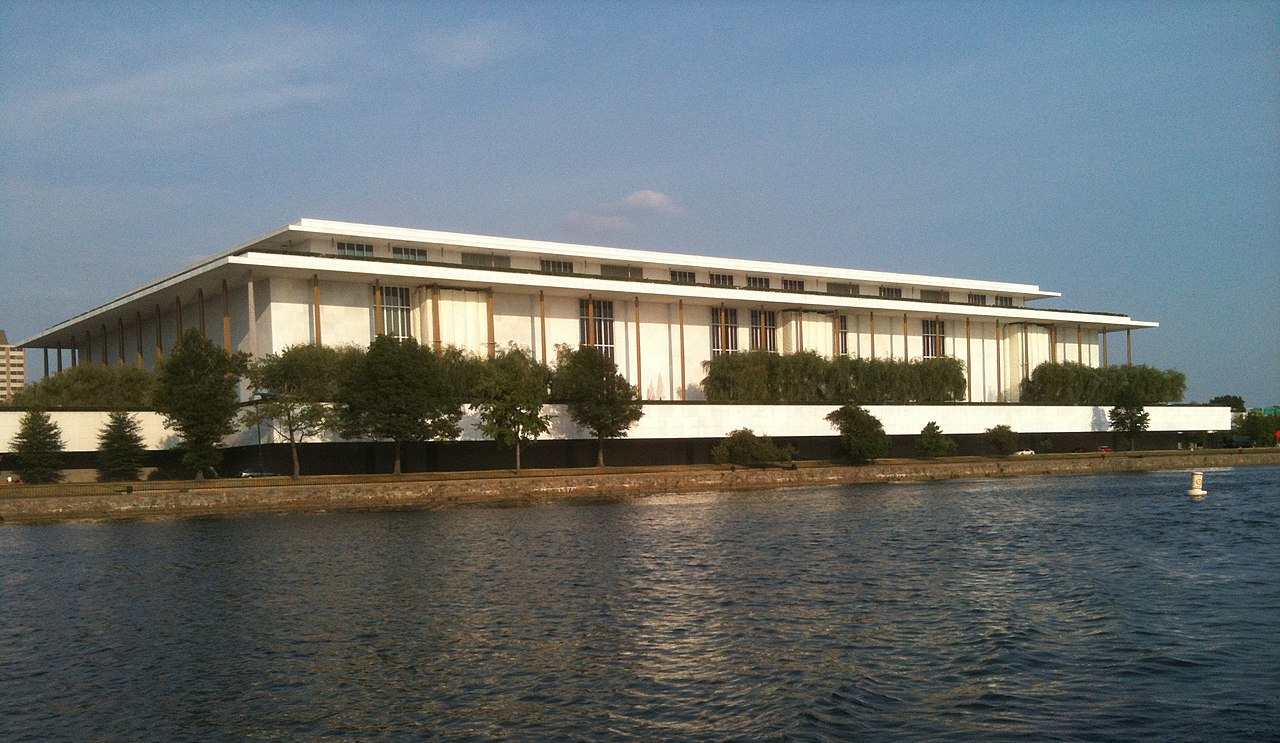
To understand how the Kennedy Center arrived at the precipice of demolition, it is necessary to examine the rapid unraveling of the institution since the return of the Trump administration. Designed by renowned architect Edward Durell Stone and opened in 1971 as a living memorial to the assassinated 35th president, the center has historically operated as a bipartisan, quasi-independent public-private partnership dedicated to staging world-class theater, dance, and music.
However, the political climate surrounding the institution shifted dramatically following administrative changes initiated by President Trump. Almost immediately, tensions flared between legacy arts administrators, resident companies, and newly appointed board members loyal to the executive branch.
The Exodus of Resident Institutions and Artists
The administrative shift triggered an immediate crisis of confidence within the global arts community. Over the subsequent months, nearly every major resident institution associated with the Kennedy Center—with the sole exception of the National Symphony Orchestra—announced their departure, citing irreconcilable differences regarding governance, artistic independence, and institutional values.
Simultaneously, a broad coalition of internationally acclaimed musicians, actors, and dancers instituted a sweeping boycott, refusing to set foot on the center’s stages. This unprecedented artist strike starved the venue of its primary cultural currency, leading to dark theaters, canceled subscription series, and plunging ticket revenues.
The Name-Change Controversy and Financial Investigations
Amidst the artistic exodus, the governance of the center became a focal point of partisan wrangling. The Trump-loyalist board initiated a series of contentious moves, most notably voting to remove and subsequently re-add President Trump’s name to the building’s facade—a move that triggered intense public outcry and immediate legal challenges from preservationists and descendants of the Kennedy family.
Concurrently, the financial management of the center came under intense scrutiny. Multiple federal investigations were launched into the alleged mishandling of federal appropriations and private endowments, with critics accusing the administration’s appointees of hollowing out the institution’s operational reserves to fund partisan initiatives.
The climax of this administrative warfare occurred recently when the Trump-aligned board voted overwhelmingly to officially close down operations at the Kennedy Center, citing mounting financial insolvency and structural decay. Crucially, however, the closure and the subsequent plan to re-inscribe Trump’s name require the explicit approval of a federal judge. It is within the context of this pending judicial review that the Justice Department filed its apocalyptic assessment of the building’s structural health.
Supporting Context & Metrics: Structural Claims vs. Preservationist Reality
The core justification provided by the Department of Justice for the potential demolition of the Kennedy Center rests on claims of catastrophic physical deterioration. Yet, structural engineers, architectural historians, and preservationists have expressed profound skepticism regarding the administration’s narrative, viewing the engineering reports as a pretextual justification for a politically motivated demolition.
Legal and Engineering Arguments from the DOJ
In the pivotal court filing, DOJ attorney Brantley T. Mayers laid out a bleak architectural appraisal:
“Without those efforts, the Center will deteriorate further into an unsafe, decrepit structure that will be required to be taken down, with a determination to follow on what to build on the site, such as a large outdoor amphitheater overlooking the Potomac River that has been proposed, by some, for many years.”
The filing further asserts that the building has become "dangerously dilapidated, outdated, and decrepit," branding it as "structurally unsound, fundamentally unsafe, and embarrassing to the Nation’s Capital."
Furthermore, the government’s legal team addressed the ideological implications of replacing the sprawling indoor facility with a simpler outdoor venue. The filing noted that any prospective outdoor amphitheater would "fail to adequately honor" President John F. Kennedy, yet explicitly highlighted its primary administrative advantage: it "would be simpler and more economical to build, operate, and maintain."
The Historical and Architectural Value at Stake
Architectural preservation groups have pushed back aggressively against the government’s characterization. Built on the banks of the Potomac River, the Kennedy Center is a masterwork of late-20th-century monumental architecture, featuring expansive white marble terraces, soaring red-carpeted halls, and monumental sculptures donated by international governments.
Experts note that while any building constructed in the early 1970s requires ongoing capital investments, moisture mitigation, and mechanical updates, the building’s reinforced concrete superstructure remains fundamentally sound. They argue that characterizing the center as "beyond repair" ignores decades of successful structural maintenance and serves a purely political agenda designed to eradicate a monument associated with a Democratic administration while elevating current political figures.
Official Statements and Institutional Responses
The administration’s legal filing has sent shockwaves through Washington, drawing sharp denunciations from lawmakers, arts advocates, preservation organizations, and representatives of the Kennedy family.
The Administration’s Defense
Defenders of the administration’s actions maintain that the Department of Justice is merely facing fiscal and structural realities. Speaking on condition of anonymity, administration officials argued that decades of alleged mismanagement by prior boards left the facility saddled with deferred maintenance bills that far exceed the center’s current fundraising capabilities. From this perspective, an open-air amphitheater is presented as a fiscally responsible alternative that would continue to provide public green space and performance opportunities without draining federal coffers.
Opposition and Advocacy Reactions
Conversely, congressional watchdogs and cultural advocacy groups have condemned the filing as an act of cultural vandalism.
"The threat to demolish the Kennedy Center is not about structural safety; it is about political retribution and the systematic erasure of our nation’s shared cultural heritage," said a prominent Democratic member of the House Committee on Oversight and Accountability. "To suggest that Washington, D.C., should tear down its premier presidential memorial and performing arts center in favor of a budget-friendly amphitheater—emblazoned with the current president’s name—is an insult to the memory of John F. Kennedy and to the American public."
Preservation organizations, including the National Trust for Historic Preservation, have signaled their intent to intervene in the federal lawsuit, arguing that the administration is legally bound by federal statute to protect, maintain, and operate the memorial as originally mandated by Congress.
Future Outlook: The Legal Battle Ahead
The fate of the Kennedy Center now rests squarely within the jurisdiction of the federal court system. As the litigation proceeds, several critical milestones will determine whether the institution survives or faces the wrecking ball.
- Judicial Review of the Closure Vote: A federal judge must rule on whether the Trump-loyalist board legally possesses the authority to shutter the institution entirely. Plaintiffs arguing against the closure contend that the board’s actions violate the statutory mission laid out by Congress when the center was established.
- Scrutiny of Financial Audits: Independent forensic accountants are expected to review the financial disclosures and audit reports submitted by both the administration and the displaced arts organizations to determine the true extent of the center’s fiscal health.
- Preservation Injunctions: Heritage groups are preparing emergency legal injunctions to block any physical alterations, renaming procedures, or demolition preparations pending a full trial on the merits of the case.
- Congressional Intervention: Lawmakers from both sides of the aisle are weighing legislative measures to strip the administration of its authority over the center’s board appointments, though such bills face high hurdles in a divided Congress.
Conclusion
As legal briefs are filed and court dates loom, the John F. Kennedy Center for the Performing Arts stands as a grim symbol of the deepening cultural divides shaping contemporary American politics. Whether the famed halls along the Potomac will once again echo with the sound of the National Symphony Orchestra and world-class theatrical productions, or whether they will be reduced to rubble to make way for a scaled-down outdoor pavilion bearing the name of Donald Trump, remains one of the most consequential cultural battles of the decade. The upcoming judicial rulings will not only decide the physical survival of a National Historic Landmark, but will also test the legal limits of executive authority over America’s shared civic monuments.