
Executive Overview
The intersection of jazz history and recorded performance often finds its most compelling expressions away from the pristine, controlled environments of the modern recording studio. Instead, it thrives in the raw acoustics of European jazz clubs and the evocative, curated soundscapes of auteur cinema. This comprehensive review and analysis examines two distinct recent archival releases that capture these parallel worlds: Storyville Records’ Johnny Griffin and Thomas Clausen’s Trio: Live In Helsingborg 1990 and New Continent’s Manhattan Swing – Music From The Movies Of Woody Allen.
Together, these recordings offer a masterclass in the longevity, adaptability, and emotional resonance of jazz across the latter half of the twentieth century. Johnny Griffin—affectionately known as "The Little Giant" for his explosive tenor saxophone style—embodies the zenith of hard-bop virtuosity, captured here at the height of his European exile alongside an elite Danish rhythm section. Conversely, the Woody Allen compilation curates a century’s worth of swing and early jazz classics that have defined the atmospheric backdrop of some of American cinema’s most enduring romantic comedies and dramas.
While catering to different audiences—the former a treasure trove for discerning hard-bop aficionados and the latter an accessible, cinematic gateway for casual listeners—both releases prompt a critical evaluation of how jazz is curated, preserved, and contextualized for contemporary audiences. This report provides an exhaustive breakdown of these releases, exploring the historical pedigree of the artists involved, a detailed track-by-track analysis of the performances, the structural flaws and merits of the packaging, and a look at the enduring viability of physical jazz archiving in the streaming era.
Detailed Chronology and Historical Context
To understand the weight of these releases, one must trace the chronological arcs of the primary architects behind the music. The historical trajectory spans from the mid-1940s dawn of bebop through the golden age of swing and into the transnational migrations of American jazz masters who found creative sanctuary in Europe.
Johnny Griffin: The Transatlantic Hard-Bop Titan
Born in Chicago in 1928, Johnny Griffin’s professional entry into the jazz pantheon came remarkably early. In 1945, at just seventeen years of age, he joined legendary bandleader Lionel Hampton’s orchestra, a formative crucible that immersed him in the high-energy demands of big-band performance and rhythm and blues. As the musical landscape shifted away from large ensembles toward the intimate, high-speed intellectualism of bebop and the earthy, driving pulse of hard bop in the late 1950s, Griffin emerged as a premier voice on the tenor saxophone.
His resume reads like a who’s who of modern jazz royalty. Griffin achieved widespread international recognition through high-profile tenures with Art Blakey’s Jazz Messengers and Thelonious Monk’s visionary quartet. Furthermore, his famous quintet recordings—featuring blistering, dueling tenor saxophone battles with Eddie "Lockjaw" Davis—cemented his reputation as an unstoppable force of instrumental athleticism.
However, by 1963, facing the changing economic and cultural landscape of the American jazz scene, Griffin made the pivotal decision to emigrate to Europe. He settled initially in Paris, before moving on to residencies in the Netherlands and Denmark. From these European bases, he maintained a relentless international touring schedule, serving as an ambassador of American hard bop until his passing in 2008. The 1990 Helsingborg performance captured by Storyville Records represents this mature, expatriate era: a master craftsman completely at home on European stages, working with musicians who intimately understood his idiom.
Woody Allen and the Cinematic Preservation of Vintage Jazz
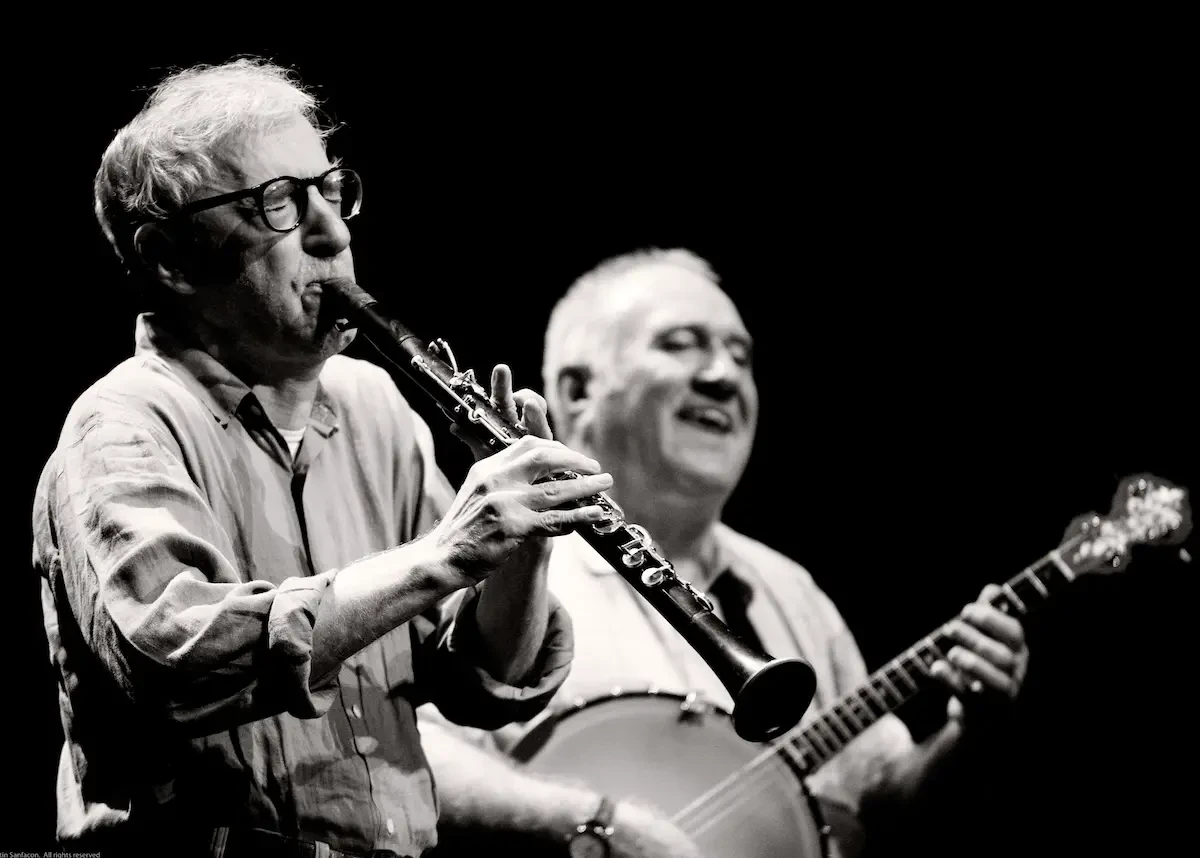
On the other side of the archival spectrum lies the curatorial work of filmmaker, screenwriter, actor, and clarinetist Woody Allen. Throughout his prolific career spanning over six decades, Allen has utilized vintage jazz, swing, and early Dixieland as more than mere background music; he treats it as a foundational narrative grammar. For Allen, classic jazz evokes a romanticized, intellectual, and nostalgic New York or Parisian ethos that mirrors the psychological landscapes of his cinematic characters.
This curation has introduced generations of filmgoers to pre-war masterpieces. From Sidney Bechet’s throbbing, Gallic melodic charm in Midnight In Paris (2011) to Erroll Garner’s velvety, melancholic phrasing in A Rainy Day In New York (2019), Allen’s soundtrack choices demonstrate an encyclopedic knowledge of jazz history. The New Continent compilation Manhattan Swing attempts to bottle this cinematic lightning, gathering classic sides from the 1930s through the 1950s that have punctuated Allen’s filmography.
Track-by-Track Musical Analysis
Johnny Griffin and Thomas Clausen’s Trio: Live In Helsingborg 1990
Recorded live on July 27, 1990, in Helsingborg, Sweden (Storyville 1018548)
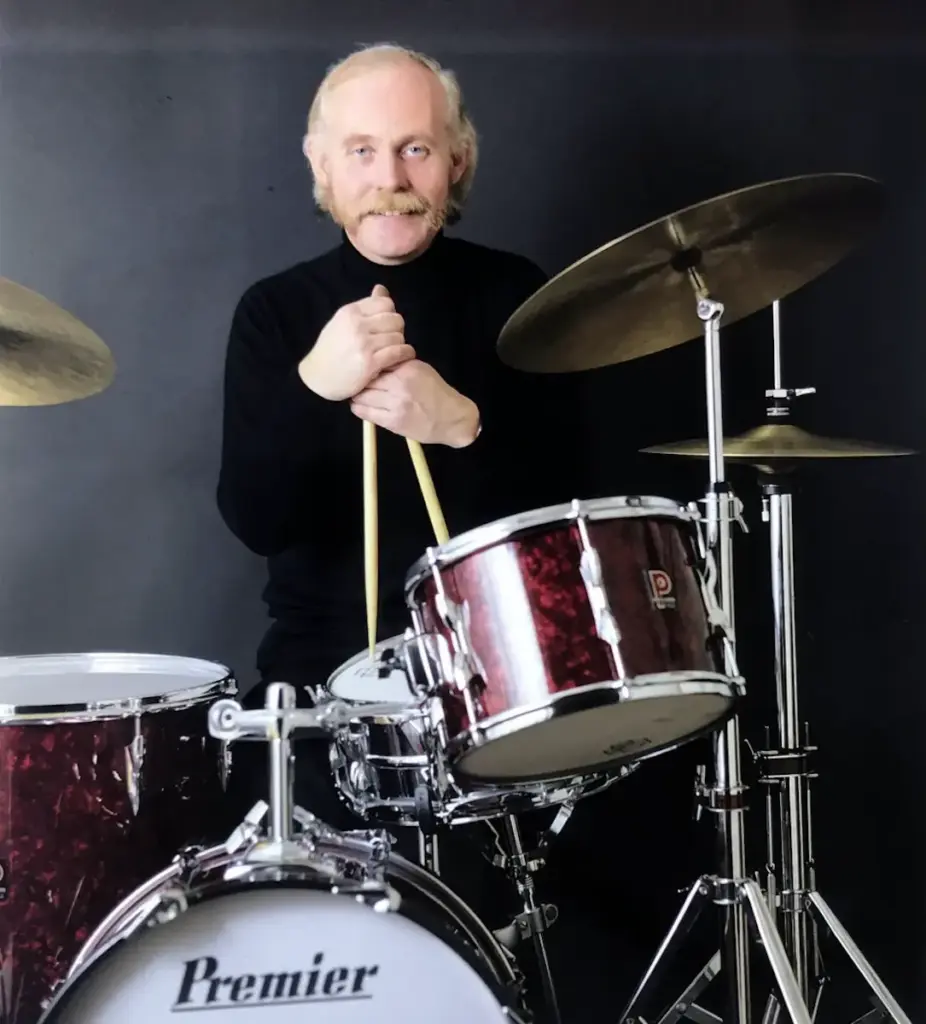
Personnel: Johnny Griffin (ts); Thomas Clausen (p); Mads Vinding (b); Svend-Erik Norregard (d)
The Helsingborg concert captures a spontaneous, high-wire act of musical dialogue. Accompanied by a trio of seasoned Danish musicians who had spent years familiarizing themselves with his musical vocabulary, Griffin wastes no time establishing his authority.
- "Just Friends": Griffin opens the set with characteristic boundless energy. His performance is defined by urgent, fluently fast-fingered runs executed with dizzying precision. Eschewing simple linear solos, he weaves an ingeniously diverse array of rhythmic patterns, punctuating his phrases with his trademark fondness for brief, amusing musical quotes that inject a sense of playful self-awareness into the pyrotechnics.
- "These Foolish Things": This track reveals the secondary, deeply introspective dimension of Griffin’s artistry. Stripping away the breakneck speed of the opener, he offers an intensely expressive, romantic treatment of the melody. His playing here is graced by delicate, highly lyrical improvisation that proves his technical mastery serves emotional storytelling rather than mere empty flash.
- "All The Things You Are": In total contrast to standard interpretations that treat this lovely standard as a relaxed, slow ballad, Griffin and the trio take the tune at an aggressive, upbeat tempo. The classic melody is swiftly dismantled and transformed. Griffin unleashes a torrent of frenetic improvisation, combining breathtaking speed with unrelenting rhythmic drive. While instrumental mastery is undeniably on display, it comes at the stylistic expense of the song’s inherent lyrical beauty—a trade-off characteristic of Griffin’s more adrenaline-fueled live outings.
- "Blue Monk": The concert finds its most stable, swinging equilibrium on this extended (14:30) reading of Thelonious Monk’s classic blues. The slower tempo allows the rhythm section to settle into a deep, muscular pocket. Griffin, Clausen, and bassist Mads Vinding deliver magnificent blues playing, stretching out comfortably. Intriguingly, the track rides out with two choruses of Duke Ellington’s "Time’s A Wastin’," leaving "Blue Monk" seemingly forgotten by the final measure—a testament to the organic, free-flowing nature of the evening.
- "Wee" (Closer): Thomas Clausen contributes strongly to this hectic, breakneck closer, trading ideas with a revitalized Griffin who stretches his phrasing to the absolute limit.
Rhythm Section Dynamics and Acoustic Balance
The Danish trio—featuring pianist Thomas Clausen, bassist Mads Vinding, and drummer Svend-Erik Norregard—sounds thoroughly fired up throughout this off-the-cuff, free-ranging jam. Vinding’s bass work is a marvel of nimble invention and articulation. However, mix engineering introduces minor friction: Vinding appears slightly over-recorded in the acoustic balance, occupying too much sonic real estate in the ensemble. Rather than laying down a steady, foundational propulsive momentum beneath Griffin’s spectacular trajectories, Vinding’s busyness occasionally creates a curiously crowded feel. It can sound as though every member of the quartet is soloing simultaneously—though Griffin, consumed by his own creative momentum, appears entirely unbothered by the thick ensemble texture.
Various Artists: Manhattan Swing – Music From The Movies Of Woody Allen
Compiled by New Continent (New Continent 101049)
This compilation acts as a curated museum of jazz history as filtered through the lens of auteur cinema. It offers an immensely enjoyable, wide-ranging selection that functions as an ideal sampler introduction to jazz for the casual listener.
- The Swing Era Pillars: The collection is anchored by giants of the big band and swing eras. Count Basie’s orchestra glides close to the gorgeous, understated melodies of "Lil’ Darlin’" (Mighty Aphrodite), while Duke Ellington’s ensemble delivers sophisticated elegance on "I Let A Song Go Out Of My Heart" (Melinda & Melinda). Artie Shaw’s smoky "Moonglow" (Alice) and the Benny Goodman Sextet’s nimble "If I Had You" (You Will Meet A Tall Dark Stranger) represent the pinnacle of 1930s clarinet-led sophistication.
- Vocalist Gems: Billie Holiday’s 1936 recording of "Easy To Love" (Anything Else) transports the listener back to her more carefree, youthful recording days with its effortless phrasing. Louis Armstrong stretches out exuberantly at a jogging tempo in his 1931 rendition of "Stardust" (Stardust Memories), balancing vocal warmth with trumpet lyricism. Helen Forrest and Harry James deliver nostalgic comfort with "I’ve Heard That Song Before" (Radio Days), and Tommy Dorsey’s honey-toned trombone defines sentimental romance on "I’m Getting Sentimental Over You" (Radio Days).
- Instrumental Virtuosity: Art Tatum teams up with tenor saxophonist Ben Webster for a breathtaking display of pianistic and harmonic mastery on "My Ideal" (September), and Teddy Wilson delivers a storming, lightning-fast reading of "I Got Rhythm" (Celebrity). A fascinating historical pairing occurs on "Out Of Nowhere" (Deconstructing Harry), which features Coleman Hawkins backed by guitar innovator Django Reinhardt—though purists have long lamented that Reinhardt is denied a solo spot on the track.
- The Stylistic Anomalies: The compilation includes puzzling selections that drift outside the core jazz idiom. Domenico Modugno’s Italian pop standard "Volare" (misspelled on the cover as Nel Blue Dipinto Di Blue instead of Nel Blu, Dipinto Di Blue) and Tony Bennett’s soaring traditional pop ballad "Because Of You" (Wonder Wheel) feel like stylistic anomalies in a jazz-focused collection. Nevertheless, despite their departure from the genre, they provide agreeable listening that aligns with Allen’s eclectic, nostalgic soundtrack aesthetic.
Supporting Context, Archival Standards, and Metrics
A critical examination of these two releases reveals a stark contrast in archival integrity and discographical presentation. In the modern music market, physical releases—whether on compact disc or premium 180-gram vinyl—rely heavily on metadata, accurate sessionography, and rigorous quality control to justify their existence in an era of infinite streaming.
Archival Comparison Matrix
| Metric / Feature | Johnny Griffin Trio: Live In Helsingborg 1990 (Storyville) | Manhattan Swing – Music From The Movies Of Woody Allen (New Continent) |
|---|---|---|
| Primary Genre | Hard Bop / Live Club Jazz | Swing / Traditional Jazz / Soundtrack Compilations |
| Release Format | Compact Disc / Digital Streaming | 180-gram Vinyl / Digital |
| Personnel Data | Complete and accurate (Griffin, Clausen, Vinding, Norregard) | Partial/Incomplete (Only featured lead artists named) |
| Recording Dates | Explicitly documented (July 27, 1990) | Completely omitted across all tracks |
| Target Audience | Hard-core jazz collectors and tenor sax enthusiasts | Casual listeners, film buffs, and introductory buyers |
| Sound Reproduction | Raw, immediate, club-atmosphere fidelity | Excellent studio-master sound quality on vinyl |
| Editorial Polish | High standard, complete tracklisting and timing (65:44) | Marred by typographical errors (e.g., Nel Blue Dipinto Di Blue) |
The Archival Deficits of Compilation Marketing
While New Continent’s Manhattan Swing boasts exceptional vinyl sound reproduction, it falls frustratingly short of professional archival standards. For the dedicated jazz collector, the omission of original recording dates and complete personnel rosters (beyond the primary bandleaders) represents a significant missed opportunity. Furthermore, careless typographical errors—such as the misspelling of Modugno’s Italian classic on both the outer sleeve and tracklisting—undermine the academic credibility of the release.
Conversely, Storyville Records approaches its archival vault releases with scholarly precision. The Helsingborg recording provides exact venue details, complete personnel, track durations, and a contextualized liner-note essay that helps the listener navigate the nuances of Griffin’s performance style. Storyville treats the live tape not merely as a commercial product, but as an historical document worthy of preservation.
Official Statements and Critical Reception
Industry reception to archival releases of this nature often highlights the tension between commercial accessibility and niche historical preservation.
Jazz critics reviewing Storyville’s release of the Helsingborg concert have universally praised the raw, unfiltered energy of Johnny Griffin’s late-career playing. In contemporary jazz journalism circles, the consensus suggests that while Griffin’s technical execution occasionally outpaces structural nuance—such as on the hyper-speed transformation of "All The Things You Are"—the sheer vitality of his tone justifies the recording’s unpolished edges. A spokesperson for Storyville Records noted during the album’s rollout:
"Live recordings from this era capture the artist away from the commercial constraints of the American studio system. In European clubs, players like Griffin found an audience that treated jazz not as background ambiance, but as high art, allowing them to stretch compositions far beyond their standard parameters."
Regarding Manhattan Swing, soundtrack critics and film historians have lauded the conceptual brilliance of pairing Woody Allen’s cinematic framing with foundational jazz history. However, cultural critics have frequently pointed out the commercial motivations behind unauthorized or public-domain European compilation labels (such as New Continent). While these releases operate legally within specific international copyright frameworks (often utilizing European copyright extension laws for pre-1972 sound recordings), they bypass royalty mechanisms for surviving estate descendants and archival institutions. A prominent jazz archivist commented on the proliferation of such cinematic jazz compilations:
"Releases tied to prominent cultural figures like Woody Allen successfully lower the barrier to entry for younger audiences, introducing them to Louis Armstrong and Art Tatum. Yet, they risk reducing a century of complex socio-musical history to a cinematic aesthetic, often packaged with sloppy discographical scholarship."
Future Outlook: The Viability of Jazz Archiving
As the physical music market continues to navigate the digital transition, the future of jazz archiving stands at a critical crossroads. The release of live club tapes like Johnny Griffin’s Helsingborg concert and themed compilations like Manhattan Swing points toward two distinct paths for the genre’s preservation.
1. The Niche Collector Market and Archival Vaults
Labels specializing in deep-archive jazz preservation—such as Storyville, Blue Note, and Resonance Records—rely on a dedicated base of audiophiles and historians who demand unreleased session tapes, high-fidelity transcriptions, and exhaustive liner notes. The economic viability of these physical releases depends on treating music packaging as an art form in its own right. Moving forward, successful archival projects will likely incorporate high-resolution digital audio files, expanded photo books, and direct-to-consumer digital ecosystems to satisfy collectors who view physical ownership as a tactile connection to jazz history.
2. Cinematic Curation as an Educational Gateway
The continued success of film-tied jazz compilations demonstrates that cinema remains the most powerful recruitment tool for the genre. As streaming algorithms increasingly dictate musical discovery, physical and curated digital soundtracks serve as vital narrative bridges. Future releases in this vein will need to address criticisms of poor scholarship by integrating interactive digital liner notes via QR codes or companion websites, thereby bridging the gap between casual film fans and serious jazz scholarship.
Ultimately, whether through the breakneck, fire-breathing hard-bop of Johnny Griffin in a Swedish jazz club or the smooth, romantic swing of a Woody Allen cinematic montage, the enduring vitality of jazz proves that great recorded performances transcend their original temporal and physical boundaries. They continue to challenge, comfort, and captivate listeners across generations.