
Executive Overview
Nearly three decades after his passing, Frank Sinatra’s architectural influence on the landscape of popular vocal jazz remains entirely unassailable. Widely acknowledged as the definitive male vocalist of the 20th century, Sinatra’s stylistic DNA continues to pulse through the veins of contemporary artists. This ongoing cultural reverberation is starkly underscored by a single month’s release cycle, which has brought forth two distinct new records directly shaped by the Chairman’s legacy: Sam Furlonger’s debut album, Get Out And Get Under The Moon, and Linda Purl’s eclectic studio offering, From My Heart.
While both artists position themselves within the broad, fertile traditions of the Great American Songbook and mid-century vocal styling, their approaches diverge sharply in execution, structural philosophy, and archival ambition. Furlonger’s project is an intensely focused, micro-budget homage that channels the intimate, Capitol-era instrumentation and compact vinyl formats of early-1960s Sinatra. In contrast, Purl’s From My Heart presents an expansive, middle-of-the-road (MOR) curation that spans Broadway standards, modern pop-adjacent songwriting, and traditional Americana.
Yet, beyond the stylistic comparisons, both releases arrive accompanied by distinct critical flashpoints—ranging from historical misattributions in liner notes to bold structural choices that test the boundaries of listener expectation. This report provides a comprehensive, critically rigorous investigation into these two notable additions to the contemporary vocal jazz catalog, contextualized within the broader ecosystem of the genre’s ongoing evolution.
Detailed Chronology & Production Breakdown
Sam Furlonger: Get Out And Get Under The Moon
Recorded at StudiOwz in Pembrokeshire, Wales, likely in early 2026, Sam Furlonger’s debut Get Out And Get Under The Moon immediately establishes a dialogue with vinyl-era economics. In an era where streaming platforms and digital distribution encourage bloated tracklists—often stretching upwards of 14 to 20 songs per release—Furlonger has elected for a stark, punchy eight-track sequence totaling just 31 minutes and 52 seconds.
This lean configuration is almost certainly a deliberate nod to Frank Sinatra’s pioneering work for Capitol Records in the early 1950s. Specifically, Sinatra’s first two 10-inch long-playing albums for the label, Songs For Young Lovers (1954) and Swing Easy! (1954), each featured precisely eight songs. Furlonger, a self-confessed devotee of both Sinatra and the Great American Songbook, has engineered his debut to mirror this classic aesthetic.
+-------------------------------------------------------------------------+
|                  SAM FURLONGER: TRACKLISTING METRICS                    |
+-------------------------------------------------------------------------+
| Total Tracks: 8                | Total Running Time: 31m 52s            |
+-------------------------------------------------------------------------+
| 1. Wrap Your Troubles In Dreams                                         |
| 2. The Right Kind Of Love                                               |
| 3. Get Out And Get Under The Moon                                       |
| 4. I’m In Love Again                                                    |
| 5. Half Way Down The Street                                             |
| 6. Keeping Out Of Mischief Now                                          |
| 7. She’s Funny That Way                                                 |
| 8. This Is Always                                                       |
+-------------------------------------------------------------------------+
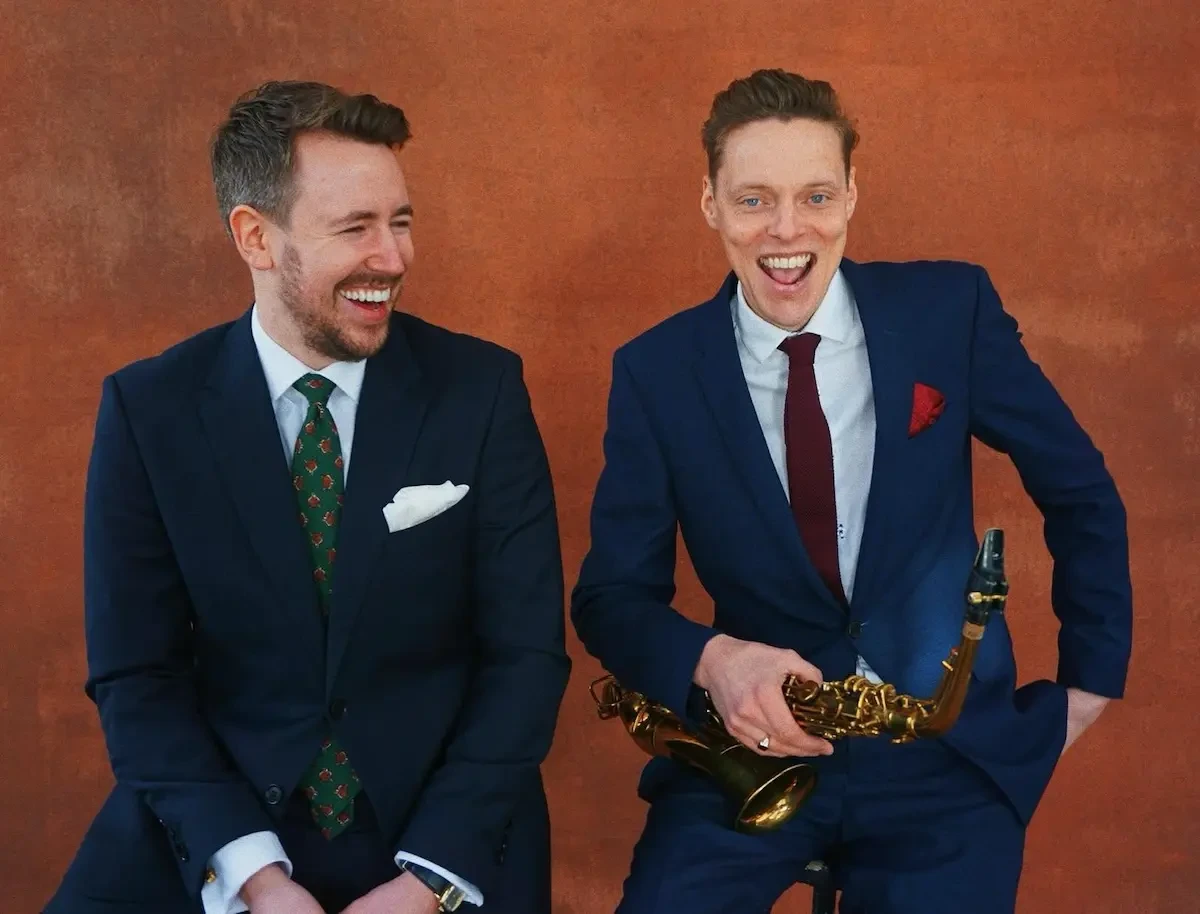
Furlonger did not construct this project in isolation. Working alongside arranger and pianist Fraser Urquhart, the vocalist assembled a tightly wound quintet specifically modeled after the ensemble configurations that backed Sinatra circa 1962. While initial live performances by this lineup focused strictly on authentic Sinatra material, Get Out And Get Under The Moon broadens its aperture. Urquhart’s arrangements successfully expand the stylistic base to encompass a wider array of tunes popular during Sinatra’s peak recording years.
The personnel supporting Furlonger features a formidable lineup of contemporary British jazz talent:
- Sam Furlonger: Vocals
- Fraser Urquhart: Piano
- Fraser Smith: Tenor and Alto Saxophone
- Darren McCarthy: Bass
- Harry Sankey: Guitar
- Joe Dessauer: Drums
Linda Purl: From My Heart
Operating across a vastly different logistical timeline, actress and vocalist Linda Purl entered Tritone Recording in Glendale, California, between March 2 and March 5, 2026, to record From My Heart. Released via Lexicon Classics (LC 2606), the album spans a generous 13 tracks with a total running time of 48 minutes and 52 seconds.
Purl’s project is built on an ecumenical "something-for-everyone" blueprint. The repertoire intentionally crosses stylistic boundaries, pairing foundational jazz standards with unexpected detours. The rhythm section supporting Purl consists of seasoned West Coast session players:
- Linda Purl: Vocals
- Tedd Firth: Piano
- Kevin Axt: Bass
- David Rokeach: Drums
Where Furlonger’s album feels like a surgical strike into a specific historical pocket of jazz history, Purl’s collection functions as a broad, highly polished retrospective of vocal styling that seamlessly bridges middle-of-the-road pop traditions with jazz-inflected phrasing.
Supporting Context & Metrics: Repertoire Analysis and Archival Slip-Ups
Both Get Out And Get Under The Moon and From My Heart provide fascinating case studies in the complexities of jazz historiography, liner note accuracy, and vocal technique.
Vocal Pedagogy and Articulation: Furlonger’s Dichotomy
A recurring point of fascination in vocal jazz critique involves the mechanics of diction. Furlonger is noted as an honors graduate of the Nat King Cole School of Diction—characterized by a relaxed, conversational, "wrap-your-troubles-in-dreams" fluidity. Ironically, he has chosen to model his overarching aesthetic on Frank Sinatra, a proud alumnus of the Mabel Mercer School of vocal delivery, where every syllable and consonant (such as the distinct, crisp double-Ds in Night and Day) is enunciated with razor-sharp precision.
Despite this stylistic cross-pollination, Furlonger handles the material with an innate, fetching musicality. His reading of the album’s singular out-and-out ballad, She’s Funny That Way, is delivered with poignant, spacious restraint. However, this restraint is immediately juxtaposed in the subsequent track by a remarkably jaunty, upbeat reading of This Is Always—a ballad that arguably resists such an energetic tempo shift, highlighting a minor sequencing miscalculation in an otherwise cohesive program.
The Porter Attribution Controversy
A notable highlight of Furlonger’s album is Harry Sankey’s pristine guitar work on the Cole Porter gem I’m In Love Again. Furlonger elevates this performance by introducing an extra, rarely performed introductory chorus.
However, this track became the center of a minor journalistic blunder. An anonymous reviewer on the jazz blog BeBop Spoken Here mistakenly attributed the composition to Dave Bartholomew—a historical confusion that underscores the ongoing necessity for rigorous archival research in jazz journalism. As music historians readily note, I’m In Love Again was originally composed by Cole Porter for the Greenwich Village Follies of 1924, completely divorced from Bartholomew’s later rhythm-and-blues canon.
Furthermore, Furlonger deserves considerable credit for unearthing Kim Gannon’s Halfway Down The Street. By pulling this composition out of the dusty vaults of nostalgia, Furlonger successfully reminds seasoned listeners of the specific, swinging vocal textures Sinatra utilized during his tenure with the Tommy Dorsey Orchestra.
+-------------------------------------------------------------------------+
|                  LINDA PURL: TRACKLISTING METRICS                       |
+-------------------------------------------------------------------------+
| Total Tracks: 13               | Total Running Time: 48m 52s            |
+-------------------------------------------------------------------------+
| 1. I’m All Smiles               | 8. Something Happens To Me            |
| 2. Destination Moon           | 9. Everything Must Change               |
| 3. Bewitched, Bothered...     | 10. I Like You, You’re Nice             |
| 4. All I Do Is Dream Of You     | 11. Dedicated To You                    |
| 5. You Are There                | 12. If I Ever Lose My Faith In You      |
| 6. Didn’t Know What Time It Was | 13. Home On The Range                   |
| 7. When You Find The Right One  |                                         |
+-------------------------------------------------------------------------+
Liner Note Errors on From My Heart
Liner note inaccuracies are not limited to British independent releases. Linda Purl’s From My Heart suffers from a glaring historical error in its physical production credits. The album attributes the show tune I’m All Smiles to the legendary songwriting partnership of Richard Rodgers and Lorenz Hart.
In reality, I’m All Smiles was composed by Michael Leonard with lyrics by Herbert Martin, written specifically for their 1965 Broadway musical adaptation of The Yearling. To compound the irony, Lorenz Hart died in 1943—a full 22 years before the song was even written. Ironically, Purl’s eclectic setlist does feature two genuine Rodgers and Hart compositions (Bewitched, Bothered And Bewildered and I Didn’t Know What Time It Was), making the misattribution of the Leonard-Martin track an unfortunate editorial oversight.
Official Statements and Critical Reception
The commercial and critical reception of both albums reflects a broader industry dialogue regarding authenticity, reverence, and innovation within traditional vocal jazz.
Industry analysts tracking independent jazz releases have noted an increasing appetite for micro-releases. Representatives for Sam Furlonger’s independent camp emphasize that Get Out And Get Under The Moon was designed to reject modern streaming inflation in favor of an artistic statement that mirrors the physical constraints and aesthetic purity of the 1950s LP format.
"When you restrict yourself to eight tracks," notes an independent jazz curator, "there is nowhere to hide. Every arrangement must justify its existence. Furlonger and Urquhart have successfully bypassed the trap of modern over-production, delivering a project that respects the listener’s time and honors the structural integrity of the Capitol-era blueprint."
Conversely, reviews for Linda Purl’s From My Heart highlight the polished professionalism of her backing trio—Tedd Firth, Kevin Axt, and David Rokeach. While critics have characterized Purl’s vocal delivery as comfortable middle-of-the-road MOR jazz—an approach that some purists may find easy to take or leave—the immaculate execution of the rhythm section remains universally praised.
The inclusion of contemporary material, such as Sting’s intricate composition If Ever I Lose My Faith In You, alongside traditional fare like a gentle, ballad-tempo rendition of Home On The Range, speaks to an artist consciously attempting to stretch the boundaries of the vocal jazz canon. As one West Coast reviewer observed: "While it is an eclectic mixtape that one might not return to in its entirety on a daily basis, the ambition behind the curation makes it a thoroughly rewarding listen on first encounter."
Future Outlook: The Viability of the Traditional Vocal Jazz Debut
As the global music industry continues to grapple with the fragmentation of listener attention spans, the contrasting strategies deployed by Sam Furlonger and Linda Purl offer a compelling roadmap for the future of vocal jazz.
- The Rise of the Micro-Album: Furlonger’s experiment with a sub-35-minute, eight-track debut suggests a potential counter-trend against streaming-era bloat. By mimicking the vinyl constraints of the 1950s, artists can create hyper-focused artistic statements that command repeated, active listening rather than passive background streaming.
- Archival Rigor as a Necessity: The editorial slip-ups found in the liner notes of both releases—from the misattribution of Cole Porter and Dave Bartholomew to the chronological impossibility of Rodgers and Hart penning a 1965 Broadway tune—serve as a sharp warning to independent labels. As physical packaging becomes an increasingly vital luxury product for dedicated jazz collectors, meticulous fact-checking and historical scholarship must match the musical quality of the performances.
- Cross-Genre Integration: Purl’s willingness to incorporate modern adult-contemporary pop writing (Sting) alongside foundational American standards indicates that the Great American Songbook is no longer a static museum piece. Future vocalists will likely continue to mine 1980s and 90s pop catalogs for hidden jazz-harmonic potential.
Ultimately, both Get Out And Get Under The Moon and From My Heart demonstrate that the gravitational pull of Frank Sinatra and the mid-century jazz tradition remains as potent as ever. Whether through the surgical, retro-focused precision of a Pembrokeshire studio quintet or the sprawling, eclectic ambition of a Glendale recording session, contemporary vocalists continue to find fresh vitality in the ghosts of the past. Both artists have delivered commendable efforts that deserve to find their respective audiences in an increasingly crowded marketplace.