
Executive Overview
The modern music streaming landscape stands at a critical technological and philosophical crossroads. For years, digital service providers (DSPs) have championed algorithms designed to maximize engagement, optimize discovery, and streamline the continuous delivery of audio content. However, the meteoric rise of generative artificial intelligence has flooded streaming platforms with millions of synthetic tracks, pushing DSPs, artists, and listeners into uncharted territory.
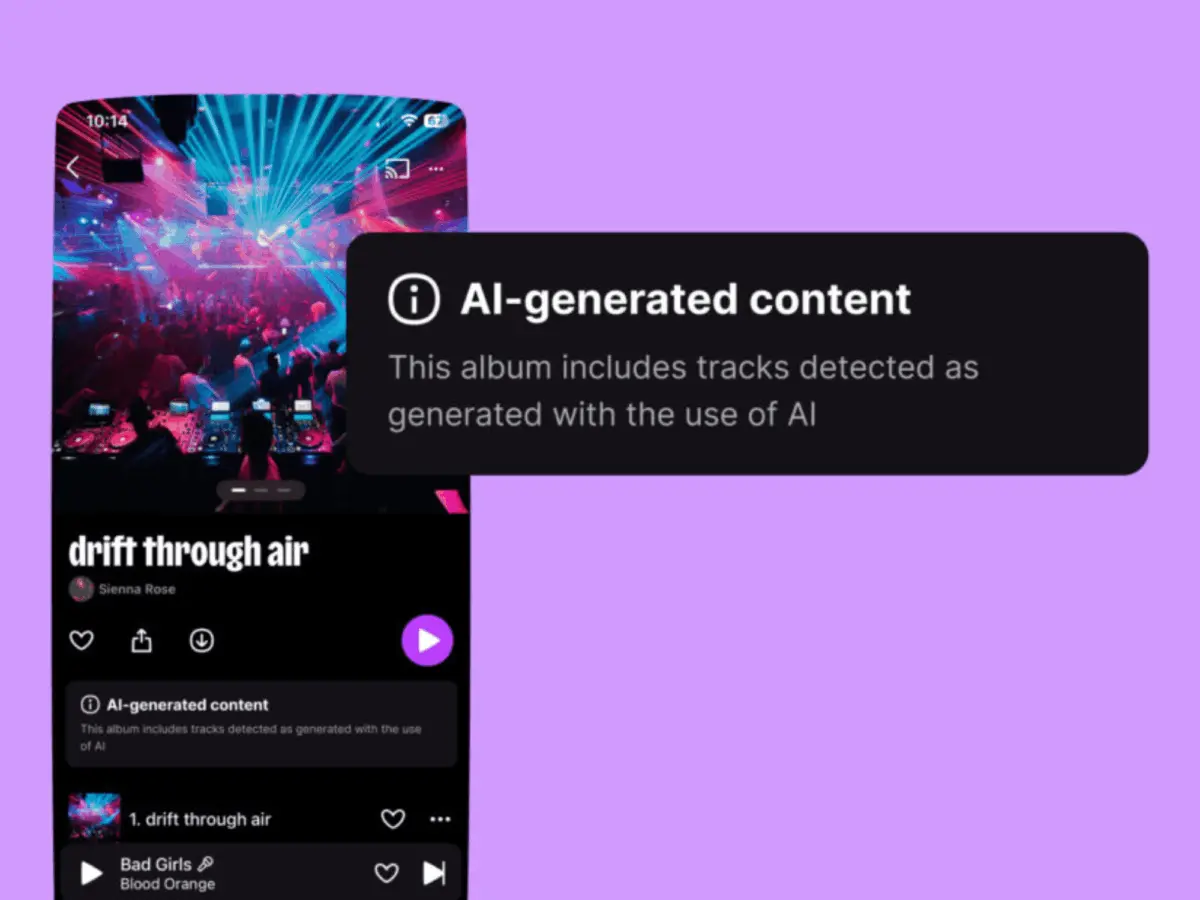
Amidst this tidal wave of automated audio, French music streaming giant Deezer has emerged as a vocal proponent of transparency, data accountability, and platform curation. In a major industry development, Deezer has announced a groundbreaking feature scheduled for rollout before the end of 2026: a dedicated "human-only" on/off toggle. This mechanism will empower users to fully exclude 100% AI-generated music from their listening experiences, searches, and algorithmic recommendations.
This move is not merely a reactionary PR gesture; it is backed by concrete data, aggressive platform detection measures, and evolving consumer sentiment. According to recent demographic and market research, a significant portion of the streaming audience actively resents the unmonitored integration of synthetic tracks into their personal rotations.
Simultaneously, the broader audio technology sector is witnessing a fascinating dichotomy. While consumers increasingly demand protections against synthetic music consumption, independent creators are rapidly adopting non-generative AI tools to enhance their production workflows. Innovations like Playhead—a tool that leverages text prompts to build customized digital signal processing (DSP) chains without training models on copyrighted master audio—demonstrate that artificial intelligence can serve as a brush for human artists rather than a robotic replacement.
This article investigates the mechanics of Deezer’s upcoming filtration toggle, the scale of synthetic audio infiltration, consumer attitudes revealed by recent polling, and the parallel rise of non-generative AI production software that respects the sanctity of human artistry.
Detailed Chronology: The Road to the "Human-Only" Switch
To understand the weight of Deezer’s 2026 announcement, one must trace the timeline of how generative AI transformed from a futuristic novelty into an administrative crisis for music streaming platforms.
Early 2023: The Floodgates Open
As accessible text-to-music and voice-cloning models matured, independent creators and bad actors alike began uploading millions of AI-generated tracks to digital distribution pipelines. Platforms that traditionally relied on low-friction uploading processes found themselves unprepared for the velocity at which synthetic tracks could be produced. Unlike human artists, who require weeks or months to write, record, mix, and master an album, automated generation tools could churn out thousands of tracks per day, optimized to game recommendation engines and exploit royalty pools.
2024–2025: Detection and Defensive Measures
Recognizing the threat posed by algorithmic manipulation and listener alienation, Deezer adopted an aggressive posture toward automated content identification. Rather than quietly absorbing synthetic tracks into its catalog, the company invested heavily in detection infrastructure designed to flag, isolate, and remove non-human audio creations.
By January 2025, Deezer’s internal monitoring systems had reached a massive operational scale. The platform successfully detected and excluded more than 42 million AI-generated tracks from user recommendations. This figure underscored the sheer volume of synthetic noise infiltrating modern DSP pipelines, validating fears that uncurated feeds would soon be choked by automated compositions.
November 2025: The Consumer Mandate
As the debate surrounding generative audio intensified, empirical data began to paint a clear picture of user sentiment. A joint study conducted by Deezer and global market research firm Ipsos in November 2025 revealed that nearly half—45%—of all music streaming users explicitly desired the ability to filter out 100% AI-generated music from their platforms. This statistic provided the quantitative justification needed for executive leadership to move past passive content filtration and invest in user-facing controls.
Late 2026 and Beyond: The Human-Only Toggle
Building on its historical transparency and aggressive backend filtering, Deezer formally announced that it would hand direct control over to the consumer. Before the close of 2026, the platform will introduce a fully integrated on/off switch. This control will allow listeners to scrub their search queries, radio stations, and algorithmic feeds clean of AI-generated tracks, establishing a clear precedent for user-autonomous curation in the streaming era.
Supporting Context & Metrics: The Scale of Synthetic Audio
The decision by Deezer to implement a human-only listening filter is rooted in hard metrics and shifting psychological paradigms among music consumers. To fully grasp the necessity of this feature, industry analysts must examine the quantitative realities of the current streaming economy.
Quantifying the Infiltration: 42 Million Tracks and Beyond
The milestone of 42 million detected and excluded tracks is a staggering indictment of open-access streaming vulnerabilities. To put this figure in perspective, many major DSP catalogs boast total inventories of roughly 100 million tracks. If left unchecked, synthetic audio risked eclipsing human-created music within recommendation engines, effectively drowning out independent and major-label artists alike.
These AI-generated uploads are often deployed in "stream-farming" operations. Automated scripts stream synthetic tracks on loop—sometimes lasting only a few seconds or minutes—to siphon micro-royalties from the central pool. By keeping these tracks out of user recommendations and restricting their visibility, Deezer has taken a proactive stance in protecting the integrity of its payout ecosystem.
The Ipsos Insights: Consumer Skepticism vs. Convenience
The November 2025 Deezer/Ipsos study remains the definitive benchmark for understanding public attitudes toward synthetic media in music. Key takeaways from the research included:
- The 45% Threshold: Nearly half of survey respondents expressed a direct desire to curate AI out of their listening experience entirely. This demographic views music as an inherently human art form rooted in emotional resonance, lived experience, and cultural struggle.
- The Trust Deficit: Consumers reported growing anxiety over accidental exposure to AI-generated tracks, particularly in curated playlists where provenance is rarely disclosed.
- Demand for Transparency: Beyond mere filtering, listeners expressed an overwhelming preference for mandatory labeling, though many noted that a total opt-out switch is the only foolproof method to guarantee authenticity.
+--------------------------------------------------------------------------+
|                 Deezer / Ipsos Study Metrics (November 2025)             |
+--------------------------------------------------------------------------+
|  Metric                                             | Percentage         |
+--------------------------------------------------------------------------+
|  Users wanting to filter out 100% AI-generated music | 45%                |
|  AI tracks excluded from recommendations (Jan 2025)  | 42+ Million        |
+--------------------------------------------------------------------------+
Official Statements & Industry Perspectives
The announcement of Deezer’s human-only toggle has elicited reactions from across the global music industry, highlighting a sharp division between technological optimists and traditional rights holders.
Industry executives have long voiced concerns that generative AI threatens the economic foundations of copyright law. When AI models are trained on vast corpuses of copyrighted master recordings without authorization or compensation, the resulting synthetic output acts as a parasitic substitute for human labor. Deezer’s leadership has consistently positioned the company as an ally to creators, arguing that platform trust relies on preserving the intrinsic value of human performance.
"Music is a deeply human expression," notes industry commentary surrounding Deezer’s transparency initiatives. "When listeners press play on a streaming service, they are seeking a connection with another human being—their stories, their pain, their joy. Synthetic generation strips that connection away, replacing art with automated calculus."
While major record labels have pursued legal avenues against unauthorized AI training datasets, consumer-facing platforms like Deezer are realizing that the battle must also be fought at the interface level. By giving users the tools to curate their own sonic environments, Deezer is effectively weaponizing consumer preference against the influx of low-quality, automated spam.
The Other Side of the Coin: Non-Generative AI in Production
While the conversation around generative AI is dominated by fears of replacement, plagiarism, and catalog saturation, a parallel technological movement is empowering artists in ways previously thought impossible. Crucially, this movement separates generative music creation from audio processing and enhancement.
The Rise of Playhead: Redefining Digital Signal Processing
A prime example of ethical, artist-centric AI implementation is found in Playhead, an innovative piece of music production software compatible with all major digital audio workstations (DAWs). Rather than generating a melody, beat, or full song from scratch, Playhead acts as an intelligent translator for a producer’s creative vision.
Founded by Shelby Stevens, Playhead allows creators to describe the desired sonic character of their recorded audio using evocative, metaphorical text prompts. In a public demonstration, Stevens instructed the software to process a clean electric guitar recording so that it sounded like "a choir of angels shattering a crystal chandelier."
Instead of generating a new audio file out of thin air, Playhead’s underlying AI analyzes the user’s specific stem or track. It then constructs a bespoke digital signal processing (DSP) chain—intricately combining compression, EQ, saturation, reverb, and modulation effects—to achieve the requested vibe.
Ethical AI: Protecting the Creator
The critical distinction between tools like Playhead and controversial generative music models lies in their interaction with source material:
- No Training on Copyrighted Master Audio: Playhead’s AI does not ingest copyrighted songs to learn how to mimic specific artists or generate competing compositions.
- Preservation of Human Agency: The software operates strictly as a plugin within the artist’s workflow. The resulting DSP chain is merely a suggestion; producers and engineers retain full control to fine-tune, tweak, or discard parameters to preference.
- Enhancement Over Replacement: Tools like this honor the original performance. The human artist’s guitar recording remains the emotional and acoustic anchor of the track; the AI simply serves as an advanced mixing assistant that translates abstract artistic language into technical parameters.
Future Outlook: Navigating the New Sonic Ecosystem
As the industry marches toward the late 2020s, the trajectory of artificial intelligence in music is bifurcating into two distinct streams: the administrative battleground of consumer streaming and the specialized workshop of independent production.
1. The Proliferation of User-Side Filtration
Deezer’s decision to launch a human-only toggle by the end of 2026 is expected to set a new industry standard. As consumer awareness grows, rival streaming platforms—including Spotify, Apple Music, and Amazon Music—will face mounting pressure to introduce similar filtration mechanisms. Users will increasingly demand sovereignty over their algorithmic diets, refusing to let unvetted synthetic tracks dilute their personal music libraries.
2. The Legal and Regulatory Landscape
The regulatory frameworks governing AI training data and copyright protection are evolving rapidly. As courts begin to rule on whether scraping copyrighted music to train generative models constitutes copyright infringement, streaming platforms will need to implement robust cryptographic watermarking and provenance tracking. Technologies capable of certifying whether a track is human-made, AI-assisted, or 100% synthetic will become standard infrastructure for digital distributors.
3. A Harmonious Coexistence for Creators
Ultimately, the music industry is learning to draw a hard line between replacement and augmentation. Consumers have made it clear through data like the Deezer/Ipsos study that they do not want computers writing their favorite songs. However, as tools like Playhead prove, human creators are more than willing to embrace intelligent software that expands the boundaries of sound design without compromising artistic integrity.
The future of music is not an all-or-nothing technological dystopia. Instead, it is becoming a highly customizable ecosystem where listeners can filter out the digital noise, and artists can harness advanced tools to push the boundaries of human expression further than ever before.