
Executive Overview
As the instrumental music education community prepares for its premier annual gathering, anticipation is reaching a fever pitch. The 80th Midwest Clinic is officially scheduled to take place from December 16–18, 2026, at the expansive McCormick Place West in Chicago, Illinois. Recognized globally as the foremost international band and orchestra conference, this monumental milestone event will draw tens of thousands of educators, conductors, student musicians, industry executives, and composers from across the globe. Attendees will immerse themselves in three intensive days of world-class performances, groundbreaking pedagogical clinics, networking opportunities, and an immense exhibit hall featuring the latest innovations in music technology, publishing, and instrumentation.
However, beneath the glamour of premier ensemble performances and cutting-edge professional development lies a formidable antagonist: the punishing Chicago winter. For first-time attendees and seasoned veterans alike, navigating the Windy City in mid-December requires meticulous planning, tactical wardrobe curation, and specialized gear. The transition from heavily heated convention spaces to the razor-sharp, sub-freezing winds sweeping off Lake Michigan can catch even the most experienced travelers off guard.
To ensure that conference-goers spend their time focusing on musical excellence rather than physical discomfort, industry experts and seasoned convention veterans have synthesized a comprehensive packing manifesto. Beyond the standard professional attire and instruments, surviving—and thriving at—the 80th Midwest Clinic demands a strategic approach to luggage management, physical endurance, and emergency preparedness. This guide provides an authoritative roadmap to outsmarting the elements, protecting your health, preserving your wardrobe, and maximizing every square inch of your suitcase.
Detailed Chronology & Event Framework
To understand the necessity of specialized packing for the Midwest Clinic, one must first examine the operational rhythm of the conference itself. The schedule is relentless, highly demanding, and structured to extract maximum value from every single hour of the three-day event.
Pre-Conference Preparation (Months to Weeks Prior)
Months before touching down in Illinois, attendees must secure their credentials. Registration is currently open through official channels, and early action is heavily encouraged to streamline arrival logistics. Concurrently, educators must coordinate travel arrangements, ensuring that hotel accommodations within proximity to McCormick Place West are locked in. Packing strategy must begin here, as the limitations of airline baggage allowances—especially when contending with bulky winter outerwear—require early logistical calculation.
Day One: Arrival, Orientation, and the Initial Chill
The opening day of the Midwest Clinic typically sets a high-energy tone. Attendees arrive at McCormick Place West, navigating security, badge collection, and the initial layout of the sprawling exhibit halls.
- The Environmental Shock: Stepping out of transit systems or vehicles into the Chicago microclimate immediately tests the unprepared traveler. Day One is notoriously when unprotected faces go numb and inadequate footwear fails against slush-covered concrete.
- The Operational Challenge: Attendees immediately transition from sub-freezing outdoor corridors to climate-controlled, densely populated indoor convention centers where ambient temperatures fluctuate wildly. Layering is not merely a comfort recommendation on Day One; it is a physiological survival mechanism.
Days Two and Three: The Marathon of Music and Networking
The middle and closing days of the conference blur into a high-speed marathon of clinic sessions, exhibit hall browsing, reading band sessions, and evening marquee concerts.
- Physical Toll: By the afternoon of Day Two, the realities of standing and walking on unforgiving concrete convention floors manifest as acute lower back pain, foot fatigue, and joint strain.
- Social and Professional Demands: Networking dinners, alumni receptions, and late-night showcase concerts mean that attendees are often on their feet for 12 to 14 consecutive hours. Maintaining personal wellness, vocal health, and physical stamina during this stretch dictates the quality of the overall conference experience.
Supporting Context & Metrics: The Anatomy of a Chicago Winter and Conference Demographics
To appreciate the gravity of proper conference preparation, it is vital to analyze the environmental and logistical data surrounding the Midwest Clinic.
Meteorological Realities of Chicago in December
- Average Temperatures: Historical meteorological data for mid-December in Chicago indicates average high temperatures hovering around 35°F (1.7°C) and lows dropping well below freezing to approximately 26°F (-3.3°C).
- The Wind Chill Factor: Because McCormick Place West sits adjacent to Lake Michigan, the wind chill factor frequently plunges ambient temperatures into the single digits or negative numbers. Wind speeds averaging 15 to 25 mph are common, transforming a standard walk from a shuttle stop to an entrance into a harsh alpine simulation.
- Precipitation: December in Chicago brings a statistical likelihood of snow flurries, sleet, or freezing rain, making waterproof, high-traction footwear an absolute necessity rather than an optional luxury.
The Scale of the Midwest Clinic
- Attendance Metrics: The Midwest Clinic consistently attracts over 18,000 attendees from all 50 states and more than 30 countries.
- Exhibitor Footprint: Hundreds of publishing houses, instrument manufacturers, software developers, and university music departments occupy vast exhibition spaces. Navigating this footprint requires covering miles of concrete flooring daily.
- Acoustic and Educational Density: With upwards of 100 clinic sessions and numerous featured ensemble performances, the cognitive load matches the physical load. Eliminating minor stressors—such as clothing stains, equipment failures, or physical fatigue—allows educators to absorb complex pedagogical concepts without distraction.
Essential Packing Strategies: The Ultimate Convention Playbook
Packing for the Midwest Clinic is an exercise in applied logistics. Every item in your luggage must earn its space by serving a distinct, vital purpose. Below is the definitive, expanded breakdown of the essential gear every attendee must incorporate into their travel kit.
1. The Art of Strategic Layering
Relying solely on a heavy coat is a rookie mistake in Chicago. The indoor-outdoor temperature delta requires a modular clothing system.
- Base Layers: Pack thermal tops and bottoms (merino wool or high-grade synthetic moisture-wicking fabrics). They trap body heat without adding bulky silhouette lines under professional concert attire.
- Mid-Layers: Sweaters, cardigans, and long-sleeve button-downs that can be easily shed when entering a packed, overheated clinic room.
- Accessories: Insulated wind-resistant gloves, a heavy-duty wool or cashmere scarf, and a fleece-lined beanie or ear warmers that protect against biting wind gusts.
- Tech Integration: Consider investing in rechargeable electronic hand warmers. When waiting for transit or walking between McCormick Place structures, keeping your hands warm preserves fine motor skills and overall comfort.
2. The Performance Emergency Kit
Instrumental music directors and performers understand that Murphy’s Law governs the stage. A compact "Performance Emergency Kit" saves precious minutes and prevents frantic, overpriced trips to local pharmacies or music shops.
- Contents: Pack extra concert black socks, an assortment of hair ties and bobby pins (for ensemble members and directors alike), specialized instrument reeds, valve oil, cork grease, screwdriver multi-tools, and spare instrument accessories.
- Footprint: The kit does not need to be expansive; a modest Dopp kit or specialized pouch stored inside your instrument case or backpack is sufficient.
3. Combatting Dehydration and Dryness
The combination of harsh winter air outside and forced-air heating systems inside hotels and convention centers creates an arid environment that wreaks havoc on the human body.
- Skincare: Pack a high-grade, travel-sized hand lotion and keep it in your pocket or bag at all times. Without it, knuckles can dry, crack, and bleed within 48 hours of exposure to Chicago’s winter climate.
- Lip Care: High-potency lip balm with SPF or heavy moisturization is mandatory to combat chapping caused by freezing winds.
4. Compression Socks: The Musician’s Secret Weapon
Though initially met with skepticism by first-time attendees, medical-grade or athletic compression socks are a transformative asset for educators spending long hours on convention floors.
- The Biomechanics: Standing on unforgiving concrete floors for hours reduces venous return in the lower extremities, leading to swollen feet, throbbing arches, and severe lower back fatigue.
- The Solution: Compression socks gently squeeze the leg tissues, promoting healthy blood flow back to the heart. They dramatically reduce end-of-day exhaustion and fit seamlessly beneath standard concert black trousers.
5. The Unconventional Travel Hack: Liquid Dish Soap
Seasoned travelers often swear by unconventional items, and standard liquid dish soap tops the list of items that evoke initial doubt followed by absolute conversion.
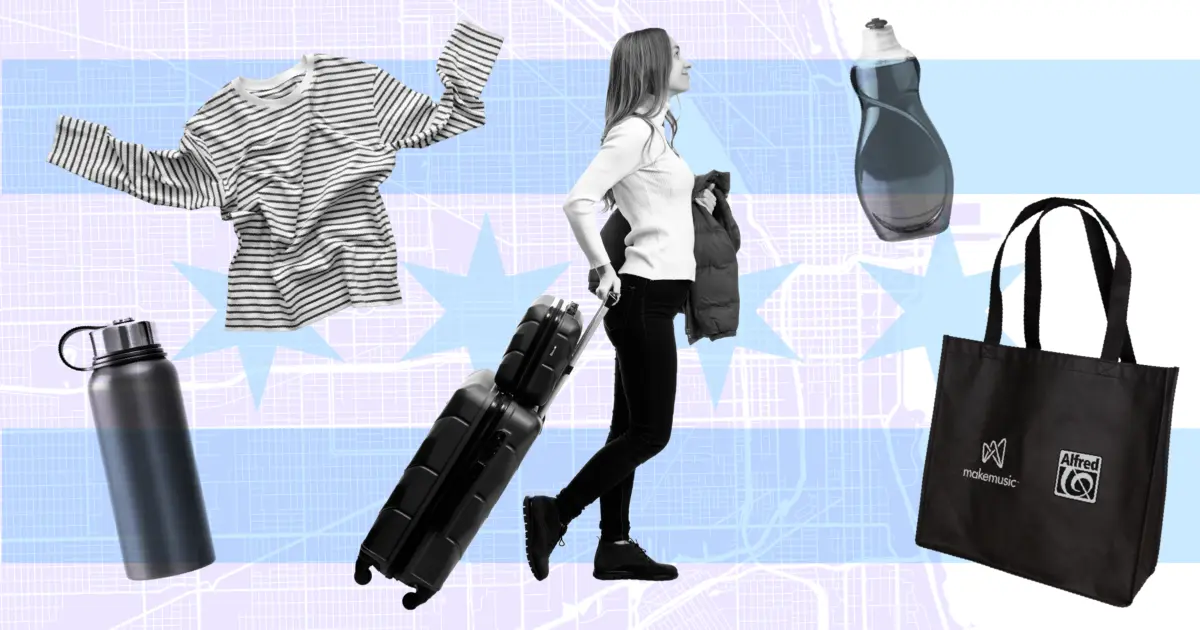
- Hydration Hygiene: Reusable water bottles require daily washing; hotel room sink setups rarely provide adequate cleaning agents for removing residue from electrolytes or coffee. A small travel-sized bottle of dish soap solves this instantly.
- Stain Remediation: Convention environments involve coffee, networking receptions with hors d’oeuvres, and rapid lunch breaks where accidents happen. A drop of dish soap combined with warm water (and accelerated by a hotel hair dryer) can lift grease, coffee, and food stains from blazers, ties, and sweaters in minutes, saving professional attire from permanent ruin.
6. Hydration Management: The Reusable Water Bottle
- Economic Defense: Chicago venues and convention centers often price bottled water at a premium (frequently $7 to $8 per bottle).
- Venue Infrastructure: The Midwest Clinic is exceptionally well-equipped with modern water bottle refilling stations strategically placed throughout McCormick Place West. Bringing a durable, insulated reusable water bottle keeps you hydrated during high-intensity cognitive sessions while saving money.
7. The Dual-Purpose Clean/Dirty Bag
- Luggage Organization: Packing a lightweight canvas tote bag or specialized laundry bag serves a dual function throughout the trip.
- Outbound Utility: On the flight to Chicago, place dirty footwear (such as gym shoes or boots not worn on the plane) inside the canvas bag to isolate them from clean shirts and professional garments in your primary suitcase.
- Inbound Utility: Once checked into your hotel room, hang the canvas bag in the bathroom to act as an instantaneous laundry hamper for worn garments. At the end of the conference, lift the entire bag out and drop it straight into your suitcase, simplifying repacking and post-trip laundry sorting.
8. Space Management for Sheet Music and Exhibitor Souvenirs
The exhibit hall at the Midwest Clinic is a treasure trove of new literature, publisher giveaways, scores, and merchandise.
- The Capacity Problem: Packing for a winter trip in a standard carry-on suitcase leaves very little margin for incoming physical items like full-score orchestra and band arrangements.
- Mitigation: Pack compressible space bags or a lightweight, foldable duffel bag that can be checked on the return flight home.
Official Statements & Exhibitor Spotlight
To support attendees facing luggage constraints or seeking immediate access to the latest educational materials, major industry partners are stepping up operations for the 2026 conference.
MakeMusic Partnership and Booth 1139
For educators who find their suitcases completely maxed out by the end of the conference, physical transportation of bulky scores is no longer an obstacle. MakeMusic has announced an integrated convention presence at Booth 1139, offering direct logistical support.
"We recognize that our attendees are walking away from the Midwest Clinic with an unprecedented volume of new pedagogical resources, physical scores, and exclusive publisher materials," noted a MakeMusic representative in a pre-conference operational brief. "Our goal is to eliminate logistical friction. Through the MakeMusic Shop platform, educators can bypass luggage weight limits entirely, ordering physical music and cutting-edge classroom resources directly from the convention floor for seamless delivery straight to their school or home doorsteps."
In addition to direct-to-door shipping solutions, Booth 1139 will host exclusive conference discounts, interactive software demonstrations, and daily giveaways designed to enhance modern music classrooms. Attendees are encouraged to stop by early to explore the newest pieces performed at the Midwest Clinic and consult with educational technology specialists.
Future Outlook: The Evolution of Music Education Conferences
As the Midwest Clinic approaches its landmark 80th anniversary iteration, the nature of professional development conferences is undergoing a profound evolution. While digital scores, cloud-based rehearsal assistants, and virtual exhibit halls continue to expand, the irreplaceable value of face-to-face musical immersion remains paramount.
The logistics of attending such massive international gatherings reflect a broader trend in professional education: the intersection of high-level intellectual engagement and rigorous personal self-care. Educators who master the operational challenges of travel—weather mitigation, physical endurance, and equipment management—position themselves to absorb the full educational wealth of the conference.
Looking ahead toward the future of instrumental music education, events like the Midwest Clinic will continue to serve as the crucible where pedagogical standards are set, repertoire is standardized, and community bonds are forged. By preparing methodically, packing strategically, and engaging fully with both the musical performances and exhibitor innovations—such as those showcased by MakeMusic and fellow industry leaders—directors will ensure that their 80th Midwest Clinic experience is both professionally transformative and physically comfortable.
For complete, up-to-the-minute scheduling data, interactive exhibit hall maps, housing reservation details, and official registration portals, educational professionals should consult the official web portal at midwestclinic.org and secure their credentials ahead of the December kickoff.