
Executive Overview
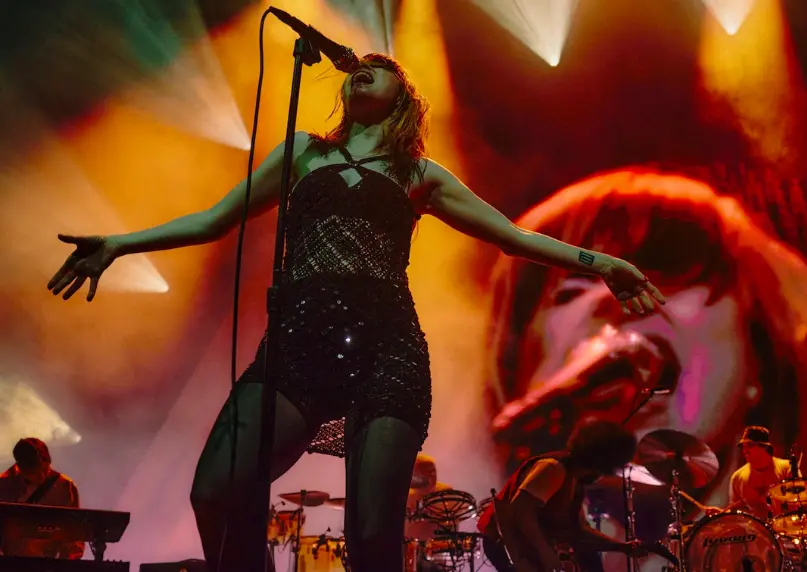
Nearly a decade after captivating the global electronic pop landscape with their critically acclaimed 2016 record Everybody’s Heart Is Broken Now, the Swedish electro-pop avant-garde duo Niki & the Dove have returned. Comprising singer and songwriter Malin Dahlström and producer Gustaf Karlöf, the group has shattered a prolonged hiatus with the announcement of their ambitious forthcoming album, Beauty and Terror.
Far from a conventional collection of singles, Beauty and Terror is structured into four distinct chapters—an architectural choice that Dahlström describes as a “musical novel.” The duo set out to investigate whether the structural pacing, thematic depth, and narrative gravity of long-form literature could be successfully translated into modern electronic composition.
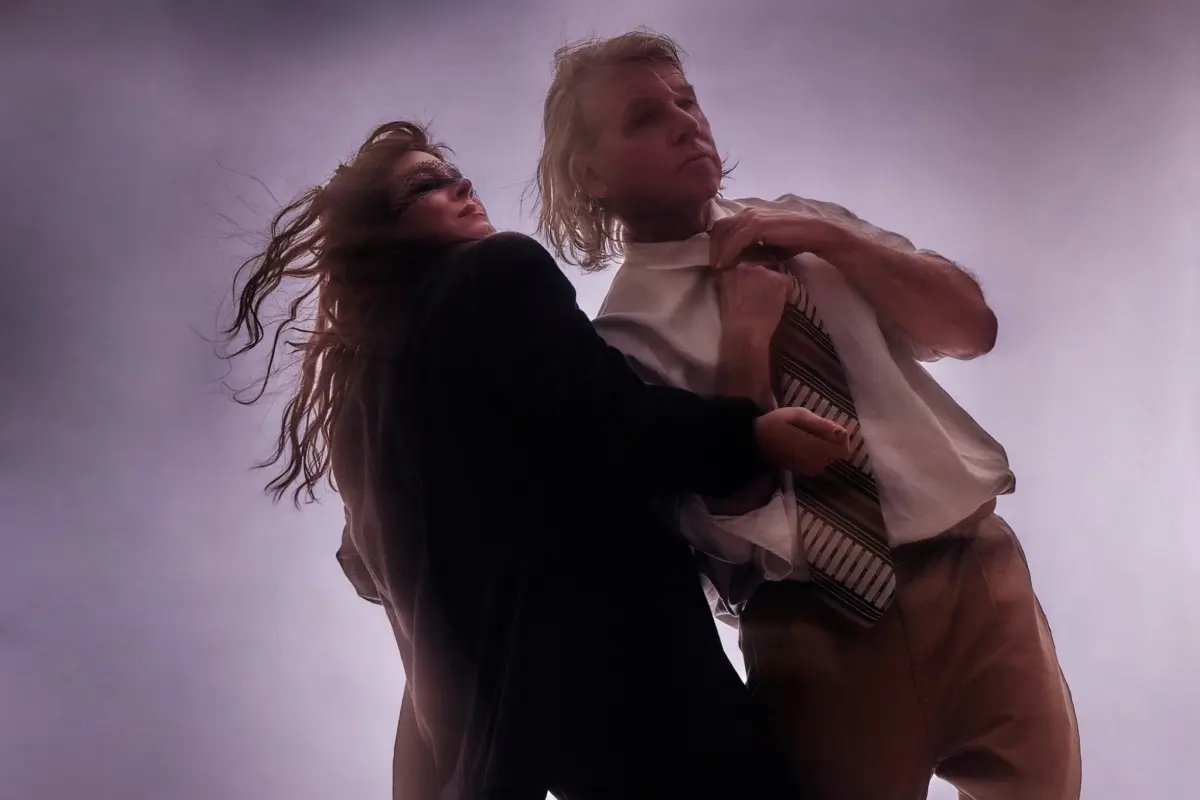
The record’s vanguard is "The Kiss," an evocative opening track that anchors the album’s first chapter. Dealing heavily in the currency of memory, deep human connection, and a subtle, lingering grief, "The Kiss" arrives alongside a cinematic music video that visually mirrors the song’s atmospheric weight.
Rooted in an artistic partnership that originally blossomed within the world of theatrical composition, Niki & the Dove used the enforced isolation and global introspection of the COVID-19 pandemic to completely re-evaluate their artistic trajectory. The resulting album title is drawn from a striking line by poet Rainer Maria Rilke, while the lyrical and aesthetic undercurrents pull deeply from the Gothic romanticism of the Brontë sisters. Yet, even as they dive headfirst into literary and theatrical influences, Dahlström and Karlöf have carefully preserved the shimmering, razor-sharp electro-pop architecture that first defined the Niki & the Dove sound. The record serves as a masterclass in synthesis, drawing inspiration as disparate as Kate Bush, Fleetwood Mac, Prince, and opulent 1970s South American arrangements.
This comprehensive investigative feature explores the genesis of Beauty and Terror, tracing the duo’s creative evolution, the thematic architecture of their "musical novel," and what this monumental return means for the future of electronic pop music.
Detailed Chronology: From Theater Pits to the Pandemic Reset
The Theatrical Roots and Early Formative Years
To understand the conceptual weight of Beauty and Terror, one must retrace the origins of Niki & the Dove back to a creative space far removed from the commercial pop charts. Malin Dahlström and Gustaf Karlöf did not meet in a traditional recording studio or through the standard digital networking channels of modern musicians; rather, their creative partnership was forged in the demanding, collaborative trenches of the theater.
Working as composers for stage productions, both artists developed a keen appreciation for narrative pacing, scene-setting, and emotional subtext. In the theater, music is never purely decorative; it serves as a psychological anchor for the audience, driving the narrative forward in the absence of dialogue. This foundational experience would lie dormant for years, only to re-emerge decades later when the duo decided to approach an entire album with the structural rigor of a literary novel.
When Niki & the Dove burst onto the international consciousness in the early 2010s, they immediately established themselves as a singular force within Scandinavian electronic music. Their early output blended tribal rhythms, soaring vocal melodies, and a dark, nocturnal mystique. However, the path of an independent electronic act is rarely linear.
The Intervening Years and Everybody’s Heart Is Broken Now
By 2016, the duo released their sophomore full-length album, Everybody’s Heart Is Broken Now. The record was a vibrant, synth-soaked homage to 1980s R&B, Minneapolis funk, and sophisticated pop songwriting. It earned critical praise for its warmth, kinetic energy, and emotional vulnerability.
Yet, following the promotional cycle of that record, the machinery of the modern music industry ground to a halt for the duo. As years turned into half a decade, fans and critics alike wondered what had become of the Stockholm-based outfit. The silence was not born of creative exhaustion, but rather of a deliberate choice to step away from the relentless treadmill of album-tour-repeat cycles.
The Pandemic Pause and the Great Re-Evaluation
Then came 2020. The COVID-19 pandemic brought the global music industry to an unprecedented standstill. While many artists rushed to record lo-fi quarantine albums or flood streaming platforms with digital content, Dahlström and Karlöf took a radically different approach: they stopped entirely and began to pick apart everything they had built thus far.
During this period of enforced isolation and global uncertainty, the duo initiated a profound re-evaluation of their material, their working methods, and their artistic identity. They stripped away the expectations of what a modern electronic pop act "should" sound like in an era dominated by short-form TikTok snippets and single-driven playlist strategies. Instead, they retreated into a space of deep reflection.
It was during this pandemic reset that the foundational concept for Beauty and Terror began to take shape. Freed from commercial deadlines, Dahlström and Karlöf asked themselves a daring question: What if we stopped writing songs as isolated pieces of content and instead constructed a unified, long-form literary journey?
Supporting Context & Metrics: The Literary, Cinematic, and Musical DNA of the Album
The "Musical Novel" Framework
The structural backbone of Beauty and Terror is its division into four distinct chapters. In literary terms, a chapter break provides the reader with a moment to pause, digest, and mentally transition into a new phase of the narrative arc. Dahlström and Karlöf sought to replicate this exact cognitive experience through sound.
"We wanted to explore the form of the novel, and whether we could translate it into music," Dahlström explains. This ambition places the album in rare company. Throughout the history of recorded music, artists have occasionally attempted rock operas, concept albums, and song cycles (such as The Who’s Tommy, Pink Floyd’s The Wall, or more recently, Janelle Monáe’s sci-fi android suites). However, Niki & the Dove’s approach is distinct in its specific dedication to the pacing and psychological depth of 19th-century and modernist fiction.
Each of the four chapters on Beauty and Terror functions as a movement within a larger story, guiding the listener through shifting emotional landscapes—from the initial intoxicating rush of connection to the inevitable disillusionment, isolation, and eventual transcendence that characterizes the human experience.
Literary and Poetic Influences: Rilke and the Brontës
The album’s evocative title, Beauty and Terror, is lifted directly from a line by the celebrated Bohemian-Austrian poet Rainer Maria Rilke, whose work frequently grappled with the sublime terror of human existence, beauty, and mortality. Rilke famously wrote in the Duino Elegies that "beauty is nothing but the beginning of terror, which we are barely able to endure." This philosophical underpinning dictates the emotional temperature of the record; it is music that acknowledges the radiant warmth of love while staring unflinchingly into the abyss of grief and uncertainty.
Complementing Rilke’s poetic philosophy is the heavy influence of Gothic romanticism, specifically drawn from the works of the Brontë sisters (Charlotte, Emily, and Anne). The windswept moors, tragic passions, psychological confinement, and fierce independence found in novels like Wuthering Heights and Jane Eyre heavily informed Malin Dahlström’s lyrical vision. This literary lineage gives Beauty and Terror a timeless, almost spectral quality—anchored in modern electronic production yet haunted by the ghosts of 19th-century romantic literature.
Sonic Architecture and Musical Touchstones
While the conceptual framework is deeply literary, the sonic execution remains undeniably tied to the high-art electro-pop architecture that Niki & the Dove have spent over a decade perfecting. The duo’s signature sound—characterized by cavernous reverb, pulsing analog synthesizers, dynamic percussion, and Dahlström’s soaring, emotive vocal delivery—serves as the primary vehicle for the narrative.
However, the palette has expanded dramatically. To achieve the lush, cinematic scope required for a "musical novel," Dahlström and Karlöf cast a wide net across musical history, pulling in unexpected and sophisticated touchstones:
- Kate Bush: The patron saint of theatrical, literary-minded pop music, whose fearless commitment to dramatic vocal delivery and unconventional song structures clearly echoes throughout the record.
- Fleetwood Mac: Specifically channeling the legendary band’s knack for marrying deeply personal, emotionally fraught interpersonal drama with immaculate, stadium-sized pop arrangements.
- Prince: Incorporating the late icon’s sensual rhythmic grooves, Minneapolis funk sensibilities, and willingness to blend high-art experimentation with undeniable pop hooks.
- 1970s South American Arrangements: A surprising and rich textural influence, introducing intricate acoustic string arrangements, percussion loops, and harmonic progressions borrowed from the tropicalia and bossa nova movements of South America.
Official Statements and Artistic Philosophy
Unpacking "The Kiss"
Serving as the emotional gateway to the entire project, the opening track "The Kiss" bears an immense amount of weight. As the anchor for the first chapter, the song is designed to set the thematic rules of engagement for the listener.
Lyrically, "The Kiss" reflects on the complex architecture of human memory—how a single fleeting moment of profound connection can ripple across a lifetime, carrying with it both exquisite joy and a subtle, pervasive grief. It captures that precise psychological juncture where realization hits that a moment, once passed, can never be relived in exactly the same way.
Accompanying the track’s release is a meticulously crafted music video. In alignment with the duo’s theatrical background, the visual component avoids cheap performance tropes in favor of a narrative-driven, highly atmospheric short film. The video translates the song’s themes of memory and subtle grief into striking visual metaphors, utilizing shadow, light, and choreography to mirror the spatial depth of the music.
The Duo on Creative Rebirth
In recent interviews discussing the rollout of Beauty and Terror, Dahlström and Karlöf have emphasized that this album represents more than just a comeback—it is a total artistic rebirth.
"When you step away from the industry for as long as we did, especially during something as globally paradigm-shifting as the pandemic, you are forced to confront why you make art in the first place," Karlöf notes. "You realize that you cannot simply repeat formulas. The music has to demand to exist."
By grounding their creative process in literature, philosophy, and theatrical pacing, Niki & the Dove have insulated themselves against the fleeting trends of the modern streaming economy. They are not trying to manufacture a viral TikTok moment; they are inviting the listener to sit down, put on a pair of good headphones, turn off the lights, and experience an album from start to finish—just as one would open the first page of a compelling novel.
Future Outlook: The Implications of Beauty and Terror
As the music world prepares for the full release of Beauty and Terror, the record arrives at a fascinating cultural crossroads. In an era dominated by algorithmically generated playlists, hyper-compressed 120-second tracks, and passive background listening, Niki & the Dove are swimming resolutely against the current.
By demanding active engagement through a four-chapter "musical novel" structure, the duo is taking a bold gamble. They are betting that contemporary audiences—weary of disposable pop content—are hungry for art that demands patience, rewards repeated listening, and possesses genuine literary and emotional depth.
What Lies Ahead
- The Chapter Rollout: Following the premiere of "The Kiss" and the first chapter, industry analysts expect Niki & the Dove to roll out the remaining chapters of the album systematically, treating each phase of the release like the unveiling of a multi-part literary work.
- Live Performance Integration: Given their extensive background in theater and the cinematic scope of Beauty and Terror, fans and promoters are already speculating about ambitious, theatrical live shows. Rather than standard club gigs, the duo’s new material practically begs for immersive, staging-heavy concert experiences that merge lighting, narrative performance, and electro-pop soundscapes.
- A Blueprint for Independent Pop: Should Beauty and Terror achieve the critical and commercial resonance its early singles promise, it could serve as a vital blueprint for veteran indie-pop artists seeking a path forward—proving that creative longevity is not achieved by chasing youth or algorithmic trends, but by deepening one’s artistic vocabulary and embracing uncompromising ambition.
Ultimately, Beauty and Terror stands as a testament to the power of the creative pause. By retreating from the noise, looking backward into Gothic literature and 20th-century poetry, and looking inward through a global crisis, Malin Dahlström and Gustaf Karlöf have crafted what may well turn out to be the defining artistic statement of their career.