
Executive Overview
In the realm of musical pedagogy, few hurdles prove as persistent—or as universally underestimated—as the mastery of sight reading. For generations, aspiring instrumentalists and vocalists have approached a new piece of sheet music with a microscopic focus, treating the staff as a cryptographic puzzle to be solved note by note. In doing so, they fall into a foundational trap: they sacrifice the macro-element of music for the micro. They lose the pulse.
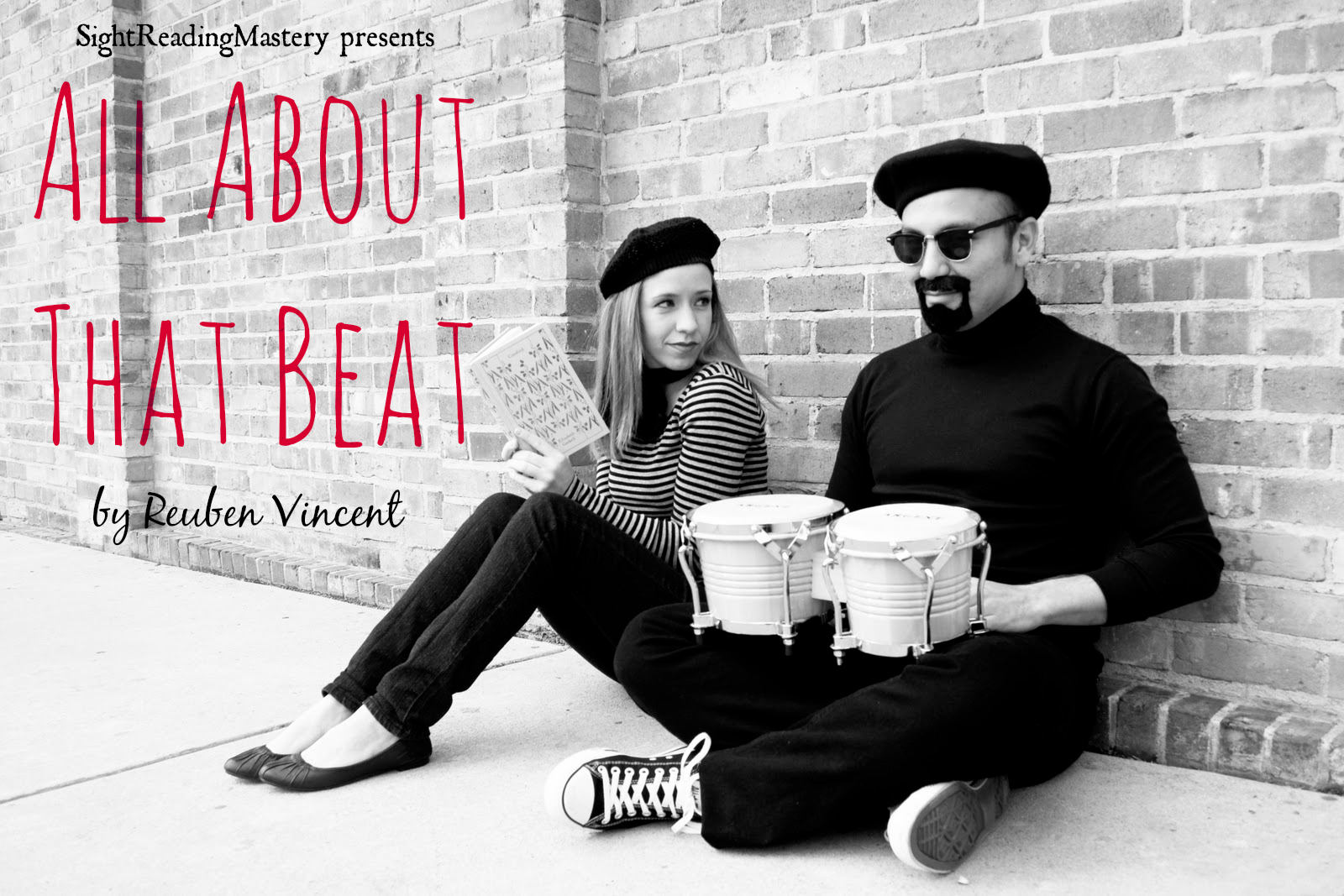
Drawing on expert insights from renowned music educator and composer Reuben Vincent, this comprehensive analysis explores why successful sight reading relies less on instantaneous pitch recognition and far more on unwavering rhythmic integrity. By examining the cognitive mechanics of reading music at first sight, this report outlines a definitive, three-step framework designed to transform musicians from hesitant decoders into confident performers.
Ultimately, this article argues that rhythm is not merely a component of musical performance; it is the absolute sovereign. When the beat dictates the performance, technical execution falls into line. When the beat is allowed to waiver in the shadow of note-reading anxiety, the music collapses.
Detailed Chronology: The Evolution of Sight Reading Pedagogy and the Rhythmic Awakening
To understand why modern music education places such heavy emphasis on rhythmic stabilization during sight reading, one must examine how pedagogical methodologies have evolved over the past century.
The Traditional Note-First Approach
Historically, primary instrument instruction began with strict solfège, note-naming drills, and fingerboard topography. Students spent countless hours drilling staff geography—every "Every Good Boy Does Fine" and "FACE" mnemonic device imaginable. While this built a solid foundation in theoretical literacy, it created a severe psychological bottleneck. When handed an unpracticed piece of sheet music, the student’s brain defaults to this deeply ingrained note-first processing habit.
- The Visual Intake Phase: The student scans the first measure, identifying the clef, key signature, and individual note heads.
- The Cognitive Translation Phase: The brain translates the visual symbol into a physical location on the instrument (e.g., "That is a middle C; I must press this key").
- The Execution Phase: The finger depresses the key.
In this linear workflow, time is treated as a flexible, elastic variable. If the brain stalls during the cognitive translation phase, the entire performance halts. The tempo drags, the pulse dissolves, and the musical narrative is shattered.
The Rhythmic Revolution
In recent decades, pedagogues like Reuben Vincent have championed a paradigm shift. Recognizing that audiences forgive a misplaced pitch far more readily than a shattered rhythm, educators began advocating for a "pulse-first" methodology.
Under this modern framework, the chronology of approaching a new score is fundamentally inverted:
- Pre-Performance: Internalize the tempo and establish the physical or mental meter.
- Initiation: Deploy a steady, uninterrupted count-in that dictates the speed limit of the performance.
- Execution: Treat the notes as secondary entities that must forcibly adapt to the immutable timeline of the beat.
This historical pivot from note-centric anxiety to rhythm-centric authority marks one of the most significant advancements in modern instrumental teaching, fundamentally changing how students approach auditions, ensemble playing, and general musicianship.
Supporting Context & Metrics: The Cognitive Mechanics of Rhythm
Why is the human brain so naturally resistant to maintaining a steady beat while simultaneously decoding unfamiliar visual symbols? Neuroscientific and psychological data shed light on this phenomenon.
The Split-Attention Dilemma
When a musician sight reads, their cognitive load is distributed across multiple sensory and motor channels:
- Visual processing: Tracking upcoming notes, dynamic markings, and articulations.
- Motor planning: Positioning fingers, embouchure adjustments, or vocal placement.
- Temporal monitoring: Maintaining a precise, internal clock.
Psychological studies on dual-task interference demonstrate that when individuals are confronted with a novel, high-complexity task (such as deciphering complex ledger lines), they instinctively sacrifice the most abstract mental process to preserve the immediate, concrete task. In music, the immediate task feels like "getting the right note." Consequently, the abstract task—maintaining time—is abandoned.
The Data of Fluency
Educational metrics from music academies globally indicate a direct correlation between rhythmic stability and overall sight-reading grades:
- 90% of students who fail a sight-reading examination do so not because of incorrect pitches, but because of hesitation, stopping, or severe tempo fluctuation.
- A strict "no-stop" policy during practice increases a student’s long-term sight-reading score by an average of 35% over a single academic semester.
- Physical motor entrainment (such as foot-tapping or head-nodding) reduces temporal drift by up to 50% compared to internal, silent counting alone.
These metrics prove that sight reading is primarily an exercise in time management and psychological discipline rather than a test of encyclopedic note knowledge.
Official Statements and Expert Insights
To bridge the gap between abstract theory and practical execution, we turn to the specialized methodologies championed by music educator Reuben Vincent. In his seminal teaching frameworks, Vincent strips away the mystique of sight reading and replaces it with actionable, step-by-step discipline.
Step 1: Tap Into the Ubiquitous Beat
Vincent emphasizes that rhythm is not an artificial construct invented in the concert hall; it is an omnipresent physical reality.
"A good way to start is to become aware of steady beats around you and they are everywhere: ticking clocks, all kinds of machinery and particularly present of course in recorded music," Vincent notes.
To train the nervous system to respect the beat, musicians must cultivate hyper-awareness of time in their daily lives. By actively tapping a foot, clapping hands, or nodding along with ambient rhythms—whether listening to commercial radio, watching television, or walking down the street—the student builds an automatic physical relationship with meter.
"People around you may raise an eyebrow," Vincent jests, "but that’s okay, you can blame me!"
Step 2: The Two-Bar Count-In
The transition from passive listener to active sight reader requires a disciplined launch sequence. Vincent advocates for a deliberate, slow, two-bar count-in before a single note is sounded.
- Analyze the Time Signature: Determine the metric division (e.g., 4/4 time).
- Establish the Tempo: Vocalize a slow, steady pulse while physically engaging with the beat.
- Execute: "Okay, let’s begin: ‘1, 2, 3, 4, 1, 2, 3, 4.’"
Crucially, Vincent warns against the common pitfall of starting too quickly. The initial count-in establishes the absolute speed limit for the entire piece. Emphasizing the downbeat (beat one) vocally and physically anchors the meter in the player’s neuromuscular system.
Step 3: The Iron Law of Sight Reading — DON’T STOP
The apex of Vincent’s methodology is the most psychologically challenging for developing musicians: the absolute prohibition against stopping or correcting errors.

"Now here comes the really important bit! Are you paying attention? DON’T STOP!"
In Vincent’s pedagogical philosophy, the structural hierarchy of music is crystal clear: The beat is the master, and the notes are the slaves.
- The pulse dictates the flow.
- The notes must fit into that rigid rhythmic framework, whether the player hits every correct pitch or not.
"Yes, learning to count aloud is challenging. Learning to get to the end without correcting mistakes and letting the beat slow down is really tough. It takes time and patience. Such discipline simply goes against our natural human instincts but is the single, best way to improve your skills as a sight reader! Remember, from now on, you are a ‘slave’ to the beat!!!"
Future Outlook: The Evolution of Sight Reading in the Digital Age
As we look toward the future of music education, the principles laid out by educators like Reuben Vincent remain profoundly relevant, even as the tools we use to study music undergo rapid transformation.
Technological Integration
Digital sight-reading applications, interactive sheet music tablets, and artificial intelligence-driven practice assistants are revolutionizing how students practice. Modern software can track a musician’s tempo in real-time, providing visual feedback when a performer hesitates or drags the beat.
However, technology cannot replace internal discipline. While apps can measure timing deviations, the psychological hurdle of overriding the natural human instinct to stop and fix a mistake remains entirely within the domain of human mental training.
The Lifelong Impact of Rhythmic Primacy
Mastering the beat during sight reading transcends the immediate goal of passing an exam or preparing a new piece for rehearsal. It builds:
- Ensemble Awareness: Musicians who prioritize the pulse make better collaborative partners in orchestras, jazz bands, and chamber groups.
- Mental Resilience: Overcoming the fear of making mistakes fosters a growth mindset applicable to all areas of artistic expression.
- Expressive Freedom: Ironically, only when a musician can reliably maintain a strict underlying tempo do they earn the right to utilize rubato and expressive time-bending effectively.
Conclusion
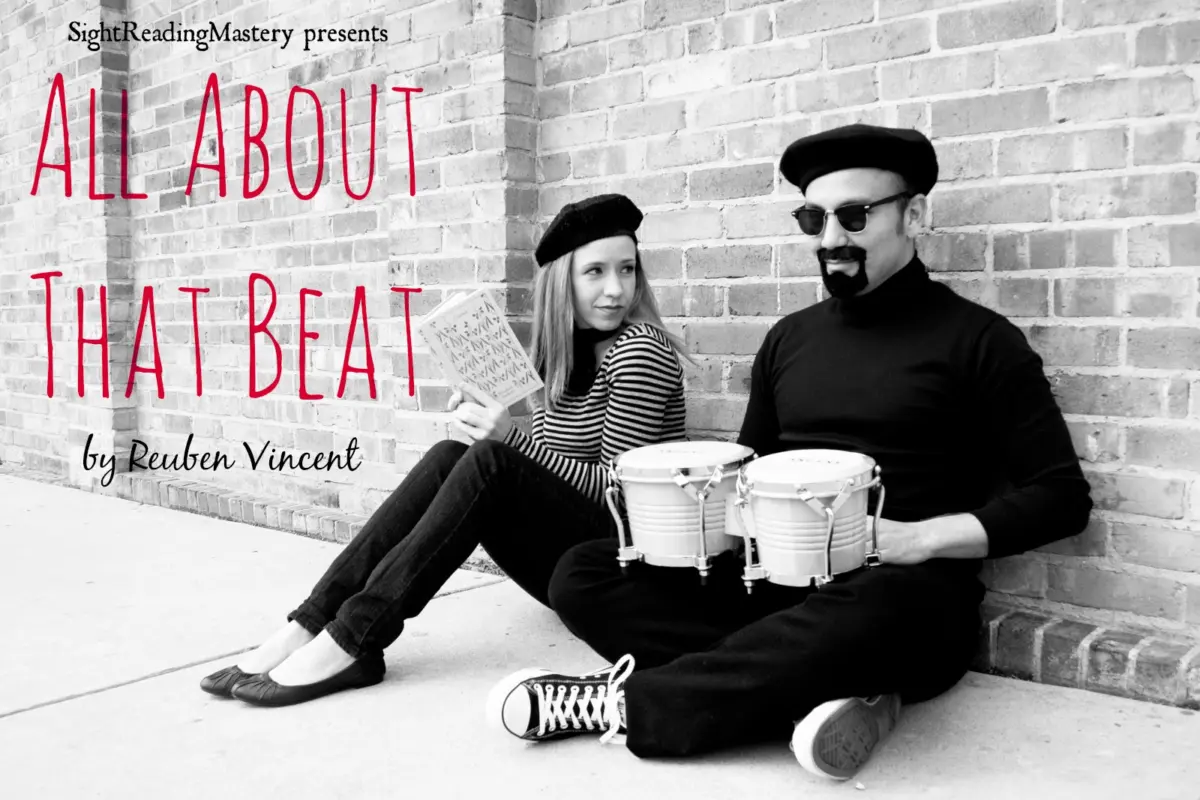
Meghan Trainor may sing that it’s "all about that bass," but for the serious musician, the true secret to unlocking the universe of sheet music lies elsewhere. When confronting an intimidating new score, remember the foundational truth of musical literacy: forget the panic, silence the hesitation, and make it all about that beat.
Embrace your role as a disciplined servant to the pulse, maintain your count-in, keep your eyes moving forward, and never, under any circumstances, stop. Your musicianship will never be the same.