
Executive Overview
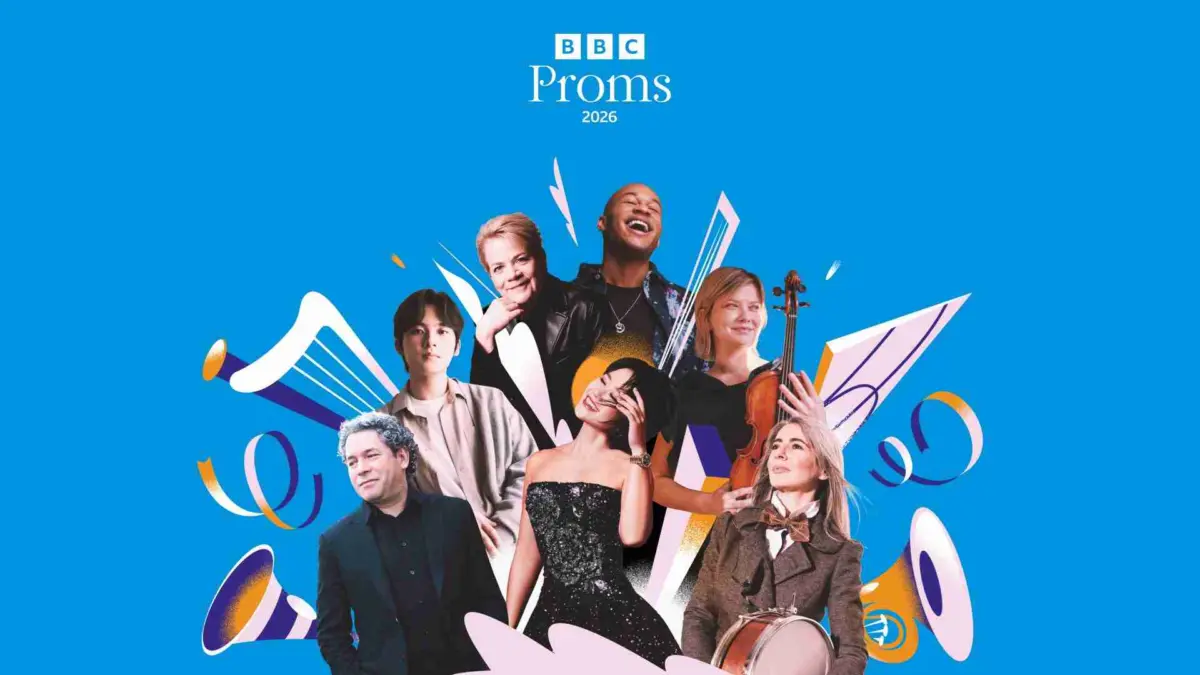
From July 17 to September 12, 2026, the global classical music community will cast its collective gaze toward London’s iconic Royal Albert Hall and venues nationwide for the inauguration of the BBC Proms 2026 season. Unveiled today, this year’s festival is an exercise in monumental scale and acute artistic focus, boasting 86 distinct concerts across eight intensive weeks, featuring upwards of 3,000 musicians, and cementing its status as the world’s largest and most expansive classical music festival.
Yet, the sheer magnitude of the numbers—including over 70,000 legendary £8 arena and gallery standing tickets—tells only part of the story. The 2026 season arrives with a distinct, compelling narrative: a transatlantic dialogue that celebrates the 250th anniversary of the United States Declaration of Independence, while simultaneously doubling down on the BBC’s enduring commitment to British creativity, regional inclusivity, and genre-defying accessibility.
Balancing monumental international star power with grassroots community engagement, the 2026 Proms functions as both a living laboratory for contemporary composition and a grand museum of canonical masterpieces. With 20 world and UK premieres, groundbreaking multi-genre collaborations, and an expanding national footprint that stretches from Bristol to North Wales, the festival continues to evolve while honoring its foundational democratic mission: great music for the widest possible audience.
Detailed Chronology: A Season in Motion
The eight-week trajectory of the 2026 BBC Proms is meticulously mapped to take audiences on an evolving journey of historical commemoration, symphonic blockbusters, and radical contemporary explorations.
The Opening Curtain: Setting the Transatlantic Tone
The festival opens on July 17 with a First Night that immediately establishes the season’s dual identity. Underpinning the American Bicentennial commemorations, the programme weaves together the distinct musical idioms of Aaron Copland, George Gershwin, and Maurice Ravel, culminating in a highly anticipated BBC-commissioned world premiere by contemporary British composer Josephine Stephenson.
Mid-Summer Highlights: American Heavyweights and European Masters
As the season hits its stride in late July and August, the Royal Albert Hall will play host to historic international returns. Most notably, the Los Angeles Philharmonic makes its long-awaited return to the Proms under the baton of Gustavo Dudamel—an absence stretching across nearly a quarter of a century. Shortly thereafter, the legendary Metropolitan Opera Orchestra makes its historic Proms debut under Yannick Nézet-Séguin, bringing a sumptuous, sweeping reading of works by Richard Strauss and Gustav Mahler to Kensington Gore.
Simultaneously, the festival’s core international roster features recurring titans—the Berlin, Munich, and Oslo Philharmonic orchestras—alongside exciting debuts from the Spanish National Orchestra and the Mahler Academy Orchestra. Piano aficionados will find themselves spoiled for choice, with a glittering keyboard roster featuring Martha Argerich, Yuja Wang, and Yunchan Lim sharing the spotlight with violin virtuosi Augustin Hadelich and Leonidas Kavakos.
The Contemporary Pulse: Premieres and Living Legacies
August and early September will serve as a showcase for the Proms’ relentless commissioning muscle. The season features 20 premieres, including 17 BBC commissions that span generations. Nonagenarian luminaries such as Thea Musgrave and Betsy Jolas share the contemporary billing with established voices like Mark-Anthony Turnage and the next generation of talent featured in the annual Young Composer showcase.
Among the standout contemporary moments are the UK premieres of Wynton Marsalis’s sweeping Concerto for Orchestra and Jessie Montgomery’s evocative new Cello Concerto. Meanwhile, a major centenary tribute to Miles Davis underscores the Proms’ unwavering institutional embrace of jazz as an essential pillar of contemporary orchestral and improvisational art.
The Grand Finale: The Last Night of the Proms
The festival concludes on September 12 with the traditional Last Night of the Proms, steered by Chief Conductor Sakari Oramo leading the BBC Symphony Orchestra and Chorus. Breaking new ground for the historic institution, superstar pianist Yuja Wang will tackle Samuel Barber’s virtuosic Piano Concerto—a first in the history of the Last Night—ensuring that the season signs off with both time-honored patriotic spectacle and daring, boundary-pushing artistry.
Supporting Context & Metrics: The Anatomy of a Mega-Festival
To understand the logistical and cultural footprint of the BBC Proms, one must examine the metrics that underpin its eight-week operation.
- Concert Volume & Reach: 86 concerts presented over 58 days, broadcast in their entirety across BBC Radio 3, BBC Sounds, and extensively on television and BBC iPlayer, building directly upon the record-breaking digital engagement of previous years.
- Orchestral Backbone: The BBC’s own in-house ensembles anchor the calendar with no fewer than 42 appearances, supported by a vast collaborative network of 41 UK-based orchestras and choirs.
- Accessibility and Inclusion: True to its founding ethos, the Proms continues to prioritize physical and financial access. Over 70,000 tickets are priced at just £8 for the legendary Arena and Gallery standing spaces. Furthermore, the 2026 season expands its accessibility initiatives through relaxed performances and the integration of cutting-edge assistive music technology, such as the pioneering Clarion concerto—an instrument played entirely via tablet interfaces.
- National Expansion: Moving far beyond the M25, the Proms’ UK-wide footprint features dedicated residencies in Bristol and the North-East, alongside a historic, first-ever visit to Mold in North Wales, bringing world-class orchestral forces directly to regional communities.
Official Statements and Curatorial Vision
The curation of a festival of this magnitude requires a delicate balancing act between historical reverence and forward-thinking provocation. Speaking on the design of the 2026 season, festival organizers emphasized the necessity of a "living repertoire."
"We are living through a period where the definition of orchestral music is expanding exponentially," noted a senior BBC Proms spokesperson during the season launch. "In 2026, we are not merely looking back at 250 years of American independence or celebrating our own rich British heritage; we are interrogating how these musical traditions converse with one another in the modern day. Whether it is Yannick Nézet-Séguin bringing the Metropolitan Opera Orchestra to London for the very first time, or Gwilym Simcock writing a triple concerto for three young British artists who have grown up alongside our own legacy, this season is built on relationships, risk, and radical accessibility."
The curation of crossover and genre-bending programming also received strong justification from the artistic team: "Music does not live in rigid academic boxes, and neither do our audiences. When we present a 40th-anniversary celebration of Paul Simon’s Graceland, a symphonic prog-rock exploration, or Turkish psych-folk alongside Mahler symphonies, we are asserting that curiosity is the only prerequisite for attending the Proms."
Future Outlook: A Living Laboratory for Classical Music
As the classical music industry navigates a rapidly shifting cultural and economic landscape, the BBC Proms 2026 positions itself not as a static museum of historical artifacts, but as a dynamic, evolving laboratory for the art form’s future.
The heavy emphasis on British voices—exemplified by a new triple concerto penned by Gwilym Simcock for a stellar trio of former BBC Young Musician winners (Sheku Kanneh-Mason, Jess Gillam, and Ben Goldscheider)—demonstrates a long-term investment in homegrown talent that has matured under the festival’s watchful eye. Similarly, the celebration of Benjamin Britten’s 50th anniversary through a comprehensive retrospective spanning his earliest juvenilia to his grandest orchestral statements proves that historical retrospectives can be deeply relevant to contemporary ears.
By aggressively bridging the gap between high art and popular culture—through tributes to Marvin Gaye, iconic James Bond film scores, and expansive family programming such as the Disney-focused Alan Menken concerts and Horrible Science: The Big Bang Proms Experiment—the festival ensures the cultivation of the next generation of concertgoers.
As the countdown to the First Night officially begins, the classical world prepares for another summer of transcendent performances, critical debates, and unforgettable musical moments. True to form, Classical Source will be embedded throughout the eight-week festival, providing rigorous, independent reviews, deep critical analysis, and comprehensive coverage of every major milestone as the world’s greatest classical music festival once again takes over the cultural life of the United Kingdom.