
Executive Overview
In an era where classical music institutions continually seek ways to bridge the gap between historic operatic tradition and the modern, globally integrated arts landscape, the “Nicola Martinucci” International Opera Prize has firmly established itself as a premier launchpad for the next generation of vocal talent. The competition’s highly anticipated second edition reached its emotional and artistic crescendo with the announcement of the 2026 winners, following a rigorous evaluation process that spanned continents, cultures, and musical styles.
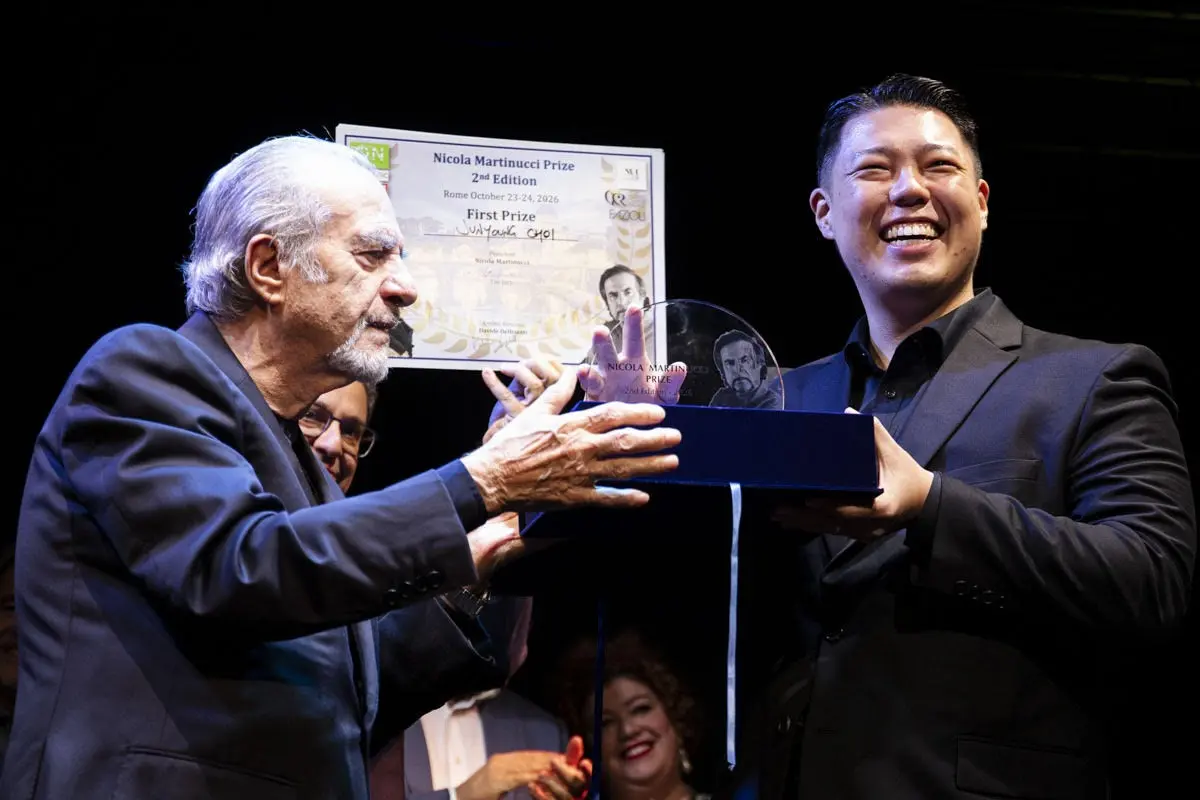
At the heart of this year’s triumph was South Korean tenor Junyoung Choi, whose electrifying interpretation of an aria from Giuseppe Verdi’s rarely staged masterpiece Attila captivated both the rigorous international jury and the live audience. Choi’s commanding stage presence, vocal agility, and dramatic depth secured him not only the prestigious €2,000 top cash prize but also the coveted Audience Award and an international performance engagement in Beirut.
The 2026 edition of the competition demonstrated an unprecedented level of global reach. More than 100 exceptionally qualified singers spanning 23 countries—ranging from traditional European operatic powerhouses to emerging classical markets across Asia, the Americas, and the Middle East—submitted applications for consideration. This demographic diversity underscores the universal appeal of opera and highlights the Martinucci Prize’s growing stature as an indispensable crucible for young artists looking to transition from academic training to major international careers.
Beyond Choi’s stellar victory, the competition distributed a suite of vital career-accelerating accolades, including shared cash prizes, high-profile orchestral debuts, prestigious opera house auditions, and special recognitions for exceptional young prodigies. Accompanied by the masterful touch of Maestro Fabio Centanni on a magnificent Fazioli 183 piano, the finalists delivered performances of breathtaking technical precision and emotional resonance.
This comprehensive report offers an in-depth examination of the 2026 Nicola Martinucci International Opera Prize. It features a detailed chronological breakdown of the finals, deep-dive analyses of the logistical and demographic metrics that defined the year, professional insights from the esteemed jury panel led by the legendary tenor himself, and a forward-looking perspective on how these young laureates are poised to reshape the future of the lyric stage.
Detailed Chronology: The Road to the 2026 Finals
The Preliminary Surge: Global Submissions and Screening
The journey to the 2026 podium began months prior to the live finals, with an exhaustive screening process managed by the competition’s artistic administration. Faced with an unprecedented influx of over 100 applications originating from 23 distinct sovereign states and territories, the preliminary selection committee confronted the formidable task of narrowing down a massive pool of world-class applicants.
The geographical spread of the applicant pool was a testament to the borderless nature of modern classical music education. Singers from Italy, Serbia, Japan, South Korea, Latvia, Mozambique, China, Venezuela, Argentina, Ireland, France, Mexico, Greece, Colombia, Turkey, Canada, Portugal, Brazil, California (represented as a distinct regional hub), Bulgaria, Armenia, Uzbekistan, and Ukraine submitted digital portfolios showcasing their vocal flexibility, dramatic interpretation, and stylistic authenticity.
The rigorous adjudication standards required candidates to present repertoire spanning multiple stylistic epochs—from the bel canto intricacies of Rossini and Donizetti to the soaring emotional peaks of Verdi and Puccini, as well as demanding verismo and contemporary compositions. Only the most technically secure and emotionally expressive vocalists were invited to advance to the live final rounds.
The Final Showdown: Artistry on the Fazioli Stage
The live finals transformed the venue into a crucible of high-stakes musical expression. Finalists were tasked with delivering standout arias under the critical gaze of a legendary panel, with every note supported and elevated by the sublime tonal palette of a Fazioli 183 grand piano. Playing this world-class instrument was Maestro Fabio Centanni, whose nuanced collaborative piano work provided an inspiring, highly responsive acoustic foundation for every competitor.
Centanni’s ability to breathe with the singers, anticipating their rubatos and dynamic shifts, allowed the finalists to take daring artistic risks. It was within this charged, supportive environment that the competitors unfurled their vocal artistry, turning a competition into a celebration of vocalism.
The afternoon and evening featured standout after standout, but it was Junyoung Choi’s reading of Verdi’s Attila aria that ultimately shifted the paradigm of the room. Verdi’s writing in Attila demands explosive vocal power, an expansive range, ironclad breath support, and a profound understanding of patriotic and emotional fervor. Choi delivered all of this and more, infusing the notoriously difficult lines with a gripping theatrical urgency that transfixed the audience and earned him an immediate, resounding wave of approval.
Following the performances, the jury convened for intense deliberations, balancing technical perfection against interpretative flair, stylistic awareness, and raw star potential. The resulting prize distribution reflected both a celebration of seasoned young artistry and a bold investment in emerging youth.
Supporting Context & Metrics: Analyzing the 2026 Competition
To fully appreciate the weight of the 2026 Nicola Martinucci Prize, one must examine the quantitative and qualitative metrics that shape the competition’s ecosystem. The following breakdown highlights the structural anatomy of this year’s awards, the logistical achievements, and the international tapestry of the applicant pool.
Comprehensive Prize Distribution Breakdown
| Award Category | Recipient(s) | Details & Compensation |
|---|---|---|
| First Prize (Top Honor) | Junyoung Choi (South Korea) | €2,000 cash prize, Audience Award, and Concert in Beirut |
| Second Prize (Shared) | Jo Wonjon & Gan Lin | €1,000 cash prize each; Lin also secured a Teatro Carlo Felice audition |
| Third Prize | Camilla Difonzo (Italy) | €500 cash prize |
| Special Nicola Martinucci Prize | Not Awarded | Reserved for transcendent achievement; left vacant in 2026 |
| Nova Amadeus Orchestra Concert | Andrea Calce (Italy) | Offered by Davide Dellisanti; orchestral debut opportunity |
| Teatro Carlo Felice Auditions | Junyoung Choi & Gan Lin | Direct pipeline to professional house auditioning panels |
| Youngest Talent Awards (Age 19) | Yifei Mao (Baritone) & Tong Tong (Soprano) | Special recognition for exceptional early-career promise |
The Global Footprint: Demographics of the 2026 Applicant Pool
The 2026 edition cemented the competition’s status as a truly international nexus. By drawing talent from 23 distinct geographic regions, the Martinucci Prize acts as a vital cultural bridge.
- Asia-Pacific Dominance: South Korea, China, and Japan continued to demonstrate their powerhouse status in classical vocal arts, producing exceptionally well-trained voices characterized by immaculate technical placement and deep stylistic affinity for European repertoire.
- European Heritage & Training: Traditional strongholds such as Italy, France, Serbia, Bulgaria, and Portugal maintained a strong presence, showcasing native linguistic fluency and deep-rooted stylistic traditions.
- The Americas & Emerging Markets: A vibrant contingent of singers from North and South America—including Brazil, Venezuela, Argentina, Mexico, Canada, Colombia, and regional applicants from California—brought fresh, vibrant theatricality and bold vocal colors to the stage.
- Eurasian and African Representations: Contributions from Armenia, Uzbekistan, Ukraine, Latvia, Ireland, and Mozambique further diversified the vocal textures, proving that classical vocal training has achieved remarkable global decentralization.
Official Statements & Jury Perspectives
The integrity, prestige, and educational value of the Nicola Martinucci International Opera Prize are directly tied to the caliber of its leadership and jury panel. Chaired by the legendary Italian operatic tenor Nicola Martinucci—whose storied career graced the stages of La Scala, the Metropolitan Opera, Verona, and Vienna in monumental dramatic tenor roles such as Turandot, Otello, and Aida—the jury brought decades of irreplaceable stage wisdom to the evaluation table.
"A great voice is merely the instrument; true artistry is found in the courage to bare one's soul through the composer's score. In this edition, we witnessed young artists who not only possess extraordinary vocal cords, but the intellectual and emotional depth required to carry the future of our art form."
— Maestro Nicola Martinucci, Jury Chair
The Distinguished 2026 Jury Panel
The evaluation of over 100 singers and the final selection of the laureates was executed by a multidisciplinary panel of international industry leaders:
- Nicola Martinucci (Jury Chair & Legendary Tenor)
- Davide Dellisanti (Artistic Director of the Prize & Renowned Pianist/Conductor)
- Alan Green (Founder of Zemsky & Green Artists Management)
- Virginio Fedeli (President of Atelier Musicale)
- Nicola Cattò (Editor of Rivista Musica)
- Toufic Maatouk (Conductor and Head of Artistic Programming at Abu Dhabi Festival, UAE)
- Simone Macrì (Artistic Coordinator at Teatro Carlo Felice in Genoa)
- Simone Alberghini (Internationally Acclaimed Bass-Baritone)
- Caterina Di Tonno (Acclaimed Soprano)
- Zong Shi (Renowned Bass)
Artistic Director Davide Dellisanti emphasized the developmental mission of the competition during the post-ceremony briefings. By pairing cash awards with concrete professional opportunities—such as orchestral collaborations with the Nova Amadeus Orchestra and high-stakes auditions at the prestigious Teatro Carlo Felice in Genoa—the Martinucci Prize actively dismantles the barriers that often leave gifted young singers stranded between conservatory graduation and professional employment.
Furthermore, agent and management representatives like Alan Green noted the exceptionally high baseline of technical preparedness among the finalists. In comments following the event, Green remarked that competitions like Martinucci serve as an indispensable radar screen for artist managers seeking fresh, market-ready voices capable of handling the rigorous demands of contemporary international opera houses.
Future Outlook: Launching the Next Generation
As the dust settles on the triumphant second edition of the “Nicola Martinucci” International Opera Prize, the broader classical music community turns its attention to the future. For the winners and finalists, the conclusion of the competition marks not an endpoint, but the explosive starting gun of their professional careers.
Immediate Career Milestones for the 2026 Laureates
The integration of career-building institutional partnerships ensures that these young artists will immediately transition from the competition stage into professional workflows:
- Junyoung Choi will prepare for his high-profile orchestral concert engagement in Beirut, facilitated by Toufic Maatouk, while also utilizing his connections to step onto Italian operatic stages following his Teatro Carlo Felice audition gateway alongside Gan Lin.
- Camilla Difonzo and Andrea Calce will leverage their respective third-prize standing and orchestral debut opportunities with the Nova Amadeus Orchestra to expand their professional visibility across the European theatrical circuit.
- Yifei Mao and Tong Tong, both remarkably poised at just 19 years of age, represent the long-term viability of the vocal arts. By singling out their raw potential early, the Martinucci Prize has placed a protective and nurturing spotlight on two voices that are destined to mature into the core repertoire powerhouses of the 2030s and 2040s.
The Legacy of Nicola Martinucci in Modern Opera
In an era where the operatic art form continually reinvents itself to court modern audiences, competitions that honor historical standards of vocal excellence while embracing globalized talent are more critical than ever. Named after a titan of the Italian dramatic tenor tradition, the Nicola Martinucci International Opera Prize bridges the generational divide, passing the torch of dramatic truth, vocal discipline, and stylistic authenticity from the masters of the past to the innovators of tomorrow.
Plans for the third edition of the competition are already underway, with organizers aiming to expand outreach networks, introduce new orchestral partnerships, and deepen masterclass educational components for all participants. As demonstrated by the resounding success of Junyoung Choi, Jo Wonjon, Gan Lin, Camilla Difonzo, and their peers, the future of opera is bright, global, and vibrantly alive.