
Executive Overview
The contemporary jazz landscape exists in a perpetual state of tension, suspended between the gravitational pull of its storied 20th-century origins and the restless imperatives of modern sonic exploration. Few artists exemplify this dialectic better than tenor and soprano saxophonist Azar Lawrence and avant-garde trumpet icon Wadada Leo Smith. Both veterans of pivotal eras in Black American Music, these creators continue to defy expectations well into their mature years, releasing projects that bridge decades of musical evolution.
This review examines two notable recent releases: Azar Lawrence’s Turn The Music Up, issued via Trazar Records, and Wadada Leo Smith’s expansive studio-crafted opus, Constellations And Hemispheres, released on Burning Ambulance. While Lawrence looks backward to propel himself forward—revisiting the fertile soil of his mid-1970s spiritual jazz breakthroughs—Smith leans into the labyrinthine complexities of post-production, assembling disparate sessions spanning a five-year period to create a sprawling, intellectually rigorous meditation on sound and space.
Though both albums originate from masters who helped shape the trajectory of modern improvised music, their methodologies could hardly be more divergent. Lawrence operates primarily within a live-in-the-studio septet framework, updating his classic repertoire with a dynamic, contemporary ensemble. Smith, by contrast, acts as a sonic architect, combining sessions recorded between 2017 and 2022 into a unified, highly polished tapestry that showcases his formidable compositional and conceptual genius. Together, these releases offer listeners a profound masterclass in the longevity, adaptability, and enduring vitality of the jazz idiom.
Detailed Chronology & Album Breakdown
Azar Lawrence: Turn The Music Up (Trazar Records)
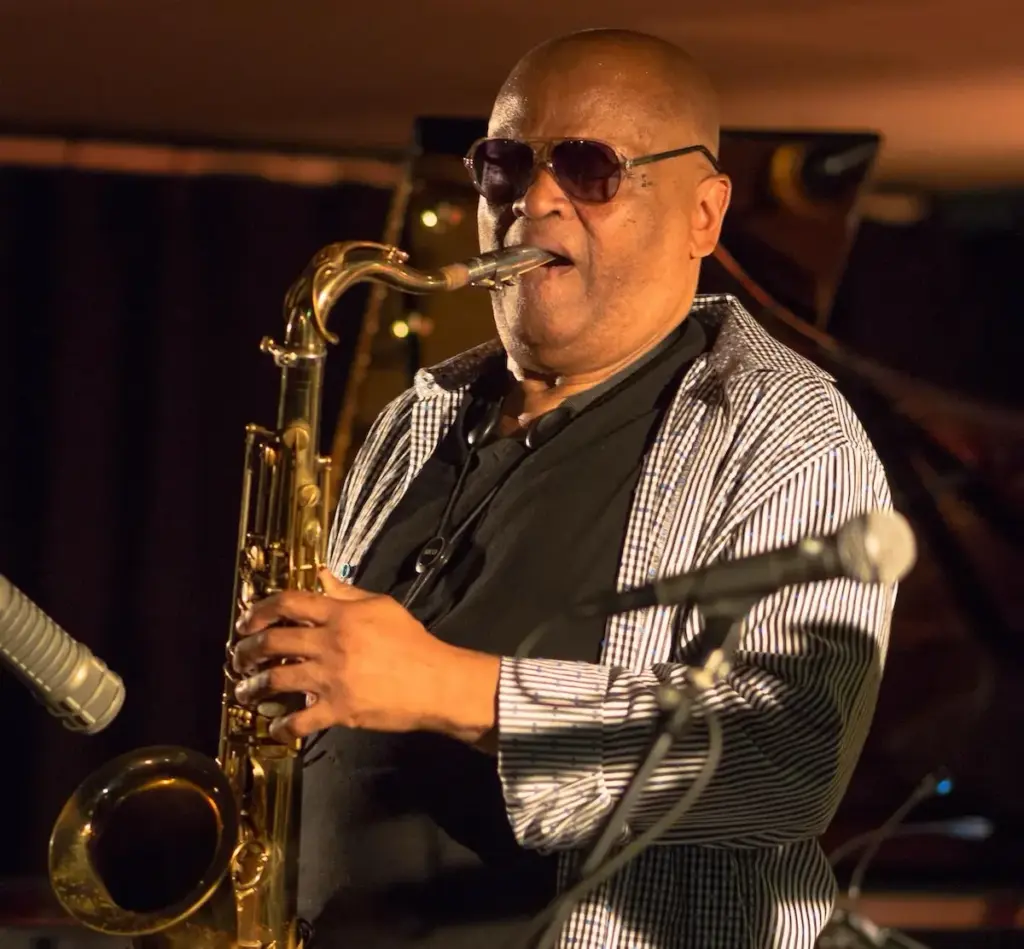
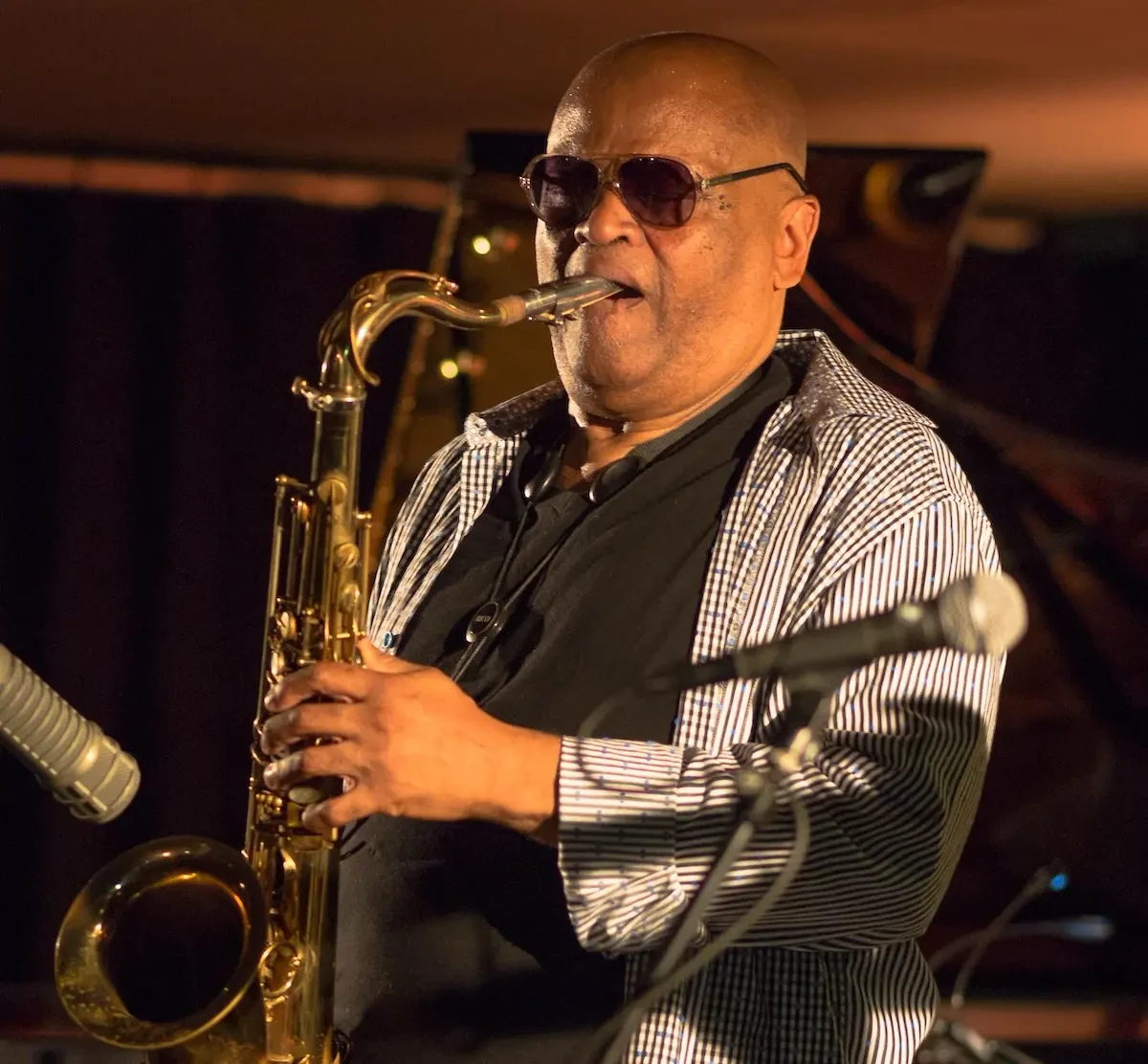
To understand Azar Lawrence’s current artistic posture on Turn The Music Up, one must trace a career that mirrors the seismic shifts of the American music industry over the past half-century. Lawrence first captured the attention of the jazz cognoscenti during the early 1970s as a leading exponent of spiritual jazz, most notably through his tenure with piano titan McCoy Tyner. During an era when the commercial viability of jazz began to wane, forcing many instrumentalists to diversify, Lawrence demonstrated remarkable versatility by lending his muscular tone to the backing bands of soul and R&B royalty, including Marvin Gaye and Earth, Wind & Fire. Today, he maintains his straightahead credentials as a prominent member of the modern jazz supergroup The Cookers.
Turn The Music Up finds Lawrence engaging in a deliberate act of historical retrospection. The album serves as a retrospective glance at his foundational early records: 1974’s Bridge Into The New Age and 1975’s Summer Solstice. Rather than merely replicating those landmark recordings, however, Lawrence reinterprets them alongside a hand-picked, highly capable ensemble recorded in Venice, California, between 2024 and 2025.
The core group assembled for this session features Brian Swartz on trumpet, Taka Mori on guitar, Robert Turner on piano and keyboards, Gerald Brown on bass, Yayo Morales on drums, and vocalist Lynne Fiddmont. The repertoire blends Lawrence’s historical catalog with deeply resonant tributes to his musical lineage. Notably, the tracklist includes a composition sourced from McCoy Tyner’s transcendent Atlantis album, alongside a stirring rendition of The Creator Has A Master Plan—a centerpiece of the repertoire of Lawrence’s late friend and mentor, Pharoah Sanders.
Furthermore, the album highlights two compositions by Brazilian composer and guitarist Amaury Tristao: Highway and Novo Ano, both of which originally appeared on Summer Solstice. It is worth noting the current cultural moment surrounding The Creator Has A Master Plan, which has enjoyed a recent surge in popularity through striking contemporary vocal interpretations by rising stars Tyreek McDole and Ekep Nkwelle.
The full tracklist and recording credits for Turn The Music Up (running at a tight 50 minutes and 2 seconds) are as follows:
- Highway
- Novo Ano
- Atlantis
- Lost Tribes Of Lemuria
- The Creator Has A Master Plan
- Fatisha
- Summer Solstice
Personnel: Azar Lawrence (tenor saxophone, soprano saxophone); Brian Swartz (trumpet); Taka Mori (guitar); Robert Turner (keyboards); Gerald Brown (bass); Yayo Morales (drums); Lynne Fiddmont (vocals). Recorded in Venice, CA, 2024–2025. Released via Trazar Records.
Wadada Leo Smith: Constellations And Hemispheres (Burning Ambulance 0785104731547)
If Azar Lawrence’s record is an exercise in warm, collective room-energy, Wadada Leo Smith’s Constellations And Hemispheres is a masterclass in post-production wizardry and structural complexity. As one of the most knotty and involved offerings in Smith’s vast discography, the album relies heavily on meticulous studio assembly.
The core of the project features a powerhouse rhythm and texture section: vibraphonist Bobby Naughton, bassists Bill Laswell and Melvin Gibbs, and drummer Pheeroan akLaff. To realize his ambitious vision, Smith supplements this core across various tracks with guitarist Lamar Smith, pianist Sylvie Courvoisier, drummer Marcus Gilmore, and percussionists Brian Jarawa Gray and Mauro Refosco. Rather than capturing a single performance, the material is synthesized from multiple sessions recorded in New Haven, Connecticut, between 2017 and 2022, combined through extensive, highly creative studio manipulation.
While the majority of the album’s pieces maintain a specific ensemble configuration, the structural anchor of the release is the sprawling, 22-minute suite titled Dark Matter, Particles Of Light, Mirror Of The Unseen. This monumental piece fluidly shifts between intimate trio settings and expansive octet configurations, showcasing Smith’s ongoing compositional strategy—previously explored on his 2023 release Fire Illuminations—of juxtaposing contrasting musical environments.
At 85 years old, Smith displays a creative vigor that belies his chronological age. Emerging in the late 1960s as an utterly original voice on the trumpet, he later became a central, driving figure in the Association for the Advancement of Creative Musicians (AACM). Belonging firmly to the post-Miles Davis avant-garde tradition, Smith’s signature sound—especially when utilizing a mute—possesses a beautifully cloudy, ethereal resonance. Like his contemporary Anthony Braxton, Smith is remarkably prolific, making a selective approach to his catalog essential for listeners. While his 2024 Intakt release Angel Falls (recorded with Sylvie Courvoisier) highlighted his spontaneous, improvisational prowess, Constellations And Hemispheres firmly emphasizes his monumental compositional side.
The full tracklist and recording credits for Constellations And Hemispheres (totaling 59 minutes and 11 seconds) are:
- Dark Energy
- Lake Tanganyika
- Dark Matter, Particles Of Light, Mirror Of The Unseen (22-minute suite)
- Deep Canyons On Mars
- Meditation On Love
Personnel: Wadada Leo Smith (trumpet); Sylvie Courvoisier (piano); Marcus Gilmore (drums); Bobby Naughton (vibraphone); Lamar Smith (guitar); Bill Laswell (bass); Melvin Gibbs (bass); Mauro Refosco, Brian Jarawa Gray (percussion); Pheeroan akLaff (drums). Recorded in New Haven, CT, 2017–2022. Released via Burning Ambulance (Catalog: 0785104731547).
Supporting Context & Metrics
Evaluating these two releases requires contextualizing them within the broader economics and aesthetics of the modern independent jazz market. Both albums bypass major label conglomerates, finding homes on boutique, dedicated imprints (Trazar Records and Burning Ambulance) that prioritize artistic uncompromise over commercial homogenization.
| Metric / Parameter | Azar Lawrence: Turn The Music Up | Wadada Leo Smith: Constellations And Hemispheres |
|---|---|---|
| Primary Genre | Spiritual Jazz / Straightahead Revival | Avant-Garde / Contemporary Classical-Jazz Fusion |
| Recording Window | 2024–2025 (Cohesive, recent sessions) | 2017–2022 (Archival synthesis over 5 years) |
| Total Runtime | 50 minutes, 02 seconds | 59 minutes, 11 seconds |
| Production Approach | Live-in-the-studio septet dynamic | Post-production studio architecture & layering |
| Primary Influences | McCoy Tyner, Pharoah Sanders, 70s Soul-Jazz | AACM, Post-Miles Davis Avant-Garde, Minimalism |
| Geographic Anchor | Venice, California | New Haven, Connecticut |
| Label | Trazar Records | Burning Ambulance |
From a critical standpoint, these albums invite distinct evaluative frameworks. Lawrence’s record prompts discussions around the delicate balance between ensemble power and spiritual resonance. Some critics argue that the combination of a robust septet augmented by four additional guests occasionally threatens to overwhelm the music’s inner meditative core, leaning into the old adage that in art, "less is more." However, the sheer infectious delight of the execution largely disarms such critiques. Minor stylistic reservations—such as the polarizing use of wordless scatting on Highway and the sudden, fade-heavy conclusion of Atlantis—prevent Turn The Music Up from reaching the absolute apex of Lawrence’s historical catalog, yet it remains a deeply worthwhile addition to his discography.
Conversely, Smith’s album demands a critique rooted in structural architecture and timbre. Because the material was gathered over a five-year span and melded in post-production, the listener is tasked with navigating a labyrinth of shifting sonic environments. It is a work designed for deep, analytical listening rather than passive background enjoyment. While Smith’s prolific output necessitates careful navigation by newcomers, Constellations And Hemispheres stands as a towering testament to his structural mastery, offering an illuminating counterweight to the more direct, organic approach favored by Lawrence.
Official Statements & Critical Perspectives
The release of these two albums has sparked lively discourse among jazz critics, historians, and purists alike, touching upon broader questions regarding how veteran artists should navigate their pasts in the twenty-first century.
In discussions surrounding Azar Lawrence’s Turn The Music Up, industry analysts have highlighted the cultural imperative of keeping the 1970s spiritual jazz flame alive for new generations. Lawrence himself has frequently spoken about the sacred duty of carrying forward the mantle of his mentors. In reflections on his time with McCoy Tyner and Pharoah Sanders, Lawrence has noted:
"When we played that music, it wasn’t just entertainment; it was a healing vibration, an intentional elevation of consciousness. Returning to those early compositions is not about looking backward with nostalgia, but about reactivating that energy for a world that needs healing now more than ever."
Critical reception of the album has generally praised Lawrence’s unflagging instrumental prowess on both tenor and soprano saxophones, even as reviewers grapple with the dense arrangements. Renowned jazz critic notes on the septet’s dynamic range point out that while the expanded line-up occasionally stretches the boundaries of traditional spiritual jazz minimalism, the inclusion of Brazilian elements via Amaury Tristao’s compositions injects a refreshing, sun-drenched rhythmic vitality into the proceedings.
Turning to Wadada Leo Smith, the discourse centers on his tireless intellectual curiosity and monumental compositional ambition. Smith has long viewed his music through a conceptual lens, famously coining the term Ankhrasmation to describe his symbolic language system of composition. In past interviews discussing his rigorous studio methodologies and multi-year recording projects, Smith articulated his philosophy on musical time and space:
"Music is not bound by the calendar year in which a note is struck. Sound is a continuous, living continuum. When I build a suite like Dark Matter, Particles Of Light, Mirror Of The Unseen across different sessions and years, I am assembling a universe where past, present, and future iterations of creative thought coexist in a single moment."
Critics have widely lauded this uncompromising vision. Reviewers evaluating Constellations And Hemispheres have emphasized that at 85 years old, Smith refuses to rest on his considerable laurels as an AACM pioneer. By utilizing post-production as an active compositional tool—partnering with heavyweights like Bill Laswell, Melvin Gibbs, and Sylvie Courvoisier—Smith demonstrates that avant-garde jazz remains an ever-evolving, elastic medium capable of absorbing decades of sonic experimentation without losing its emotional or spiritual core.
Future Outlook
As we look toward the horizon of the modern jazz ecosystem, releases such as Azar Lawrence’s Turn The Music Up and Wadada Leo Smith’s Constellations And Hemispheres offer profound insights into where the genre has been and where it might go. Both artists prove that maturity in jazz is not a signal of creative decline, but rather an invitation to deepen one’s artistic inquiry.
For Azar Lawrence, the future likely holds a continued celebration of his historic catalog, coupled with a commitment to mentoring and collaborating with younger generations of musicians who are rediscovering the transcendent power of 1970s modal and spiritual jazz. As audiences increasingly gravitate toward the healing frequencies and organic warmth of acoustic instrumentation, Lawrence’s ongoing live performances and recorded retrospectives ensure that this vital lineage remains vibrant and accessible.
For Wadada Leo Smith, the future remains an open canvas defined by relentless innovation. Given his staggering productivity and intellectual stamina, the jazz community can undoubtedly anticipate further conceptual explorations, cross-genre collaborations, and archival syntheses. Smith’s work serves as an enduring blueprint for younger avant-garde improvisers, proving that uncompromising artistic vision, combined with rigorous structural discipline, can yield timeless masterworks across any span of years.
Ultimately, both Turn The Music Up and Constellations And Hemispheres reinforce the resilience of jazz as a global art form. Whether through Lawrence’s joyous reinvigoration of spiritual jazz anthems or Smith’s microscopic studio curation of avant-garde soundscapes, these two masters remind us that the conversation between past traditions and future possibilities is infinite, urgent, and deeply human.