
Executive Overview
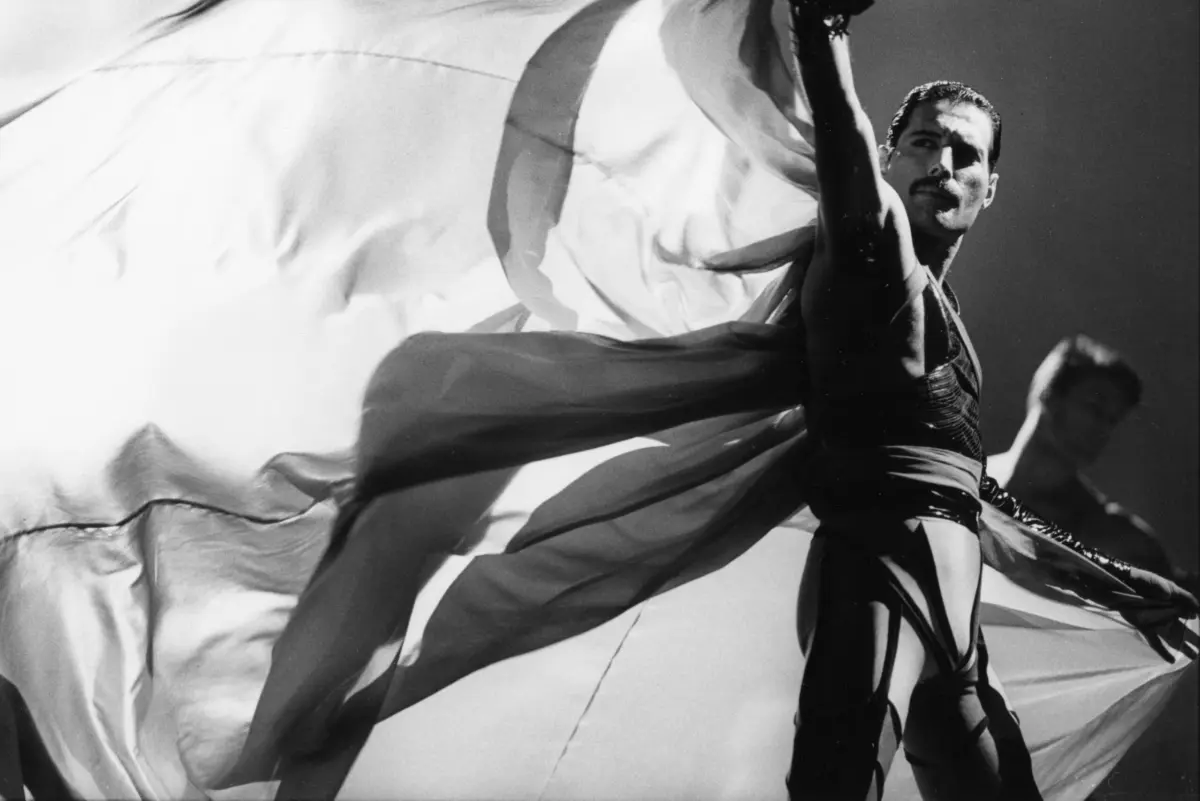
Few cultural icons remain as vividly etched into the global consciousness as Freddie Mercury, the charismatic frontman of Queen. Decades after his passing, his gravitational pull—fueled by an uncompromised vocal range, theatrical bravura, and fearless aesthetic—continues to captivate generation after generation of music lovers, fashion historians, and performance artists alike.
Opening its doors on October 24 at the prestigious Victoria and Albert (V&A) Museum in South Kensington, a landmark new exhibition titled Freddie Mercury | Splendid Things promises to offer an unprecedented, deeply intimate lens into the artist’s visual and sartorial universe. Timed deliberately to coincide with the 80th anniversary of Mercury’s birth, the exhibition is not merely a retrospective; it is a meticulously choreographed spatial experience that tracks his evolution from an ambitious young art student and early-days rock pioneer to a stadium-conquering solo artist.
Developed in close collaboration with Mary Austin—Mercury’s former fiancée, lifelong confidante, and primary heir, who has generously loaned seven of the eight core theatrical looks on display—the exhibition is a masterclass in museum curation. Spread across six distinct, immersive stops nestled throughout the museum’s cavernous and historically rich galleries, Splendid Things traces the arc of Mercury’s career through the medium of his most legendary stage costumes.
To bring this vision to life, the V&A tapped renowned theatre and opera designer Tom Piper, celebrated for his work with the Royal Shakespeare Company, the haunting Tower of London ceramic poppies installation, and the museum’s own blockbuster hits Alice: Curiouser and Curiouser and the Taylor Swift | Songbook Trail. Piper has conceived a multi-sensory trail where historical V&A artifacts, bespoke building architecture, and theatrical staging collide. Custom-built mannequins, posed meticulously to capture Mercury’s iconic, gravity-defying stage stances, breathe life into dead threads, turning garments into active agents of performance history.
Behind the scenes, the project represents a convergence of curatorial dedication and personal guardianship. Kate Bailey, the V&A’s Senior Curator of Theatre and Performance, alongside Mary Austin, has spearheaded a project that captures not just the physical garments, but the psychological and artistic transformation of a man who viewed fashion as an extension of his sonic architecture. As cultural institutions increasingly look for ways to marry historical collection-keeping with live performance dynamics, Freddie Mercury | Splendid Things stands poised to set a new benchmark for museum exhibitions worldwide.
Detailed Chronology: A Sartorial Journey Through Time
Spanning a turbulent, boundary-pushing timeline from 1973 to the late 1980s, the six-stop trail within the V&A’s galleries maps Freddie Mercury’s meteoric rise through the clothes that helped forge his mythos. Each stop pairs a legendary costume with a tailored set design, dialoguing with both the V&A’s permanent collections and the striking Victorian architecture of the building.
1. The Genesis: The Monochrome Imperial College Look (1973)
The journey begins at the dawn of Queen. The exhibition’s opening phase highlights the stark, monochrome outfit Mercury wore for an early, career-defining Queen gig at Imperial College in London. This look holds a sacred place in rock lore, having been immortalized on the front cover of the band’s self-titled 1973 debut studio album.
At this juncture, Mercury’s aesthetic was deeply informed by his formal training in graphic art and design (he graduated from Ealing Art College with a Diploma in Art and Design in 1969). The black-and-white palette reflects a glam-rock sensibility filtered through a modernist, graphic lens. It speaks to a young artist carefully constructing an identity, utilizing high-contrast visual signifiers to stand out in a crowded, transitional musical landscape.
2. Glamour Takes Flight: The "Mercury Wing" Catsuit (1975–1976)
As Queen evolved from progressive-glam upstarts into stadium titans, Mercury’s aesthetic exploded in color, scale, and theatricality. Central to the exhibition is the iconic "Mercury Wing" catsuit. Designed by Wendy de Smet, this breathtaking garment was worn extensively during the A Night at the Opera tour of 1975 and 1976—the era that birthed the operatic masterwork "Bohemian Rhapsody."
Fans will instantly recognize the catsuit from its immortalization in the accompanying promotional music video, which fundamentally altered how popular music was marketed to the masses. The winged sleeves amplified Mercury’s physical wingspan on stage, transforming him into a mythical, avian creature capable of soaring over massive crowds. De Smet’s construction allowed for extreme athletic movement, essential for Mercury’s high-octane, calisthenic performances.
3. Royalty and Rebellion: The Crown and Cloak (Late 1970s–1980s)
No examination of Mercury’s stage persona is complete without addressing his self-anointed royalty. Featured prominently along the V&A trail is the regal crown and ermine-trimmed cloak, designed by Diana Moseley.
First introduced during the News of the World and The Game eras, this ensemble cemented Mercury’s playful, tongue-in-cheek coronation as the undisputed King of Queen. By wrapping himself in royal regalia while commanding arenas filled with working-class rock fans, Mercury subverted traditional notions of authority. He turned the rock stage into his own sovereign state, inviting his audience into a shared, egalitarian kingdom of joy and abandon. The pairing of this look with the V&A’s own historical collections of textiles and decorative arts creates a brilliant meta-narrative about the performance of power across centuries.
4. The Solo Years and Final Acts: "Made in Heaven" and Personal Wardrobe (Late 1980s)
The trail culminates in the twilight years of Mercury’s career, representing his solo artistic excursions and his final creative outpouring with Queen. Anchoring this final stop is the striking costume worn in the music video for "Made in Heaven," a track originally released on his 1985 debut solo album of the same name and later repurposed for the posthumous 1995 Queen album.
Accompanied by carefully curated items from his personal wardrobe, this section offers a poignant meditation on mortality, legacy, and artistic rebirth. Here, the theatrical armor of the 1970s gives way to a more nuanced, reflective aesthetic, demonstrating how Mercury continued to use clothing to narrate his internal state even as his health began to fail him.
Supporting Context & Metrics: The Architecture of an Exhibition
To fully appreciate the scale and ambition of Freddie Mercury | Splendid Things, one must examine the production logistics, design philosophy, and institutional frameworks that make such an undertaking possible.
The Mastermind: Tom Piper’s Theatrical Spatial Design
Tom Piper, the designer tasked with translating Mercury’s life into museum architecture, is no stranger to monumental public installations. Having spent years as a key designer for the Royal Shakespeare Company, Piper understands how space, lighting, and narrative pacing interact to evoke emotional responses from an audience.
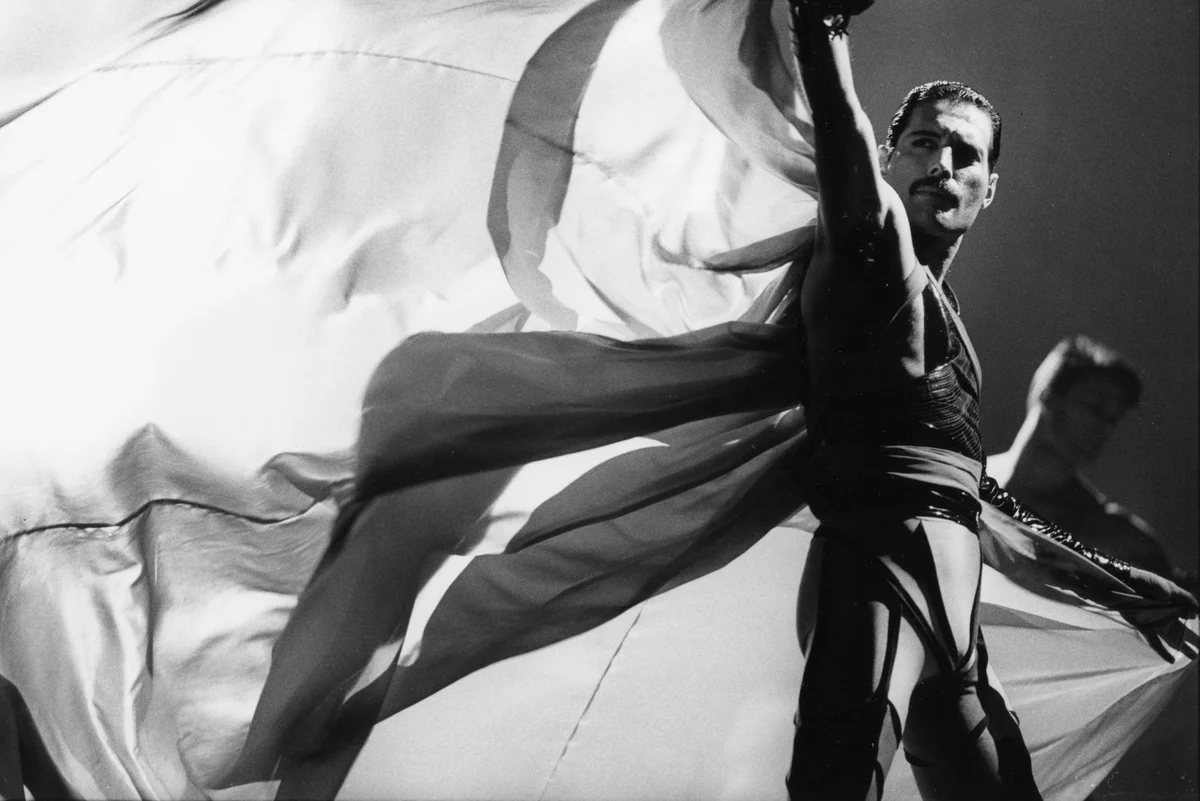
His previous work on the V&A’s Alice: Curiouser and Curiouser proved his ability to turn literary and cultural fantasy into immersive museum reality. For Splendid Things, Piper has deployed dynamic lighting, directional sound design, and site-specific spatial interventions across the six gallery stops. Rather than placing the costumes in sterile, static glass boxes, Piper integrates them into the fabric of the V&A. Mannequins have been custom-engineered and sculpted specifically for this display, capturing the dynamic torsion of Mercury’s hips, the defiant thrust of his microphone stand, and the triumphant arc of his arms.
Mary Austin and the Preservation of Legacy
The exhibition rests upon a foundation of deep personal trust. Mary Austin, who inherited the vast majority of Mercury’s estate, including his beloved West London home, Garden Lodge, has spent decades preserving his personal and professional archive.
The loan of seven out of the eight core looks highlights Austin’s ongoing commitment to ensuring that Mercury’s memory is celebrated through the lens of his art, rather than sensationalized by tabloid myth-making. Austin’s collaboration with the V&A ensures an authentic representation of Mercury’s artistic journey, offering scholars and fans alike direct access to artifacts that have rarely been seen outside of private vaults.
Official Statements: Voices from the Curatorial Frontline
The cultural weight of the exhibition has been underscored by statements from key figures involved in its realization, shedding light on the philosophical underpinnings of the display.
Kate Bailey, Senior Curator of Theatre and Performance at the V&A, articulated the museum’s excitement regarding the acquisition and display of these cultural treasures:
"We are absolutely thrilled to display Freddie’s most iconic costumes at the V&A, celebrating one of greatest performers and songwriters of all time. Reflecting his love of ‘splendid things’ and his passion for art, design and fashion, Freddie will be very at home in the V&A galleries."
Mary Austin, reflecting on her decades-long partnership with Mercury and the evolution of his visual identity, provided profound insight into his psychological approach to clothing:
"As the records became more successful and the response grew stronger, his confidence deepened and his performance settled. The clothes were part of that exploration. Freddie understood early on that he wasn’t just wearing clothes; he was providing an image to match the scale of the space and the vastness of the crowd. He was there to entertain, and everything about what he wore fed into that."
These reflections position Mercury not merely as a pop star who happened to wear flamboyant clothes, but as a calculated visual strategist who understood that in the modern stadium era, sight and sound were inextricably bound together.
Future Outlook: The Ongoing Legacy of a Global Icon
As the cultural landscape continues to grapple with the intersection of music, fashion, and museum curation, Freddie Mercury | Splendid Things points toward a fascinating future for institutional exhibitions.
Gone are the days when major museums could satisfy audiences with static rows of paintings and dusty manuscripts. Today’s visitors—accustomed to immersive digital media, experiential art installations, and multi-sensory storytelling—demand environments that activate all five senses. By embedding Tom Piper’s theatrical stagecraft within the historic galleries of the V&A South Kensington, the museum has created a blueprint for how historical music archives can be brought to vibrant, breathing life.
Furthermore, the exhibition arrives at a time when Mercury’s cultural footprint remains utterly undiminished. From the global phenomenon of the 2018 biographical film Bohemian Rhapsody to the staggering multi-million dollar Sotheby’s auction of Mercury’s personal collection in 2023, public appetite for all things Freddie is at an all-time high.
Freddie Mercury | Splendid Things does not simply cash in on this nostalgia; it elevates it. By anchoring the spectacle in rigorous curatorial scholarship, personal testimony from Mary Austin, and brilliant spatial design, the V&A ensures that Mercury’s enduring genius is understood not as a relic of the past, but as a living, breathing blueprint for modern performance art. As visitors walk the six-stop trail starting this October, they will not merely be looking at clothes—they will be stepping inside the mind of a titan who turned the entire world into his stage.