
Date: August 3, 2026
Source: Sinfonia Smith Square / Architectural & Cultural Desk
Executive Overview
In a landmark development for London’s classical music landscape, Sinfonia Smith Square has officially secured a substantial £200,000 infrastructure grant from the prestigious Wolfson Foundation. This vital funding serves as a powerful catalyst for Doors Open: Transforming Lives Through Music, the most ambitious, comprehensive, and structural redevelopment of Smith Square Hall since the historic Grade I listed building was first converted into a dedicated concert venue in 1969.
Nestled in the heart of Westminster, Smith Square Hall—originally constructed as St John’s Smith Square in the early 18th century—has long stood as an architectural masterpiece of the English Baroque period. However, decades of continuous use, coupled with the rigorous infrastructural demands of a modern 21st-century performance institution, have taken their toll on the fabric of the building. The upcoming multi-million-pound transformation project aims to achieve a delicate, dual objective: meticulously conserving the heritage-protected architectural features of the historic structure while radically modernising its interior utility to expand public access, education, and artistic output.
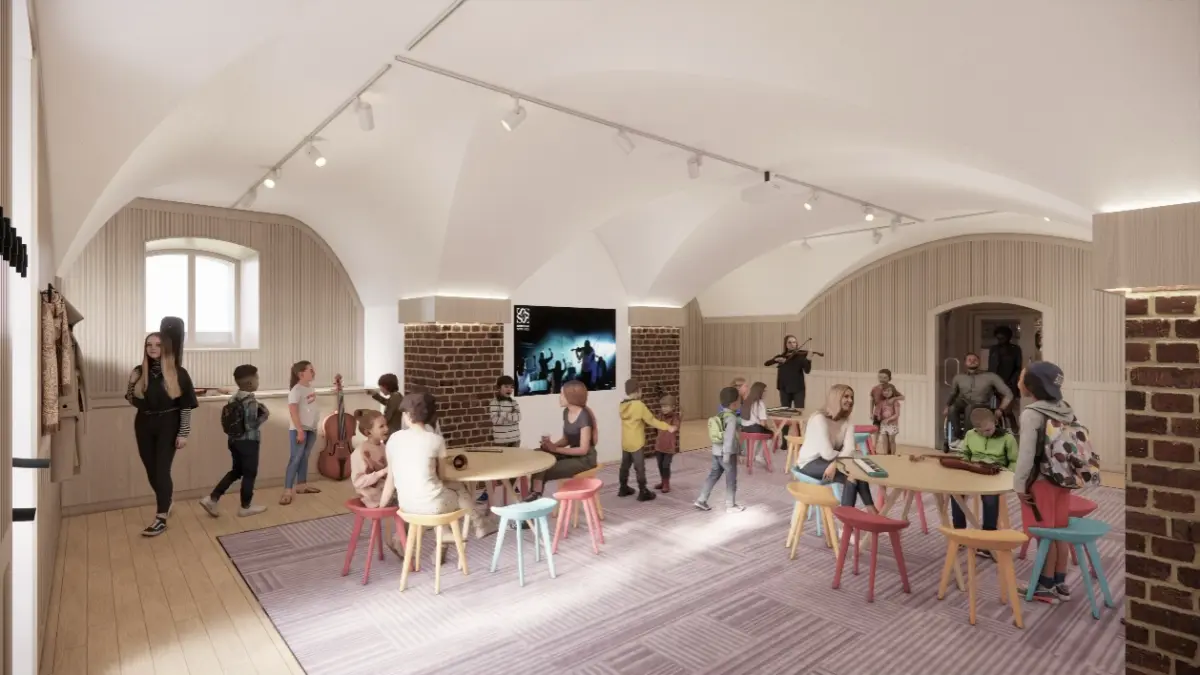
At the core of the Doors Open initiative is a visionary reconfiguration of the building’s layout. Most notably, the underutilised crypt will undergo a dramatic conversion into a cutting-edge, dedicated learning space tailored for schools, community music initiatives, and collaborative creative workshops. Furthermore, the redevelopment will introduce vastly improved rehearsal facilities specifically designed to support the globally renowned Sinfonia Smith Square orchestral Fellowship programme.
Beyond cultural expansion, the project carries a profound preservation mandate. A primary metric of success for the capital works is the complete removal of Smith Square Hall from Historic England’s precarious Heritage at Risk Register, ensuring this architectural jewel is safeguarded for generations to come. With construction slated to commence in late 2027 and a grand reopening projected for 2029, the revitalised venue anticipates welcoming upward of 90,000 visitors annually, fundamentally cementing its status as a dynamic hub for musical performance, professional training, and community engagement in the heart of the UK capital.
Detailed Chronology: From Baroque Masterpiece to Modern Cultural Hub
To fully appreciate the gravity of the Doors Open redevelopment, it is essential to examine the rich, centuries-long timeline that has shaped Smith Square Hall into the cultural landmark it is today.
1713–1728: Architectural Genesis
The history of the site begins in the wake of the 1711 Act of Parliament, which commissioned the construction of fifty new churches in the rapidly expanding suburbs of London and Westminster. Designed by the celebrated architect Thomas Archer and constructed between 1713 and 1728, the building—originally consecrated as the parish church of St John the Evangelist—stood as a bold statement of English Baroque architecture. Archer’s design was famously unorthodox, featuring four distinctive corner towers and monumental baroque facades that drew comparisons to contemporary European continental styles.
1941: The Wartime Devastation
The building’s trajectory was catastrophically altered during the Blitz of World War II. In 1941, an incendiary bomb struck the church, gutting the interior and leaving behind little more than the charred exterior masonry walls. For more than two decades, the roofless shell stood as a haunting reminder of the Blitz, appearing to many as an irrecoverable architectural casualty.
1965–1969: The Phoenix Rising and Conversion to Concert Hall
Hope arrived in the mid-1960s when a dedicated trust was formed to rescue the building. Spearheaded by Lady Parker of Waddington and supported by a coalition of music lovers, politicians, and philanthropists, a painstaking restoration project was launched to rebuild the interior while preserving Archer’s surviving exterior stonework. In 1969, the building triumphantly reopened not as a parish church, but as a secular concert hall. Its superb acoustic properties, intimate yet grand atmosphere, and central London location quickly established it as a premier destination for chamber orchestras, choral groups, and solo recitals.
2002: The Birth of the Fellowship Programme
A pivotal chapter in the venue’s modern history opened in 2002 with the establishment of the Sinfonia Smith Square orchestral Fellowship programme (formerly operating under the Orchestra of the Age of Enlightenment’s Orion initiative and subsequently Southbank Sinfonia). Designed as a vital bridge between conservatoire study and the professional orchestral profession, the Fellowship offered immersive, high-level performance and mentorship opportunities to exceptional young musicians at the threshold of their careers.
2024–2026: The Path to Doors Open
As the concert hall entered the 2020s, the widening gap between its operational needs and its physical infrastructure became increasingly apparent. Accessibility was limited, backstage and rehearsal spaces were cramped, and historical fabric degradation landed the building on Historic England’s Heritage at Risk Register. Recognising the urgent need for renewal, leadership formulated the Doors Open master plan. The securing of the £200,000 Wolfson Foundation grant in August 2026 marks the critical financial tipping point, transitioning the project from visionary concept to funded reality.
Supporting Context & Metrics: The Scope of the Redevelopment
The transformation of Smith Square Hall is not merely a cosmetic face-lift; it is a deep, structural engineering and community-focused endeavor designed to future-proof the institution for decades to come.
The Fellowship Impact
At the heart of Sinfonia Smith Square’s identity is its orchestral Fellowship. Since its inception in 2002, the programme has served as a crucible for artistic excellence, successfully supporting and launching the careers of more than 700 early-career musicians. Graduates of the Fellowship populate the ranks of major symphony orchestras across the United Kingdom, Europe, and beyond. However, up to this point, the programme has often had to operate around the constraints of a building that lacked dedicated, acoustically isolated rehearsal spaces and modern administrative infrastructure. The Doors Open project rectifies this by building bespoke rehearsal and coaching rooms into the facility, ensuring that the next generation of orchestral talent trains in an environment optimized for professional development.
Unlocking the Crypt
Perhaps the most innovative architectural intervention in the master plan is the comprehensive redevelopment of the building’s subterranean crypt. Historically used primarily for storage and auxiliary building services, this atmospheric vaulted space will be transformed into a dedicated, state-of-the-art learning and community hub.
Once operational, the crypt will host:
- Schools Education Programmes: Tailored music workshops, interactive classical concerts, and curriculum-linked creative sessions designed to introduce school children from diverse socioeconomic backgrounds to orchestral music.
- Community Engagement Initiatives: Inclusive music-making sessions for local Westminster residents, vulnerable groups, and elderly populations, using the power of music to combat social isolation and foster community cohesion.
- Creative Incubation: A flexible workspace for emerging composers, cross-genre artists, and multidisciplinary creators to experiment and develop new work.
Economic and Visitor Projections
The logistical scope of the project is immense. Construction is scheduled to kick off in late 2027, with a targeted reopening date in 2029. Upon reopening, institutional modeling projects that Smith Square Hall will accommodate more than 90,000 visitors annually—a significant increase over pre-redevelopment figures. This surge in footfall will be driven by an expanded calendar featuring not only evening classical concerts but also daytime educational events, family programming, community festivals, and public exhibitions detailing the rich history of the Grade I listed building.
Official Statements and Stakeholder Perspectives
The announcement of the Wolfson Foundation grant has elicited widespread acclaim from cultural leaders, architectural preservationists, and arts administrators across the UK.
Speaking on behalf of Sinfonia Smith Square, executive leadership emphasized the transformative nature of the award:
"The generous support of the Wolfson Foundation marks a monumental milestone for Sinfonia Smith Square. ‘Doors Open’ is much more than a capital works project; it is a reinvention of how a historic building can serve its community. By unlocking the potential of our crypt, modernising our facilities, and addressing critical conservation needs, we are ensuring that Smith Square Hall remains a vibrant, living monument to music. This grant brings us significantly closer to making our vision a reality, empowering us to nurture the next generation of musical talent while opening our doors wider than ever before."
Representatives from the Wolfson Foundation echoed these sentiments, highlighting the foundation’s commitment to funding excellence in education, science, and the arts:
"The Wolfson Foundation is delighted to support Sinfonia Smith Square in this ambitious redevelopment of a magnificent Grade I listed building. The ‘Doors Open’ project strikes a rare and admirable balance: it preserves an irreplaceable piece of British architectural heritage while directly addressing contemporary needs in music education, accessibility, and community engagement. We are confident that this investment will yield profound dividends for early-career musicians, London school children, and the wider public for generations to come."
Architectural conservation experts have also praised the inclusion of the Heritage at Risk Register remediation within the project scope. Historic England consultants noted that the comprehensive masonry restoration, roof repairs, and internal climate-control upgrades will halt the slow degradation of the 18th-century fabric, securing the building’s architectural integrity for its upcoming tercentenary milestones.
Future Outlook: A New Era for Westminster’s Musical Landmark
As Sinfonia Smith Square looks toward the commencement of construction in late 2027 and the anticipated grand reopening in 2029, the organization is poised at the vanguard of a new era for classical music institutions in the United Kingdom.
In an era where arts organizations face unprecedented financial pressures, shifting audience demographics, and the heavy burden of maintaining aging heritage assets, the Doors Open project offers a masterclass in strategic adaptation. By anchoring its future in deep community integration—transforming subterranean vaults into lively spaces for schoolchildren and expanding professional pathways for young artists—Sinfonia Smith Square is redefining the modern concert hall.
The £200,000 injection from the Wolfson Foundation serves as both vital seed capital and a resounding vote of confidence in the institution’s strategic vision. As fundraising efforts continue to bridge the remaining capital requirements for the multi-million-pound overhaul, the classical music community watches with eager anticipation.
When Smith Square Hall finally flings its doors open to the public in 2029, it will no longer merely be a historic venue hosting performances; it will be a fully realized, accessible ecosystem of musical learning, community enrichment, and artistic excellence—ready to echo with the sound of music for centuries to come.